
This chapter follows the supplied KMU learning outcomes in a logical sequence. First understand how a medico-legal autopsy is authorized, prepared and performed; then revise the examination protocol, specimen handling and high-yield medico-legal points.
Topic 12 — Medico-Legal Autopsy: Principles, Autopsy Suite and Examination Protocol
Module/Theme: Infection and Inflammation
A structured introduction to medico-legal autopsy, examination of the body, autopsy incisions, internal examination, specimen collection, chain of custody, reporting and examination in deaths related to heat and cold.
Topic Introduction
An autopsy is a systematic examination of a dead body to determine and document important facts about death and disease. In a medico-legal autopsy, the examination is performed because the death has legal importance, such as a sudden, suspicious, unnatural or otherwise legally investigated death. The purpose is not limited to finding a single anatomical lesion. The examiner must correlate the history, circumstances, clothing, external injuries, internal findings and laboratory evidence before giving a medico-legal opinion. This chapter explains the major types and systems of autopsy, the design and safety requirements of an autopsy suite, the complete examination protocol, collection and preservation of specimens, chain of custody, preparation of the autopsy report, and important considerations in deaths caused by exposure to heat or cold.
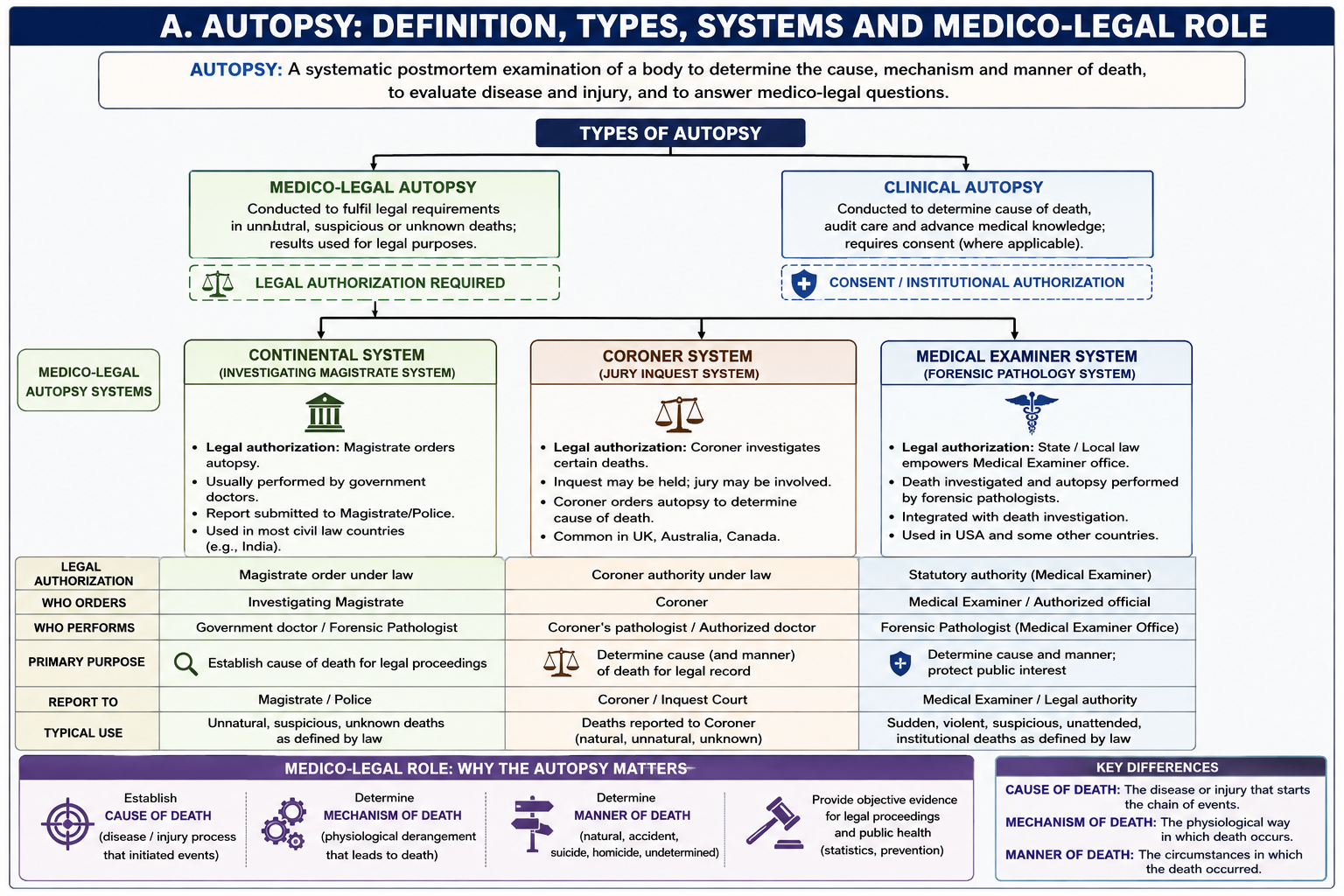
A. Autopsy: Definition, Types, Systems and Medico-Legal Role
An autopsy is a detailed examination of a body after death. The examination may be performed for clinical, academic or medico-legal purposes. In forensic practice, the important feature is that the autopsy forms part of a legal investigation. Therefore, the pathologist does not examine the body in isolation. The circumstances of death, available records, scene information and physical findings must all be interpreted together.
Definition
A medico-legal autopsy is a postmortem examination carried out under lawful authority to investigate the cause, mechanism and circumstances of death and to collect, document and preserve evidence that may be relevant to legal proceedings.
Types of autopsy
Autopsies can be classified according to their principal purpose:
- Medico-legal or forensic autopsy: performed when death requires legal investigation.
- Clinical or pathological autopsy: performed primarily to study disease, clarify diagnosis and correlate clinical findings with pathology.
- Anatomical or academic autopsy/dissection: used for teaching and study of human anatomy under the applicable institutional and legal framework.
Major systems of medico-legal investigation
Different countries organize the investigation of suspicious or unnatural deaths differently. The important distinction is who directs the investigation and who performs the medical examination.
| System | Basic principle | General emphasis |
|---|---|---|
| Continental/modified continental system | Death investigation is closely linked with judicial or investigating authorities, while the medical expert performs and interprets the postmortem examination. | Coordination between legal investigation and medical evidence. |
| Coroner system | A coroner has a central role in investigating specified deaths and may order a postmortem examination. | Independent investigation of reportable deaths. |
| Medical examiner system | A medically qualified official has a major role in death investigation and postmortem interpretation. | Medical expertise is central to the investigation. |
The exact organization of these systems varies between jurisdictions. For undergraduate understanding, the central principle is that medico-legal autopsy must combine legal authorization, scientific examination and defensible documentation.
Role of autopsy in criminal offences
In a suspected criminal death, the autopsy can provide objective medical evidence. It may help establish the cause of death, identify injuries, describe their characteristics, recover or document foreign material, obtain samples for laboratory examination and determine whether the physical findings are compatible with the alleged circumstances.
For example, an autopsy may demonstrate that an injury involved a vital organ and produced fatal hemorrhage. However, the pathologist should avoid extending a medical observation beyond what the findings can scientifically support.
Sections 174 and 176 of the CrPC, 1973
As specified in the supplied curriculum, Sections 174 and 176 of the Criminal Procedure Code (CrPC), 1973 are important in relation to investigation of certain deaths.
- Section 174: deals principally with police inquiry into specified categories of unnatural, suspicious or otherwise reportable deaths. The body and surrounding circumstances are examined, an inquest process is undertaken, and medical examination may be required when necessary to establish the nature or cause of death.
- Section 176: concerns inquiry by a magistrate in circumstances in which such judicial inquiry is required. Its importance is that certain deaths require scrutiny beyond an ordinary police investigation.
For the medical student, the key principle is that the doctor performs a medico-legal autopsy under proper legal authority and provides a medical opinion. The doctor does not independently decide criminal responsibility.
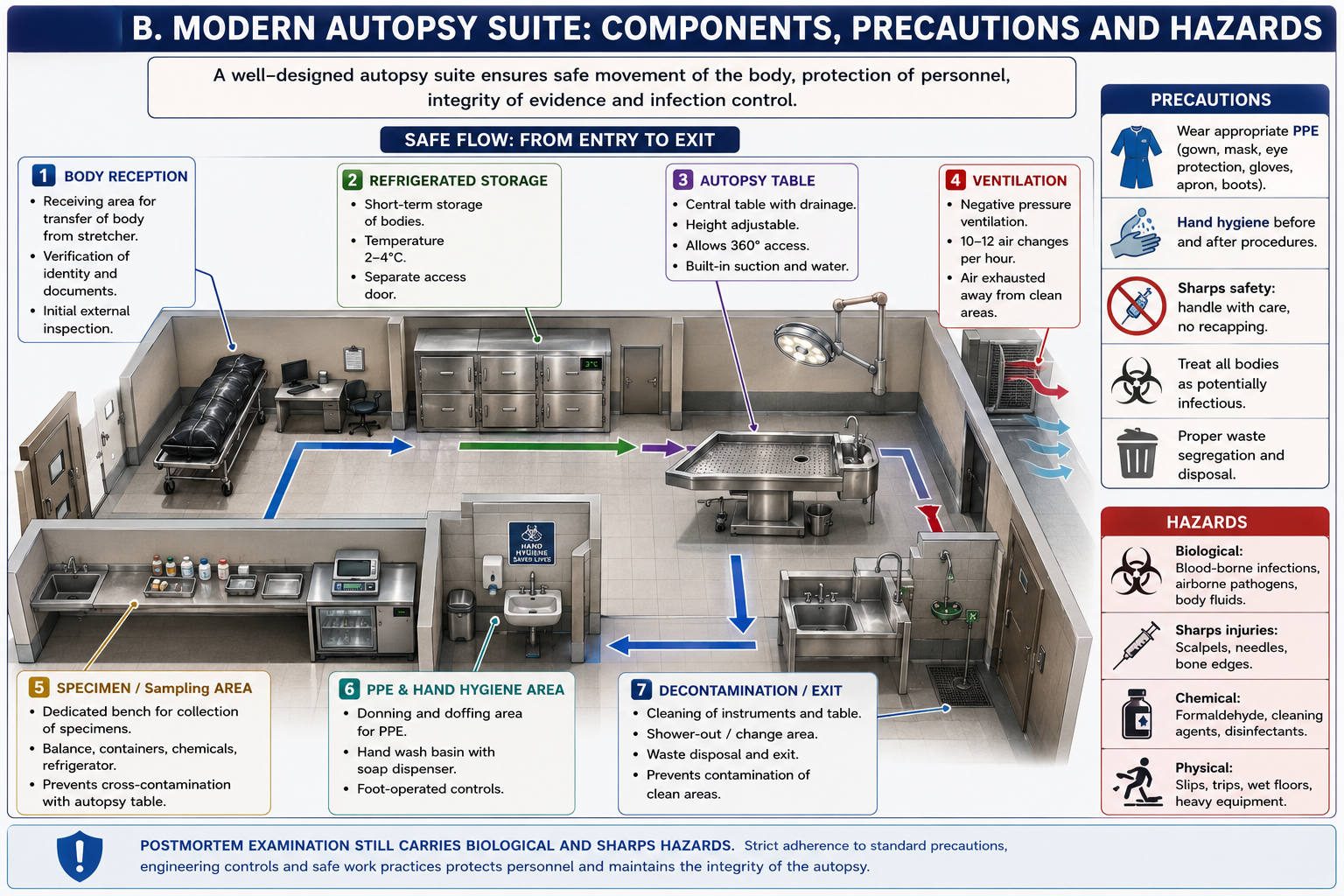
B. Modern Autopsy Suite: Components, Precautions and Hazards
A modern autopsy suite is designed to allow systematic examination of bodies while protecting staff, preserving evidence and maintaining dignity. It therefore requires more than an examination table. Safe movement of bodies, adequate lighting, ventilation, cleaning facilities, specimen handling and controlled access all contribute to reliable medico-legal work.
Major components
- A secure receiving and identification area for bodies.
- Refrigerated body-storage facilities.
- A well-lit postmortem examination area.
- Appropriate autopsy tables with drainage and access to water.
- Facilities and instruments for external and internal examination.
- A clean area for documentation, photography and record preparation.
- Facilities for collection, labeling and temporary handling of specimens.
- Hand-washing, decontamination and cleaning facilities.
- Appropriate ventilation and environmental control.
- Restricted-access areas for maintaining security, privacy and evidence integrity.
Hazards encountered in an autopsy suite
A dead body may still expose staff to several hazards. Infection does not automatically disappear after death, and the examination itself can generate splashes, sharp injuries and aerosols.
- Biological hazards: exposure to blood, body fluids, infected tissues and potentially infectious aerosols.
- Sharps hazards: injuries from scalpels, needles, bone fragments and other instruments.
- Chemical hazards: exposure to fixatives, disinfectants or toxic substances associated with the body.
- Physical hazards: slips, falls, lifting injuries and injury from equipment.
- Radiological or unusual environmental hazards: possible in selected cases when contamination or special exposure is suspected.
Precautions
Precautions aim to interrupt the pathway from a hazardous source to the worker. Every body should therefore be handled with standard infection-control principles rather than assuming that the absence of a known diagnosis means absence of risk.
- Use appropriate personal protective equipment.
- Protect the eyes, face and exposed skin where splashing is possible.
- Handle sharp instruments carefully and dispose of sharps appropriately.
- Minimize unnecessary aerosol generation.
- Perform proper hand hygiene before and after the examination.
- Clean and decontaminate instruments and work surfaces.
- Use safe body-handling techniques.
- Restrict access to authorized staff.
- Follow additional precautions when a specific infectious, chemical or radiological hazard is suspected.
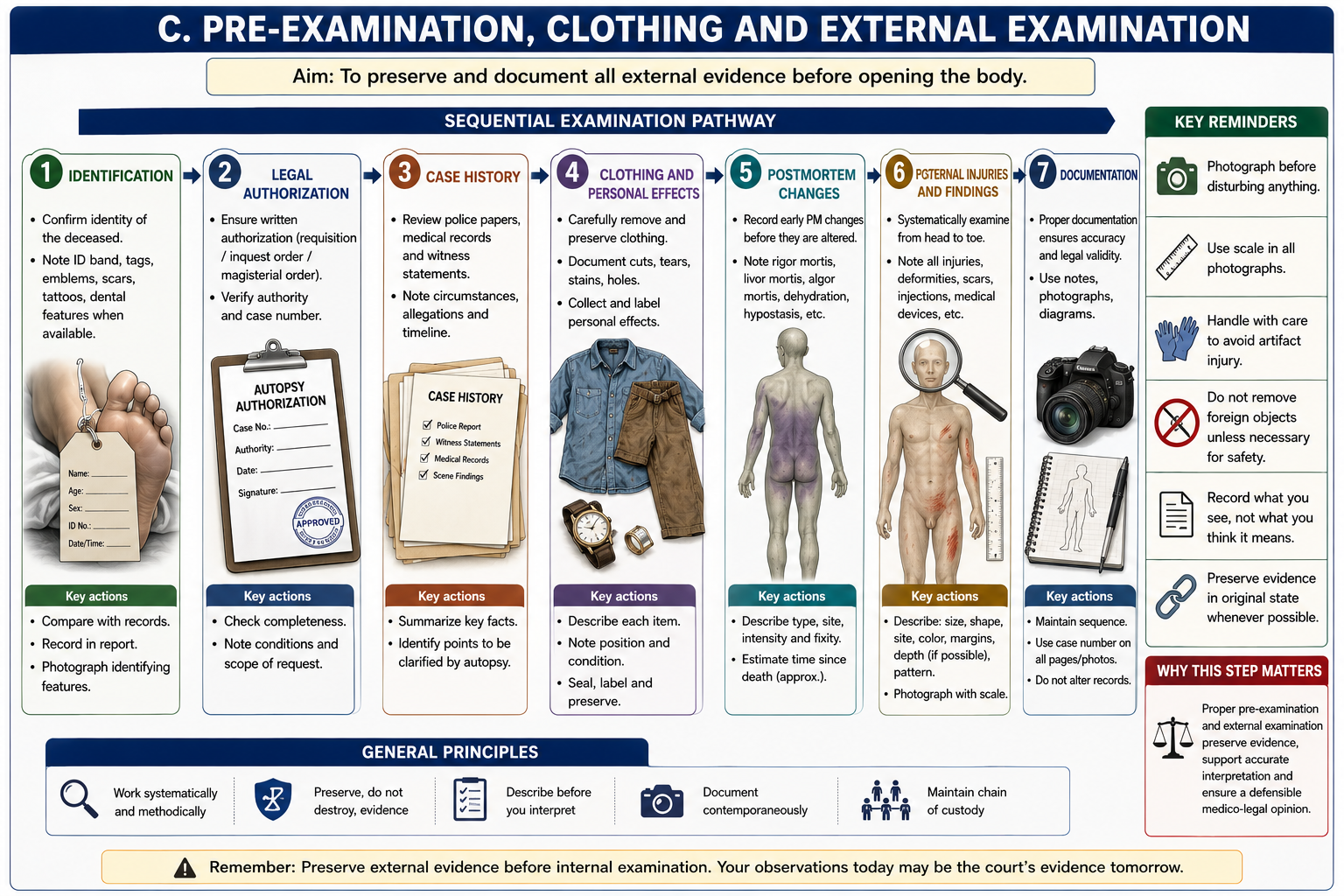
C. Pre-Examination, Clothing and External Examination
A reliable autopsy begins before any incision is made. Identification, documentation and examination of clothing and external findings must occur systematically because opening the body can alter or destroy information that was originally present on its surface.
Pre-examination
The examiner first confirms that the correct body is being examined and reviews the available medico-legal information. The examination should then proceed in an organized manner so that observations remain traceable to the correct individual.
Important pre-examination steps include:
- Confirming the identity or identification details attached to the body.
- Confirming the legal authorization for examination.
- Reviewing the available history and circumstances of death.
- Reviewing relevant medical or investigative information where available.
- Documenting the condition in which the body is received.
- Planning additional precautions if a particular hazard is suspected.
Examination of clothing
Clothing can contain evidence that helps relate the body to the circumstances of death. It should therefore be examined before it is removed or altered. Its type and condition are documented, and relevant stains, tears, cuts, burns, holes or foreign material are noted.
When an injury is present beneath damaged clothing, the relationship between the defect in the clothing and the injury on the body should be assessed carefully. Clothing itself may also require preservation as evidence.
External examination
The external examination provides a complete description of the body and records findings that may disappear or be modified during dissection. The whole body should be examined, not only the region where an obvious injury is present.
The examination commonly includes:
- General physical characteristics useful for identification.
- State of nutrition and general condition of the body.
- Postmortem changes.
- Scars, tattoos, deformities and other identifying marks.
- Medical intervention such as cannula sites, surgical wounds or other treatment-related findings when present.
- Natural body openings where relevant.
- All injuries, including their location, type and important characteristics.
- Foreign material, stains or trace evidence when present.
Injuries should be described objectively. A medical examiner should record what is observed before making an interpretation about how the injury may have been produced.
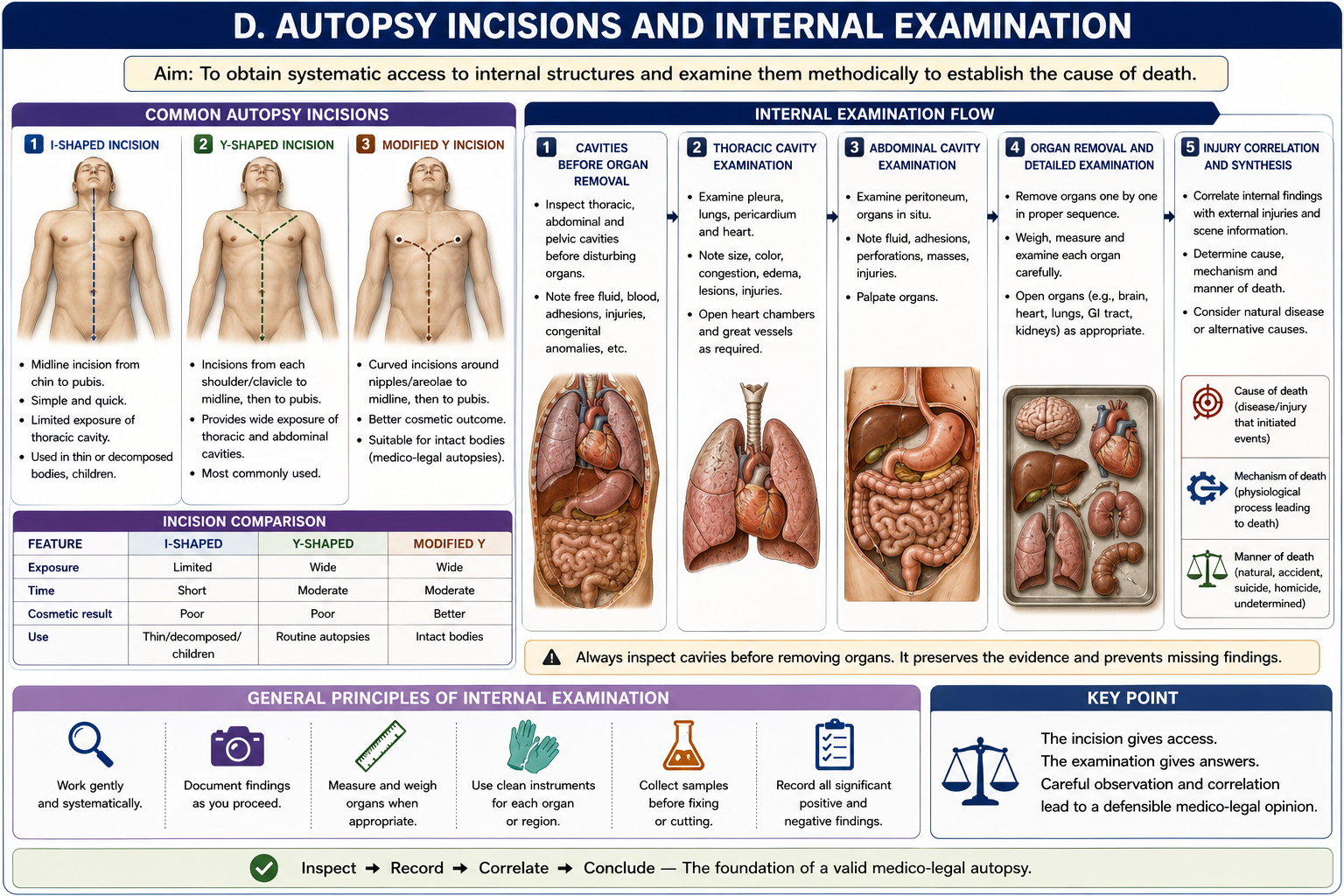
D. Autopsy Incisions and Internal Examination
After the external examination has been completed and documented, the internal examination is performed. The incision must provide sufficient access to body cavities while allowing systematic inspection and removal or examination of organs. The choice of incision depends on the purpose of examination, the body and the practice followed by the examiner.
Common autopsy incisions
- I-shaped or midline incision: a predominantly vertical incision providing access to thoracic and abdominal cavities.
- Y-shaped incision: incisions from the upper chest or shoulder regions converge toward the sternum and continue downward along the midline.
- Modified Y-shaped incision: a variation of the Y-incision adapted to provide suitable exposure while considering reconstruction and external appearance.
The exact incision is less important than the principles behind it: adequate exposure, systematic examination, preservation of important evidence and respectful reconstruction of the body after examination.
Opening the body cavities
Once the incision is made, the thoracic and abdominal cavities are opened and examined in an orderly manner. Before organs are disturbed, the examiner notes abnormal fluids, blood, adhesions, displacement of structures and other relationships that may be important.
Internal examination
The internal examination assesses organs and tissues for disease, injury and other abnormalities that may explain death. Findings are interpreted in relation to the external examination and circumstances.
Important principles include:
- Inspect the cavities before removing organs.
- Observe abnormal collections of blood or fluid before disturbing them.
- Examine the position and relationships of organs.
- Assess organs for injury and disease.
- Record important size, appearance, consistency and cut-surface findings where relevant.
- Examine the head and brain when required by the case.
- Correlate internal injuries with external injuries.
- Collect appropriate specimens before contamination or alteration occurs.
Methods of organ examination
Different autopsy traditions use different methods for removal and examination of organs. Organs may be removed individually, in groups, or as larger organ blocks. The important undergraduate principle is that whichever method is used, the examination must remain systematic, complete and suited to the medico-legal question.
E. Autopsy Samples and Chain of Custody
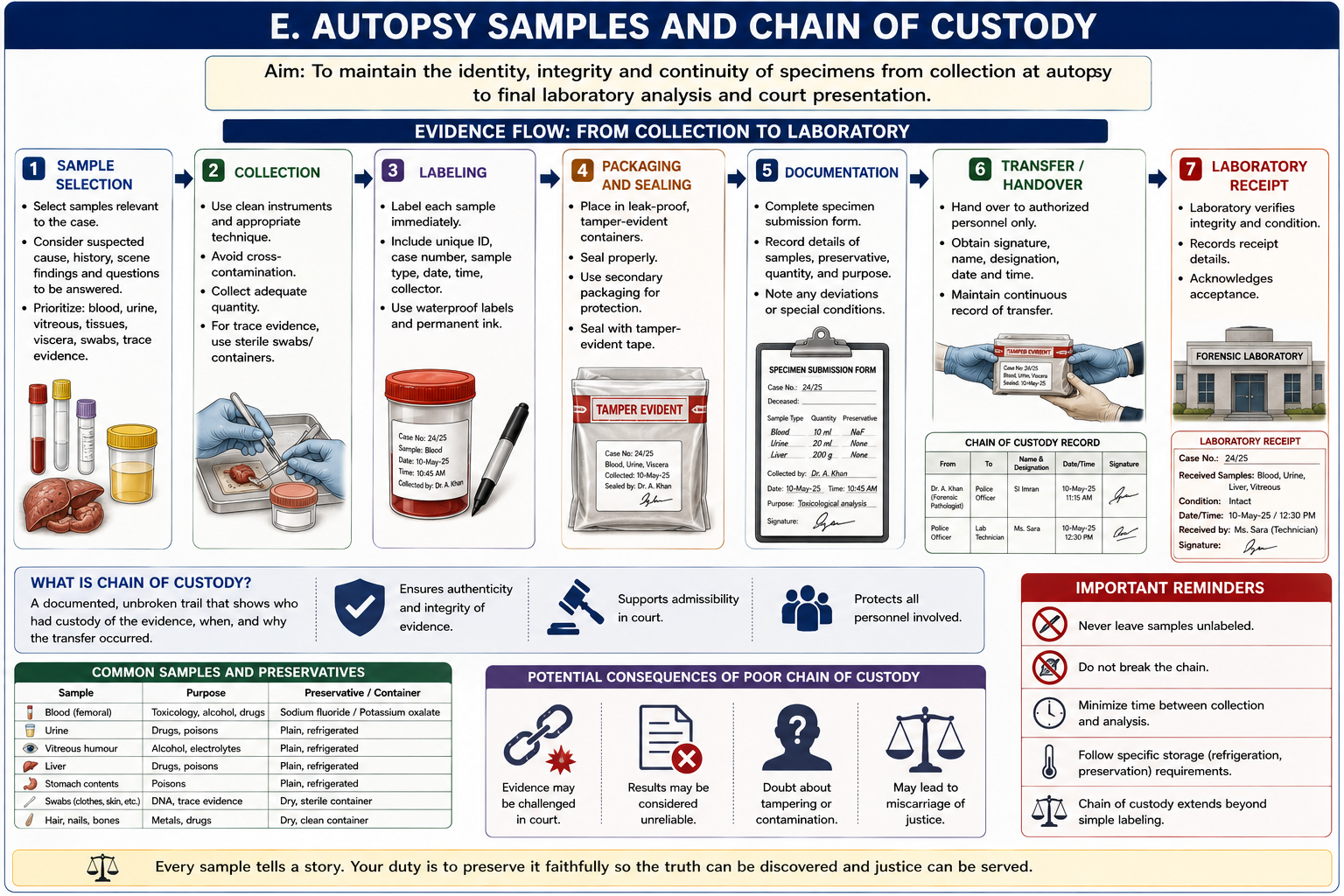
Some causes of death cannot be established by naked-eye examination alone. Toxicological, histological, microbiological or other laboratory investigations may therefore be required. The value of such testing depends not only on collecting a specimen but also on ensuring that it genuinely belongs to the body examined and has not been mixed, substituted or improperly handled.
Selection of samples
Specimens should be selected according to the suspected cause of death and the medico-legal question. There is no single set of samples that answers every case.
Examples of specimen categories include:
- Blood: may be required for toxicological or other laboratory analysis.
- Urine: may assist toxicological investigation.
- Vitreous fluid: may be useful for selected biochemical or toxicological analyses.
- Gastric contents: may be relevant when ingestion of a substance is suspected.
- Internal organs or tissues: may be collected for toxicology or histopathology where indicated.
- Representative tissue samples: may be submitted for microscopic examination.
- Swabs or microbiological samples: may be collected when infection is relevant to the investigation.
- Trace or evidentiary material: may require collection when present and relevant.
The correct container, preservation method and laboratory requirements depend on the specimen and investigation requested. They should therefore follow the applicable laboratory and medico-legal protocol rather than being assumed to be identical for every sample.
Labeling
Every specimen must be clearly connected to the correct case. Labels and accompanying documentation should allow the specimen to be identified without uncertainty. Inadequate labeling can make an otherwise correctly collected specimen unreliable as evidence.
Chain of custody
Chain of custody is the documented history of possession, handling, transfer and storage of evidence from the time it is collected until its final use or disposition. Its purpose is to show that the specimen tested by the laboratory is the same specimen that was collected during the autopsy and that its integrity was maintained.
Specimen collected → correctly labeled → sealed and documented → transferred to an identified person → received and stored appropriately → analyzed with documented identity.
Whenever custody changes, the transfer must remain traceable. A break in documentation may reduce confidence in the evidentiary value of the sample even if the laboratory analysis itself is technically accurate.
F. Writing the Autopsy Report
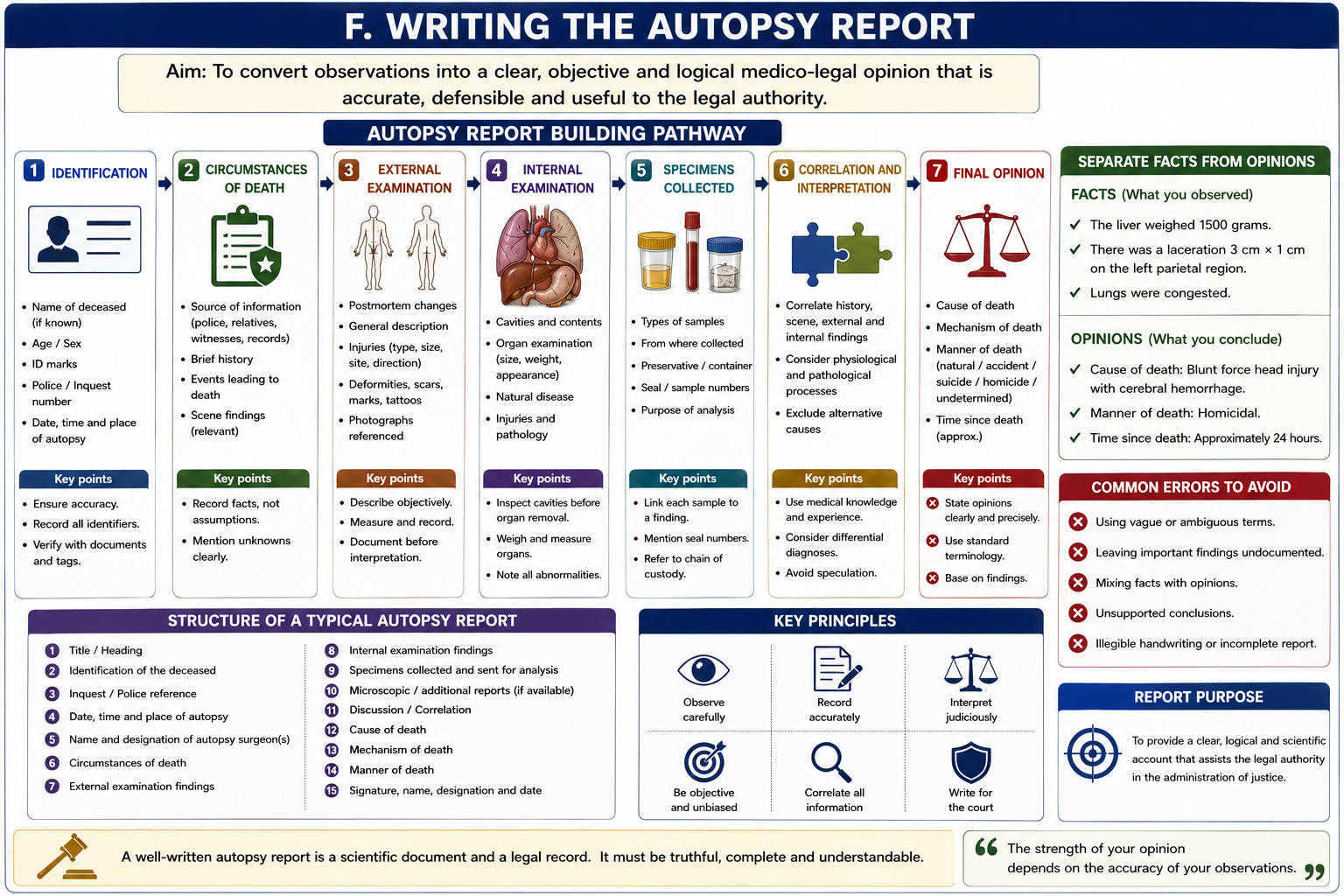
The autopsy report converts observations made during the examination into a permanent medico-legal record. It should therefore separate factual observations from interpretation and present information in a logical sequence. The report must be sufficiently clear that another appropriately trained person can understand what was found and how the final opinion was reached.
Main steps
- Case identification: record the information required to identify the body and the medico-legal case.
- Authority and background: document the relevant authorization and available history or circumstances.
- Condition of the body and clothing: record how the body was received and important clothing findings.
- External examination: document general features, postmortem changes, identifying marks and injuries.
- Internal examination: record relevant findings in body cavities, organs and tissues.
- Specimens: document important samples collected and investigations requested.
- Opinion: correlate the findings and state the medically supportable conclusion, including cause of death where it can be determined.
Description before interpretation
The report should first describe what was actually observed. For example, an injury should be described by location and physical characteristics before an opinion is offered about the type of force that may have produced it.
Provisional and final opinion
Sometimes the anatomical examination does not provide enough information for an immediate final opinion. Toxicology, histopathology or another laboratory investigation may be necessary. In such a situation, it is scientifically appropriate to defer the final conclusion until the relevant results are available rather than give an unsupported opinion.
G. Autopsy in Deaths Due to Heat and Cold
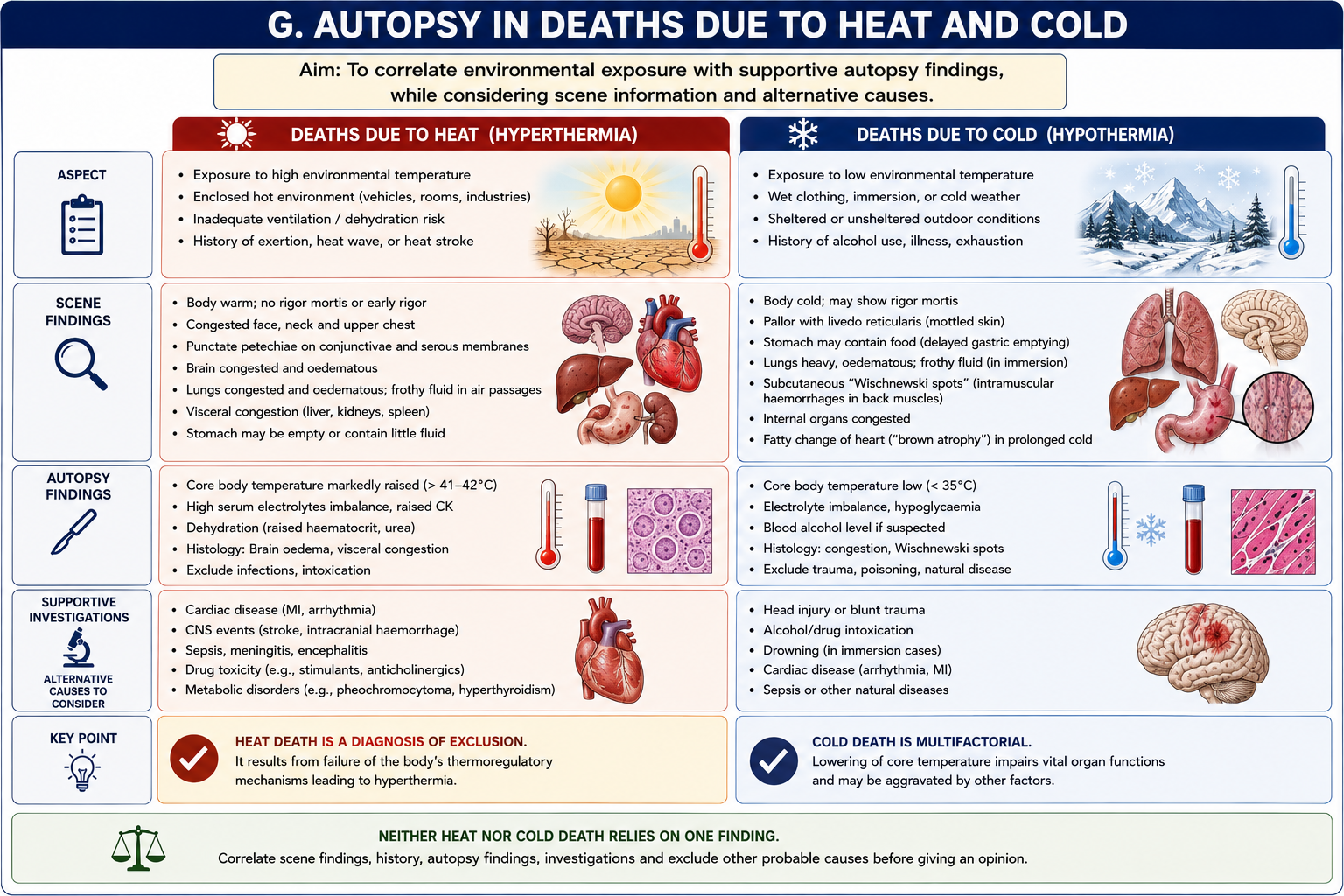
Deaths related to extreme environmental temperature require careful interpretation because many postmortem findings are not specific. The diagnosis should therefore depend on the combination of circumstances, scene information, exclusion of competing causes and supportive autopsy findings rather than on one isolated sign.
Death due to excessive heat
Exposure to excessive environmental heat can overwhelm normal heat-dissipating mechanisms. Severe hyperthermia may then cause widespread physiological disturbance and organ dysfunction. At autopsy, the findings may be nonspecific, so the environmental circumstances are especially important.
The examination should include:
- Review of the environmental circumstances and duration or nature of exposure where known.
- Assessment of clothing and general condition of the body.
- Careful external and internal examination.
- Documentation of injuries or diseases that might provide an alternative cause of death.
- Collection of appropriate specimens when toxicological or other laboratory investigation is required.
- Correlation of autopsy findings with the circumstances before giving the final opinion.
Death due to cold
Prolonged exposure to sufficiently low temperature can cause hypothermia, in which body temperature falls to a level incompatible with normal physiological function. As with heat-related death, no single postmortem feature should automatically be considered diagnostic in isolation.
The examination should consider:
- The scene and environmental exposure.
- The deceased person’s clothing and circumstances.
- Possible factors that may have impaired protection from cold.
- External and internal findings that may support exposure.
- Injuries, natural disease, intoxication or other competing explanations.
- Appropriate specimen collection where additional analysis is required.
| Feature | Heat-related death | Cold-related death |
|---|---|---|
| Central disturbance | Excessive body heat and failure of thermoregulation | Progressive loss of body heat and hypothermia |
| Importance of circumstances | Essential | Essential |
| Autopsy findings | May be supportive but are often nonspecific | May be supportive but are often nonspecific |
| Interpretive approach | Correlate exposure, findings and exclusion of alternatives | Correlate exposure, findings and exclusion of alternatives |
Integrated Autopsy Workflow
↓
Review of circumstances and pre-examination information
↓
Documentation of clothing and complete external examination
↓
Appropriate incision and examination of body cavities
↓
Systematic internal examination and correlation of injuries/disease
↓
Collection, labeling and documented custody of required specimens
↓
Correlation of all findings and preparation of the medico-legal report
⭐ AIM High-Yield Review
- Autopsy is a systematic postmortem examination performed to investigate disease, injury and circumstances relevant to death.
- A medico-legal autopsy is performed under legal authority and forms part of the investigation of a legally reportable death.
- The major investigation models include the continental/modified continental, coroner and medical examiner systems.
- ⭐ A medico-legal autopsy may establish the cause of death, document injuries, collect evidence and determine whether findings are compatible with the circumstances.
- The autopsy suite must provide secure body handling, refrigeration, examination facilities, specimen handling, documentation and decontamination facilities.
- Important occupational hazards include biological exposure, sharps injury, chemical exposure and physical hazards.
- ⭐ Clothing and the external surface of the body must be examined before internal dissection alters potentially important evidence.
- Common autopsy incisions include I-shaped, Y-shaped and modified Y-shaped incisions.
- Body cavities should be inspected before removal of organs so that abnormal blood, fluid and anatomical relationships are not lost.
- Specimens are selected according to the suspected cause of death and may include blood, urine, vitreous fluid, gastric contents and tissues.
- ⭐ Chain of custody is the continuous documented history of collection, possession, transfer and handling of evidence.
- The autopsy report should clearly separate objective observations from medical interpretation.
- A final opinion may appropriately be deferred when toxicology, histopathology or another investigation is required.
- ⭐ Heat-related and cold-related deaths require correlation with environmental circumstances because autopsy findings may be nonspecific.
- Do not confuse cause of death, mechanism of death and manner of death; they represent different medico-legal concepts.
🎥 AIM Video Learning
Watch this lecture to reinforce the principles, procedure and medico-legal aspects of autopsy.
Suggested focus: types of autopsy, medico-legal authorization, examination procedure, evidence handling and legal responsibilities.