
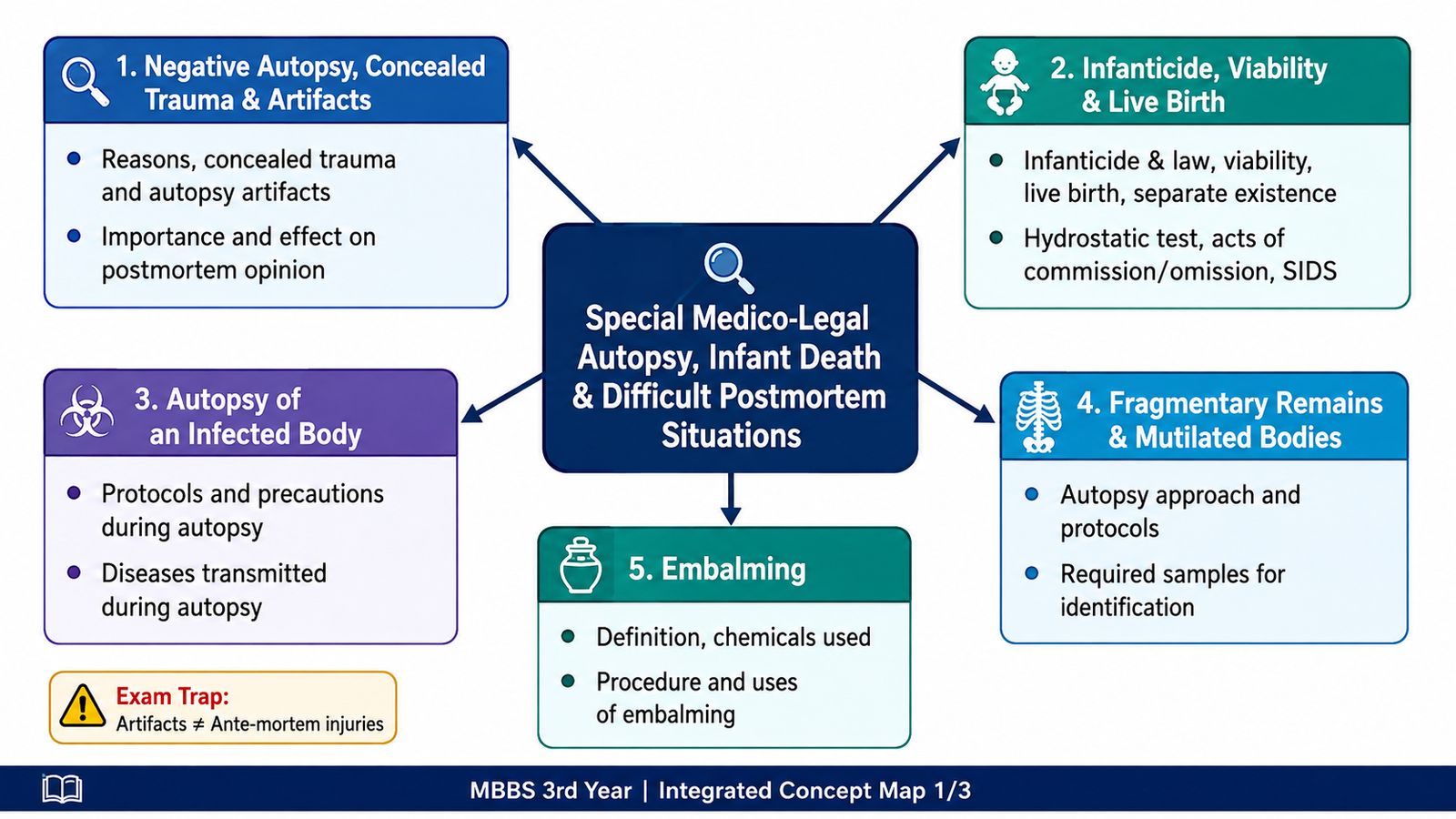
This chapter follows the supplied KMU learning outcomes and explains each concept in a logical sequence. First understand why each postmortem situation is difficult or special, then use the final high-yield review for examination revision.
Topic 14 — Special Medico-Legal Autopsy, Infant Death and Difficult Postmortem Situations
Module/Theme: Infection and Inflammation • Forensic Medicine
Topic Introduction
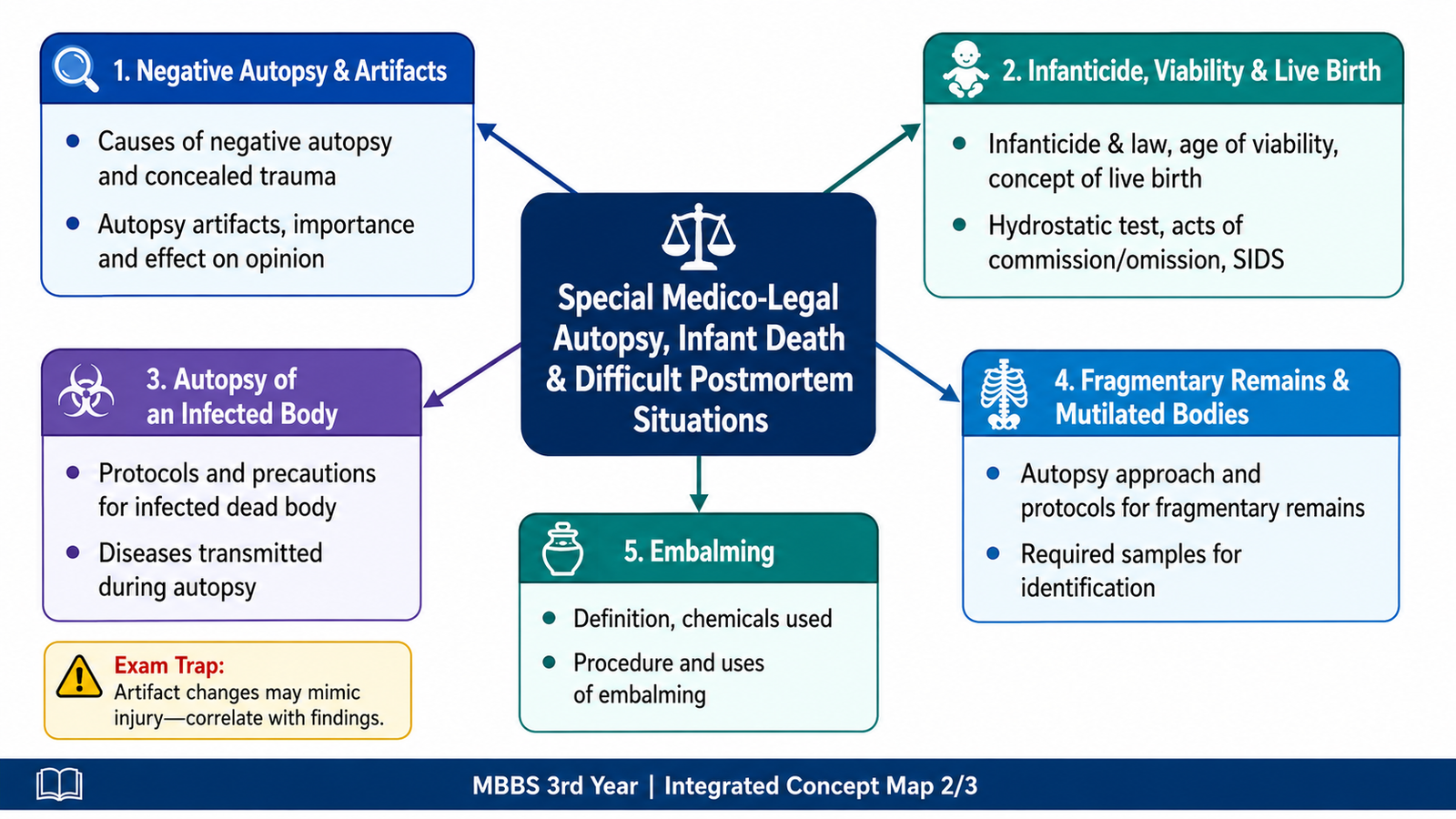
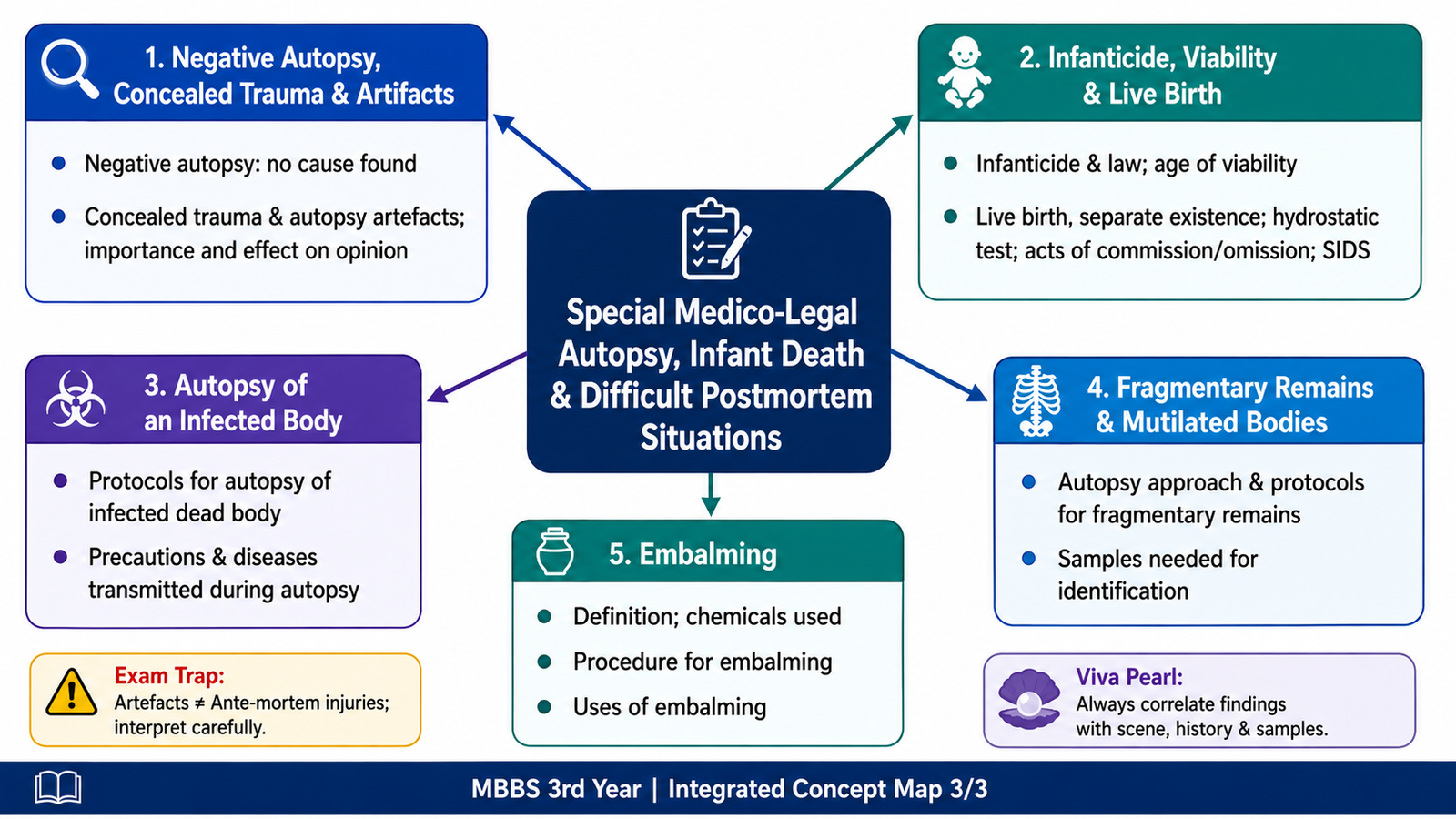
Some medico-legal autopsies are more difficult than routine postmortem examinations because the usual findings may be absent, misleading, hazardous to examine, fragmented or altered after death. This topic covers five important situations: a negative autopsy, concealed trauma and postmortem artifacts; medico-legal examination of an infant in suspected infanticide; autopsy of an infected body; examination of fragmentary or mutilated remains; and embalming. The central principle is careful, systematic examination with cautious interpretation. Students should understand not only what findings may be present, but also what those findings can and cannot prove in a medico-legal investigation. :contentReference[oaicite:0]{index=0}
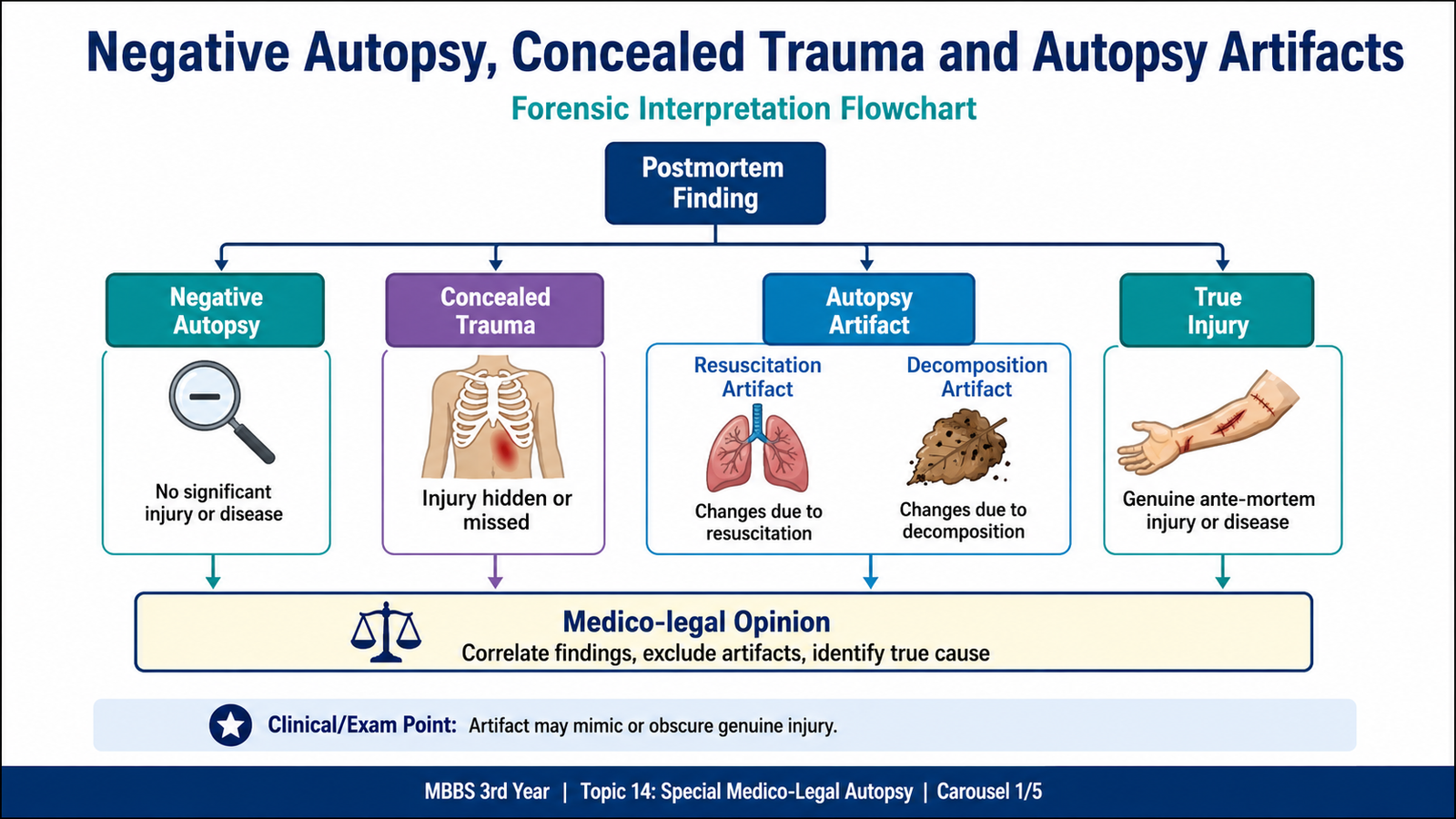
A. Negative Autopsy, Concealed Trauma and Autopsy Artifacts
A medico-legal autopsy normally aims to identify injuries, disease or toxicological evidence that can explain death. Occasionally, however, a complete examination does not reveal a definite anatomical or toxicological cause. In other cases, a genuine lesion may be difficult to detect, or a change produced during resuscitation, transportation, decomposition or the autopsy itself may imitate an injury. These situations require special care because an incorrect interpretation can change the final medico-legal opinion.
Negative autopsy
A negative autopsy is a postmortem examination in which no definite cause of death can be established even after a careful external and internal examination and appropriate ancillary investigations. It does not mean that the examination was unnecessary or poorly performed. Rather, some fatal processes may produce little or no visible structural change.
Situations that may lead to a negative or apparently negative autopsy include:
- functional disturbances in which death occurs before recognizable structural lesions develop;
- certain cardiac electrical disturbances or sudden fatal rhythm abnormalities;
- some metabolic or biochemical disturbances;
- some toxicological deaths when the poison produces no characteristic anatomical change;
- very subtle natural disease;
- concealed trauma that is missed unless specifically searched for;
- advanced decomposition that obscures original findings;
- inadequate history, scene information or laboratory investigation.
Concealed trauma
Concealed trauma refers to significant injury that is not readily visible during an initial external examination. The skin may appear almost normal even though deeper soft tissue, bone, internal organs or intracranial structures are injured. Therefore, the absence of obvious external injury does not exclude trauma.
Careful examination may require inspection and dissection of deeper tissues when the history or circumstances suggest hidden injury. Areas covered by hair, body folds or clothing should not be overlooked. Internal examination must also be systematic because a small external lesion may be associated with important internal damage.
The reasoning is:
→ injury may not be obvious externally
→ targeted examination of deeper structures
→ concealed lesion becomes detectable
→ more reliable interpretation of cause and circumstances of death
Autopsy artifacts
An autopsy artifact is a change that is produced after death or during handling, resuscitation, transportation, storage or postmortem examination and may be mistaken for a genuine disease or injury. Artifacts are important because they can create false impressions if their origin is not recognized.
Examples may arise from several stages surrounding death and examination:
- Resuscitation-related changes: procedures performed before death may produce marks or internal injuries that need to be distinguished from primary trauma.
- Handling and transportation: pressure, movement or accidental damage may produce postmortem changes.
- Decomposition: tissue discoloration, gas formation, skin changes and tissue disruption can imitate disease or trauma.
- Postmortem dissection: cuts, fractures or tissue damage produced during examination should not be confused with antemortem injury.
Why forensic artifacts matter
The medico-legal importance of an artifact lies in its potential to alter interpretation. A postmortem change may be mistaken for an injury, while a genuine lesion may be incorrectly dismissed as an artifact. The pathologist should therefore assess the location, appearance, surrounding tissue reaction, procedural history and circumstances before forming an opinion.
B. Infanticide, Viability and Evidence of Live Birth
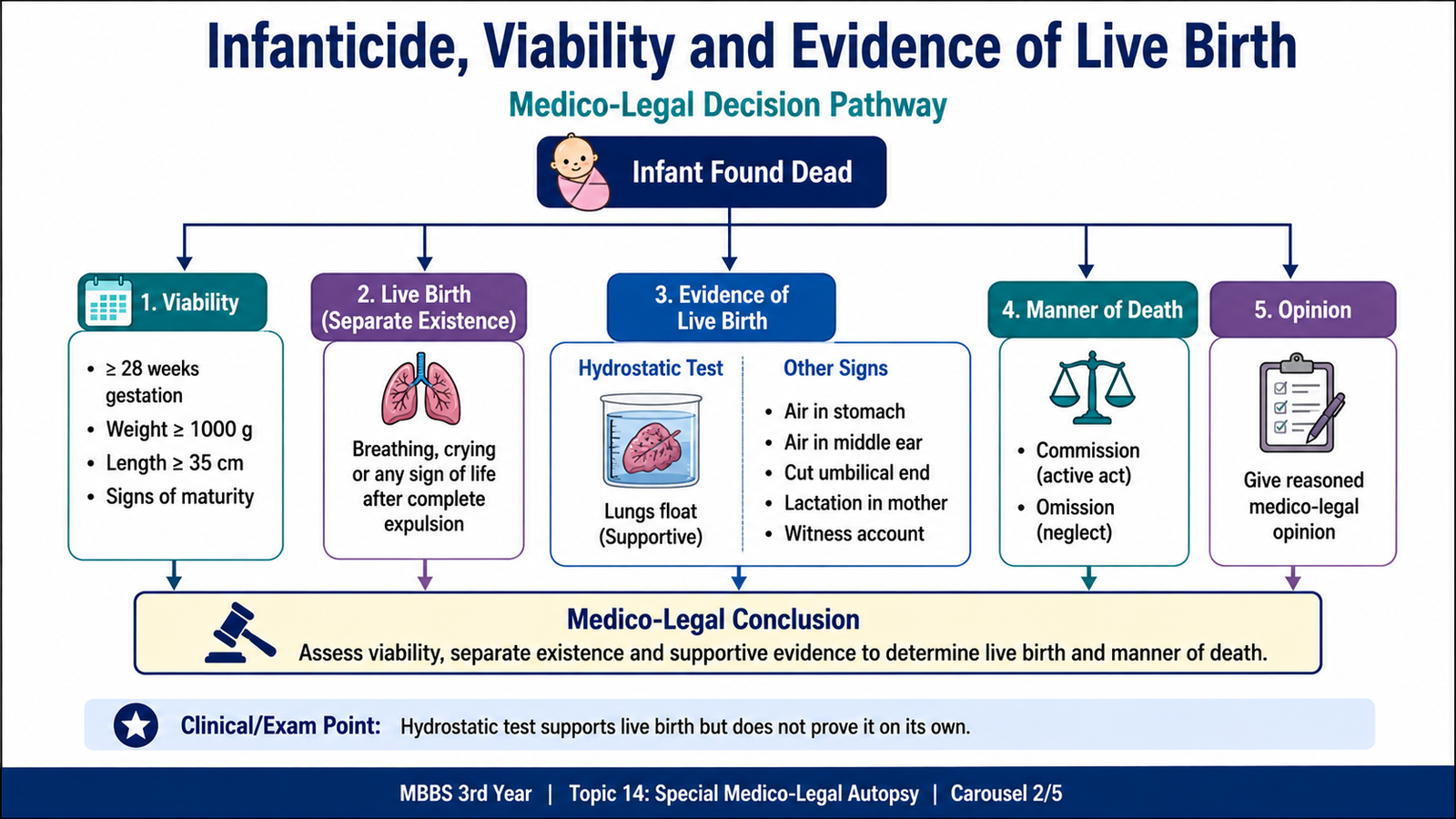
The medico-legal examination of a dead newborn requires the examiner to answer several different questions in sequence. The important issues include whether the fetus had reached a stage compatible with survival, whether the child was born alive, whether it existed independently after birth and, if death occurred, whether it resulted from disease, an active harmful act or failure to provide necessary care.
Infanticide
Infanticide refers broadly to the unlawful killing of an infant. In forensic practice, suspected cases require a careful examination of the infant, available maternal and obstetric information and the circumstances surrounding delivery and death. The medico-legal examiner provides medical findings and interpretations; the final legal classification depends on the applicable law and judicial process.
The autopsy may need to address:
- development and maturity of the infant;
- whether birth was live or stillbirth;
- whether separate existence occurred;
- evidence of injury or disease;
- evidence suggesting failure of essential care;
- the most supportable cause of death.
Viability
Viability refers to the developmental capacity of a fetus to survive independently outside the uterus under appropriate conditions. Its medico-legal importance is that the maturity and development of the fetus help the examiner interpret whether independent survival was biologically possible.
Viability should not be judged from a single feature in isolation. The assessment is based on the overall maturity and development of the body, together with the circumstances of birth. A precise legal threshold should be applied according to the governing jurisdiction rather than assumed from morphology alone.
Live birth and separate existence
Live birth means that after complete delivery from the mother, the infant showed evidence of life. Separate existence concerns survival as an individual after birth. These concepts are medico-legally important because a child who has lived independently after birth raises different questions from a fetus that died before or during delivery.
Evidence suggesting postnatal life must be interpreted as a combination of findings rather than from one isolated test. Respiration is important, but evidence of breathing should be correlated with the condition of the lungs, gastrointestinal tract, umbilical cord and other available circumstances.
Hydrostatic test
The hydrostatic test, also called the lung flotation test, is based on the principle that lungs which have expanded with air after respiration are generally less dense and may float in water, whereas unexpanded fetal lungs are more likely to sink.
→ air enters and expands alveoli
→ overall lung density decreases
→ lung tissue may float in water
→ finding may support, but does not by itself prove, live birth
The test must be interpreted cautiously. Floating lungs are not absolute proof of live birth, and sinking lungs are not absolute proof of stillbirth. Decomposition can generate gases and produce false flotation, while weak or incomplete respiration may fail to aerate the lungs sufficiently. Artificial ventilation may also influence the result.
Acts of commission and acts of omission
When investigating the death of an infant, the examiner considers whether death may have resulted from an act of commission or an act of omission.
- Act of commission: a positive act that directly causes harm or death, such as deliberate traumatic injury or another active lethal act.
- Act of omission: failure to provide necessary care or protection when such failure contributes to death.
The distinction is medico-legally important, but the forensic opinion must remain based on demonstrable medical findings and the circumstances rather than assumptions about intention.
Sudden infant death syndrome
Sudden infant death syndrome (SIDS) refers to the sudden and unexpected death of an infant that remains unexplained after an appropriate investigation, including a complete autopsy and evaluation of the circumstances. Because there may be no specific anatomical lesion that independently establishes the diagnosis, SIDS is fundamentally a diagnosis reached after other identifiable causes have been excluded.
C. Autopsy of an Infected Body
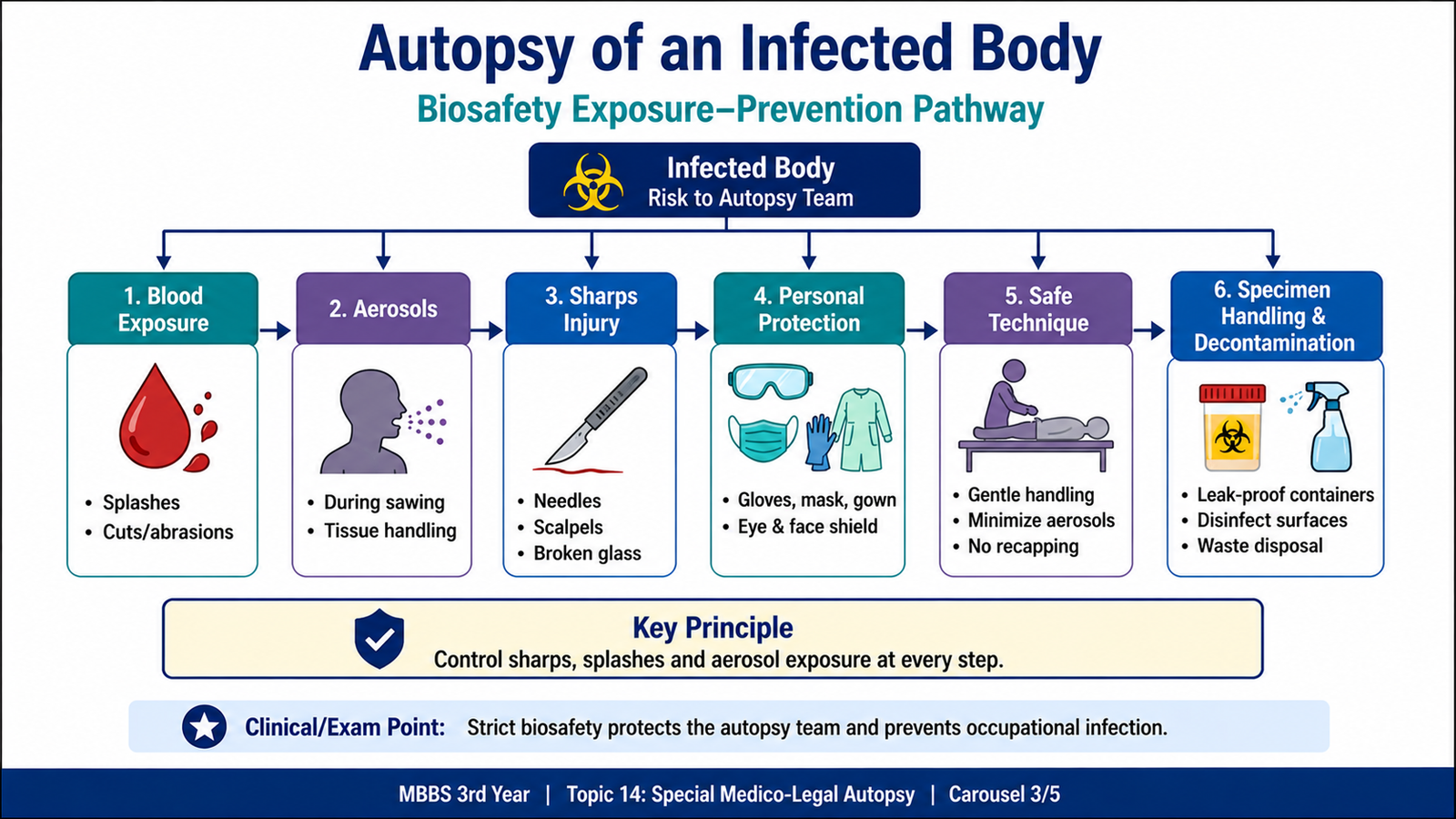
An infected dead body can expose autopsy personnel to biological hazards through blood, body fluids, aerosols, contaminated instruments and accidental sharps injuries. Therefore, the purpose of special precautions is not to avoid the necessary medico-legal examination, but to perform it in a controlled manner that reduces exposure while preserving the quality of the investigation.
General protocol
Before the examination begins, the team should review available information about suspected infection and plan the procedure. Only necessary personnel should participate. Appropriate personal protective equipment should be used, and procedures likely to generate splashes, droplets, aerosols or sharps injuries should be carefully controlled.
A safe approach includes:
- recognizing the suspected infectious hazard before examination where possible;
- using appropriate barrier protection;
- minimizing unnecessary personnel in the examination area;
- handling scalpels, needles and other sharp instruments carefully;
- reducing aerosol-generating manipulation where feasible;
- collecting required specimens in correctly identified secure containers;
- cleaning and decontaminating instruments and working surfaces after examination;
- disposing of contaminated material according to appropriate biosafety procedures;
- documenting significant occupational exposure if it occurs.
Why precautions are necessary
Death does not immediately remove all biological hazards. Viable infectious material may remain in blood, tissues or body fluids for a variable period. The autopsy itself can expose staff through cuts, punctures, splashes to mucous membranes or inhalation of infectious aerosols.
→ contact with blood, tissues, fluids or aerosols
→ exposure of skin, mucosa or respiratory tract
→ possibility of occupational transmission
→ barrier protection + safe technique + decontamination reduce risk
Diseases of concern during autopsy
Important occupationally transmissible infections include blood-borne infections and respiratory or aerosol-transmitted infections. Examples of concern include hepatitis B, hepatitis C, HIV infection and tuberculosis. Other infectious conditions may also require additional precautions depending on their mode of transmission and the suspected diagnosis.
Precautions should be proportionate to the hazard. A systematic approach protects staff while allowing necessary examination, documentation and specimen collection to proceed.
D. Fragmentary Remains and Mutilated Bodies
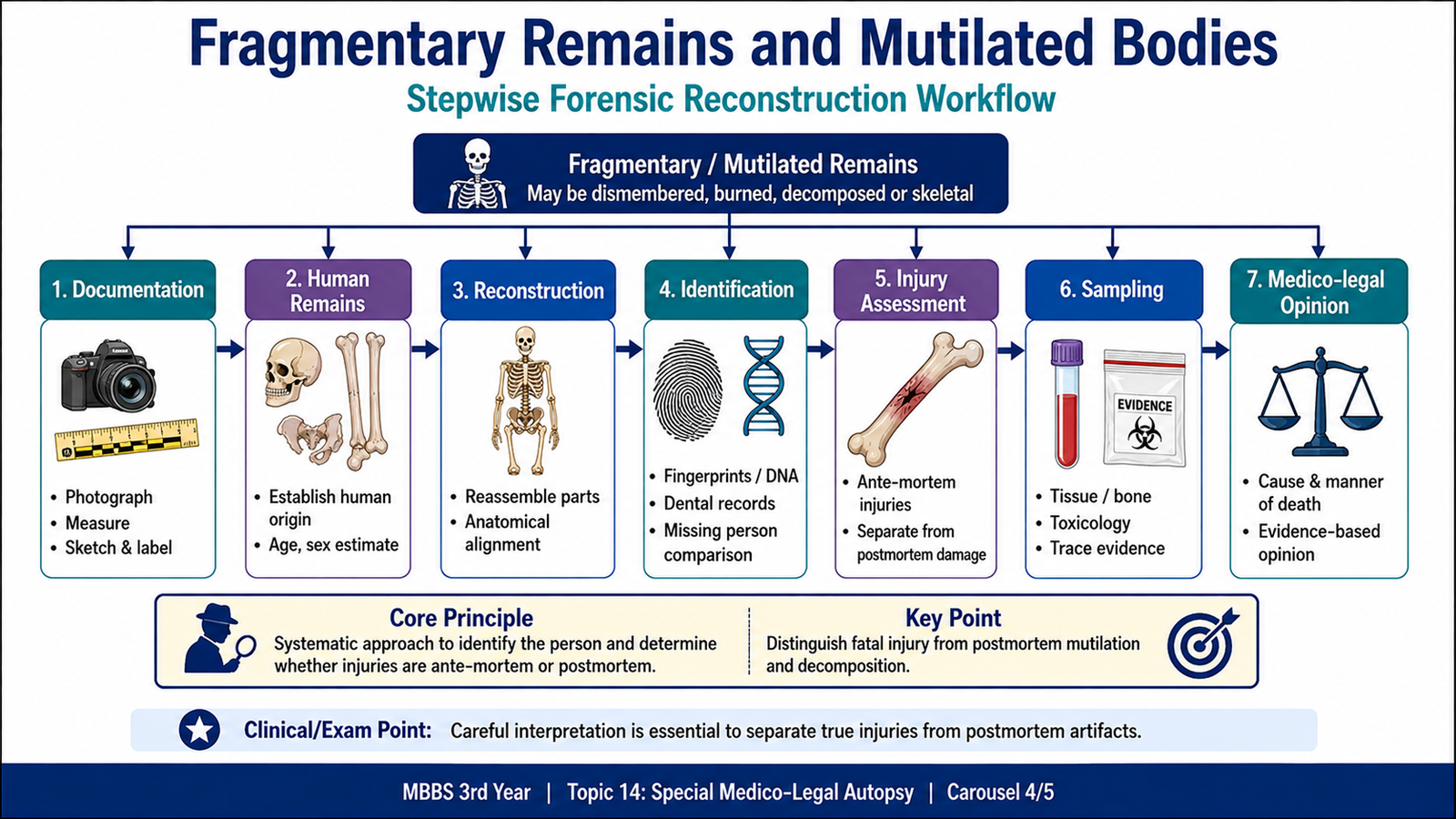
Fragmentary or mutilated human remains create a different forensic problem from examination of an intact body. The examiner may first need to establish what material is present, whether separate fragments belong to one individual, and whether the injuries represent the cause of death, deliberate mutilation or damage that occurred after death. Preservation of evidence and systematic reconstruction are therefore especially important.
Objectives of examination
The examination of fragmentary remains should proceed from identification and documentation toward reconstruction and interpretation. Depending on what is available, the examiner attempts to determine:
- whether the material is human;
- the number of individuals represented;
- identity where possible;
- which anatomical parts are present or absent;
- the nature and distribution of injuries;
- whether damage occurred before death, around the time of death or after death;
- whether a cause of death can reasonably be established.
Protocol for examination
Each fragment should be treated as potential evidence. It should be documented before extensive manipulation, described anatomically and correlated with other recovered parts. Whenever possible, fragments are arranged in their expected anatomical relationship to help reconstruct the body and recognize injury patterns.
A logical sequence is:
→ separate and identify individual fragments
→ determine anatomical relationship
→ reconstruct where possible
→ examine injuries and tissue changes
→ collect identification and laboratory samples
→ formulate a cautious medico-legal opinion
Documentation should preserve the relationship between each specimen and its identifying information. This becomes particularly important when multiple fragments or multiple possible individuals are involved.
Interpreting mutilation
Mutilation refers to destruction, removal or disfigurement of body parts. It may complicate identification and may obscure the original injury. The examiner should avoid assuming that every cut or separation caused death. Some injuries may be postmortem and related to disposal, concealment or environmental damage.
Interpretation therefore asks two different questions:
- What caused death?
- What produced the later fragmentation or mutilation?
These may have the same answer, but they may also represent separate events.
Samples that may be required
The exact samples depend on the remains available and the questions being investigated. Useful material may include tissue for histological examination, biological material for DNA-based identification, blood or tissue suitable for toxicological examination when preserved, hair and other identifiable biological specimens, and representative tissue from suspicious injuries.
Where identification is uncertain, suitable samples should be preserved in a way that allows comparison with reference material. The source of each specimen must remain clearly documented so that evidence from different fragments is not mixed.
E. Embalming: Principle, Chemicals, Procedure and Uses
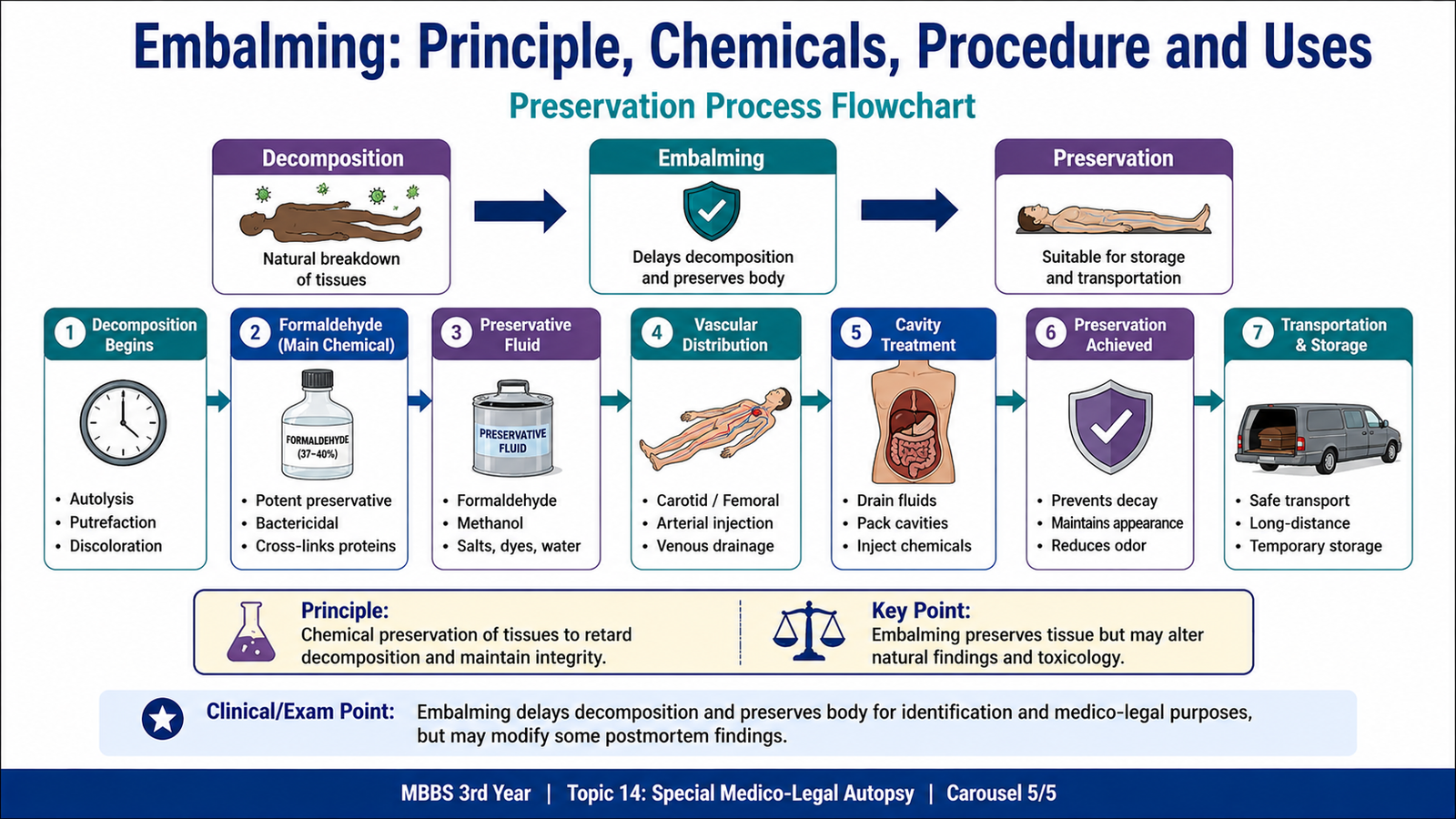
Embalming is the treatment of a dead body with preservative methods and chemicals in order to delay decomposition and maintain the body in a condition suitable for storage, transportation, viewing or teaching. Unlike a medico-legal autopsy, its primary purpose is preservation rather than determination of the cause of death.
Principle of embalming
After death, tissues undergo autolysis and bacterial decomposition. Embalming delays these processes by introducing preservative and disinfecting chemicals into tissues and by treating body cavities where decomposition can progress rapidly.
→ autolysis and bacterial decomposition begin
→ preservative chemicals are introduced
→ tissue breakdown and microbial activity are reduced
→ decomposition is delayed
Chemicals used
Embalming fluids usually contain a mixture of chemicals serving different purposes rather than a single substance. Important components may include:
- Formaldehyde or formaldehyde-containing solutions: important tissue-preserving agents.
- Alcohols: may contribute to preservation and solvent action.
- Disinfecting agents: help reduce microbial activity.
- Humectant or conditioning substances: may help limit excessive drying and maintain tissue appearance.
- Other modifying substances: may be included to improve penetration or physical characteristics of the solution.
General procedure
The exact technique depends on the purpose and condition of the body, but the general concept is to distribute preservative fluid through the body and treat areas where decomposition may persist.
- The body is examined and prepared.
- A suitable blood vessel is accessed for introduction of embalming fluid.
- Preservative solution is distributed through the vascular system.
- Body cavities and internal areas requiring additional treatment are managed appropriately.
- External cleaning and final preparation are performed.
The objective is uniform preservation rather than simply introducing a large quantity of chemical into one area.
Uses of embalming
- temporary preservation of a dead body;
- facilitating transportation over distance;
- allowing viewing or funeral arrangements when preservation is required;
- preservation of cadavers for anatomical teaching and related educational purposes.
Integrated Medico-Legal Reasoning Flow
→ identify the specific problem: absent findings, infant death, infection risk, fragmentation or preservation need
→ perform systematic examination appropriate to that problem
→ distinguish genuine findings from postmortem change or artifact
→ collect and document relevant specimens and evidence
→ recognize limitations of individual tests or incomplete remains
→ give a cautious opinion supported by the total evidence
⭐ AIM High-Yield Review
- Negative autopsy means that no definite cause of death is established despite appropriate postmortem investigation.
- The absence of obvious external injury does not exclude concealed trauma.
- Autopsy artifacts may imitate genuine injury or disease and can alter the final medico-legal interpretation.
- In infant death, viability, live birth and separate existence are related but distinct medico-legal concepts.
- ⭐ The hydrostatic test is based on flotation of aerated lungs but is supportive rather than absolute proof of live birth.
- Decomposition or artificial ventilation may influence the hydrostatic test.
- An act of commission is an active harmful act; an act of omission is failure to provide necessary care.
- SIDS is considered only after an appropriate investigation fails to identify another cause of sudden infant death.
- Autopsy of an infected body requires protection against blood, body-fluid, sharps and aerosol exposure.
- Important occupational infections include hepatitis B, hepatitis C, HIV infection and tuberculosis.
- Fragmentary remains should be documented and reconstructed systematically before conclusions are drawn.
- In mutilated bodies, the injury causing death and the later mutilation may represent different events.
- Samples from fragmentary remains may assist identification, toxicology, histology and injury assessment depending on what tissue is available.
- Embalming delays decomposition by preservation and disinfection of tissues.
- ⭐ Medico-legal conclusions in difficult autopsies should always reflect the limitations of the available evidence.
Special Medico-Legal Autopsy, Infant Death and Difficult Postmortem Situations
Use this video resource to reinforce negative autopsy, concealed trauma and artifacts, evidence of live birth and the hydrostatic test, infected-body autopsy precautions, fragmentary remains and embalming.