
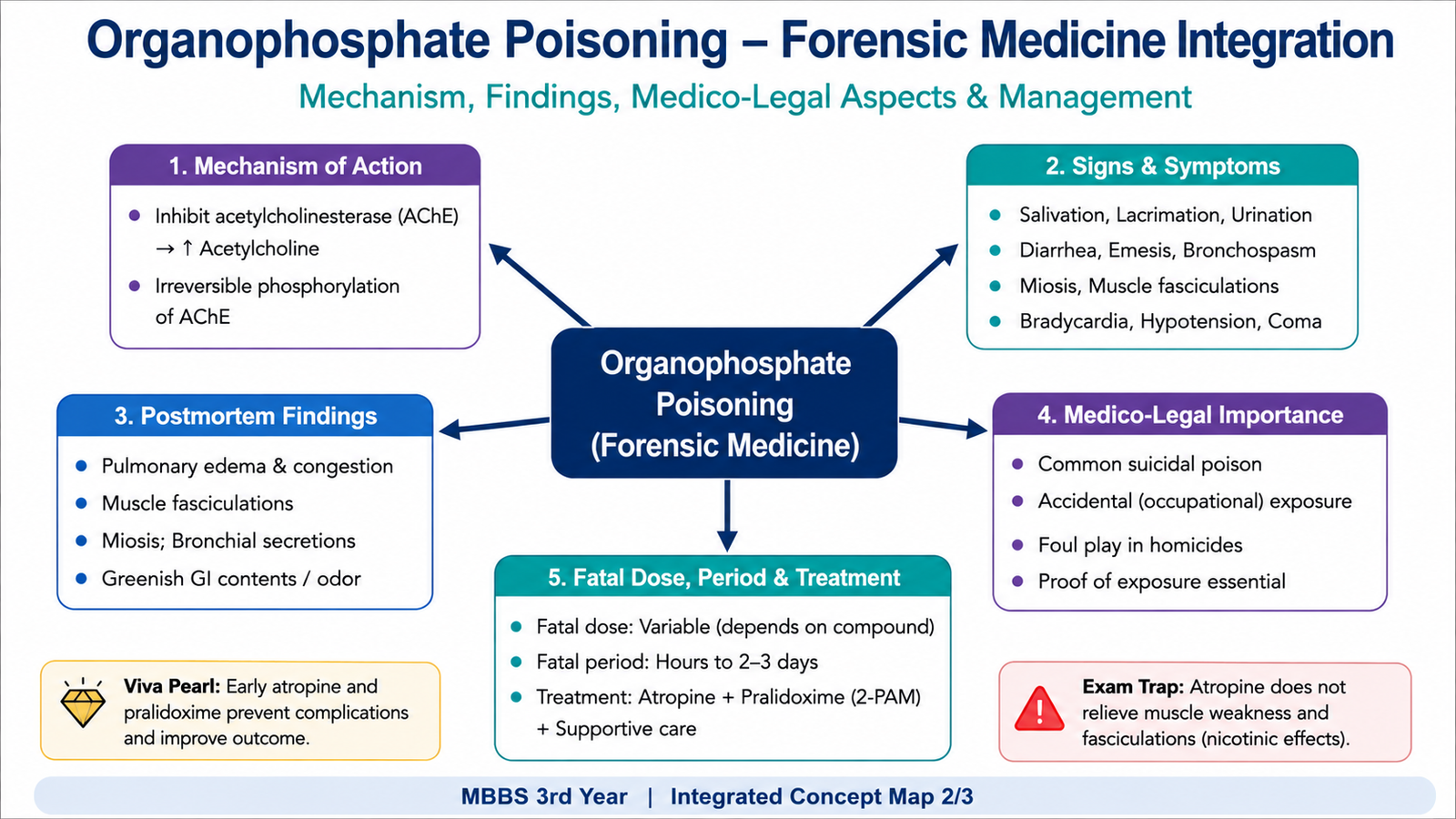
This chapter follows the supplied KMU learning outcomes. First understand how organophosphates inhibit acetylcholinesterase and produce cholinergic excess; treatment, nerve-agent prophylaxis and the forensic findings will then become much easier to remember.
Organophosphate, Nerve-Gas and Mushroom Poisoning
Infection and Inflammation Module — Pharmacology & Forensic Medicine
Topic Introduction
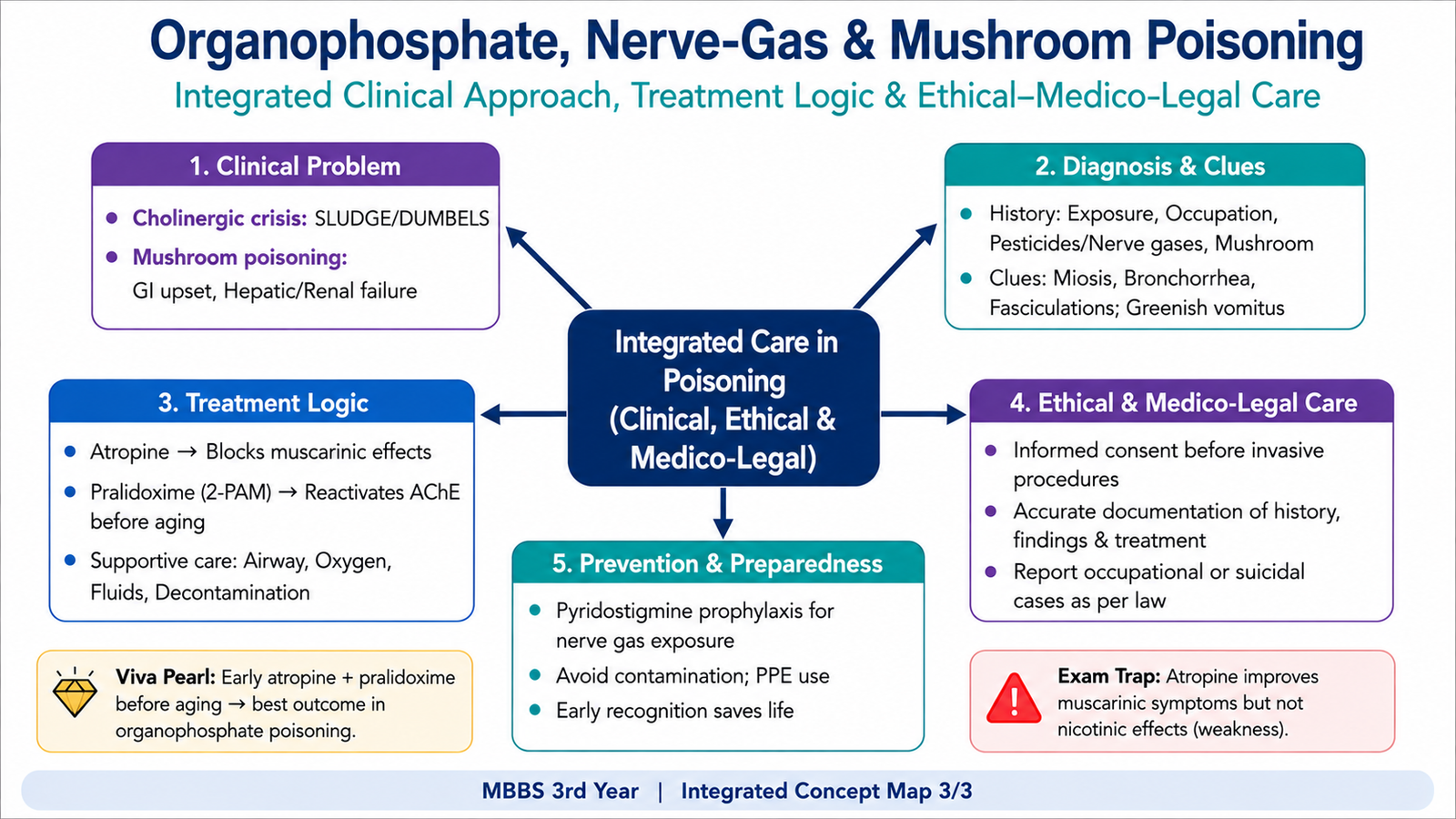
Organophosphate compounds are widely used chemicals that can cause severe poisoning by inhibiting acetylcholinesterase, the enzyme that normally terminates the action of acetylcholine. Acetylcholine therefore accumulates at muscarinic, nicotinic and central nervous system synapses, producing a characteristic cholinergic toxidrome. Certain highly toxic organophosphates have also been developed as nerve agents. Understanding the mechanism explains the clinical features and the rationale for atropine, oximes and selected prophylactic measures. This chapter also covers the important forensic findings and medico-legal significance of organophosphate poisoning, followed by the major manifestations and drug treatment principles of mushroom poisoning.
A. Organophosphate Compounds and Nerve Agents
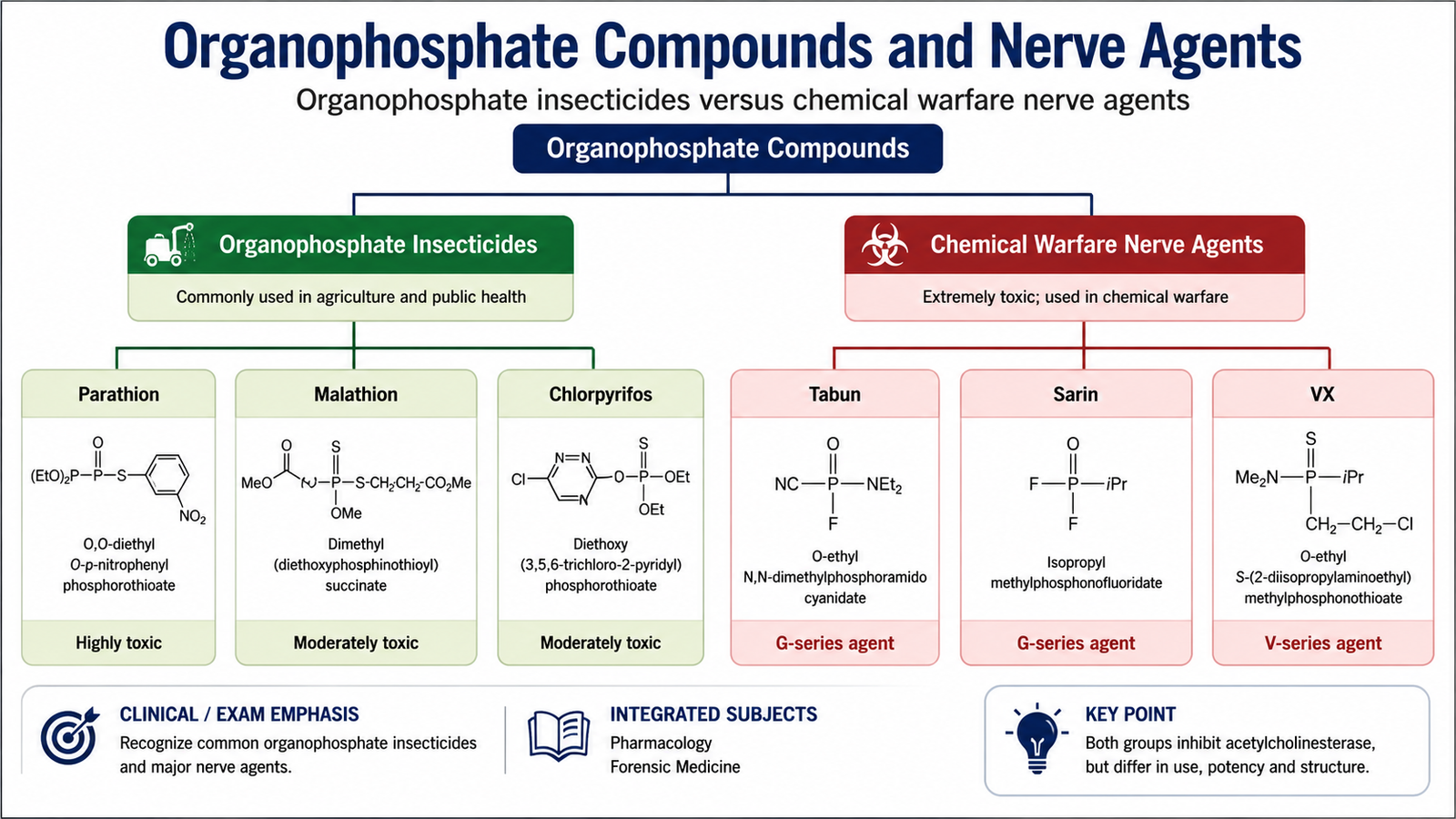
Organophosphates are phosphorus-containing compounds that inhibit cholinesterase enzymes. Many are used as agricultural insecticides, while some extremely potent compounds have been developed as chemical warfare nerve agents. Although individual compounds differ in toxicity and physical properties, their major toxic effect results from excessive cholinergic stimulation.
Major organophosphate compounds
Commonly encountered organophosphate insecticides include:
- Parathion
- Malathion
- Diazinon
- Chlorpyrifos
- Dichlorvos
- Dimethoate
These agents are especially important in toxicology because poisoning may occur after ingestion, inhalation or absorption through skin and mucous membranes. The clinical syndrome is primarily determined by inhibition of acetylcholinesterase rather than by the intended agricultural use of the compound.
Organophosphates used as nerve agents
Major organophosphate nerve agents include:
- Tabun (GA)
- Sarin (GB)
- Soman (GD)
- Cyclosarin (GF)
- VX
Nerve agents act through the same fundamental biochemical target as organophosphate insecticides—acetylcholinesterase—but they are exceptionally potent. Exposure can therefore produce rapid cholinergic toxicity with respiratory failure, seizures and death in severe cases.
B. Mechanism of Toxicity and the Importance of Aging
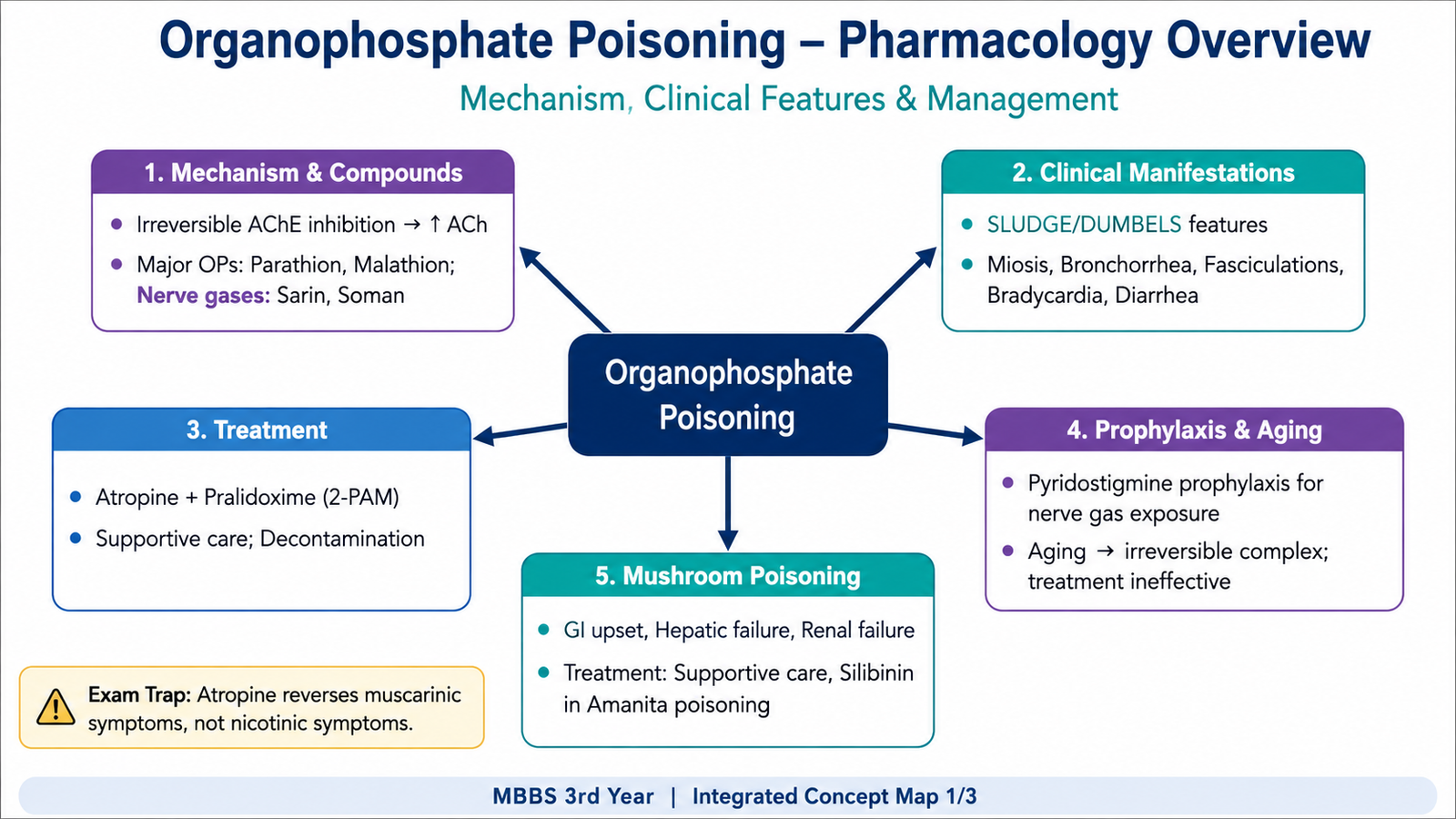
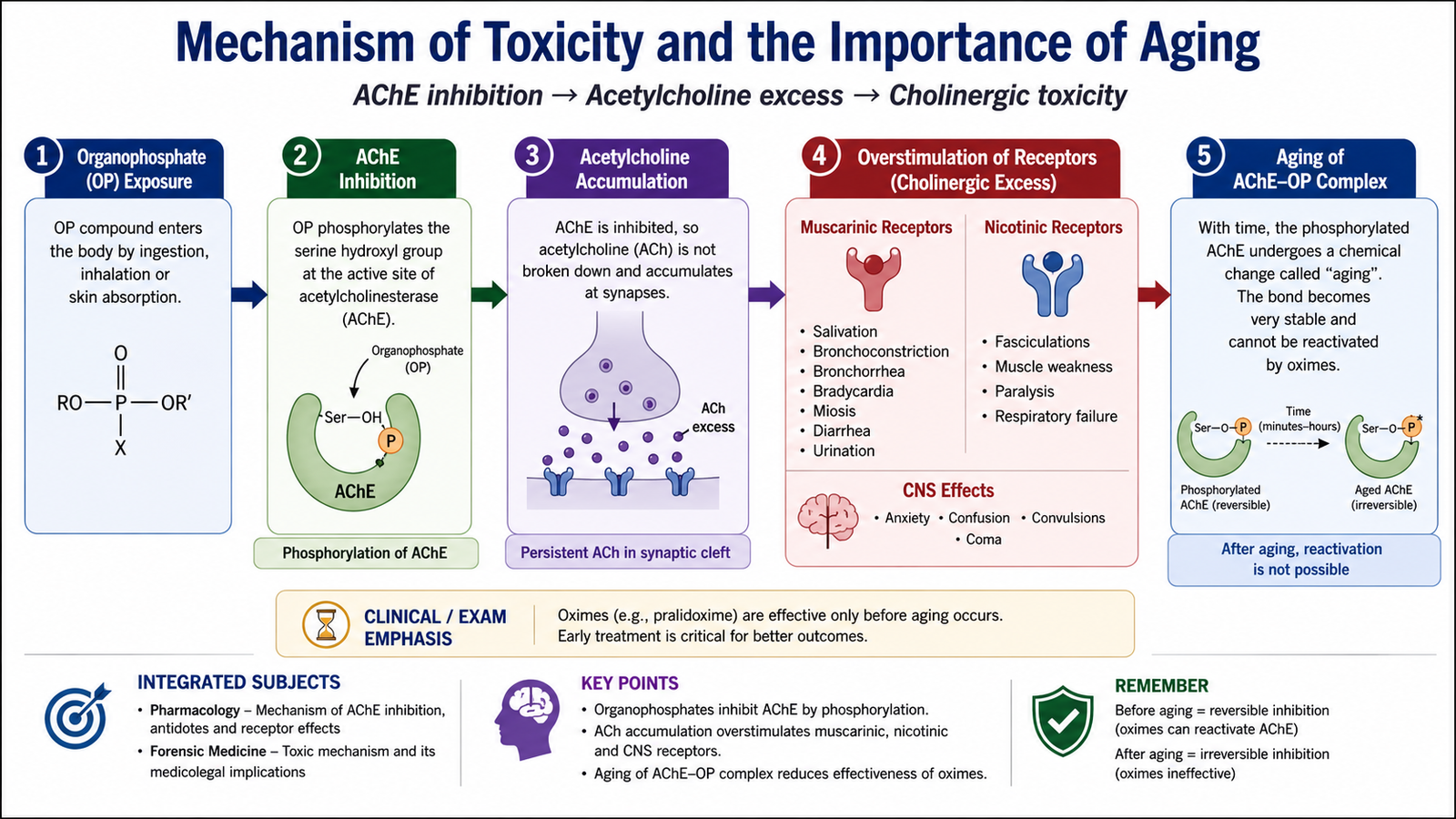
The central event in organophosphate poisoning is inhibition of acetylcholinesterase (AChE). Normally, AChE rapidly hydrolyses acetylcholine after it has transmitted a signal across a cholinergic synapse. Organophosphates phosphorylate the enzyme and prevent it from breaking down acetylcholine. Acetylcholine consequently accumulates wherever cholinergic neurotransmission occurs.
How enzyme inhibition produces toxicity
→ phosphorylation and inhibition of acetylcholinesterase
→ failure to hydrolyse acetylcholine
→ accumulation of acetylcholine at cholinergic synapses
→ excessive muscarinic, nicotinic and CNS stimulation
→ cholinergic manifestations and potentially respiratory failure
Excess acetylcholine stimulates muscarinic receptors in glands, smooth muscle, the eye and heart; nicotinic receptors at autonomic ganglia and neuromuscular junctions; and cholinergic pathways in the central nervous system. This explains why organophosphate poisoning affects several organ systems simultaneously.
Aging of the phosphorylated enzyme
After an organophosphate binds to acetylcholinesterase, the phosphorylated enzyme complex may undergo a time-dependent chemical change called aging. During aging, part of the organophosphate-enzyme complex is lost, making the remaining bond between the organophosphate and the enzyme much more stable.
This has major therapeutic importance. Oximes can reactivate phosphorylated acetylcholinesterase most effectively before substantial aging has occurred. Once the enzyme has aged, oxime-mediated reactivation becomes ineffective or markedly reduced. Early administration of an appropriate oxime is therefore important when clinically indicated.
C. Clinical Manifestations of Organophosphate Poisoning
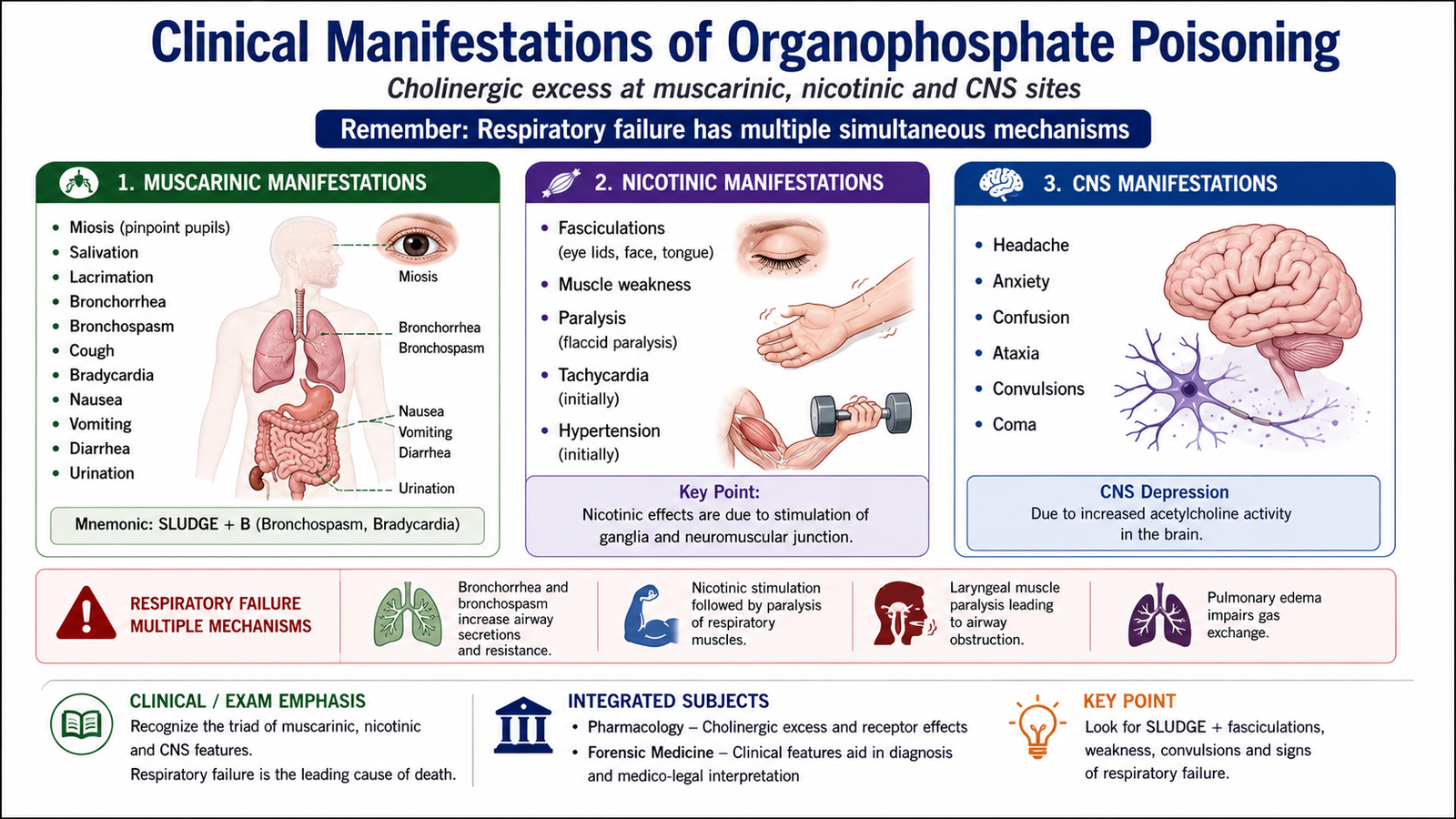
The manifestations of organophosphate poisoning are best understood by separating the effects of excessive acetylcholine into muscarinic, nicotinic and central nervous system effects. In severe poisoning these occur together, and respiratory failure is the major immediate danger.
Muscarinic manifestations
Muscarinic stimulation increases glandular secretion, contracts smooth muscle and alters parasympathetic control of the eye and heart. Important manifestations include:
- Miosis and visual disturbance
- Profuse salivation
- Lacrimation
- Sweating
- Bronchorrhea and excessive respiratory secretions
- Bronchospasm
- Bradycardia, although pulse rate may vary
- Abdominal cramps
- Nausea and vomiting
- Diarrhea
- Urinary urgency or incontinence
Bronchorrhea and bronchospasm are particularly dangerous because they interfere with ventilation and oxygenation.
Nicotinic manifestations
Excess acetylcholine at the neuromuscular junction initially causes excessive stimulation and later impaired neuromuscular transmission. Manifestations may include:
- Muscle fasciculations
- Muscle cramps
- Weakness
- Progressive paralysis in severe poisoning
- Respiratory muscle weakness
- Autonomic ganglionic effects that may contribute to cardiovascular instability
Central nervous system manifestations
- Anxiety or restlessness
- Confusion
- Ataxia or altered behaviour
- Convulsions in severe poisoning
- Depressed consciousness
- Coma
- Central respiratory depression
Why respiratory failure develops
Respiratory compromise is often multifactorial. Muscarinic stimulation causes bronchorrhea and bronchospasm; nicotinic toxicity causes respiratory muscle weakness or paralysis; and CNS toxicity may suppress central respiratory drive. These effects can occur simultaneously.
D. Treatment and Nerve-Agent Prophylaxis
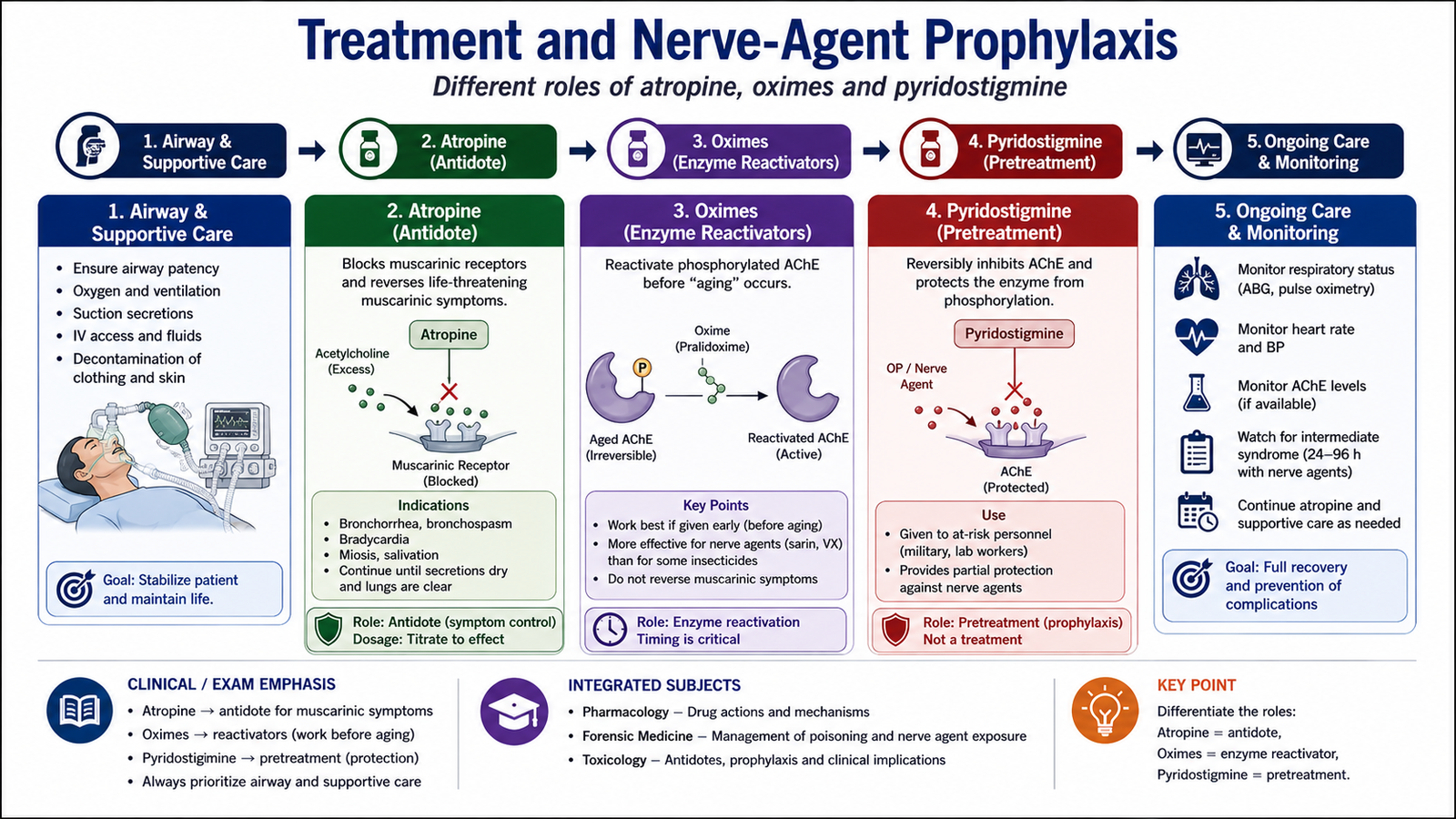
Treatment follows directly from the mechanism of poisoning. The immediate priorities are stabilization of breathing and circulation, reduction of further exposure, blockade of dangerous muscarinic effects and, when appropriate, reactivation of acetylcholinesterase before aging prevents meaningful reactivation.
Initial management
- Remove the patient from continuing exposure while protecting healthcare personnel from contamination.
- Assess and support the airway, breathing and circulation.
- Provide oxygen and ventilatory support when required.
- Remove contaminated clothing and perform appropriate external decontamination after dermal exposure.
- Control seizures when present.
Atropine
Atropine is a competitive antagonist at muscarinic acetylcholine receptors. It therefore blocks the effects of accumulated acetylcholine at muscarinic receptors.
→ muscarinic receptor blockade
→ reduced bronchial secretions and bronchoconstriction
→ improvement of dangerous muscarinic manifestations
Atropine does not remove organophosphate from acetylcholinesterase and does not directly reverse nicotinic neuromuscular paralysis. Its major life-saving value is control of excessive muscarinic activity, particularly respiratory secretions and bronchoconstriction.
Cholinesterase-regenerating compounds
Oximes can reactivate phosphorylated acetylcholinesterase when administered before the enzyme has undergone substantial aging. Important cholinesterase-regenerating compounds include:
- Pralidoxime (2-PAM)
- Obidoxime
Oximes are particularly important because reactivation of acetylcholinesterase can improve effects related to neuromuscular transmission that atropine alone cannot correct. Their effectiveness depends on the responsible organophosphate and the extent of aging.
Pyridostigmine prophylaxis in anticipated nerve-agent exposure
Pyridostigmine is a reversible acetylcholinesterase inhibitor that can be used as pretreatment in specific situations where exposure to certain nerve agents is anticipated. It reversibly carbamylates a proportion of acetylcholinesterase molecules and temporarily protects these enzyme molecules from irreversible phosphorylation by the nerve agent.
→ reversible carbamylation of some acetylcholinesterase
→ temporary protection of these enzyme molecules from organophosphate binding
→ spontaneous decarbamylation later
→ recovery of functional acetylcholinesterase
Pyridostigmine is therefore a pretreatment measure rather than the definitive treatment of established nerve-agent poisoning. If exposure occurs, standard emergency treatment including atropine, an appropriate oxime and supportive management is still required.
E. Forensic Findings and Medico-Legal Importance
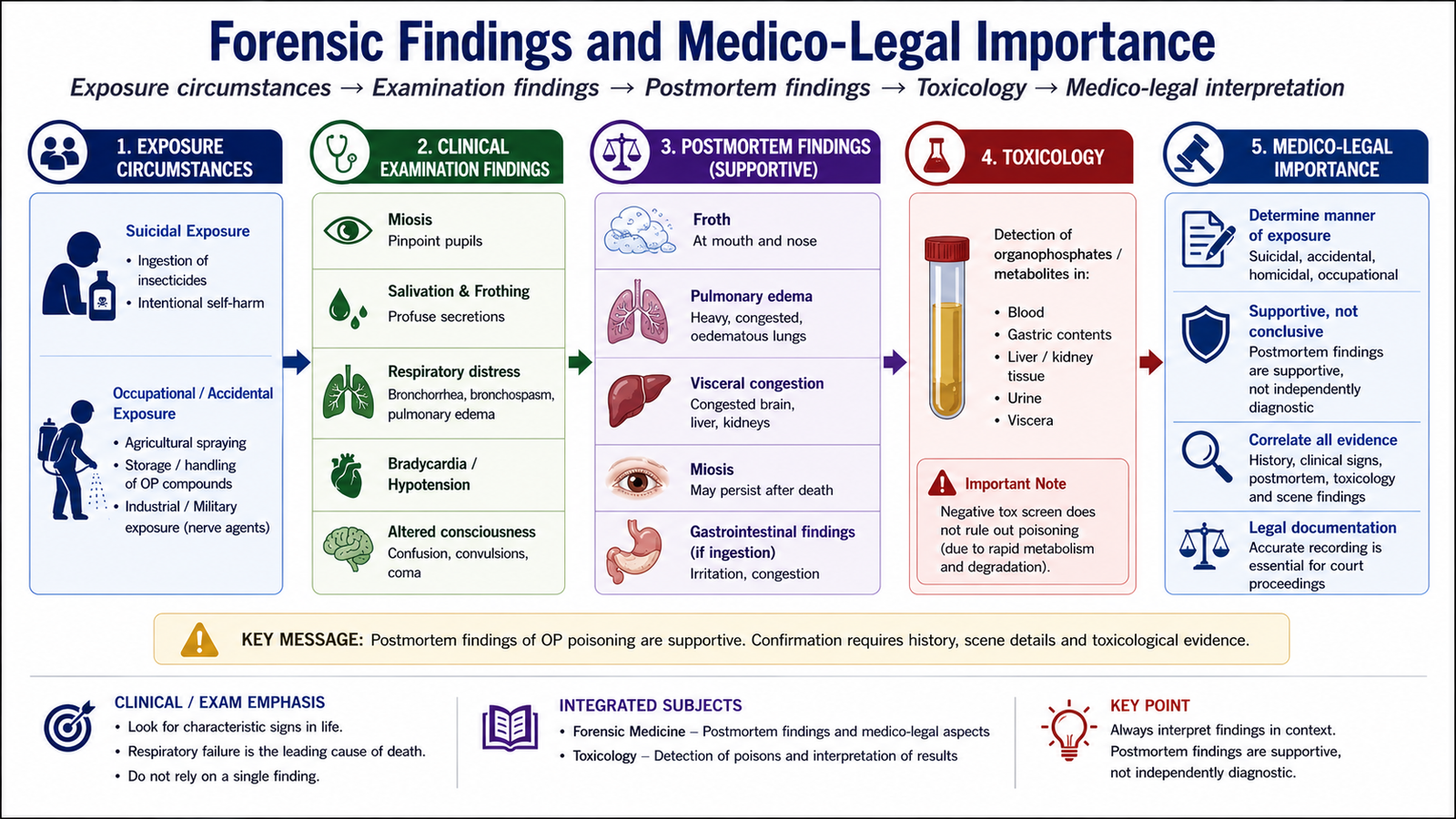
Organophosphate poisoning has important medico-legal significance because these compounds are readily encountered in agricultural and domestic environments and may be involved in accidental, suicidal or occupational exposures. The forensic assessment combines the history and circumstances with clinical findings, postmortem examination and appropriate toxicological evidence.
Characteristic postmortem findings
Postmortem findings largely reflect severe cholinergic activity, respiratory secretions, hypoxia and pulmonary congestion. Findings may include:
- Fine froth around the mouth and nostrils due to excessive respiratory secretions
- Congested and edematous lungs
- Abundant fluid or frothy secretions in the respiratory passages
- General visceral congestion
- Miosis may be present
- A characteristic chemical or solvent-like odor may sometimes be noticed with particular preparations, but odor is not a reliable diagnostic finding
These findings are supportive rather than individually specific. The interpretation should therefore consider the circumstances of death and toxicological evidence rather than relying on a single postmortem sign.
Medico-legal importance
- Suicidal poisoning: possible because agricultural preparations may be accessible.
- Accidental poisoning: may occur through improper handling, storage or unintentional exposure.
- Occupational exposure: possible during agricultural or industrial handling.
- Homicidal use: possible but generally less common than accidental or suicidal circumstances.
- Chemical warfare or terrorism: nerve agents have major forensic and security relevance.
Fatal dose and fatal period
There is no single universally applicable fatal dose for all organophosphates. Toxicity varies greatly according to the particular compound, formulation, concentration, route of exposure, amount absorbed and the speed of treatment. Highly potent nerve agents cannot be equated with ordinary agricultural preparations.
Similarly, the fatal period is variable. Severe untreated poisoning may progress rapidly because respiratory failure can develop from bronchorrhea, bronchospasm, respiratory muscle paralysis and central respiratory depression. Survival depends strongly on the severity of exposure and the promptness of airway support, atropine and other indicated treatment.
For forensic interpretation, a compound-specific numerical fatal dose or fatal period should therefore not be applied to the whole organophosphate group without identifying the agent concerned.
F. Clinical Manifestations of Mushroom Poisoning
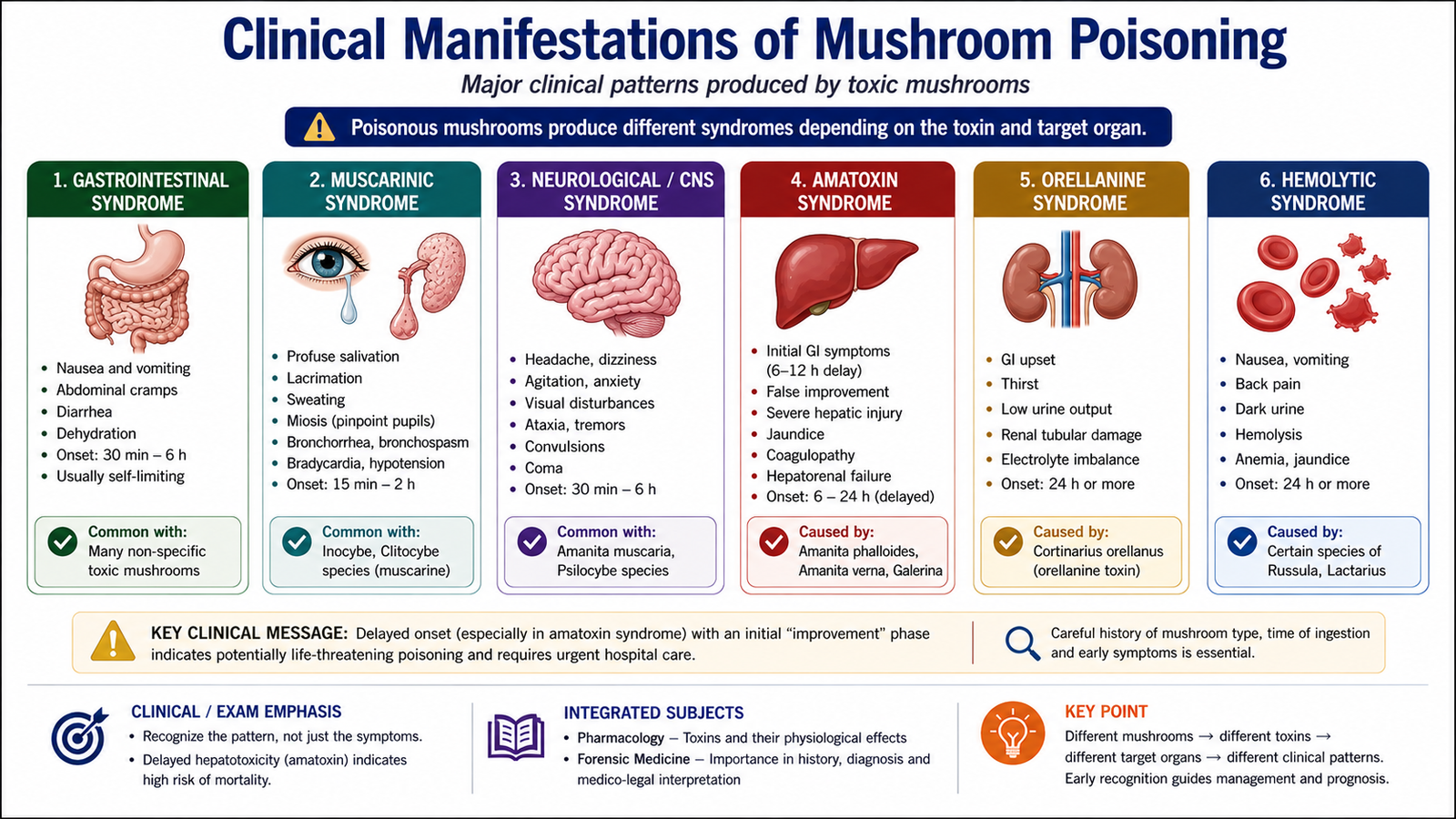
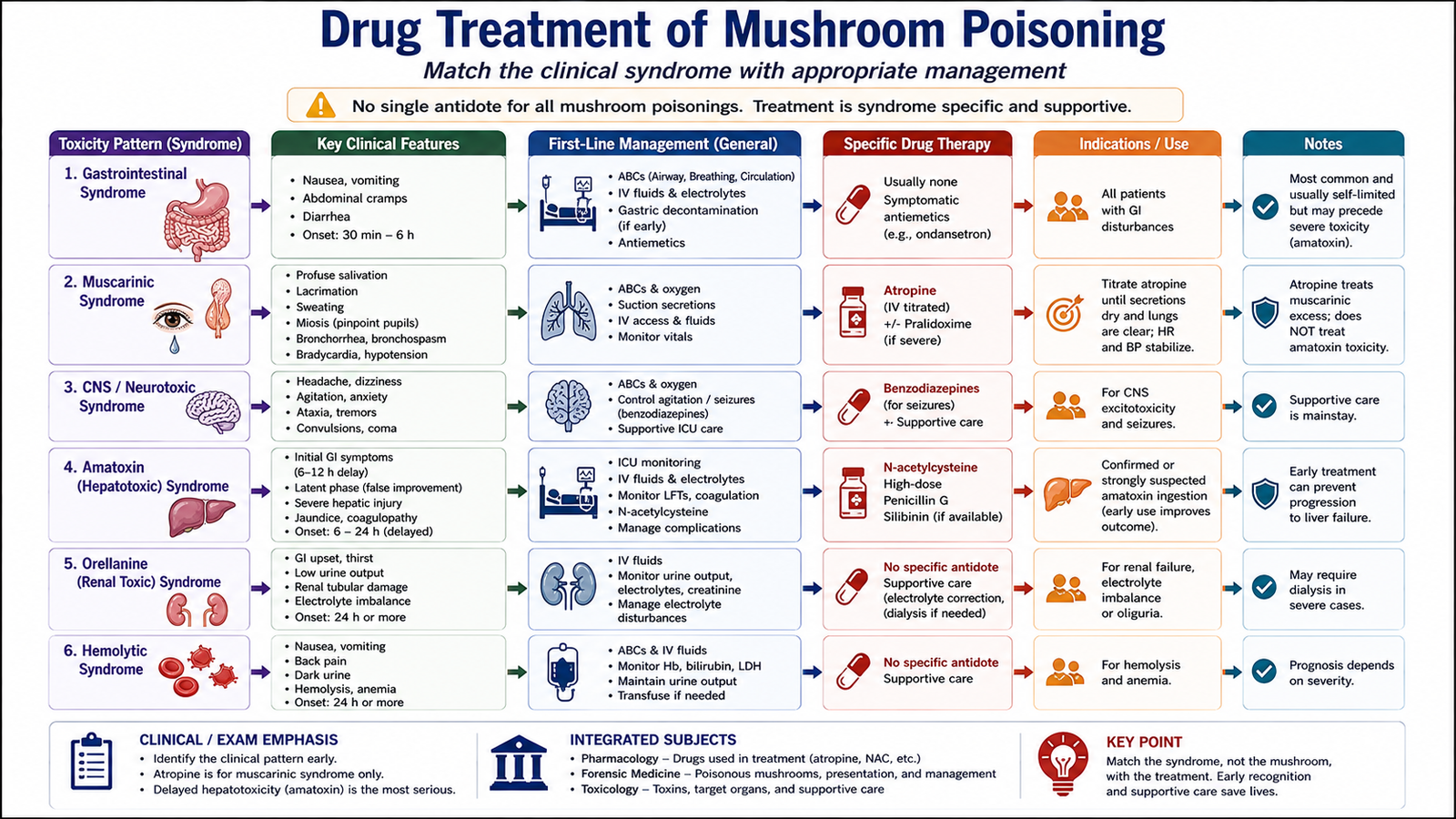
Mushroom poisoning is not a single toxic syndrome. Different mushrooms contain different toxins, so the manifestations vary according to the species and toxin involved. For undergraduate understanding, the most important patterns are gastrointestinal toxicity, muscarinic cholinergic toxicity, central nervous system effects and delayed serious organ toxicity.
Gastrointestinal manifestations
Many toxic mushrooms produce nausea, vomiting, abdominal pain and diarrhea. Fluid loss may lead to dehydration and electrolyte disturbance when symptoms are severe.
Muscarinic mushroom poisoning
Some mushrooms contain muscarine, which directly stimulates muscarinic acetylcholine receptors. The resulting syndrome resembles the muscarinic component of organophosphate poisoning:
- Profuse salivation
- Lacrimation
- Sweating
- Miosis
- Abdominal cramps
- Vomiting and diarrhea
- Bronchial secretions and bronchospasm
- Bradycardia may occur
The mechanism differs from organophosphate poisoning: muscarine stimulates muscarinic receptors directly, whereas organophosphates cause acetylcholine accumulation by inhibiting acetylcholinesterase.
Central nervous system manifestations
Certain mushroom toxins can produce neurological or behavioural manifestations such as confusion, agitation, altered perception, hallucinations, drowsiness or seizures. The precise clinical picture depends on the toxin involved.
Delayed severe toxicity
Some mushrooms, particularly those containing amatoxins, may initially produce gastrointestinal symptoms followed by a period of apparent improvement. Serious hepatic injury can then develop. This delayed pattern is important because early improvement does not necessarily indicate recovery.
G. Drug Treatment of Mushroom Poisoning
Treatment depends on the clinical syndrome produced by the particular mushroom toxin. Because mushrooms contain different toxic substances, there is no single antidote that treats every type of mushroom poisoning. Initial management therefore emphasizes stabilization and supportive care while the dominant toxic syndrome is identified.
Supportive management
- Assess airway, breathing and circulation.
- Correct dehydration and electrolyte disturbance caused by vomiting or diarrhea.
- Provide symptomatic and supportive treatment according to the manifestations.
- Monitor carefully when severe systemic toxicity is suspected.
Atropine for muscarinic mushroom poisoning
When the mushroom toxin produces a clinically important muscarinic cholinergic syndrome, atropine is pharmacologically appropriate because it competitively blocks muscarinic receptors.
→ direct muscarinic receptor stimulation
→ salivation, sweating, bronchial secretions, abdominal symptoms and bradycardia
→ atropine blocks muscarinic receptors
→ reduction of clinically important muscarinic manifestations
Unlike organophosphate poisoning, an oxime is not required simply because muscarinic symptoms are present: muscarine does not produce toxicity by phosphorylating acetylcholinesterase.
Severe toxin-specific poisoning
Serious poisoning such as suspected amatoxin exposure requires urgent specialist management and intensive supportive care because progressive hepatic injury may occur. Treatment is guided by the toxin and clinical condition rather than by assuming that all mushroom poisonings are cholinergic.
Integrated Mechanism Flow
↓
2. Acetylcholinesterase becomes phosphorylated and inhibited
↓
3. Acetylcholine accumulates at muscarinic, nicotinic and CNS synapses
↓
4. Secretions, bronchospasm, fasciculations, weakness and neurological manifestations develop
↓
5. Severe poisoning may cause respiratory failure
↓
6. Atropine blocks muscarinic effects, while an oxime may reactivate acetylcholinesterase before aging
↓
7. After aging, the phosphorylated enzyme becomes much less responsive to oxime reactivation
Important Comparison
| Feature | Organophosphate Poisoning | Muscarinic Mushroom Poisoning |
|---|---|---|
| Primary mechanism | Acetylcholinesterase inhibition | Direct muscarinic receptor stimulation |
| Muscarinic features | Prominent | Prominent |
| Nicotinic weakness | May be important | Not explained by muscarinic receptor stimulation |
| Atropine | Blocks muscarinic manifestations | Blocks muscarinic manifestations |
| Oxime rationale | May reactivate phosphorylated AChE before aging | No phosphorylated AChE to reactivate |
⭐ AIM High-Yield Review
- Organophosphates produce toxicity mainly by phosphorylating and inhibiting acetylcholinesterase.
- Acetylcholine accumulation produces muscarinic, nicotinic and CNS manifestations.
- ⭐ Bronchorrhea, bronchospasm, respiratory muscle weakness and CNS depression can combine to produce fatal respiratory failure.
- Major nerve agents include tabun, sarin, soman, cyclosarin and VX.
- Atropine competitively blocks muscarinic receptors and is especially important for controlling dangerous respiratory secretions and bronchoconstriction.
- Pralidoxime is a cholinesterase-regenerating oxime; obidoxime is another oxime.
- ⭐ Oxime reactivation is most useful before aging of the phosphorylated acetylcholinesterase complex.
- Pyridostigmine may be used as pretreatment in selected anticipated nerve-agent exposures because reversible carbamylation temporarily protects some acetylcholinesterase molecules.
- Pyridostigmine pretreatment does not replace emergency treatment after nerve-agent exposure.
- Postmortem organophosphate findings commonly reflect excessive secretions and pulmonary congestion but are not individually specific.
- There is no single universally valid fatal dose or fatal period for the entire organophosphate group because toxicity varies markedly between compounds and exposures.
- Mushroom poisoning can produce gastrointestinal, muscarinic, neurological or delayed systemic toxicity depending on the toxin.
- Muscarine causes toxicity by directly stimulating muscarinic receptors, not by inhibiting acetylcholinesterase.
- Atropine is appropriate for clinically important muscarinic mushroom poisoning.
- ⭐ Delayed severe hepatic toxicity after mushroom ingestion should raise concern for a serious toxin such as an amatoxin.