
This chapter follows the KMU learning outcomes for rigor mortis, algor mortis and estimation of time since death. First understand how the postmortem changes develop and why they occur; then use the high-yield review for revision.
Topic 10 — Rigor Mortis, Algor Mortis and Estimation of Time Since Death
This topic explains two important early postmortem changes—stiffening of muscles and cooling of the body—and shows how these findings are interpreted cautiously when estimating the time since death.
Topic Introduction
After death, the body does not remain physically unchanged. Some changes begin within a relatively short period and can help a forensic examiner understand what has happened since death. Two of the most important early changes are rigor mortis, which is postmortem stiffening of muscles, and algor mortis, which is the gradual cooling of the body. Neither change acts as an exact clock. Their development depends on biological and environmental factors. Therefore, the time since death is estimated by combining the observed findings with the circumstances in which the body was found. In this chapter, you will learn the mechanism, timing, special features, modifying factors, mimics and medico-legal importance of rigor mortis, along with body cooling, temperature recording, the postmortem cooling curve and basic time-since-death calculations.
A. Rigor Mortis: Definition and Core Concept
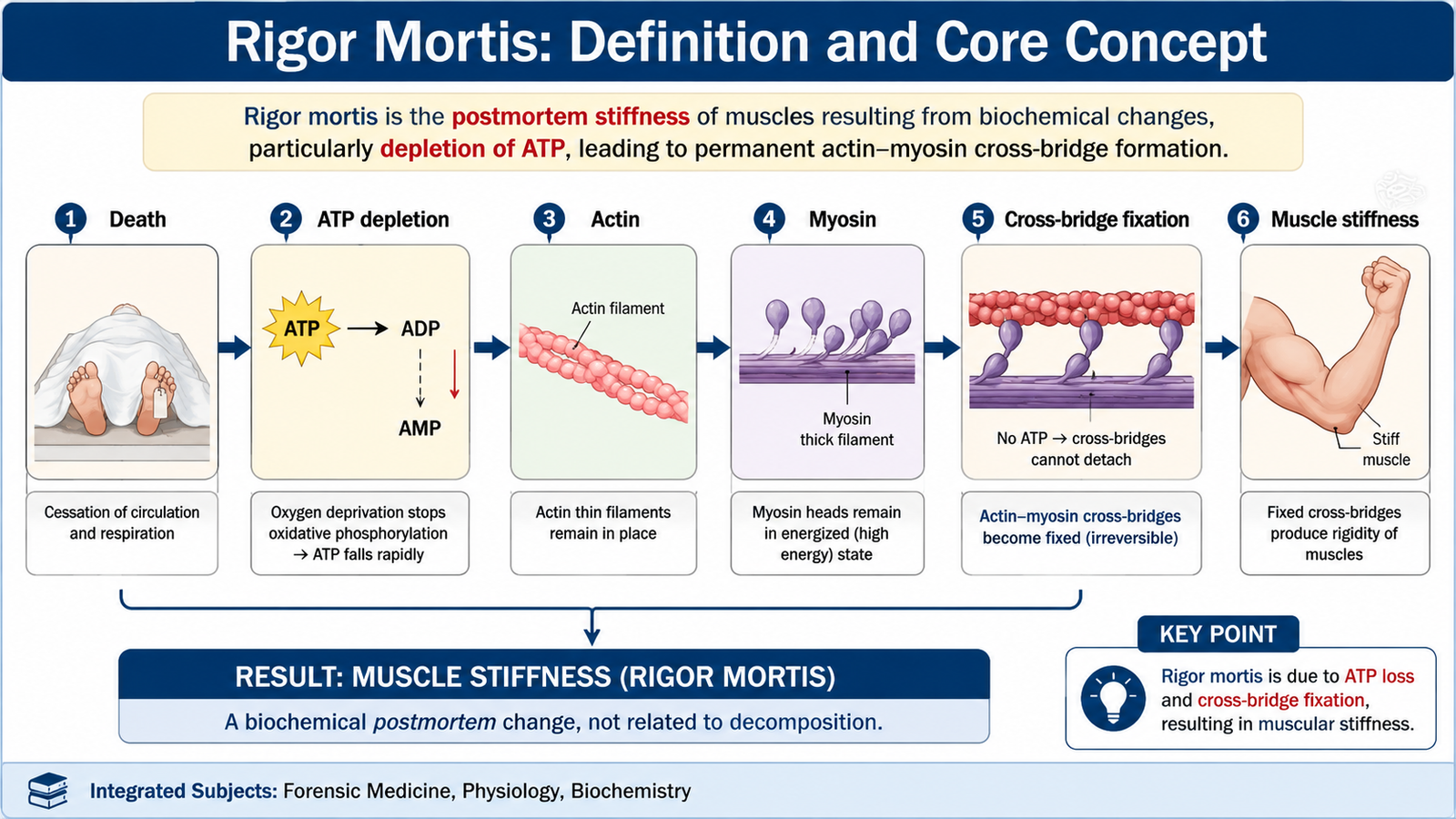
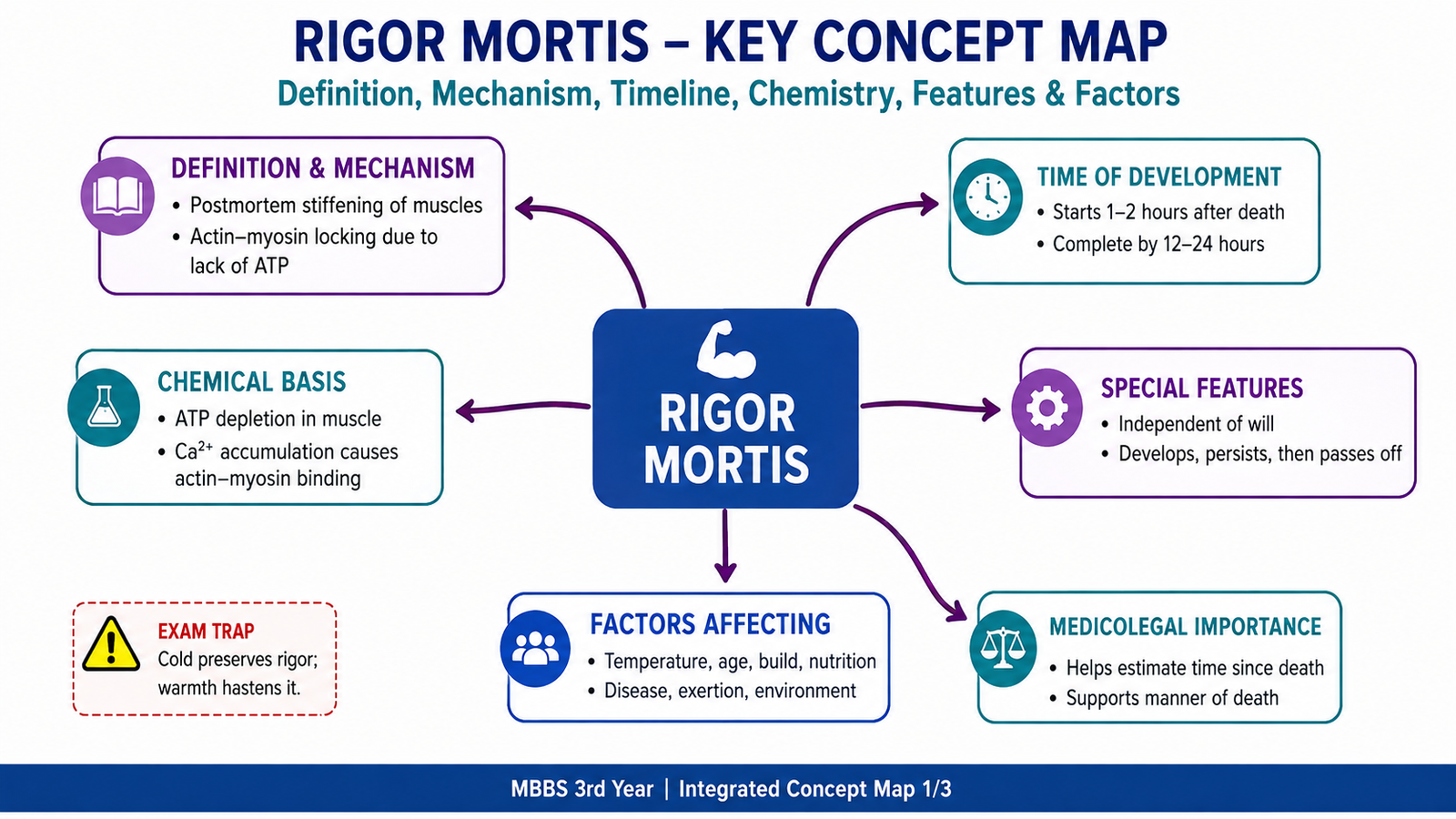
Rigor mortis is the postmortem stiffening of muscles that develops after an initial period of muscular relaxation following death. It is a temporary phenomenon. The muscles become firm and joints become resistant to passive movement, but the stiffness later disappears as decomposition progresses.
Rigor mortis is important because it reflects definite biochemical changes taking place in dead muscle. It is not caused by continued nervous activity or active contraction under normal physiological control. Instead, it results from failure of the energy-dependent processes that normally allow actin and myosin to separate after muscle contraction.
Why stiffness develops after an initial relaxation
Immediately after death, voluntary and reflex muscular activity ceases and the muscles are initially relaxed. During this early period, some ATP is still present within muscle cells. As ATP becomes depleted, calcium control is lost and actin and myosin remain attached. This produces the characteristic stiffening of rigor mortis.
B. Mechanism and Chemical Basis of Rigor Mortis
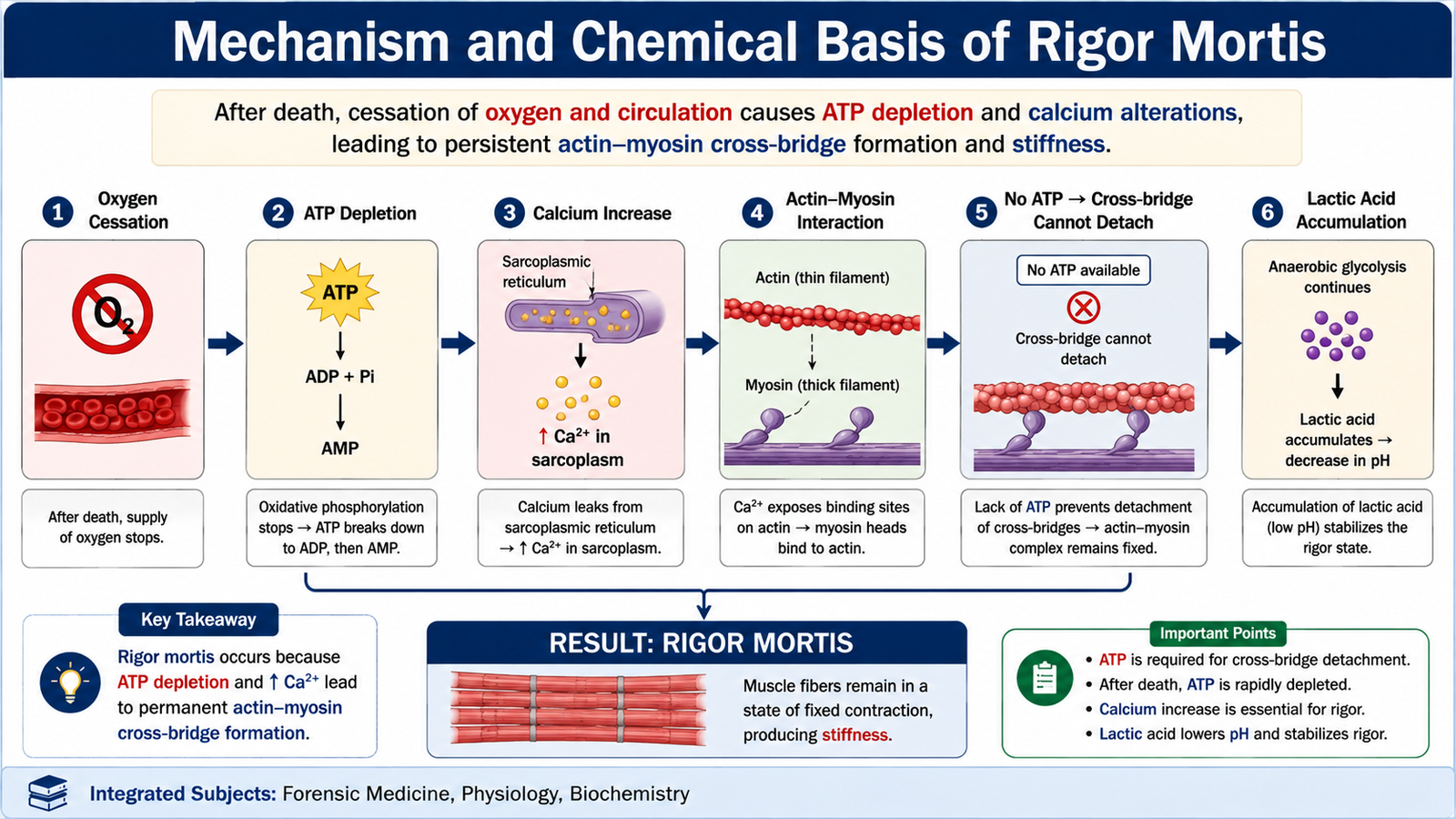
The chemical basis of rigor mortis is mainly the progressive depletion of adenosine triphosphate (ATP) in skeletal muscle after death. In living muscle, contraction occurs when actin and myosin interact. ATP is then required for the myosin head to detach from actin so that the muscle fibre can relax. After death, ATP is no longer continuously regenerated.
Role of ATP
When circulation and respiration stop, oxygen is no longer delivered to muscle. Oxidative phosphorylation ceases, so ATP production falls. For a short time, anaerobic glycolysis may continue using stored glycogen, but this is limited. As ATP is consumed and cannot be replaced, the actin–myosin cross-bridges become fixed.
Role of calcium
After death, cell membranes and the sarcoplasmic reticulum gradually lose their ability to maintain normal calcium gradients. Calcium enters the sarcoplasm and promotes interaction between actin and myosin. Because ATP is deficient, the cross-bridges cannot detach efficiently. The muscle therefore remains in a shortened and stiffened state.
Role of lactic acid and falling pH
Residual anaerobic metabolism produces lactic acid, lowering the pH of muscle. This accompanies the biochemical changes of rigor mortis. However, the key event responsible for persistent stiffness is depletion of ATP and fixation of the contractile proteins.
Death → oxygen supply stops → ATP production fails → calcium accumulates in muscle cytoplasm → actin and myosin interact → ATP becomes insufficient for cross-bridge separation → muscle becomes stiff.
C. Development, Sequence and Special Features of Rigor Mortis
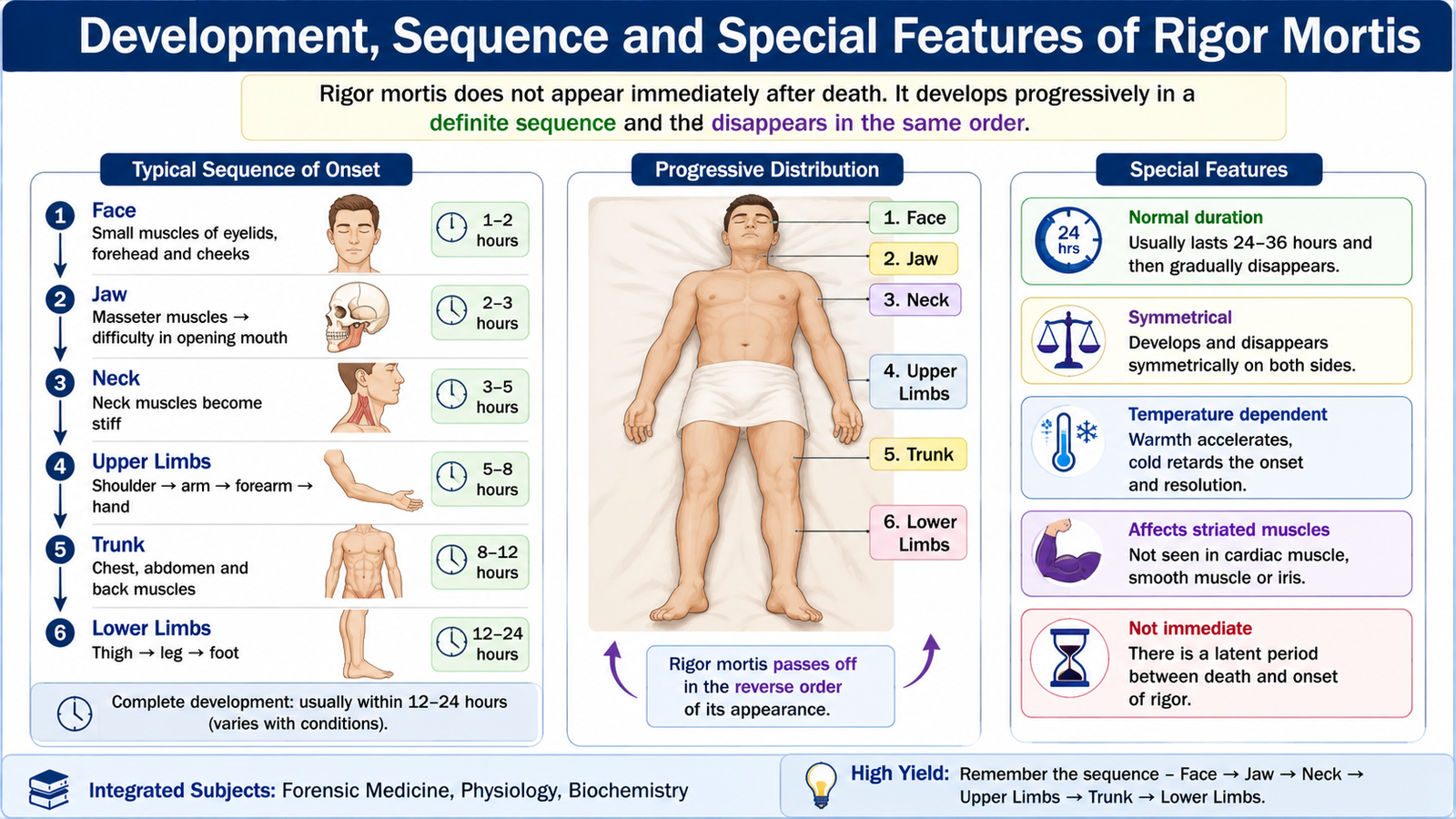
Rigor mortis does not affect the whole body simultaneously. It usually appears in a recognizable sequence and later disappears in approximately the same order. Its timing is variable, so the examiner should never interpret a single time value as absolute.
Usual sequence
Rigor is generally noticed first in smaller muscle groups and then progresses to larger muscles. It is commonly described as appearing first in muscles of the face and jaw, followed by the neck, upper limbs, trunk and lower limbs. Resolution subsequently follows a broadly similar progression.
This sequence is traditionally described according to Nysten’s law. The practical importance is not the memorization of a rigid timetable, but recognition that rigor develops progressively rather than appearing everywhere at once.
Time consumed in development
Under ordinary conditions, rigor mortis begins after the initial period of muscular relaxation, becomes progressively established over the next several hours, remains for a variable period, and then disappears as decomposition breaks down the muscle proteins. The exact onset, completion and duration vary with climate, body condition, activity before death and other factors.
Important special features
- Rigor affects both voluntary and involuntary muscles.
- It develops after death rather than being a continuation of normal physiological contraction.
- Once fully established, forceful breaking of rigor at a joint does not normally cause that rigor to re-form to the same degree in that muscle group.
- It is a temporary postmortem change and disappears with decomposition.
- Its rate of development and duration are influenced by both internal and external factors.
D. Factors Affecting Rigor Mortis
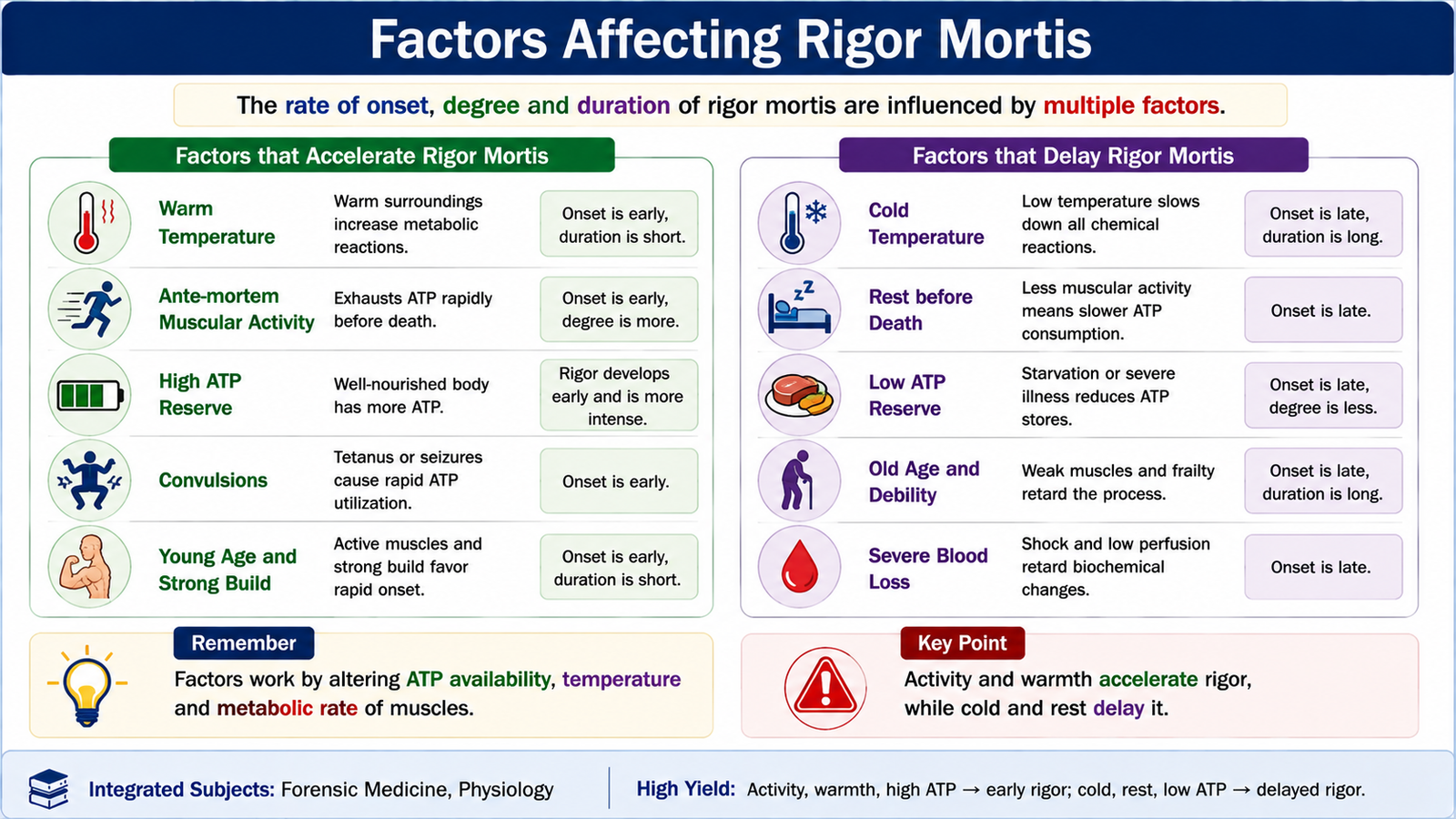
The rate at which rigor develops depends largely on how quickly muscle energy stores are exhausted and how quickly postmortem biochemical reactions occur. Conditions that increase muscular activity before death or accelerate chemical reactions tend to make rigor appear earlier. Conditions that conserve energy stores or slow chemical reactions tend to delay it.
Temperature
Warm environmental conditions generally accelerate postmortem biochemical reactions and decomposition. As a result, rigor tends to develop and pass more rapidly. Cold conditions slow these processes, so rigor may develop more slowly and persist longer.
Muscular activity before death
Severe exertion, struggling or convulsions may deplete muscular glycogen and ATP reserves before death. Because less energy reserve remains, ATP falls more rapidly after death and rigor may appear sooner.
Age and muscular condition
Differences in muscle mass and energy reserves can alter the pattern and intensity of rigor. A well-developed muscular body may show pronounced rigor, whereas rigor may be less marked in persons with very little muscle mass.
Cause and circumstances of death
Deaths associated with intense muscular activity may produce earlier rigor because ATP reserves have already been reduced. Conversely, circumstances in which muscles have not been extensively active before death may allow a relatively slower progression.
| Factor | Effect on rigor | Reason |
|---|---|---|
| High temperature | Usually faster onset and shorter duration | Chemical reactions and decomposition are accelerated |
| Low temperature | Usually delayed and prolonged | Biochemical reactions are slowed |
| Severe exercise or convulsions | Earlier onset | ATP and glycogen reserves are already reduced |
E. Conditions Simulating Rigor Mortis and Its Confirmation
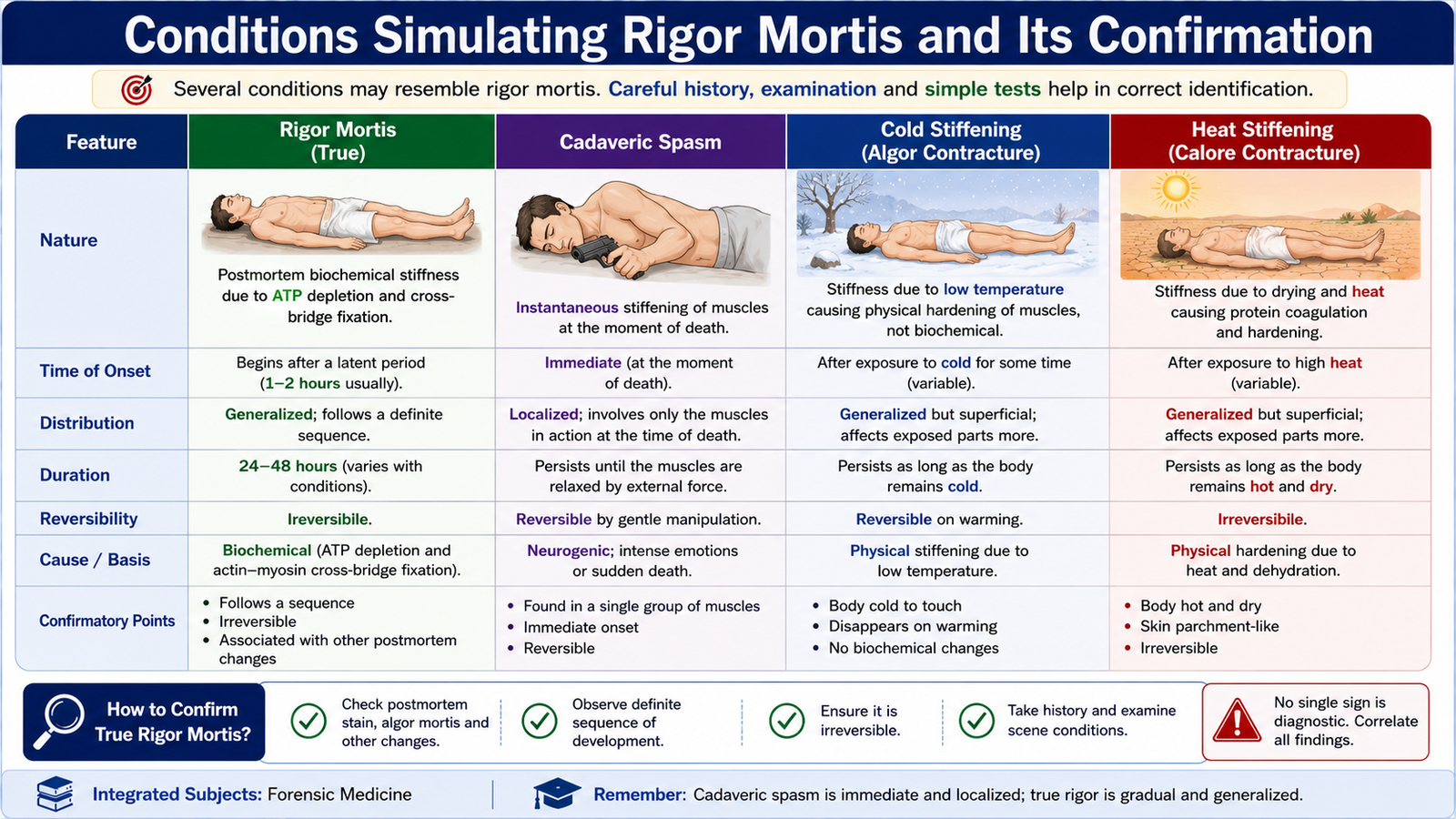
Not every stiff dead body is showing true rigor mortis. Some conditions can produce muscular rigidity or apparent stiffness and may therefore mimic rigor. Distinguishing them is important because incorrect identification may lead to a wrong interpretation of the postmortem interval.
Cadaveric spasm
Cadaveric spasm is an uncommon immediate stiffening of a group of voluntary muscles occurring at the moment of death, without the usual stage of primary muscular relaxation. It is classically associated with intense emotional or physical activity immediately before death. Unlike ordinary rigor mortis, it is localized and immediate.
Cold stiffening
Exposure of a body to very low temperature may cause tissues and body fat to become firm, producing apparent stiffness. This is a physical effect of cooling rather than the biochemical actin–myosin fixation of true rigor mortis. The stiffness may disappear as the body is warmed, after which genuine rigor may be assessed according to the postmortem state.
Heat stiffening
Exposure to intense heat can coagulate muscle proteins and produce marked stiffness. This is not true rigor mortis. Heat-related shortening of muscles can produce a characteristic flexed posture because flexor muscles are generally stronger than extensors.
Procedure for confirmation
Confirmation is based mainly on careful physical examination and interpretation of the circumstances. The examiner assesses whether stiffness is present at multiple joints, whether its distribution follows the expected postmortem pattern, whether environmental cold or heat could explain the stiffness, and whether the finding is localized or generalized.
A joint may be moved carefully to determine the character of resistance. If established rigor is forcibly broken, the resistance is lost at that joint and does not ordinarily return to the same degree. This helps distinguish true postmortem rigidity from some reversible forms of apparent stiffness.
| Condition | Key feature | Difference from rigor mortis |
|---|---|---|
| Cadaveric spasm | Immediate, localized stiffening | No preceding primary relaxation in affected muscles |
| Cold stiffening | Body becomes firm in severe cold | Physical effect of low temperature; may reverse on warming |
| Heat stiffening | Protein coagulation due to intense heat | Thermal injury rather than ATP-depletion mechanism |
F. Medico-Legal Importance of Rigor Mortis
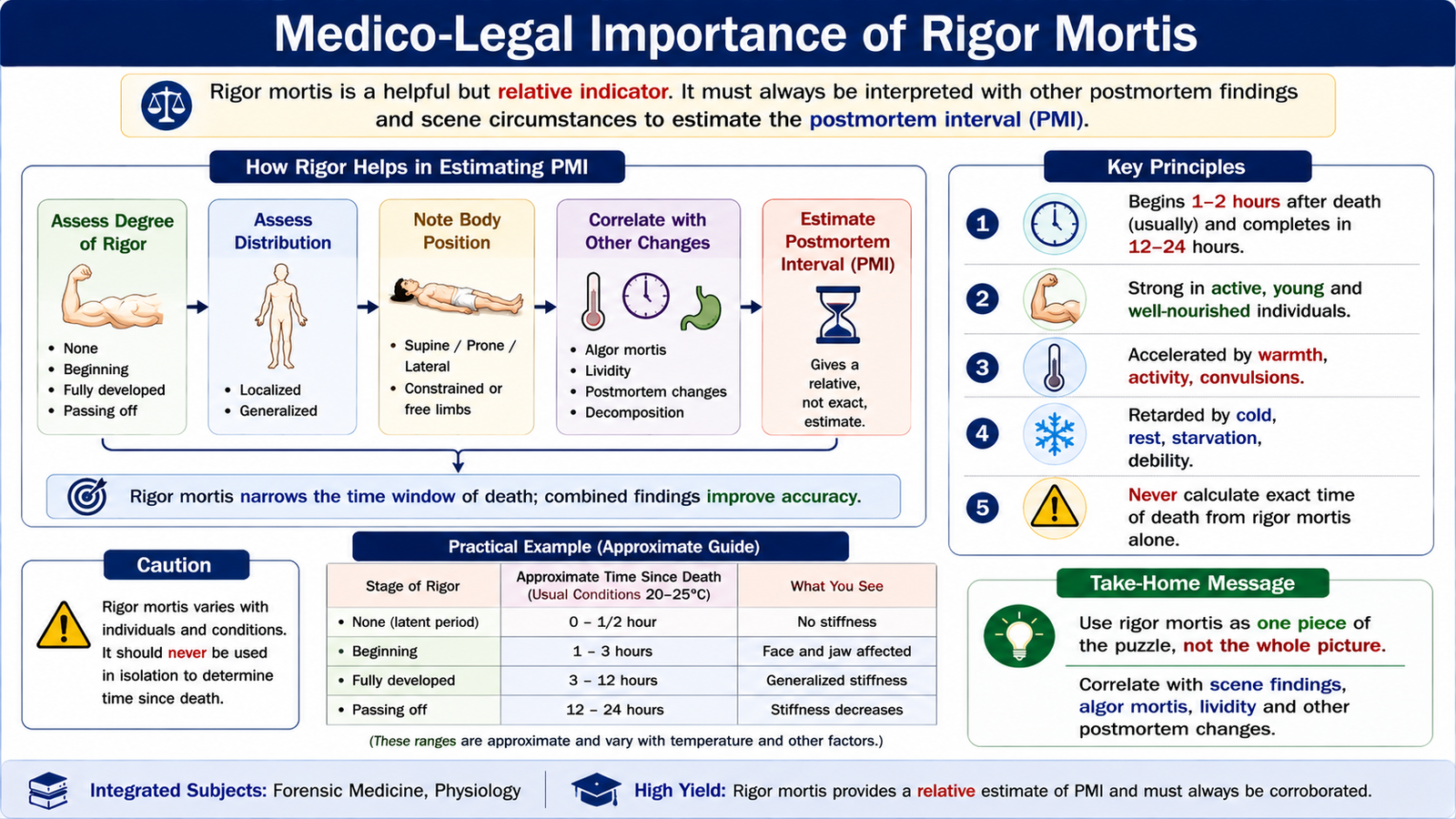
Rigor mortis has medico-legal value because it confirms that postmortem biochemical changes have occurred and can contribute to an estimate of the time since death. Its interpretation must remain cautious because the rate of onset and disappearance varies considerably.
Estimation of time since death
The distribution and degree of rigor can help place death within a broad postmortem interval. For example, partial involvement may suggest that rigor is developing, whereas generalized stiffness may suggest that it has become established. Absence of rigor may indicate that it has not yet developed or that it has already passed. Therefore, absence alone cannot distinguish a very recent death from a later stage after rigor has disappeared.
Possible information about movement of the body
The position in which rigor is established may sometimes help the examiner assess whether the body could have been moved after death. However, such interpretation must be correlated with lividity, scene findings and other postmortem changes rather than relying on rigor alone.
Need for cautious interpretation
Rigor is influenced by temperature, muscular activity, body condition and the circumstances of death. Consequently, it is an estimating tool, not a precise clock. Medico-legal conclusions should be based on the combined evidence.
G. Algor Mortis: Cooling of the Dead Body
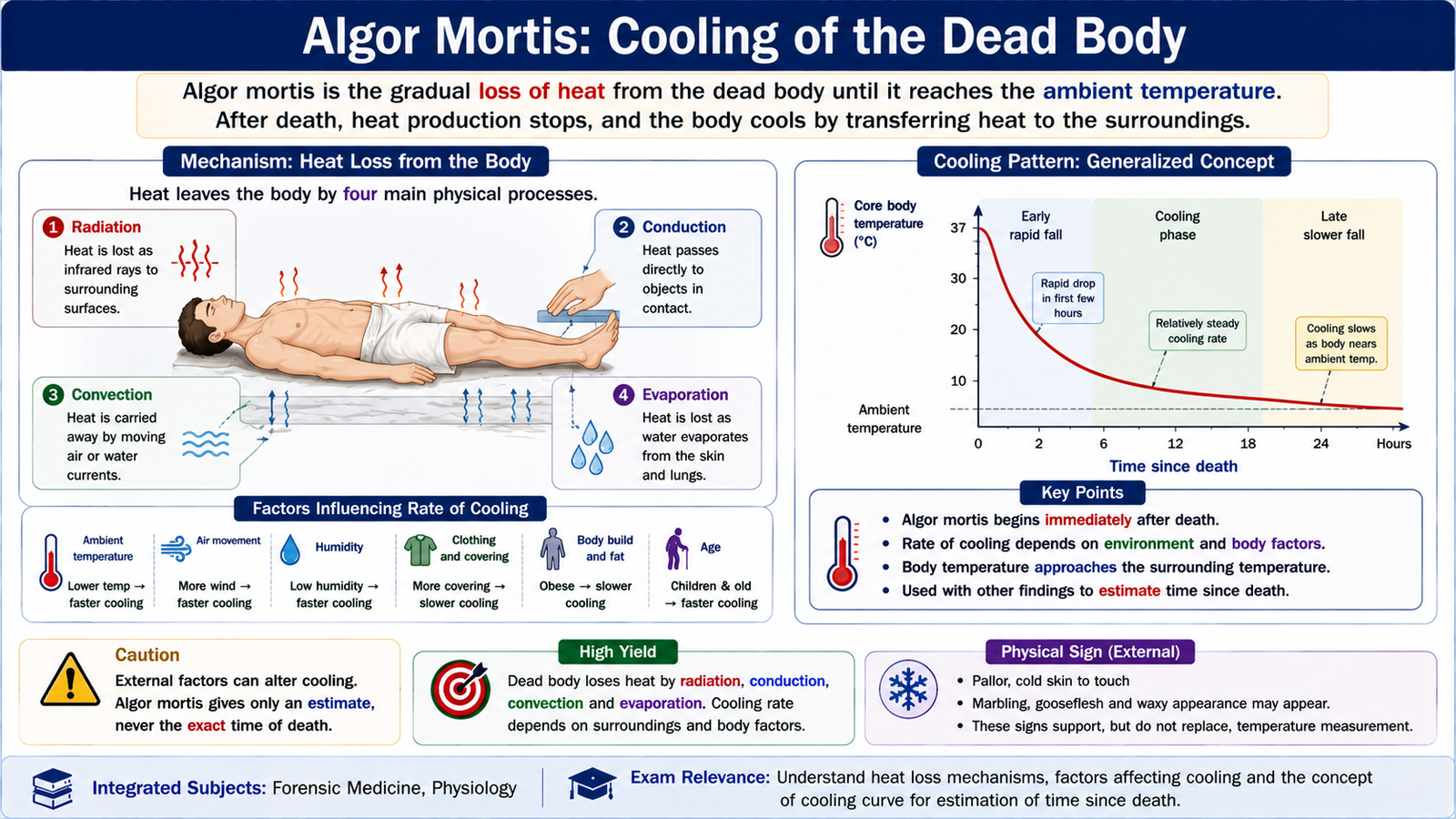
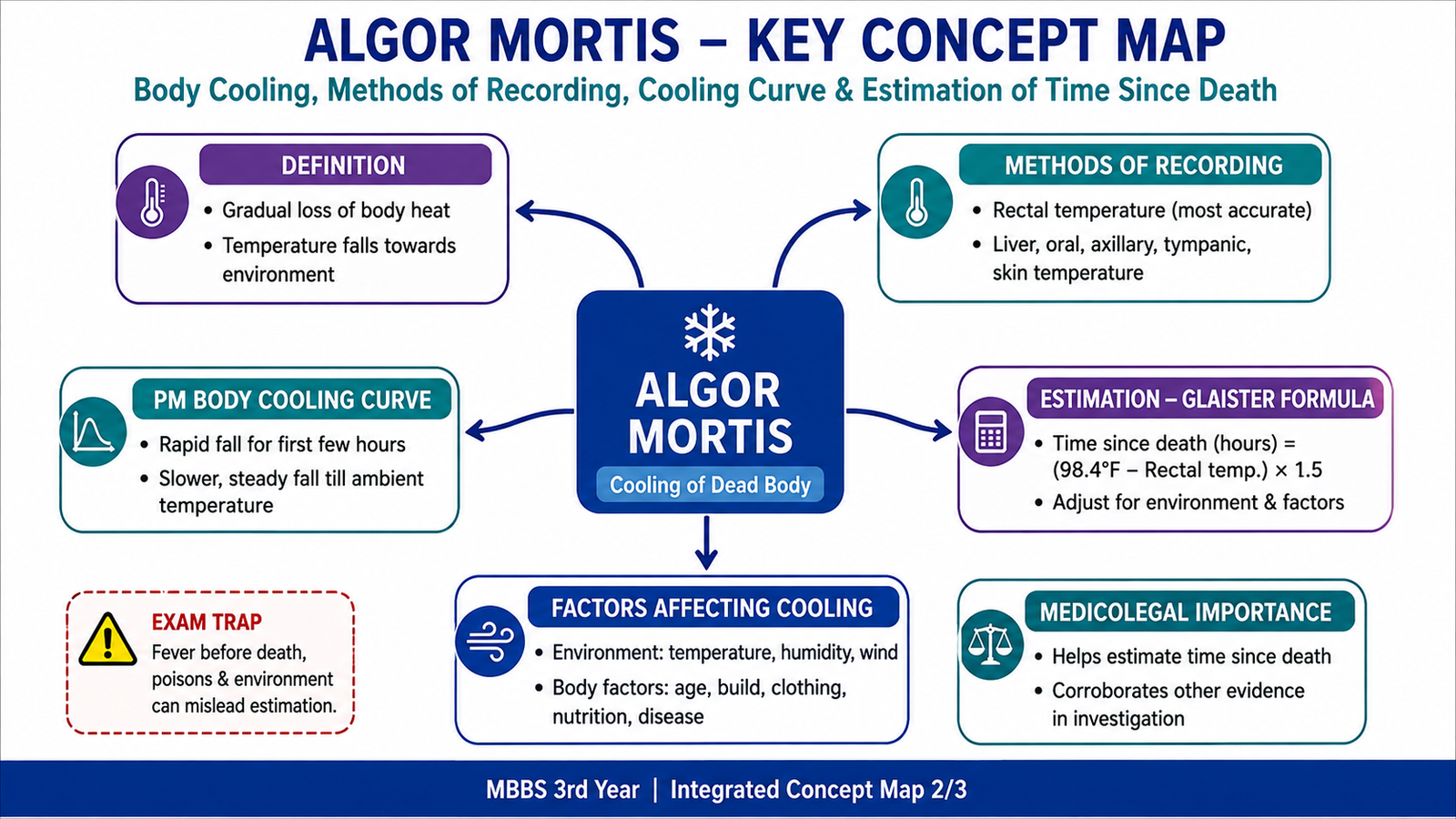
Algor mortis is the progressive fall in body temperature after death until the body approaches the temperature of its surroundings. It occurs because normal heat production ceases while heat continues to be lost to the environment.
In life, body temperature is maintained by metabolism, circulation and thermoregulatory mechanisms. After death, these mechanisms stop. The body therefore loses heat through radiation, conduction, convection and evaporation. The speed of cooling depends on both the body and the environment.
Factors affecting body cooling
- Environmental temperature: A large difference between body and ambient temperature generally promotes faster heat loss.
- Clothing and covering: Insulation slows heat loss.
- Body build: A larger or more adipose body usually cools more slowly than a thin body because of greater mass and insulation.
- Air movement: Increased air movement can increase convective heat loss.
- Contact surface: Contact with a cold surface can increase conductive heat loss.
- Humidity and wetness: Wet conditions can modify heat loss and may increase cooling under suitable circumstances.
Methods of recording the temperature of a dead body
For forensic estimation, temperature should be measured at a site that reflects the body’s deep or core temperature more reliably than exposed skin. Commonly described approaches include deep rectal temperature and other suitable deep-body measurements used in forensic practice. The environmental temperature should also be recorded because the interpretation depends on the temperature difference between the body and its surroundings.
A single superficial skin temperature is less useful because skin temperature changes rapidly with local environmental conditions. Serial measurements, when available and appropriate, provide more information about the cooling trend than an isolated reading.
H. Postmortem Cooling Curve and Estimation of Time Since Death
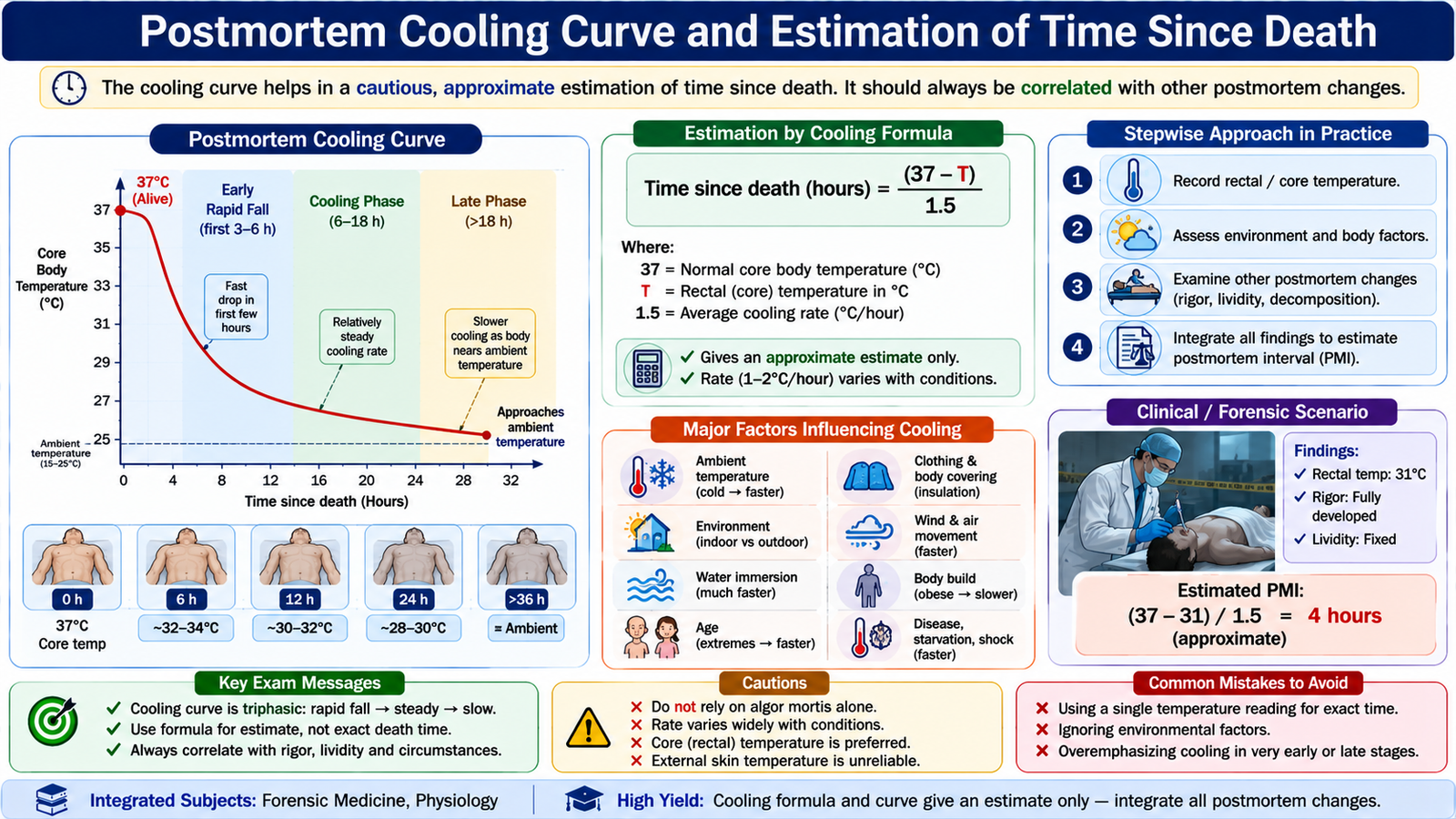
Body cooling after death is often described using a postmortem cooling curve. The fall in temperature is not perfectly uniform throughout the entire postmortem period. There may initially be a short period during which the core temperature changes little, followed by a more definite decline, and later the rate of cooling slows as the body temperature approaches the surrounding temperature.
Why the curve is not a perfect straight line
Heat loss depends partly on the difference between the body’s temperature and the ambient temperature. When this difference is large, cooling is generally faster. As the body approaches environmental temperature, the temperature difference becomes smaller and heat loss slows. Clothing, body size, air movement and contact with surfaces further alter the curve.
Death → short early temperature plateau may occur → progressive fall in core temperature → rate of fall gradually decreases → body approaches ambient temperature.
Formula-based estimation
A traditional simplified method estimates the time since death from the difference between normal body temperature and the measured postmortem temperature, divided by an assumed average rate of cooling:
(Normal body temperature − measured body temperature) ÷ assumed hourly cooling rate
This formula expresses the basic principle of temperature-based estimation, but it should not be treated as exact because the cooling rate is not constant. The actual rate is altered by environmental and individual factors. More formal forensic approaches therefore interpret body temperature together with ambient conditions and other postmortem findings.
Why more than one postmortem sign is needed
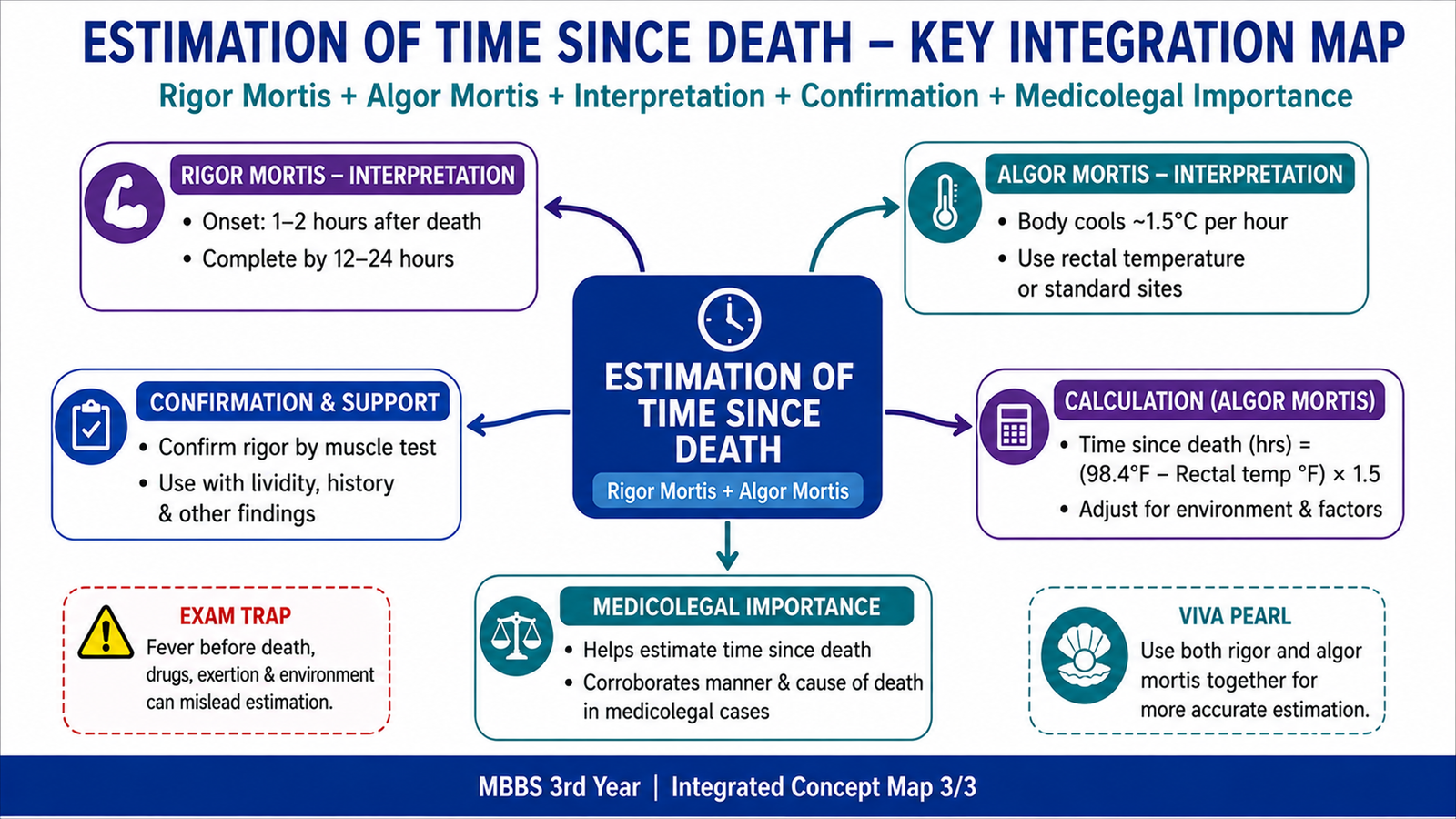
Temperature is useful mainly during the earlier postmortem period. As the body approaches ambient temperature, further estimation from cooling becomes increasingly difficult. Rigor mortis also has wide biological variation. Therefore, the most reliable practical approach is to combine algor mortis, rigor mortis and other appropriate postmortem findings with the known circumstances of discovery.
Integrated Mechanism Flow
↓
Circulation, respiration and normal metabolism stop
↓
Muscle: ATP production fails + calcium control is lost
↓
Actin–myosin cross-bridges remain fixed
↓
Rigor mortis develops
At the same time:
↓
Metabolic heat production stops while heat loss continues
↓
Core body temperature falls toward ambient temperature
↓
Algor mortis develops
↓
Both findings contribute to a cautious estimate of the time since death.
Important Comparison
| Feature | Rigor Mortis | Algor Mortis |
|---|---|---|
| Basic change | Postmortem muscular stiffening | Postmortem cooling of the body |
| Main mechanism | ATP depletion with fixed actin–myosin interaction | Heat production stops while heat loss continues |
| Main observation | Resistance to passive joint movement | Falling deep body temperature |
| Major modifiers | Temperature, activity before death, muscle condition | Ambient temperature, clothing, body size, air movement, surfaces |
| Forensic use | Broad estimation of postmortem interval | Early postmortem time estimation from cooling |
| Important limitation | Timing varies significantly | Cooling rate is not constant |
⭐ AIM High-Yield Review
- Rigor mortis is postmortem muscular stiffening caused mainly by ATP depletion.
- ATP is required for detachment of myosin from actin; without ATP, cross-bridges remain fixed.
- Loss of calcium control after death promotes actin–myosin interaction.
- Rigor generally develops progressively from smaller muscle groups to larger muscle groups.
- Warm conditions usually accelerate development and disappearance of rigor; cold slows the process.
- Severe muscular activity or convulsions before death may cause earlier rigor because energy stores are depleted.
- Cadaveric spasm is immediate and localized, unlike ordinary rigor mortis.
- Cold stiffening and heat stiffening can simulate rigor but arise through different mechanisms.
- Once established rigor is mechanically broken, it does not usually reappear to the same degree in that muscle group.
- Rigor mortis assists in estimating the postmortem interval but cannot determine the exact time of death alone.
- Algor mortis is postmortem cooling toward environmental temperature.
- Cooling is affected by ambient temperature, clothing, body build, air movement and contact surfaces.
- The postmortem cooling curve is not perfectly linear because the rate of heat loss changes over time.
- A temperature-based formula provides only an approximate time since death because cooling is not constant.
- ⭐ The safest forensic interpretation combines rigor, algor and other postmortem findings with scene circumstances.
🎥 AIM Video Learning
Watch this video to reinforce your understanding of Rigor Mortis, Algor Mortis and Estimation of Time Since Death.