
Foundations of Pharmacology, Drug Sources, Routes, Absorption and Bioavailability
Topic Introduction
Pharmacology is the science of drugs and their interaction with living systems. Before studying individual drug groups, a student needs to understand the basic language used in pharmacology, where drugs come from, how they are named, how they enter the body and how much of an administered dose reaches the systemic circulation. These ideas form the foundation for later understanding of pharmacokinetics, pharmacodynamics and rational therapeutics. In this chapter, you will learn the essential terminology and branches of pharmacology, sources and active principles of drugs, important routes of administration, mechanisms and factors controlling drug absorption, and the concepts of bioavailability, first-pass effect and enterohepatic circulation.
A. Foundations and Essential Terminology of Pharmacology
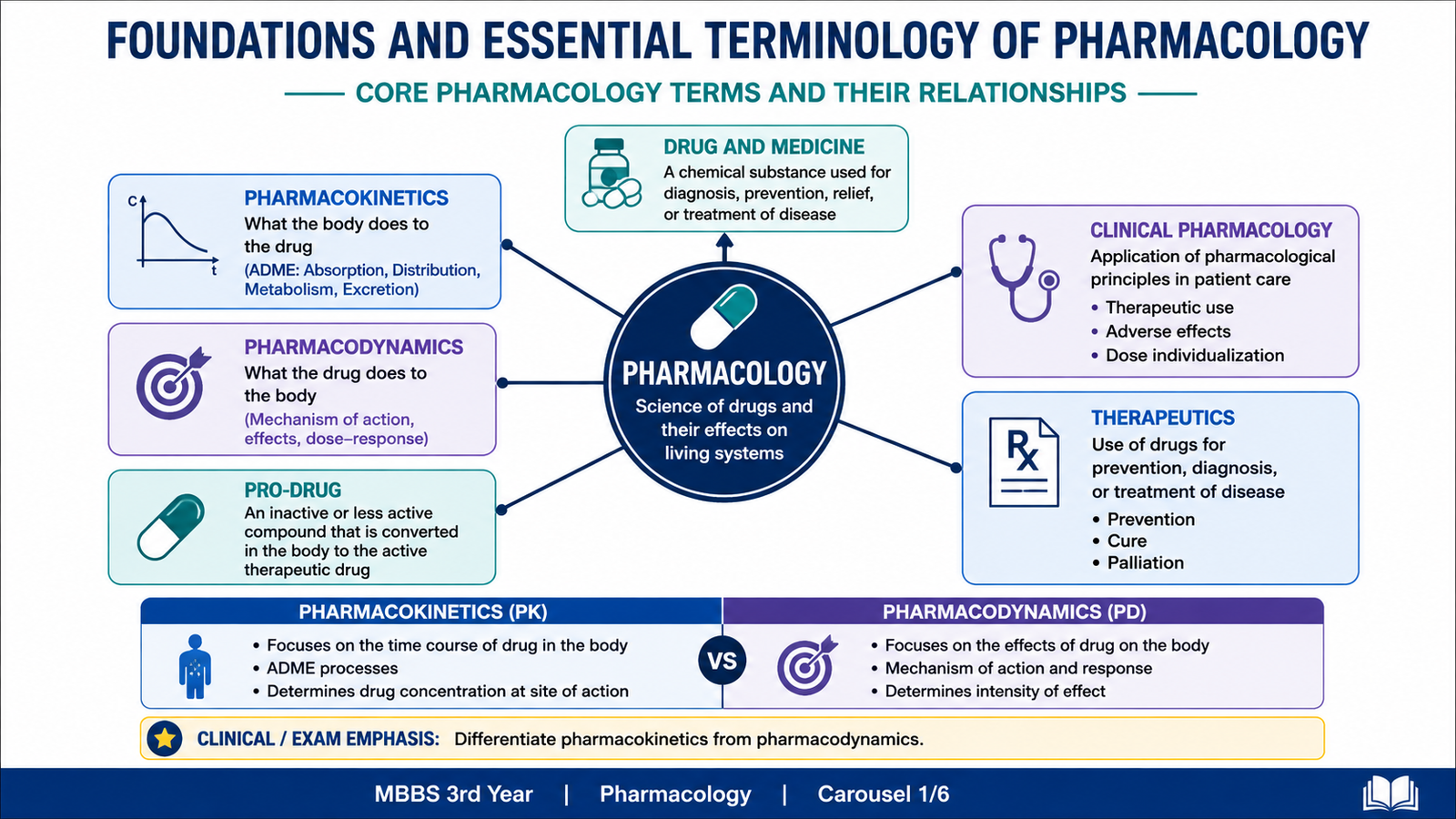
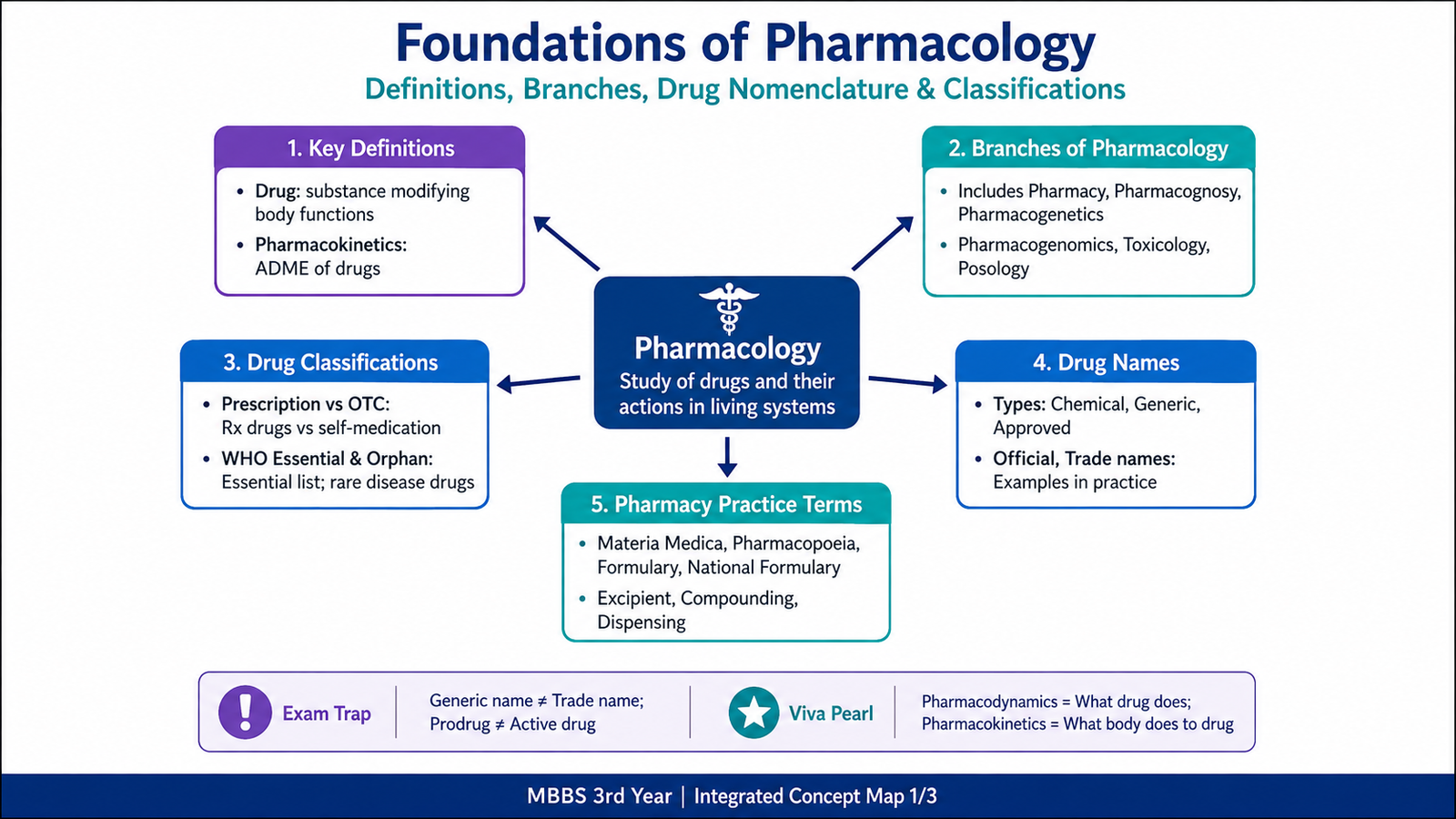
Pharmacology begins with a small group of terms that describe what drugs are, how they are studied and how they are used. Understanding these terms prevents confusion later because similar words may describe different stages between discovering a substance and using it as a medicine.
Pharmacology
Pharmacology is the science concerned with drugs, including their sources, properties, actions, uses and effects on living organisms. It also studies what the body does to a drug and what the drug does to the body.
Clinical Pharmacology and Therapeutics
Clinical pharmacology is the study of drugs in humans. It applies pharmacological principles to the safe, effective and rational use of medicines in patients. Therapeutics is the practical use of drugs and other measures for the prevention and treatment of disease. Pharmacology provides the scientific basis; therapeutics applies that knowledge to patient care.
Drug, Medicine and Pro-drug
- Drug: a chemical substance that modifies a biological function when introduced into a living organism.
- Medicine: a drug prepared in a suitable dosage form for prevention, diagnosis or treatment of disease. A medicine commonly contains the active drug together with suitable excipients.
- Pro-drug: a compound administered in an inactive or less active form that is converted within the body into an active drug. For example, enalapril is converted to the active compound enalaprilat.
Prototype Drug
A prototype drug is a representative drug used to illustrate the important properties of a drug class. Other members of the same class are commonly compared with the prototype. For example, morphine is commonly used as a prototype for opioid analgesics.
Materia Medica, Pharmacopoeia and Formulary
- Materia Medica: an older term referring to the study or collection of medicinal substances and their sources and uses.
- Pharmacopoeia: an official publication that provides recognized standards for the identity, purity, strength and preparation of drugs and pharmaceutical substances.
- Formulary: an organized list of medicines selected for use within a healthcare system, institution or professional setting, usually accompanied by prescribing information.
- National formulary: a formulary prepared for use at national level to guide rational selection and use of medicines.
Pharmacokinetics and Pharmacodynamics
Pharmacokinetics describes what the body does to a drug. It includes absorption, distribution, metabolism and excretion. These processes determine the concentration of a drug that reaches its site of action over time. Pharmacodynamics describes what a drug does to the body. It deals with drug actions, mechanisms, receptors, concentration-effect relationships and the resulting therapeutic or adverse effects.
Excipient, Compounding and Dispensing
- Excipient: a pharmacologically inactive substance added to a formulation to provide bulk, stability, taste, appearance or suitable drug delivery.
- Compounding: preparation or alteration of a medicine to produce a formulation suitable for an individual patient or particular requirement.
- Dispensing: preparation, labeling and supplying of a prescribed medicine to the patient with appropriate instructions.
Poisons and Toxins
A poison is a substance capable of producing harmful effects when absorbed into the body in sufficient quantity. A toxin is a poisonous substance produced by a living organism. The biological effect depends on the nature of the substance, dose, route and exposure.
B. Branches, Drug Categories and Drug Names
Pharmacology is a broad subject, so it is divided into branches according to the aspect of drugs being studied. Drugs can also be grouped according to how they are obtained, regulated or selected for healthcare. A single drug may additionally have several different names, each serving a different purpose.
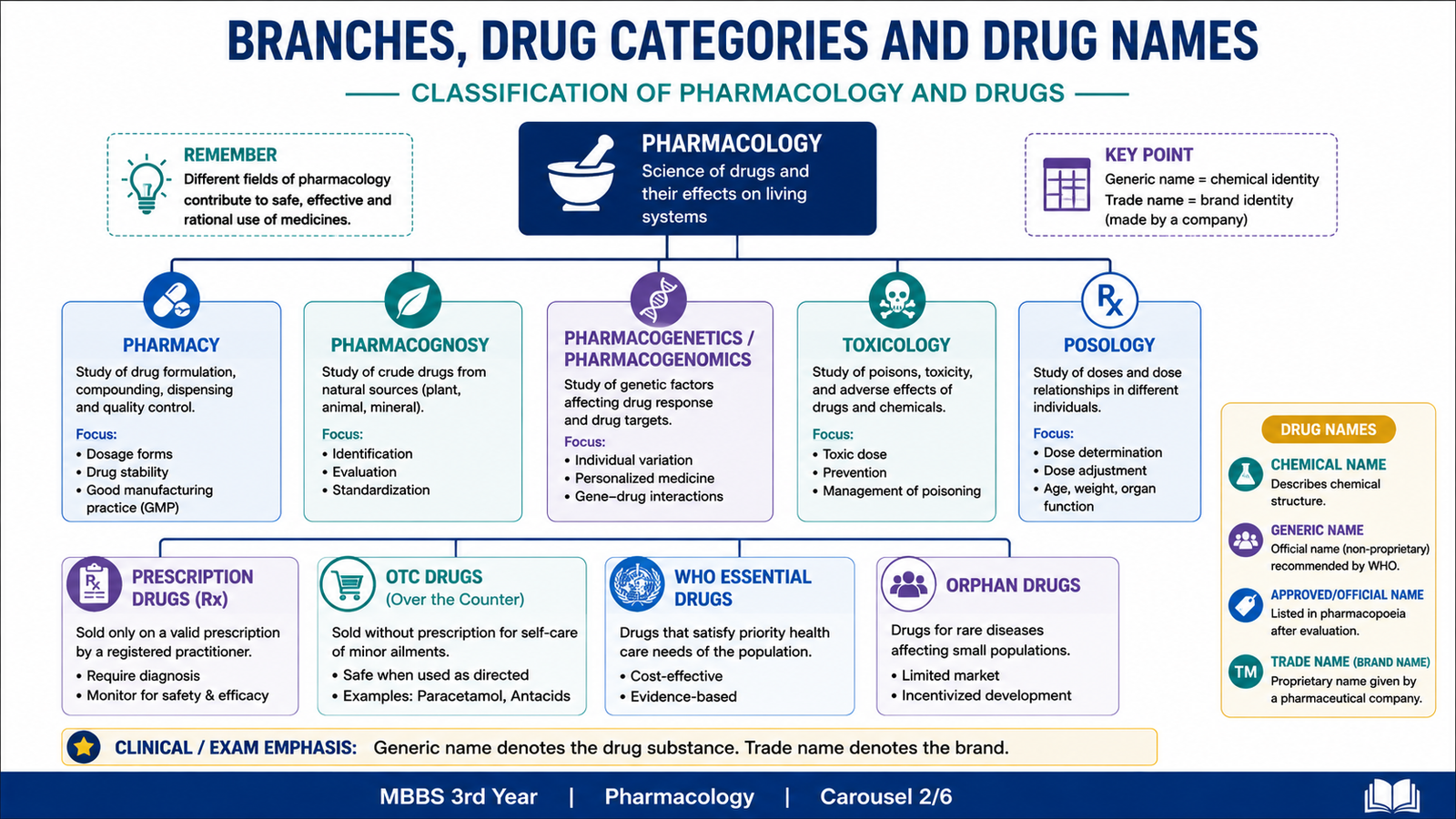
Important Branches of Pharmacology
- Pharmacy: deals with preparation, formulation, storage and dispensing of medicines.
- Pharmacognosy: studies drugs and medicinal substances obtained mainly from natural sources.
- Pharmacogenetics: studies how inherited genetic differences influence an individual’s response to drugs.
- Pharmacogenomics: studies the broader relationship between genomic variation and drug response and may help guide individualized treatment.
- Toxicology: studies harmful effects of drugs, chemicals and poisons on living organisms.
- Posology: is the study of drug dosage and the factors influencing appropriate dosage.
Prescription Drugs
Prescription drugs are medicines supplied for patient use under the authorization of an appropriately qualified prescriber. Such control is important when professional assessment, monitoring or supervision is required for safe use.
Over-the-Counter Drugs
Over-the-counter (OTC) drugs are medicines that may be obtained without an individual prescription according to the regulatory system in which they are sold. They are generally intended for conditions suitable for self-care when used according to directions. The regulatory classification of individual medicines may vary between countries.
WHO Essential Medicines
Essential medicines are medicines selected to meet the priority healthcare needs of a population. The concept emphasizes medicines of proven public-health relevance, effectiveness, safety and appropriate value for healthcare systems. Examples commonly represented within essential-medicine lists include medicines such as oral rehydration salts, insulin and important antimicrobial agents.
Orphan Drugs
Orphan drugs are medicines developed for rare diseases or conditions affecting relatively small patient populations. Because the number of potential users is small, ordinary commercial incentives for developing such medicines may be limited.
Names of Drugs
A drug may acquire several names during its development and use. These names should not be confused because one refers to chemical structure, another provides a universal professional name, while another may be assigned by a manufacturer.
- Chemical name: describes the chemical structure of the compound and is usually too complex for routine clinical use.
- Generic name: the non-proprietary name used internationally or professionally for the active drug; for example, paracetamol.
- Approved name: the name officially accepted by a recognized national or professional naming authority.
- Official name: the name under which the drug is recognized in an official pharmacopoeia or similar official standard.
- Trade or brand name: a proprietary name assigned by a manufacturer for marketing a particular preparation.
C. Sources and Active Principles of Drugs
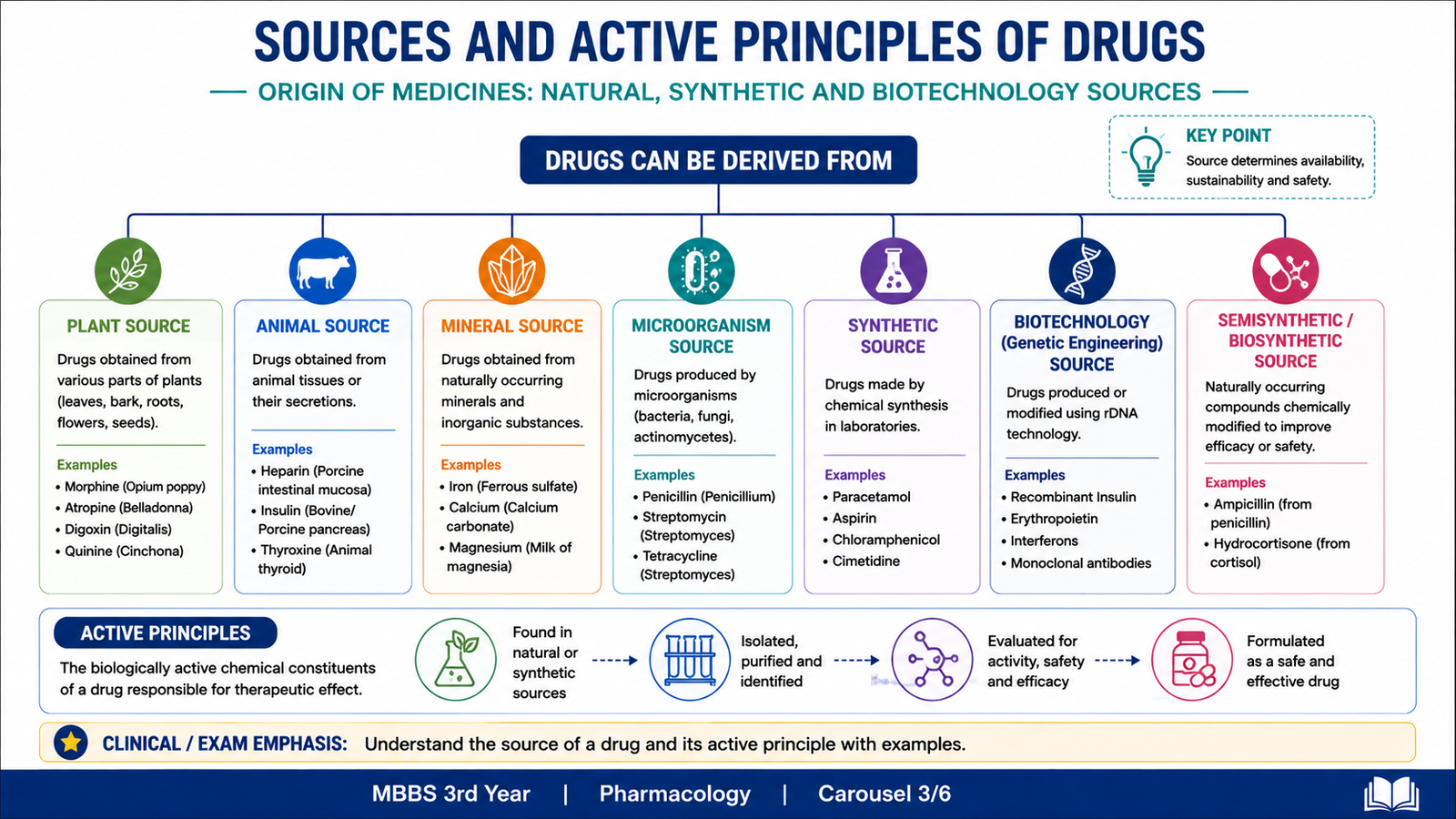
Drugs may originate from natural materials or may be produced by chemical synthesis and modern biotechnology. Traditionally, many medicines were obtained directly from plants, animals and minerals. Modern pharmacology increasingly uses synthetic, semisynthetic and genetically engineered products because these approaches can provide reliable purity, large-scale production and specifically designed therapeutic molecules.
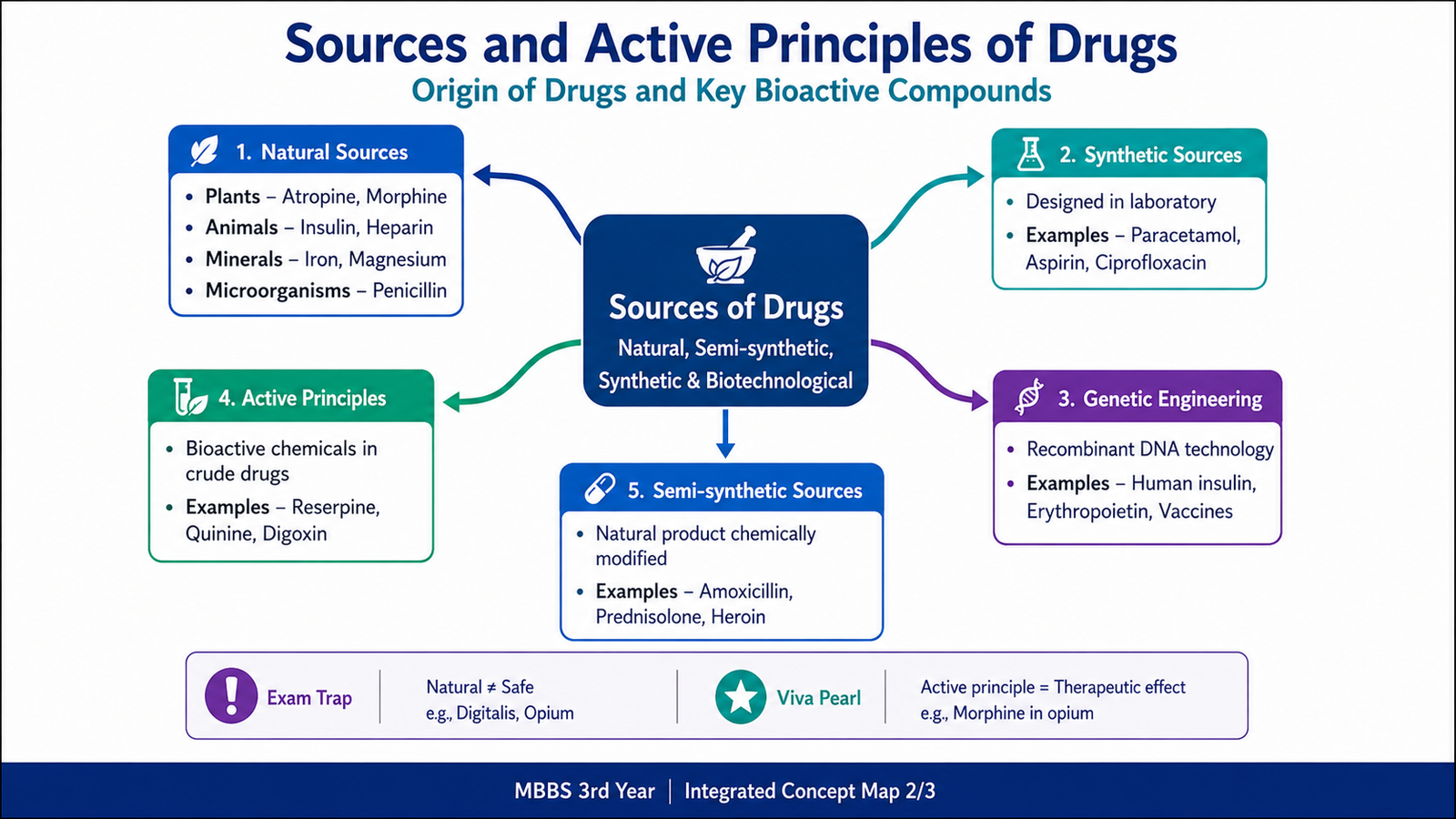
Major Sources of Drugs
- Plants: important medicinal compounds have been obtained from leaves, roots, bark, seeds and other plant parts.
- Animals: some therapeutic substances were historically isolated from animal tissues or secretions.
- Minerals: inorganic substances and mineral-derived compounds may have therapeutic applications.
- Microorganisms: microorganisms are important sources of several antimicrobial substances.
- Synthetic sources: many modern drugs are produced entirely by chemical synthesis.
- Semisynthetic sources: naturally occurring molecules can be chemically modified to improve useful properties.
- Biotechnology and genetic engineering: microorganisms or cultured cells can be genetically programmed to manufacture therapeutic proteins.
Examples from Natural and Synthetic Sources
- Plant: morphine from opium poppy; atropine from belladonna-related plants; digoxin from Digitalis.
- Animal: some hormones and biological preparations were historically derived from animal tissues.
- Mineral: iron salts, magnesium salts and lithium salts provide examples of therapeutically used mineral substances.
- Synthetic: many modern medicines, including several analgesic and antimicrobial agents, are manufactured by chemical synthesis.
Genetic Engineering as a Drug Source
Genetic engineering allows a gene coding for a useful human protein to be introduced into a suitable host cell. The host then produces the desired protein, which can be purified for therapeutic use. This method avoids dependence on large quantities of human or animal tissue and allows production of highly specific biological products.
Important examples include recombinant human insulin, recombinant human growth hormone and recombinant erythropoietin.
Active Principles of Crude Drugs
A crude drug is a naturally occurring medicinal material that has undergone little processing. Its therapeutic effect usually depends on one or more chemically active constituents called active principles. Identifying and isolating these principles allows more accurate dosing and better control of purity.
- Alkaloids: nitrogen-containing compounds with marked biological activity; examples include morphine, atropine and quinine.
- Glycosides: compounds containing a sugar component linked to a non-sugar component; cardiac glycosides such as digoxin are important examples.
- Oils: some plants contain therapeutically useful volatile or fixed oils.
- Resins: complex plant products with various medicinal applications.
- Tannins: plant polyphenolic compounds with astringent properties.
D. Routes of Drug Administration
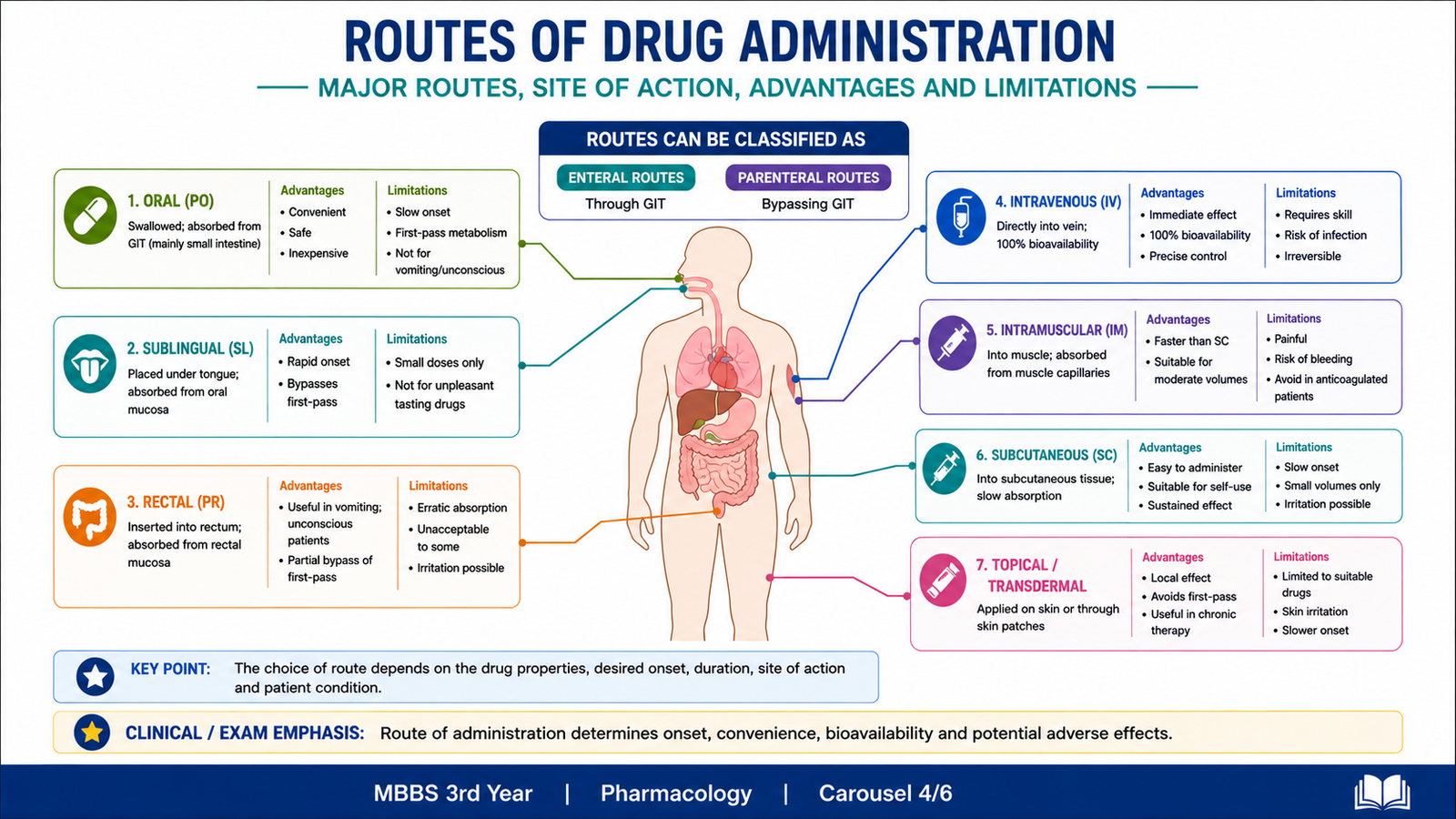
The route of administration is the pathway by which a drug is introduced into the body. Route selection influences the speed of onset, amount of drug reaching the circulation, convenience, safety and suitability for a particular patient. No route is best in every situation. The choice depends on the required action, properties of the drug and condition of the patient.
Major Routes
- Enteral: oral, sublingual and rectal.
- Parenteral: intravenous, intramuscular, subcutaneous, intradermal, intra-arterial and spinal routes.
- Inhalational: delivery through the respiratory tract.
- Topical: application directly to a surface for a mainly local effect.
- Transdermal: application to skin for controlled absorption into the systemic circulation.
| Route | Main Advantages | Main Limitations | Typical Example |
|---|---|---|---|
| Oral | Convenient, economical, usually safe and suitable for self-administration. | Slower onset; absorption may vary; unsuitable in vomiting or unconsciousness; some drugs undergo first-pass metabolism. | Paracetamol tablet |
| Sublingual | Rapid absorption and largely avoids hepatic first-pass metabolism before reaching systemic blood. | Suitable only for potent drugs that can be absorbed through oral mucosa. | Glyceryl trinitrate |
| Rectal | Useful when oral administration is difficult; part of rectal drainage can reduce first-pass exposure. | Absorption may be irregular; inconvenient for some patients. | Rectal suppository preparations |
| Intravenous | Immediate effect; complete entry into systemic circulation; precise control of administration. | Requires skill; effects cannot be reversed by removing the administered dose; complications may occur if given improperly. | IV fluids or injectable medicines |
| Intramuscular | Usually reliable absorption; depot preparations can provide prolonged action. | Painful; absorption may fall when local blood flow is poor. | Certain vaccines and depot preparations |
| Subcutaneous | Slow, relatively sustained absorption; suitable for selected self-administered drugs. | Small volumes; irritant drugs may damage tissue; absorption depends on local blood flow. | Insulin |
| Intra-arterial | Can deliver a substance directly to a particular tissue or vascular territory. | Technically demanding and associated with significant local risk. | Selected diagnostic or specialist therapeutic procedures |
| Inhalational | Very rapid absorption for gases; can deliver drugs directly to the respiratory tract. | Technique and device use can influence delivery. | Inhaled bronchodilator |
| Spinal | Provides access to the cerebrospinal fluid or neural structures when specifically required. | Invasive and requires trained personnel and careful technique. | Spinal anesthetic administration |
| Topical | Direct local effect with limited systemic exposure in many preparations. | Penetration may be limited; local irritation may occur. | Topical corticosteroid cream |
| Transdermal | Produces prolonged systemic delivery and avoids gastrointestinal absorption and initial hepatic first-pass exposure. | Only suitable for drugs capable of crossing skin in adequate amounts. | Transdermal drug patch |
Intradermal administration places a very small amount of a substance within the dermis and is mainly useful when a local response is required, such as selected diagnostic tests. In contrast, subcutaneous administration deposits the drug in tissue beneath the skin and is generally used when systemic absorption is desired.
E. Drug Absorption, Membrane Transport and Ionization
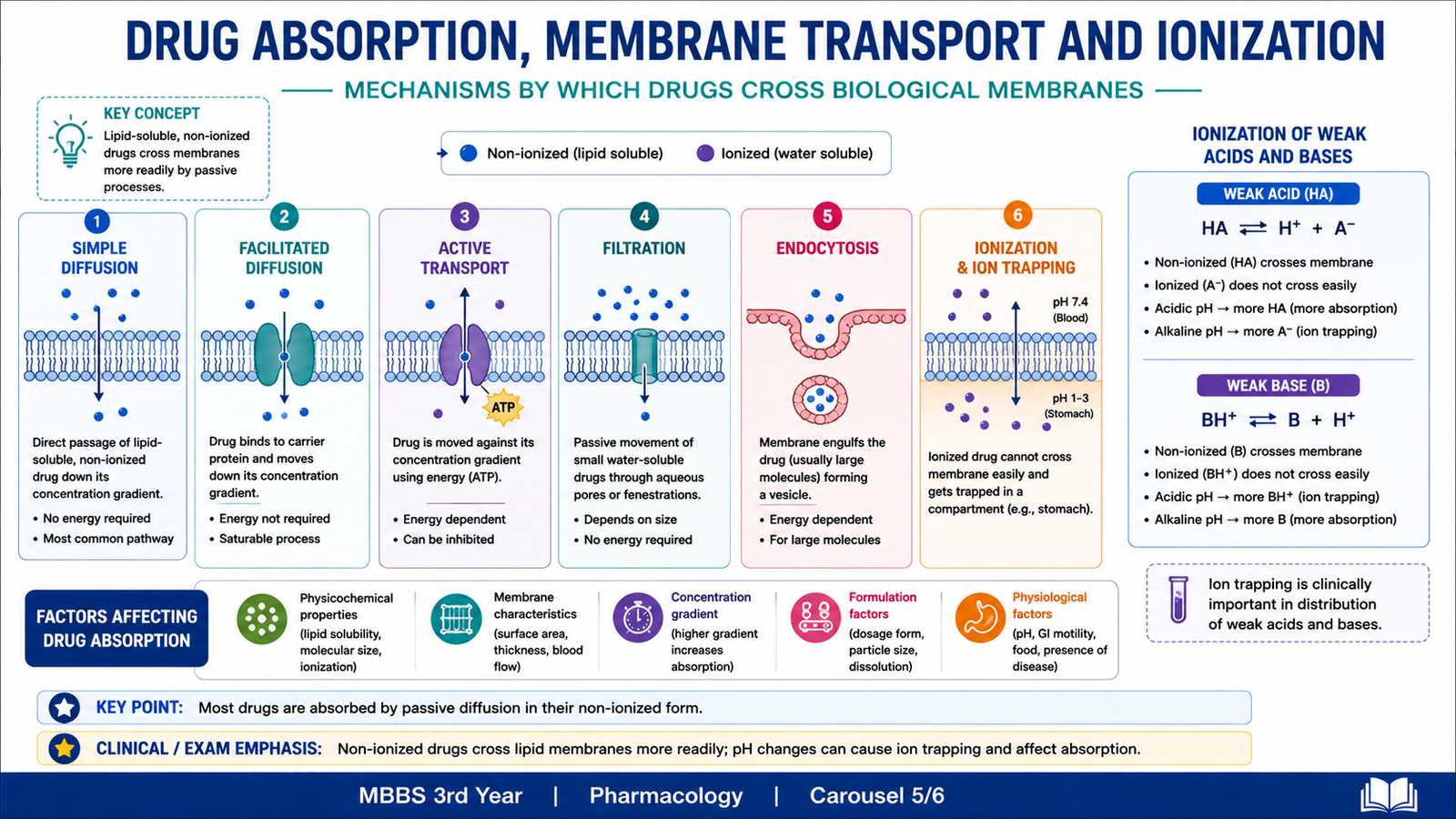
Drug absorption is the movement of a drug from its site of administration into the bloodstream. For most routes other than direct intravenous administration, the drug must cross one or more biological membranes before entering systemic circulation. The speed and extent of this process depend on both the properties of the drug and the characteristics of the absorbing surface.
Simple Diffusion
Simple diffusion is the most common mechanism by which many drugs cross cell membranes. Drug molecules move from an area of higher concentration to an area of lower concentration without requiring a carrier or metabolic energy. Lipid-soluble and non-ionized molecules generally cross lipid membranes more readily than highly polar or strongly ionized molecules. The rate of diffusion increases when the concentration gradient and available surface area are greater.
Facilitated Diffusion
Facilitated diffusion also moves substances down their concentration gradient, but the process depends on a membrane carrier. Because a carrier is involved, transport can become saturated when all available carriers are occupied. No direct energy expenditure is required.
Active Transport
Active transport uses a specific carrier and energy to move a substance across a membrane, often against its concentration gradient. It is selective, can become saturated and may be inhibited by competing substances using the same transport mechanism.
Filtration
Filtration involves movement of small molecules through aqueous pores or spaces driven by hydrostatic or other pressure differences. The size of the molecule and properties of the membrane determine whether filtration can occur.
Endocytosis
Endocytosis allows the cell membrane to surround and internalize relatively large molecules or particles. It is more important for selected large or complex substances than for routine absorption of most small drug molecules.
Ion-Pair Transport
In ion-pair transport, an ionized drug may temporarily associate with an oppositely charged ion to form a more lipid-soluble neutral complex. This can permit passage across a lipid membrane. It is less important than simple diffusion for most drugs but explains how some strongly ionized compounds may cross membranes.
Ionization of Drug Molecules
Many drugs are weak acids or weak bases and can exist in both ionized and non-ionized forms. The proportion in each form depends mainly on the drug’s acid-base properties and the pH of the surrounding fluid. In general, the non-ionized form is more lipid-soluble and therefore crosses biological membranes more readily by simple diffusion. The ionized form is usually more water-soluble and crosses lipid membranes less easily.
Ion Trapping
Ion trapping occurs when a drug crosses a membrane in its non-ionized form and then becomes ionized in a compartment with a different pH. Once ionized, it crosses the membrane less readily and may accumulate on that side. Thus, weak acidic drugs tend to become more ionized in relatively alkaline environments, while weak basic drugs tend to become more ionized in relatively acidic environments. This principle helps explain differences in drug distribution between body compartments of different pH.
Factors Affecting Drug Absorption
Drug absorption depends on the interaction between the drug formulation, the properties of the molecule and the physiological characteristics of the site from which absorption occurs.
- Lipid solubility: lipid-soluble drugs generally cross cell membranes more easily.
- Degree of ionization: the non-ionized fraction usually crosses lipid membranes more readily.
- Molecular size: smaller molecules generally cross barriers more readily than very large molecules.
- Concentration gradient: a larger gradient promotes faster passive diffusion.
- Surface area: a larger absorptive surface favors greater absorption.
- Blood flow: good blood flow removes absorbed drug from the site and maintains the concentration gradient.
- Contact time: sufficient time at the absorptive surface can increase the amount absorbed.
- Dosage form and dissolution: a solid drug generally must disintegrate and dissolve before it can be absorbed.
- Gastrointestinal factors: gastric emptying, intestinal motility, food and interactions with other substances may alter oral absorption.
F. Bioavailability, First-Pass Effect and Enterohepatic Circulation
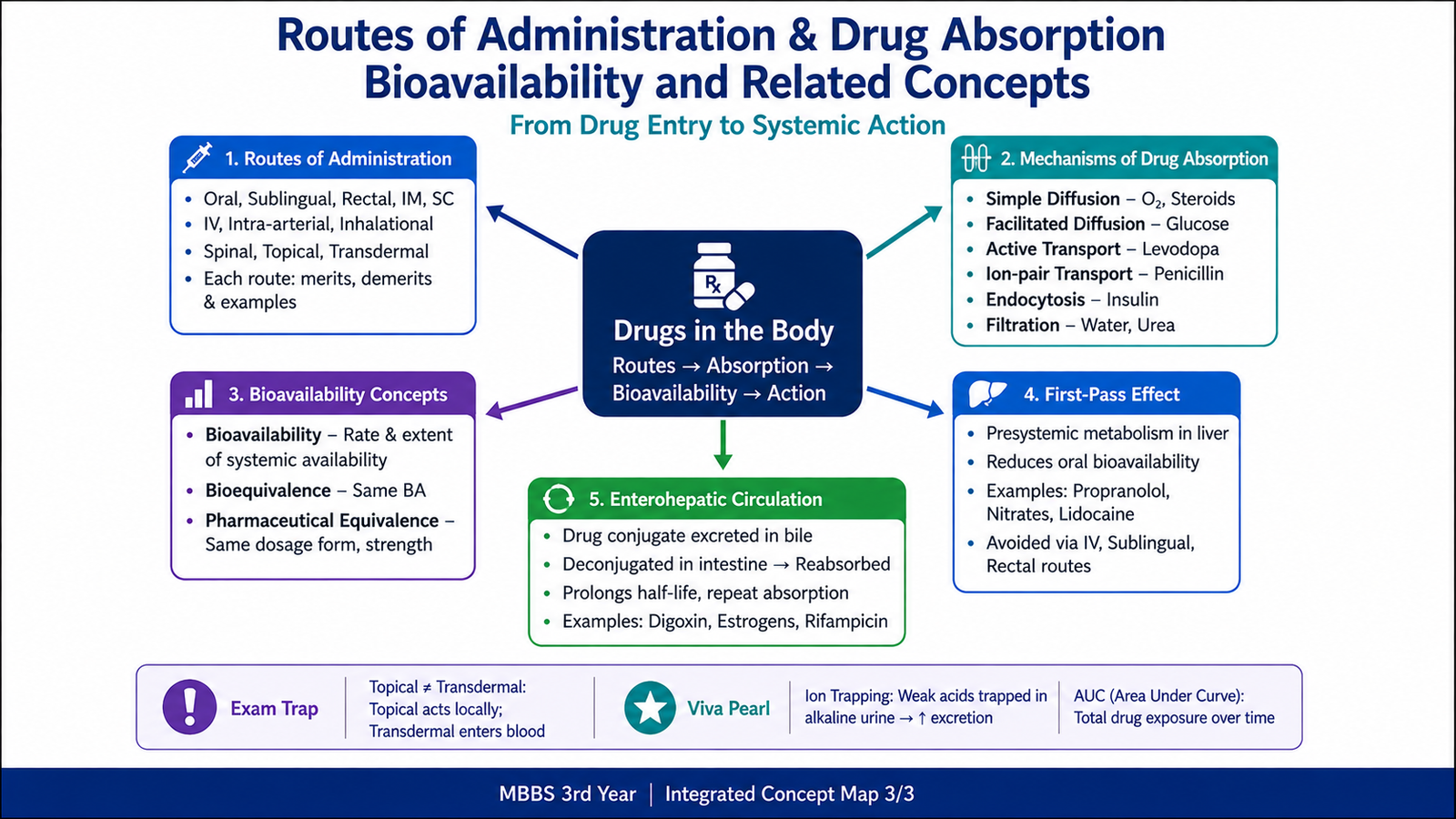
Absorption alone does not tell us how much active drug becomes available to the systemic circulation. Some drug may fail to cross the absorption barrier, may be destroyed before absorption or may be metabolized in the intestinal wall or liver before reaching the systemic blood. These factors are summarized by the concept of bioavailability.
Bioavailability
Bioavailability is the fraction of an administered dose of unchanged drug that reaches the systemic circulation. For an intravenous dose, the drug is delivered directly into systemic blood, so its bioavailability is effectively complete. With oral and other extravascular routes, bioavailability may be lower because absorption may be incomplete and presystemic metabolism may occur.
Time-Concentration Curve and Area Under the Curve
After a drug is administered, its concentration in plasma changes with time. Plotting plasma concentration against time produces a time-concentration curve. The concentration usually rises during absorption, reaches a peak and then falls as distribution and elimination become dominant. The area under the plasma concentration-time curve (AUC) represents the body’s overall systemic exposure to the drug. For the same drug and comparable conditions, a larger AUC generally indicates that a greater amount of drug has reached the systemic circulation.
Pharmaceutical Equivalence and Bioequivalence
Two pharmaceutical preparations can be compared at more than one level. Pharmaceutical equivalence concerns whether they contain the same active drug in comparable pharmaceutical form and strength, whereas bioequivalence concerns whether they provide sufficiently similar systemic drug exposure under comparable conditions.
- Pharmaceutical equivalence: products contain the same active ingredient in the same dosage form and strength and meet applicable pharmaceutical standards.
- Bioequivalence: comparable pharmaceutical products show no meaningful difference in the rate and extent to which the active drug becomes available at the site of action when administered under similar conditions.
Factors Affecting Bioavailability
- Extent of absorption from the site of administration.
- Drug formulation and rate of dissolution.
- Chemical or enzymatic degradation before reaching systemic circulation.
- Metabolism in the intestinal wall.
- Hepatic first-pass metabolism.
- Interactions with food or other drugs that alter absorption.
- Changes in gastrointestinal motility or blood flow.
Hepatic First-Pass Effect
Drugs absorbed from much of the gastrointestinal tract enter the portal circulation and pass through the liver before reaching the systemic circulation. During this first passage, part of the absorbed drug may be metabolized. This is known as the first-pass effect or presystemic metabolism.
A marked first-pass effect reduces the amount of unchanged orally administered drug reaching systemic blood. This explains why some drugs have lower oral bioavailability and why routes such as intravenous, sublingual or transdermal administration can be useful when avoidance of substantial presystemic metabolism is desirable.
Enterohepatic Circulation
Enterohepatic circulation is the recycling of a drug or its conjugated metabolite between the liver and intestine. A drug may be metabolized in the liver, excreted in bile into the intestine and then become available for reabsorption. After reabsorption, it returns through the portal circulation to the liver and may re-enter the systemic circulation.
Recycling can prolong the presence and action of certain drugs in the body because material that would otherwise be eliminated in bile may be absorbed again. Examples of substances that may undergo clinically relevant enterohepatic recycling include some steroid-related compounds and selected drugs such as certain estrogen-containing preparations.
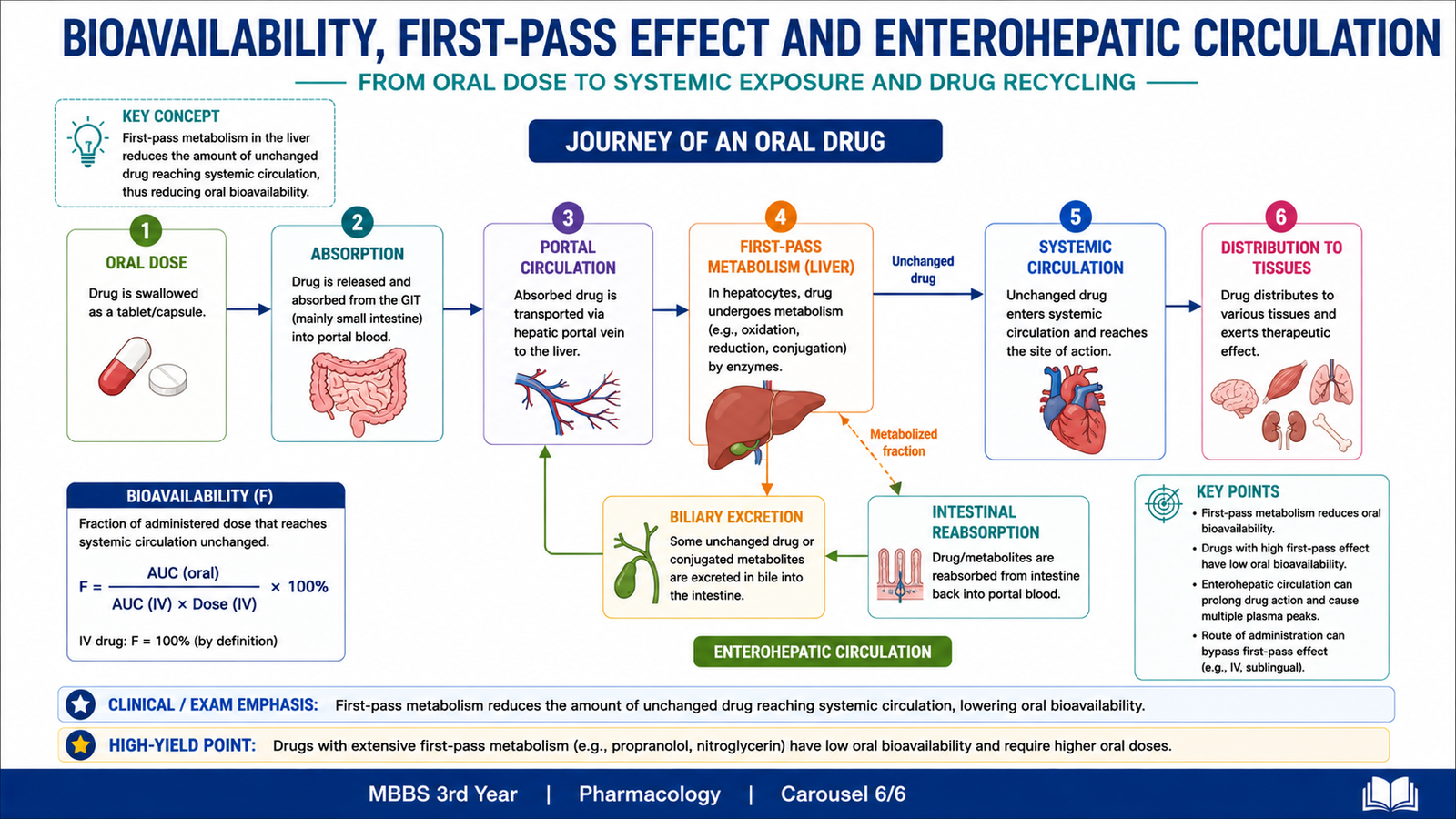
Integrated Mechanism Flow
The main pharmacokinetic sequence linking route of administration with systemic drug exposure can be viewed as one continuous pathway:
Important Comparison
Two route distinctions are specifically important because the sites appear similar but the intended depth and effect are different.
| Comparison | First Route | Second Route | Key Difference |
|---|---|---|---|
| Topical vs Transdermal | Topical: applied to skin or mucosa mainly for a local effect. | Transdermal: applied to skin specifically to deliver drug through the skin into systemic circulation. | Local treatment versus systemic drug delivery. |
| Subcutaneous vs Intradermal | Subcutaneous: deposited beneath the skin in subcutaneous tissue, usually for systemic absorption. | Intradermal: placed within the dermis in a very small amount, commonly to produce or assess a local response. | Different tissue depth and usual purpose. |
⭐ AIM High-Yield Review
- Pharmacology studies drugs and their interaction with living systems.
- Pharmacokinetics is what the body does to the drug; pharmacodynamics is what the drug does to the body.
- A pro-drug requires conversion in the body to form an active drug.
- A pharmacopoeia establishes official drug standards, while a formulary provides a selected list of medicines for use.
- Pharmacogenetics and pharmacogenomics relate genetic variation to differences in drug response.
- Important drug sources include plants, animals, minerals, microorganisms, chemical synthesis and genetic engineering.
- Recombinant DNA technology permits production of therapeutic proteins such as human insulin.
- IV administration places drug directly into systemic circulation, while oral administration may be limited by incomplete absorption and first-pass metabolism.
- Topical administration mainly aims for a local effect; transdermal administration aims for systemic delivery across the skin.
- Most drugs cross biological membranes mainly by simple diffusion; the non-ionized, lipid-soluble form usually crosses most easily.
- Ion trapping occurs when a drug becomes ionized after entering a compartment with a different pH and therefore crosses back less readily.
- Bioavailability is the fraction of unchanged administered drug reaching systemic circulation.
- AUC reflects overall systemic exposure to a drug.
- ⭐ First-pass metabolism occurs before an orally absorbed drug reaches the systemic circulation and may markedly reduce oral bioavailability.
- Enterohepatic circulation can prolong drug persistence by biliary excretion followed by intestinal reabsorption.
Pharmacokinetics — Drug Absorption
Use this video to reinforce the concepts of drug absorption, membrane passage and the pharmacokinetic principles discussed in this AIM topic.