
Drug Excretion, Dosage Regimens and Pharmacokinetic Principles
Learn how drugs are removed from the body, how clearance determines maintenance dosing, how half-life and steady state are related, and why first-order and zero-order kinetics behave differently.
Topic Introduction
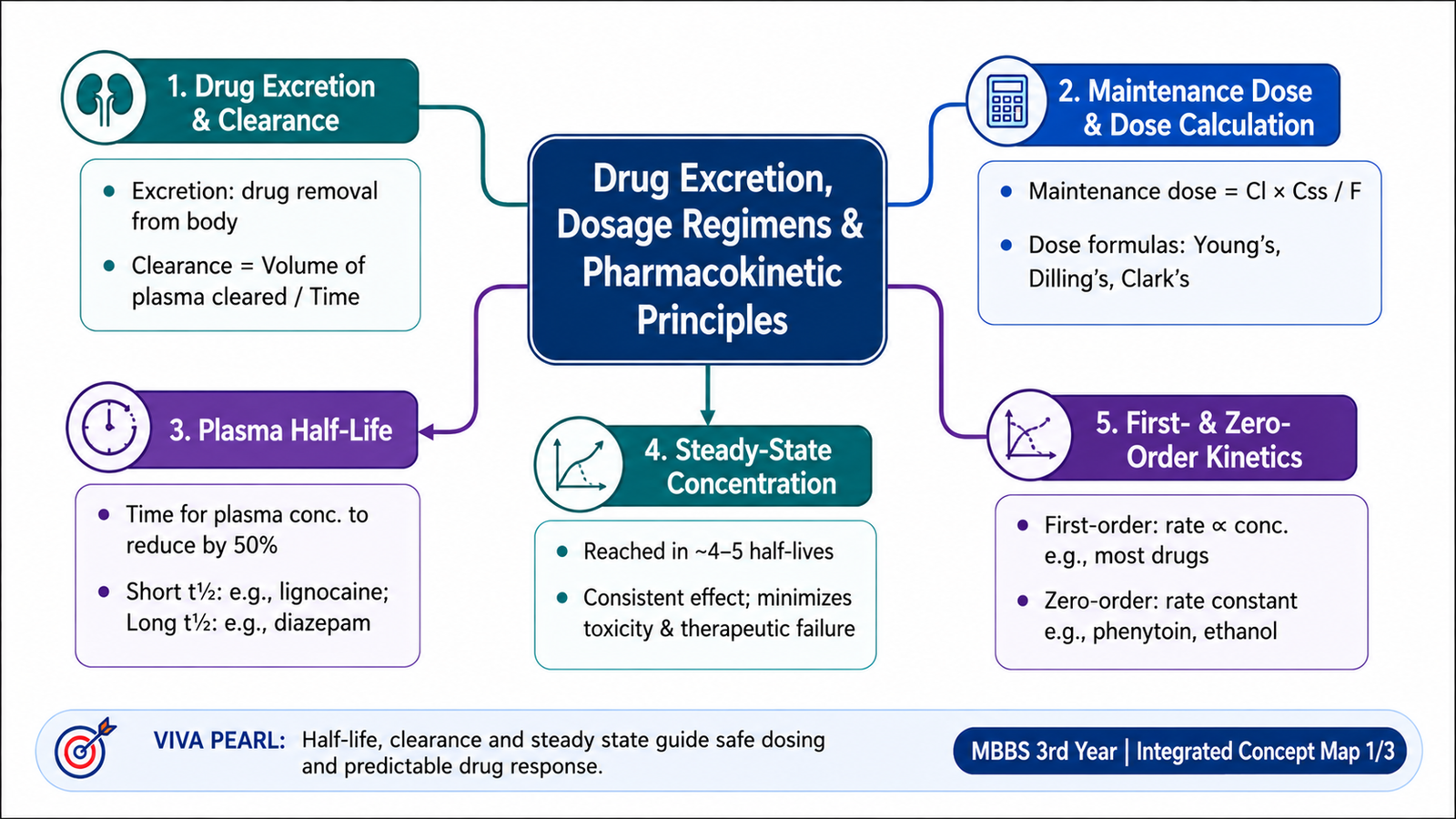
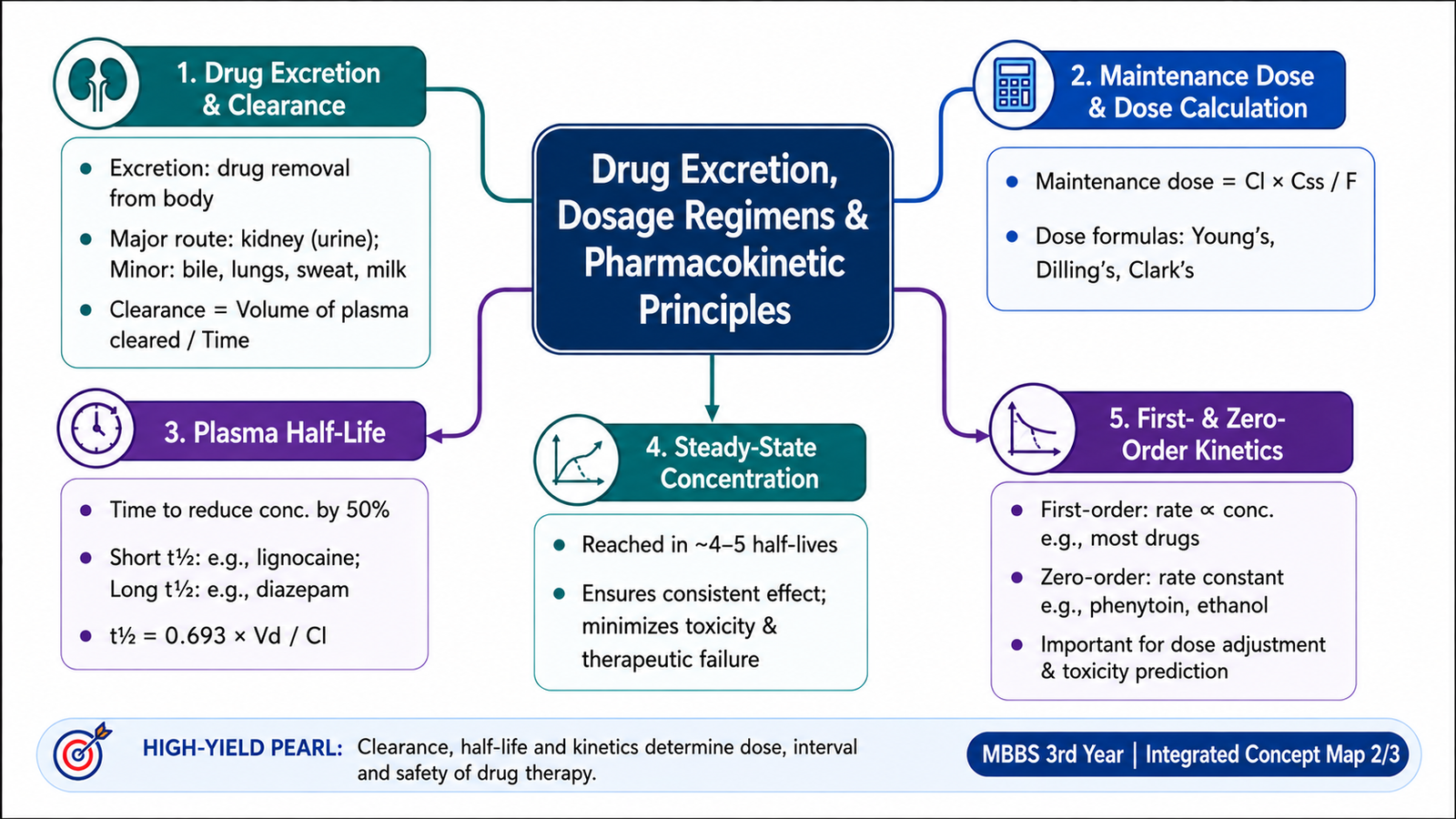
Pharmacokinetics describes what the body does to a drug. After a drug has been distributed and, where necessary, metabolized, it must ultimately be removed from the body. This removal is closely related to drug excretion, elimination and clearance. These concepts are important because they determine how much drug remains in the body and therefore influence the dose and frequency required to maintain an effective concentration. In this chapter, you will learn the routes of drug excretion, the meaning and calculation of clearance, maintenance-dose calculations, commonly taught pediatric dose formulae, plasma half-life, steady-state concentration, and the differences between first-order and zero-order kinetics.
A. Drug Excretion, Elimination and Clearance
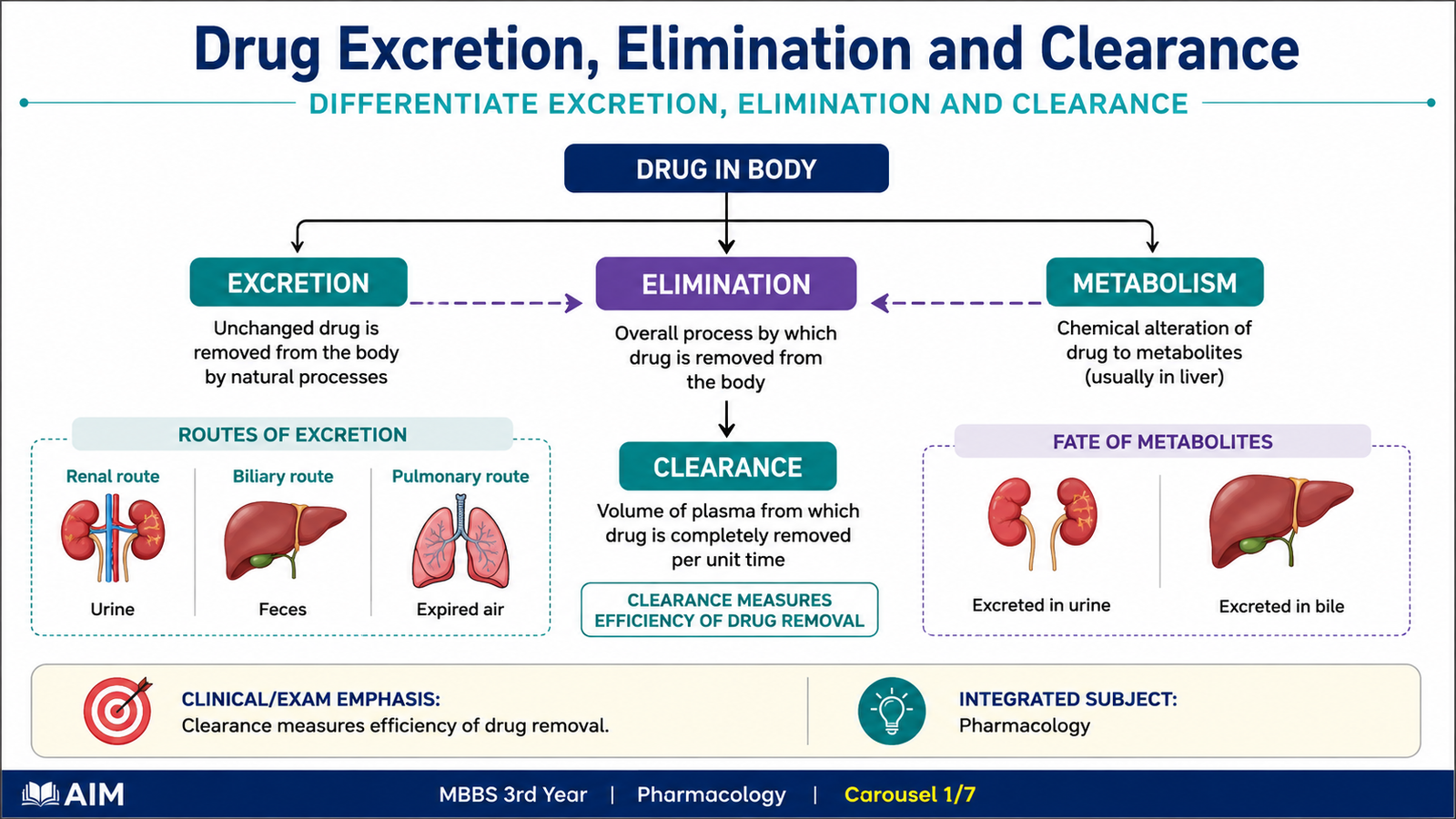
Once a drug has entered the body, its concentration eventually falls because the drug is removed. Three related terms are frequently used: excretion, elimination and clearance. They are connected, but they do not mean exactly the same thing.
Drug excretion
Drug excretion is the physical removal of a drug or its metabolites from the body. Excretion usually occurs through the kidneys into urine, but several other routes are also available.
Major and minor routes of excretion
The kidney is the major route for many drugs because it can remove water-soluble drugs and metabolites into urine. Other routes become important for particular drugs or clinical situations.
- Renal excretion: removal through urine; the most important route for many drugs.
- Biliary and fecal excretion: drugs or metabolites may enter bile and then the intestine.
- Pulmonary excretion: important for volatile substances and some gaseous anesthetic agents.
- Saliva: a minor route for certain drugs.
- Sweat: a minor route of elimination for some substances.
- Breast milk: some drugs enter milk and may expose a breast-fed infant.
- Tears and other secretions: usually quantitatively minor.
Excretion versus elimination
Elimination is broader than excretion. It refers to the overall irreversible removal of active drug from the body through metabolism plus excretion. A drug may therefore be eliminated because it is chemically transformed into metabolites, because it is excreted unchanged, or through both processes.
Drug elimination = metabolism + excretion
Clearance
Clearance is the theoretical volume of plasma from which a drug is completely removed per unit time. Clearance does not describe the actual volume of plasma physically removed from the body. Instead, it expresses the efficiency with which eliminating organs remove a drug.
If the kidneys and liver are both removing a drug, their clearances contribute to the overall or total body clearance.
For example, if a drug is being eliminated at a rate of 20 mg/hour while its plasma concentration is 2 mg/L:
A high clearance means the body can remove the drug efficiently. A reduction in clearance causes the drug to remain in the body for longer and can increase drug accumulation if the dose is not adjusted.
B. Renal Drug Excretion
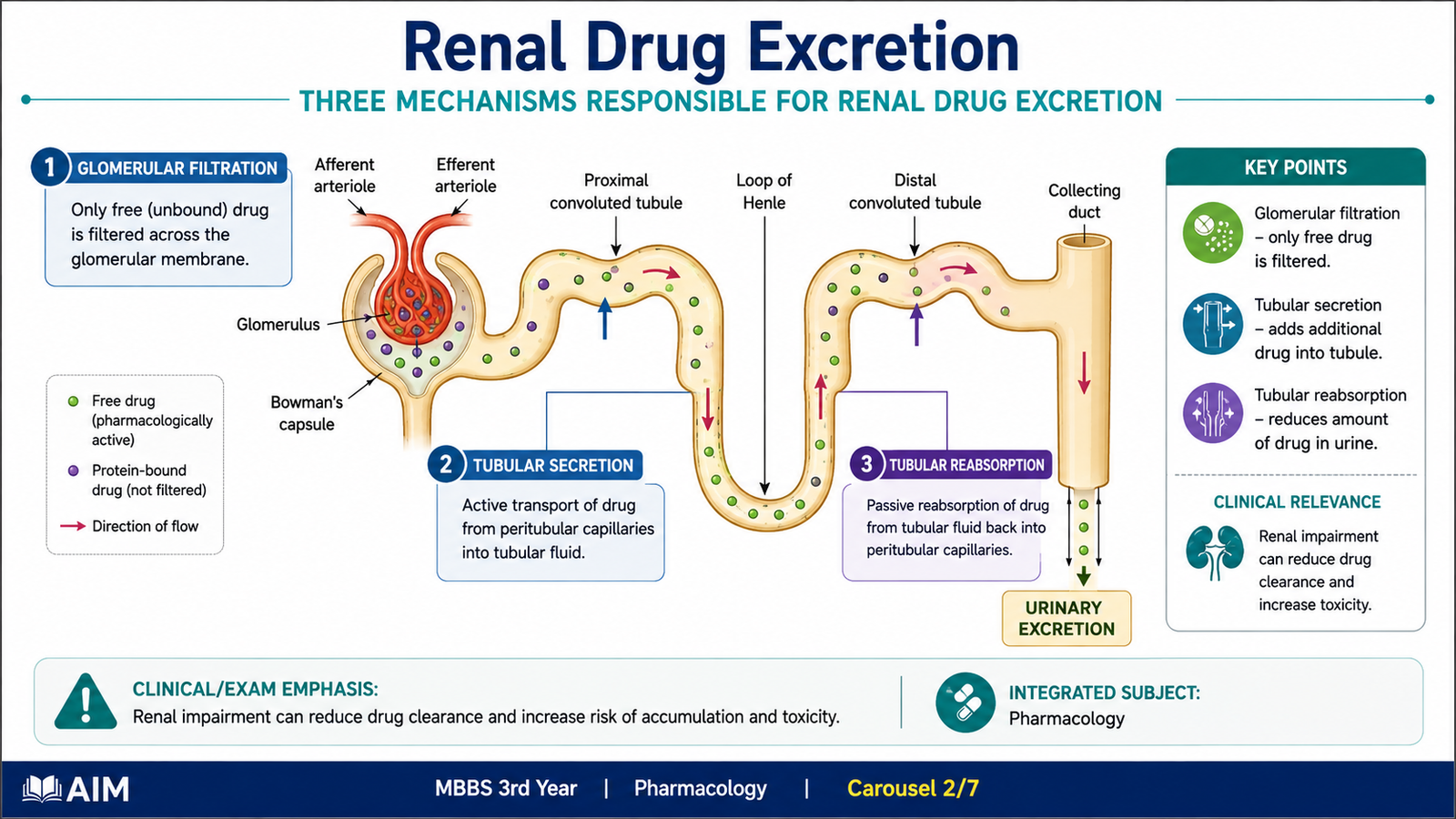
The kidneys are the major excretory organs for many drugs. Renal elimination depends mainly on three processes: glomerular filtration, active tubular secretion and tubular reabsorption. Understanding these processes helps explain why kidney function can markedly affect the concentration of some medicines.
1. Glomerular filtration
Drug dissolved freely in plasma can pass from glomerular capillaries into the renal filtrate. However, drug bound to plasma proteins such as albumin is generally not freely filtered. Therefore, only the unbound fraction is readily available for glomerular filtration.
2. Active tubular secretion
In the proximal renal tubule, transport systems can actively transfer certain drugs from blood into the tubular fluid. Because this process uses transporters, different drugs may compete for the same transporter.
3. Tubular reabsorption
After filtration or secretion, a drug may pass back from tubular fluid into the blood. Lipid-soluble, non-ionized drugs are generally more able to cross tubular membranes and undergo passive reabsorption, whereas more polar or ionized compounds tend to remain in urine and are excreted.
Plasma drug → filtration and/or secretion → tubular fluid → reabsorption of suitable drug molecules → remaining drug leaves in urine
Renal impairment can reduce elimination of drugs that depend strongly on kidney excretion. Their plasma concentration can then rise, particularly when repeated doses are given. This is one reason why drug clearance is clinically important when dosage regimens are planned.
C. Maintenance Dose and Dosage Regimens
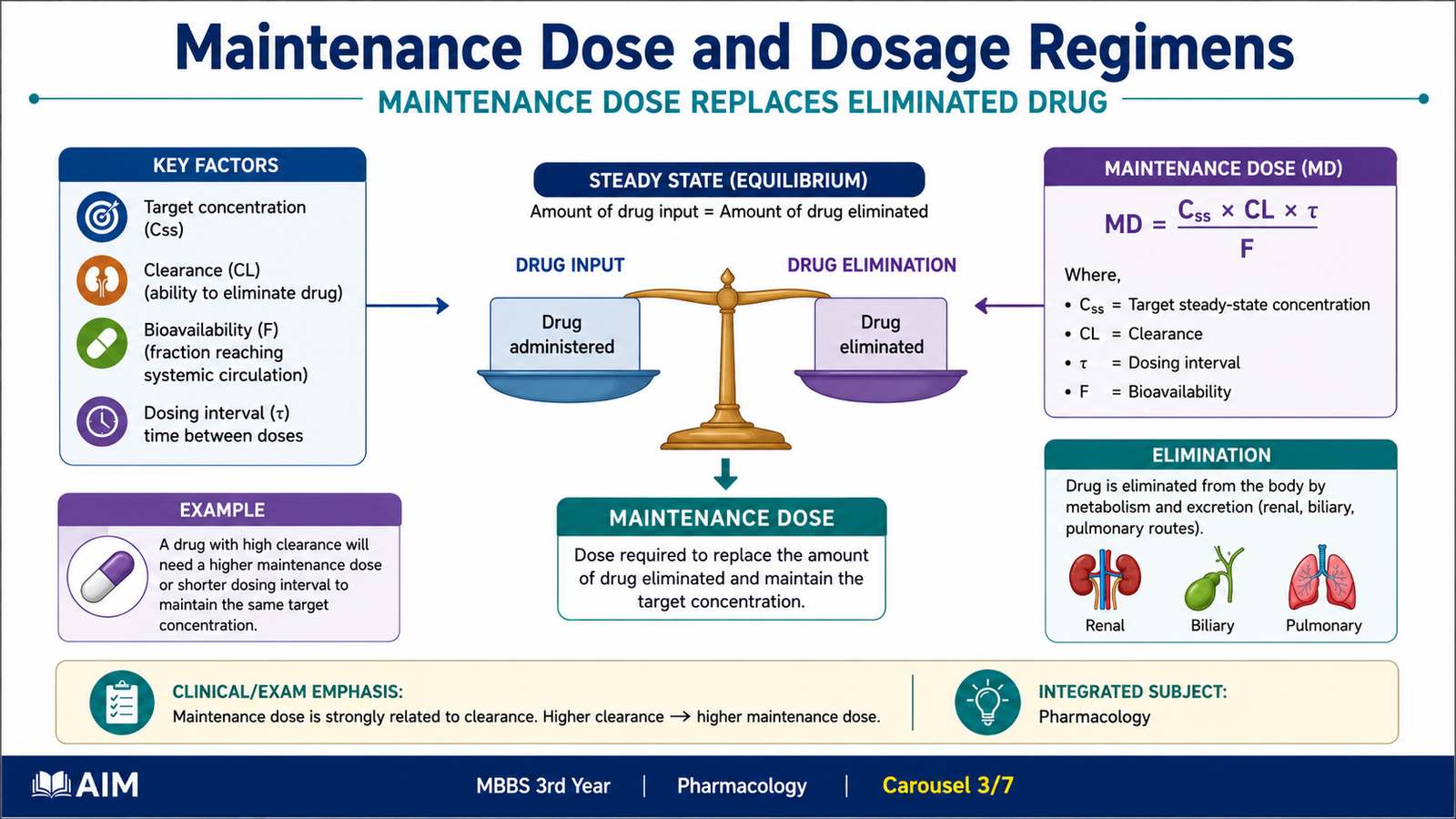
When repeated doses of a drug are given, the purpose of a maintenance dose is to replace the amount of drug that has been eliminated and thereby maintain the desired average plasma concentration. Maintenance dosing is therefore closely related to clearance.
Definition
A maintenance dose is the dose given repeatedly to replace eliminated drug and maintain the desired therapeutic concentration during continued treatment.
If a drug has high clearance, more drug is removed per unit time, so a greater maintenance dosing rate may be required. If clearance decreases, the same dosage regimen may cause accumulation.
When a dose is administered at specific intervals, the formula can be expressed as:
For an intravenously administered drug, bioavailability is effectively complete, so the bioavailability term is 1.
Simple calculation
Suppose the desired average plasma concentration is 5 mg/L, clearance is 4 L/hour, the dosing interval is 8 hours, and bioavailability is 1:
= 160 mg every 8 hours
This calculation illustrates the principle that maintenance dosing mainly depends on how rapidly the drug is being cleared from the body.
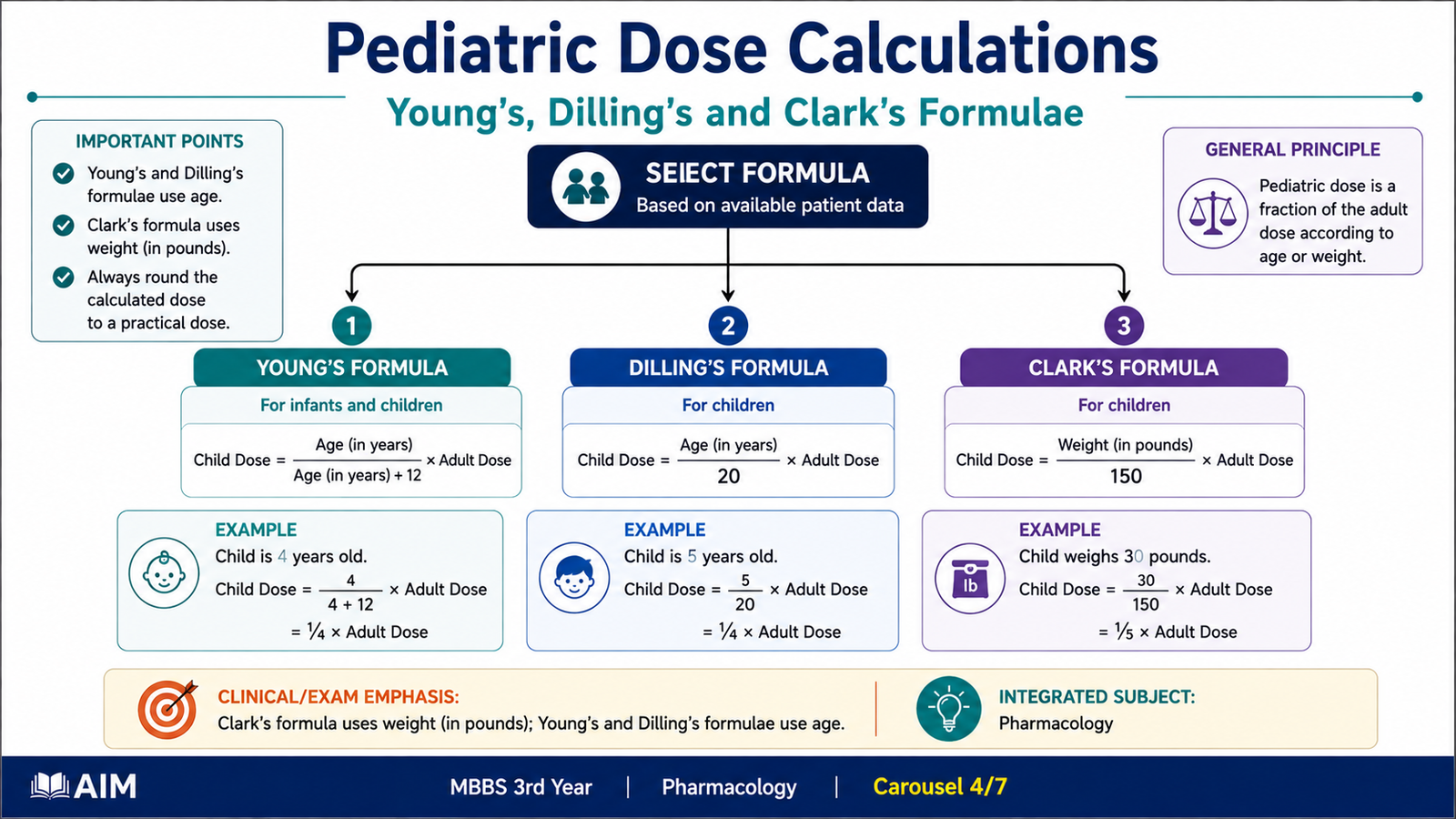
D. Pediatric Dose Calculations: Young’s, Dilling’s and Clark’s Formulae
Young’s, Dilling’s and Clark’s formulae are traditional methods used in undergraduate pharmacology exercises to estimate a child’s dose from the usual adult dose. Young’s and Dilling’s formulae use age, whereas Clark’s formula uses body weight. The important examination skill is to recognize the correct formula and perform the calculation accurately.
| Formula | Basis | Calculation |
|---|---|---|
| Young’s formula | Age in years | Child dose = Age ÷ (Age + 12) × Adult dose |
| Dilling’s formula | Age in years | Child dose = Age ÷ 20 × Adult dose |
| Clark’s formula | Weight in pounds | Child dose = Weight in lb ÷ 150 × Adult dose |
Young’s formula example
A 6-year-old child requires a drug for which the usual adult dose is 300 mg.
= 6 ÷ 18 × 300
= 100 mg
Dilling’s formula example
For the same 6-year-old child and an adult dose of 300 mg:
= 90 mg
Clark’s formula example
If a child weighs 50 lb and the adult dose is 300 mg:
= 100 mg
E. Plasma Half-Life
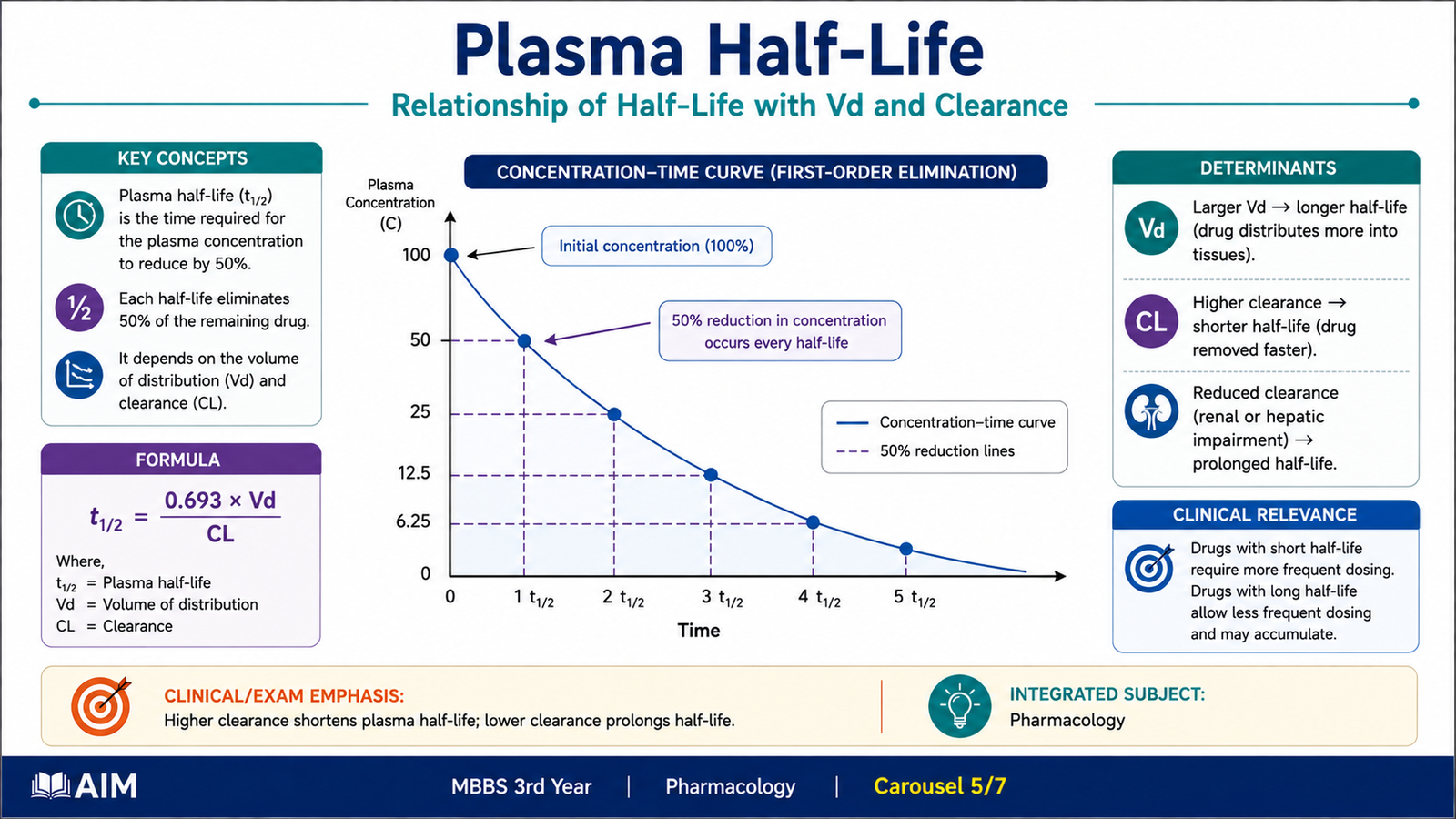
The plasma half-life of a drug is the time required for its plasma concentration, or the amount of drug in the body, to decrease by 50%. Half-life provides a practical indication of how long a drug persists and helps determine dosing frequency, drug accumulation and the time needed for drug concentrations to approach steady state.
This equation shows that half-life is influenced by two major pharmacokinetic variables:
- Volume of distribution (Vd): a larger Vd tends to increase half-life because more drug is distributed outside the plasma.
- Clearance: greater clearance tends to shorten half-life because drug is removed more rapidly.
↑ Clearance → generally ↓ half-life
Calculation example
A drug has a volume of distribution of 40 L and a total clearance of 4 L/hour:
= 6.93 hours
Examples of relatively short and long half-lives
Drugs differ considerably in their half-lives. Some are removed rapidly and therefore have relatively short half-lives, whereas others persist for much longer.
- Short half-life examples: adenosine and esmolol.
- Long half-life examples: amiodarone and diazepam.
Clinical significance
Half-life influences how often a drug is administered and how long it takes for drug concentration to change after starting, stopping or modifying therapy. Drugs with long half-lives usually disappear more slowly and may accumulate more gradually during repeated administration.
F. Steady-State Concentration
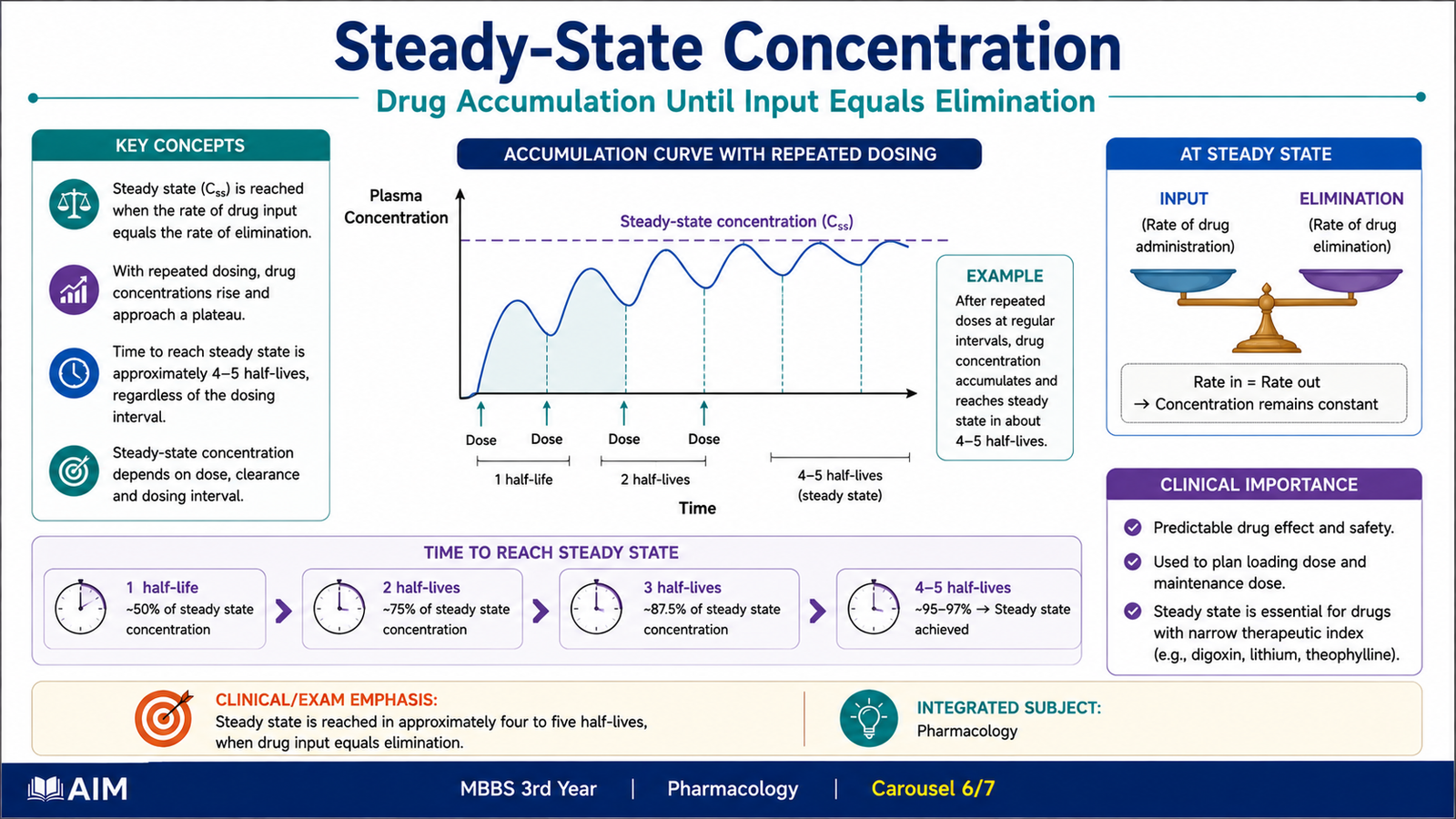
When a drug is administered repeatedly, drug enters the body with each dose while drug is simultaneously being eliminated. At first, administration exceeds elimination and the drug accumulates. Eventually, a point is reached at which the rate of drug administration equals the rate of drug elimination. The average plasma concentration then remains relatively stable. This condition is called steady state.
Definition
Steady-state concentration is the concentration achieved during repeated or continuous administration when the rate of drug input is equal to the rate of drug elimination.
Rate of drug administration = Rate of drug elimination
Time required to reach steady state
For drugs that follow first-order kinetics, steady state is approached gradually. Approximately half of the eventual steady-state concentration is reached after one half-life, about three quarters after two half-lives, and progressively more thereafter.
In practical pharmacokinetic teaching, a drug is considered to be very close to steady state after approximately four to five half-lives.
| Elapsed time | Approximate approach to steady state |
|---|---|
| 1 half-life | 50% |
| 2 half-lives | 75% |
| 3 half-lives | 87.5% |
| 4 half-lives | About 94% |
| 5 half-lives | About 97% |
Clinical importance
The concept of steady state helps explain why the full effect of a repeatedly administered drug may not be apparent immediately. It also explains why changing a dosage regimen may require several half-lives before the new average concentration becomes established.
Clearance is also important at steady state. If clearance falls while the same maintenance dosing rate continues, the steady-state concentration can increase because drug is leaving the body more slowly.
G. First-Order and Zero-Order Kinetics
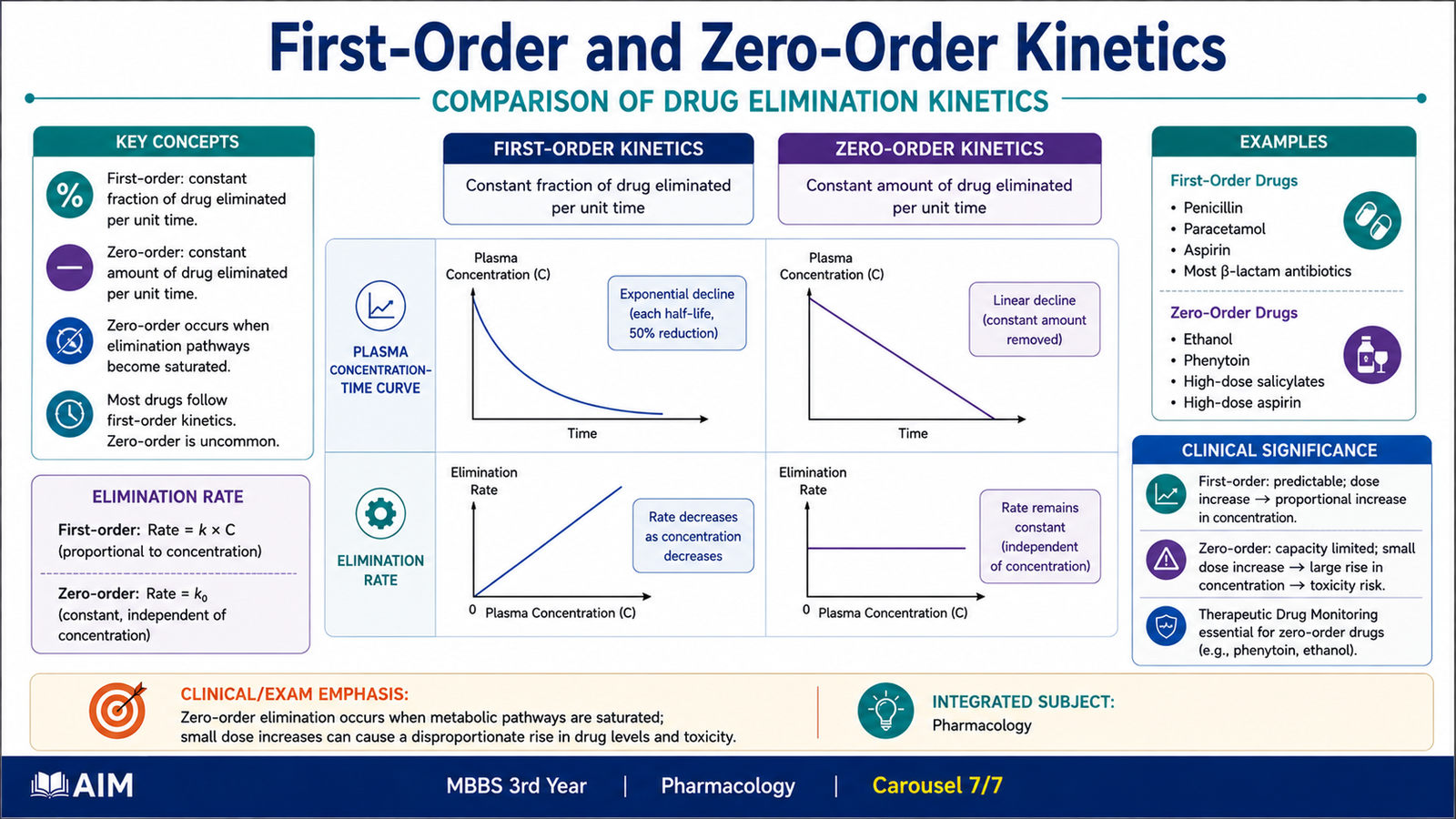
Drugs do not always disappear from the body at the same pattern or rate. The two major pharmacokinetic patterns are first-order kinetics and zero-order kinetics. Their main difference is whether a constant fraction or a constant amount of drug is eliminated per unit time.
First-order kinetics
In first-order kinetics, the rate of elimination is proportional to the drug concentration. When the concentration is high, more drug is eliminated per unit time; as concentration falls, the amount eliminated per unit time also falls. However, the same fraction of drug is removed during each equal time interval.
Most drugs at usual therapeutic concentrations follow first-order kinetics. Because a constant fraction is eliminated, these drugs generally have a relatively constant half-life under usual conditions.
Zero-order kinetics
In zero-order kinetics, the elimination pathway is operating at or near its maximal capacity. Increasing drug concentration cannot proportionately increase the elimination rate. Therefore, a constant amount of drug is eliminated per unit time.
Classically tested examples associated with capacity-limited elimination include ethanol and, at sufficiently high concentrations, phenytoin and aspirin.
Why the distinction matters
With first-order elimination, an increase in concentration is accompanied by a proportional increase in the amount eliminated. With zero-order elimination, the elimination pathway cannot increase its rate proportionately. Therefore, relatively small increases in dose can sometimes produce disproportionately large increases in plasma concentration when capacity-limited elimination is present.
| Feature | First-order kinetics | Zero-order kinetics |
|---|---|---|
| Eliminated per unit time | Constant fraction | Constant amount |
| Relation to concentration | Elimination rate rises with concentration | Elimination rate limited by capacity |
| Half-life | Usually relatively constant | Not constant in the usual sense |
| Typical occurrence | Most drugs at therapeutic concentrations | Capacity-limited elimination |
| Examples | Most commonly used drugs | Ethanol; phenytoin and aspirin at higher concentrations |
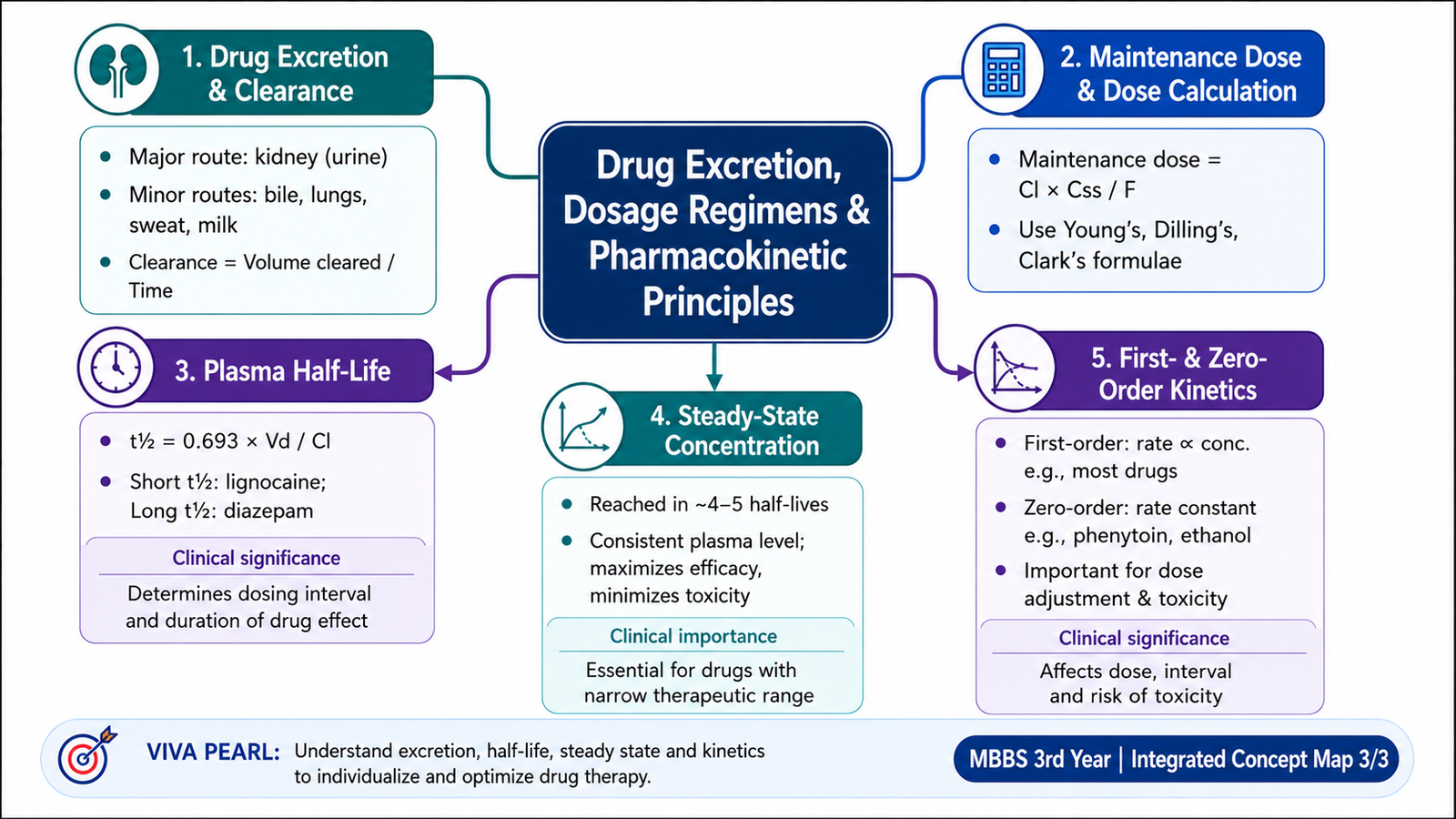
Integrated Mechanism Flow
↓
Distribution establishes the amount of drug in the body
↓
Metabolism and excretion remove drug
↓
Clearance determines the efficiency of removal
↓
Clearance and Vd determine plasma half-life
↓
Half-life influences accumulation and time to steady state
↓
Maintenance dosing replaces the amount eliminated
Important Comparison
| Term | Meaning | Key idea |
|---|---|---|
| Excretion | Physical removal of drug or metabolite from the body | Urine is the major route for many drugs |
| Elimination | Overall irreversible loss of active drug | Includes metabolism and excretion |
| Clearance | Volume of plasma theoretically cleared of drug per unit time | Measures efficiency of drug removal |
⭐ AIM High-Yield Review
- Excretion is the physical removal of a drug or its metabolites from the body.
- Elimination includes both metabolism and excretion.
- Clearance describes the efficiency with which drug is removed from plasma.
- Clearance = rate of elimination ÷ plasma drug concentration.
- The kidney removes drugs through glomerular filtration, tubular secretion and tubular reabsorption.
- ⭐ Maintenance dosing replaces the drug lost through elimination and therefore depends strongly on clearance.
- Young’s formula = Age ÷ (Age + 12) × adult dose.
- Dilling’s formula = Age ÷ 20 × adult dose.
- Clark’s formula uses body weight in pounds: Weight ÷ 150 × adult dose.
- Plasma half-life is the time required for plasma drug concentration to fall by 50%.
- ⭐ t½ = 0.693 × Vd ÷ Clearance.
- Steady state occurs when drug input equals drug elimination.
- Steady state is approached after approximately four to five half-lives in first-order kinetics.
- ⭐ First-order kinetics removes a constant fraction per unit time; zero-order kinetics removes a constant amount.
- Ethanol and capacity-limited elimination of phenytoin and aspirin are classic zero-order examples.
Drug Excretion & Pharmacokinetic Principles
Watch this video alongside the AIM Learning Material to reinforce clearance, half-life, steady state and drug elimination kinetics.