
Health Research, Health Systems and General Practice
A practical introduction to research methodology, health-system research, organization of healthcare and the role of general practice.
Topic Introduction
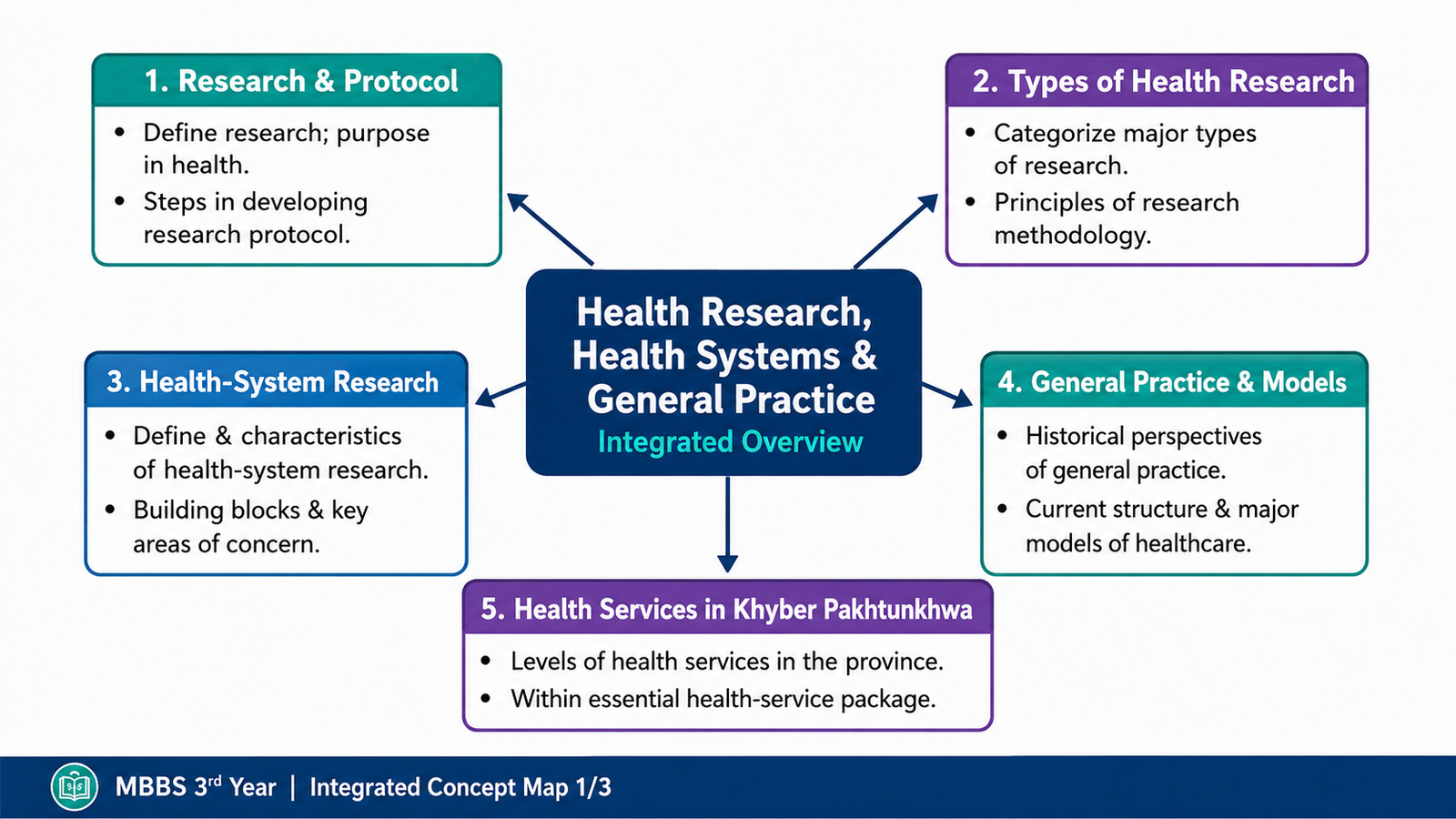
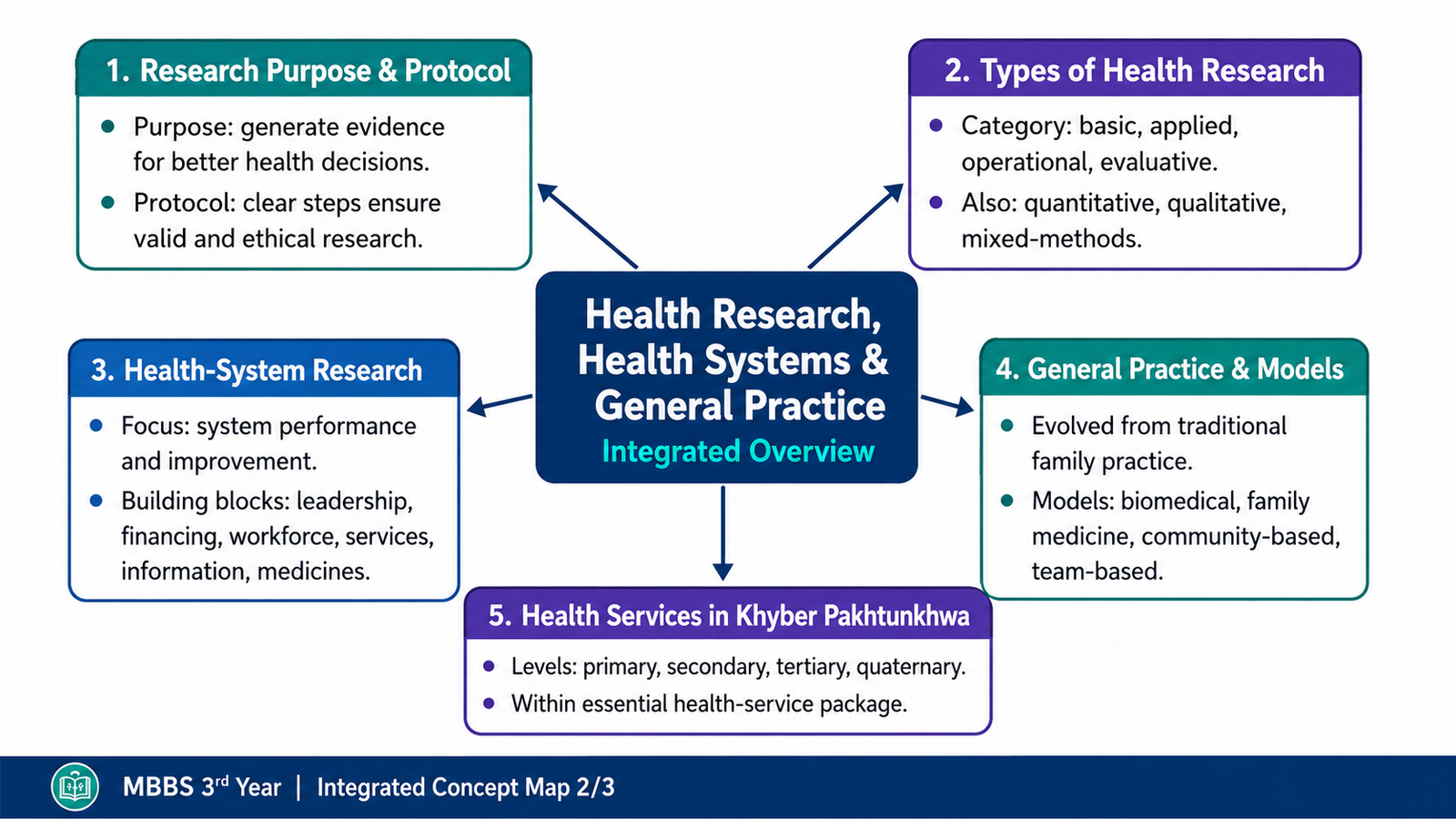
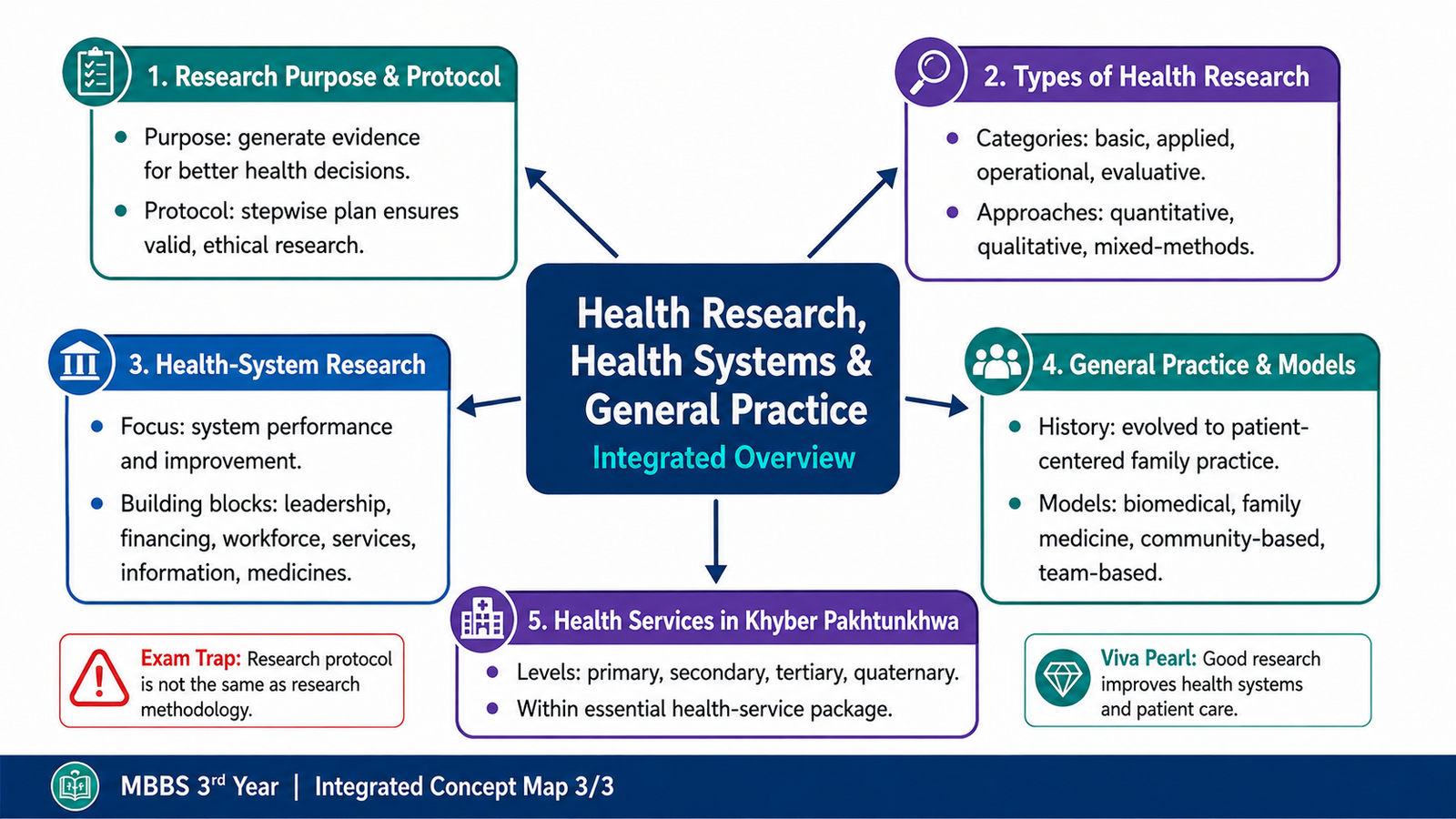
Health research provides a systematic way of answering questions about health, disease, healthcare and health services. A good research project begins with a clearly defined problem and follows an organized protocol so that its findings are trustworthy and useful. Health-system research applies similar scientific principles to the organization, delivery and improvement of healthcare. General practice forms an important part of this system because it usually provides first-contact, continuing and comprehensive care to individuals and families. In this chapter, you will learn the purpose and types of research, the main steps of a research protocol, principles of research methodology, health-system research and its building blocks, the development and organization of general practice, major healthcare models, and the levels through which health services are provided in Khyber Pakhtunkhwa.
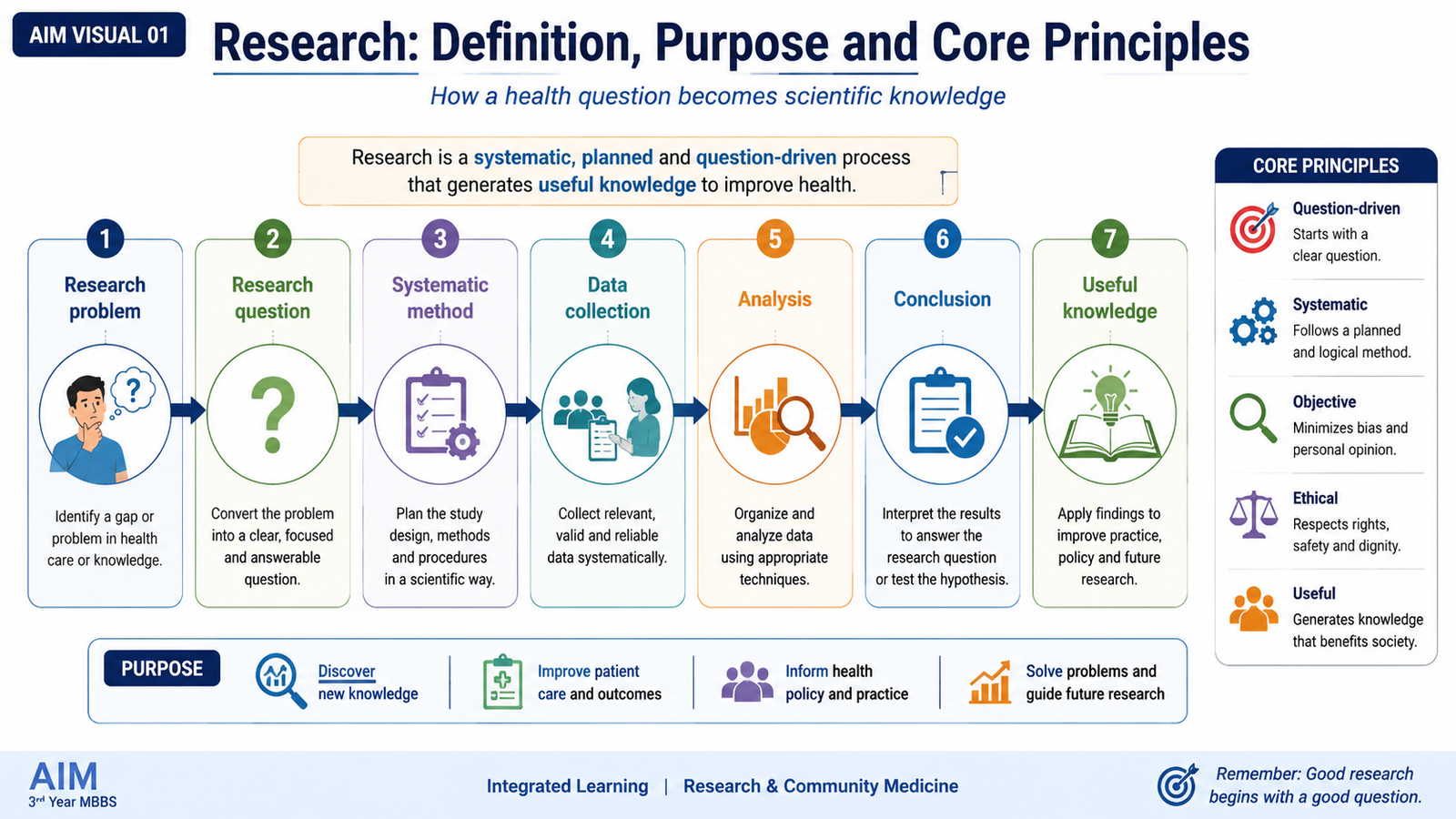
A. Research: Definition, Purpose and Core Principles
Research is a systematic and scientific process used to generate new knowledge, test existing ideas or solve a clearly defined problem. It differs from casual observation because the investigator follows a planned method, collects information in an organized manner and analyzes the findings before reaching a conclusion.
In health sciences, research may focus on disease mechanisms, clinical problems, populations, healthcare services or health systems. The central purpose is not simply to collect information. Research should answer a meaningful question in a way that produces valid, reliable and useful knowledge.
Why is health research performed?
Health research helps us understand health problems and improve decisions. For example, researchers may investigate why a disease occurs, identify risk factors, compare diagnostic approaches, assess an intervention or examine weaknesses in the delivery of healthcare.
- To describe the distribution and characteristics of health problems.
- To identify causes, determinants and risk factors.
- To improve understanding of disease and health-related processes.
- To evaluate diagnostic, preventive or therapeutic interventions.
- To identify problems in healthcare delivery.
- To generate evidence that can support better healthcare decisions.
Basic principles of research methodology
Research methodology refers to the organized approach used to answer a research question. The method must match the question being asked. The population must be clearly identified, variables must be defined, data should be collected consistently and analysis should be appropriate to the type of data obtained.
Good methodology aims to reduce bias, which is a systematic error that can distort study findings. It also aims to reduce the influence of confounding factors, which are additional factors that may falsely alter the apparent relationship between an exposure and an outcome.
B. Developing a Research Protocol
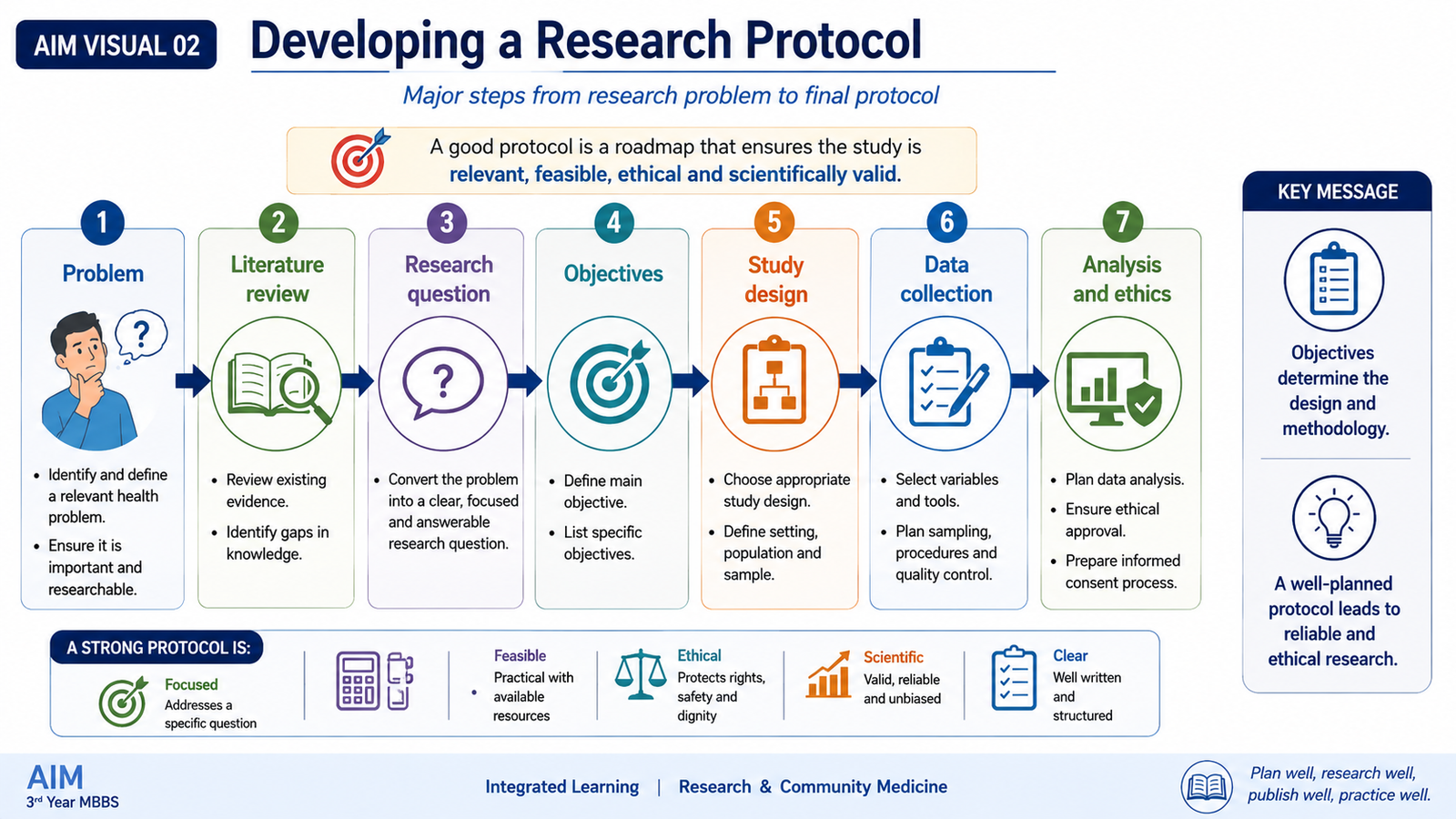
A research protocol is the written plan of a research study. It explains what will be studied, why the study is needed and exactly how the investigator intends to conduct it. Preparing the protocol before data collection prevents important decisions from being made inconsistently during the study.
The parts of a protocol are connected. The research problem leads to a research question; the question determines the objectives; and the objectives determine the most suitable study design, population, variables and methods of analysis.
Major steps in developing a research protocol
1. Select and define the research problem.
The investigator first identifies an important and researchable problem. The problem should be sufficiently specific to be studied using available scientific methods.
2. Review existing knowledge.
Relevant literature is reviewed to understand what is already known, identify gaps in knowledge and avoid unnecessary duplication.
3. Develop the research question.
The broad problem is converted into a clear question that the study can realistically answer.
4. State the objectives.
Objectives describe what the researcher intends to achieve. A broad general objective may be divided into specific objectives that can be directly addressed by the study.
5. Formulate a hypothesis when appropriate.
A hypothesis is a testable statement about an expected relationship or difference. Not every descriptive study requires one.
6. Select the research design.
The design determines the overall structure of the investigation. The choice depends on whether the study is descriptive, analytical or experimental and on the type of question being asked.
7. Define the study population and setting.
The researcher identifies who will be studied and where the study will take place. Eligibility criteria clarify which participants can or cannot enter the study.
8. Plan sampling.
Because it is often impossible to study every member of a population, a sample is selected. The sampling method should provide participants who appropriately represent the population relevant to the research question.
9. Define variables and methods of measurement.
A variable is a characteristic that can differ between individuals or observations, such as age, blood pressure or presence of a disease. Important variables should have clear operational definitions so that they are measured consistently.
10. Plan data collection.
The protocol identifies the information required and the method used to obtain it, such as questionnaires, interviews, examination, laboratory testing or review of records.
11. Plan data management and analysis.
The investigator decides how information will be organized and analyzed so that the study objectives can be answered.
12. Address ethical considerations.
Research involving human participants must respect fundamental ethical principles. Participation should be voluntary, unnecessary harm should be avoided, privacy should be respected and appropriate ethical review should be obtained.
13. Prepare the work plan and other practical details.
The protocol should show that the project can realistically be completed using the available time and resources.
C. Major Types of Research and Health Research
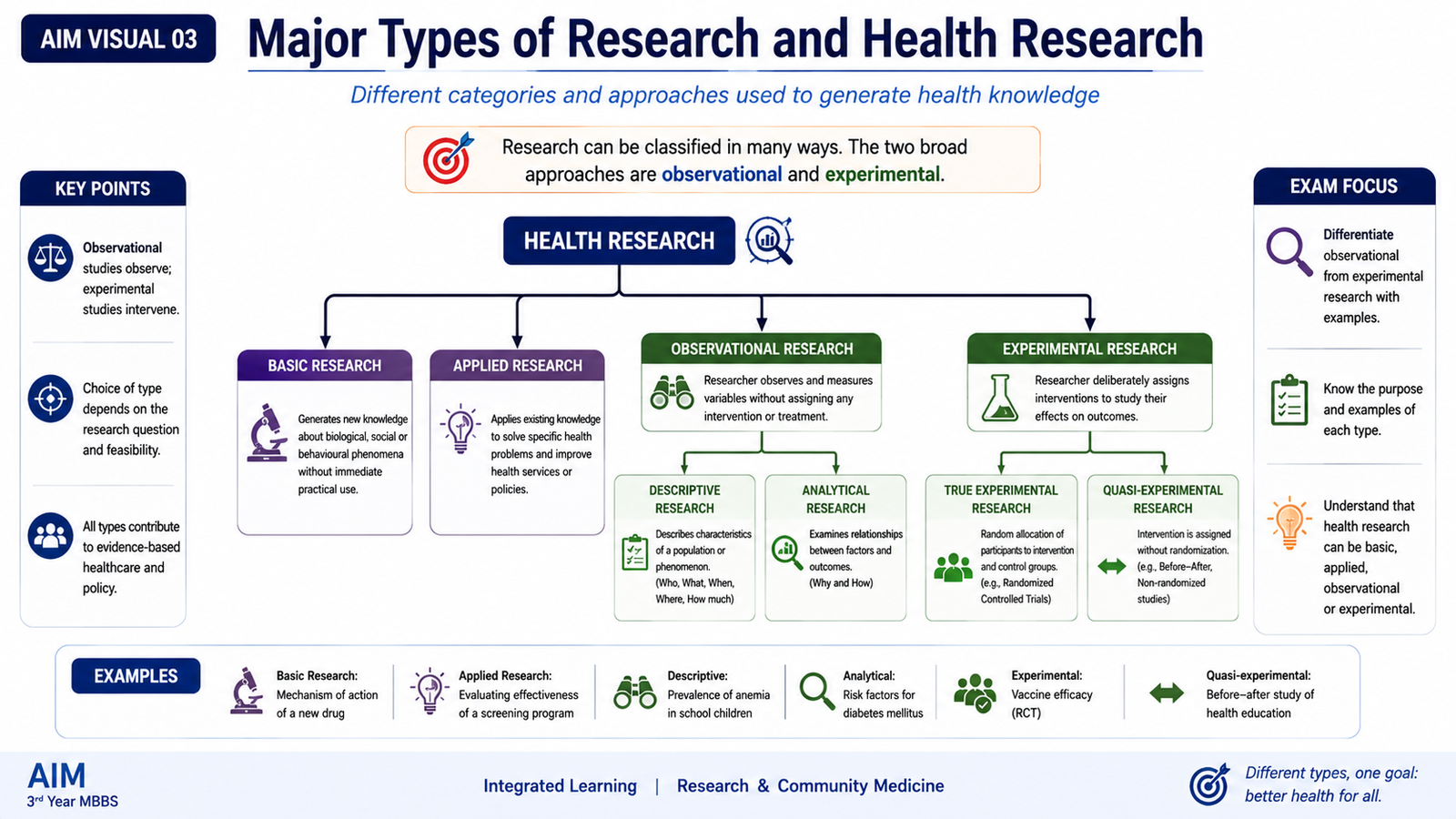
Research can be classified in several ways because a single study can be described according to its purpose, subject and design. Students should therefore understand the principle behind the classification rather than assume that every study belongs to only one category.
Research according to purpose
Basic research aims to increase fundamental knowledge about biological or other processes. It may not produce an immediate practical application.
Applied research uses scientific investigation to solve a practical problem. Much health and clinical research is applied because it addresses prevention, diagnosis, treatment or healthcare delivery.
Research according to study approach
Observational research involves observing exposures, characteristics or outcomes without deliberately assigning an intervention.
- Descriptive studies describe a disease, population or health-related event.
- Analytical studies examine possible relationships between exposures and outcomes.
Common observational designs include cross-sectional, case-control and cohort studies. They differ mainly in how participants are selected and how the relationship between exposure and outcome is examined.
Experimental or interventional research involves deliberate introduction or allocation of an intervention so that its effect can be assessed. This design is particularly useful when the investigator wants to determine whether an intervention causes a change in an outcome.
Major categories of health research
Health research covers more than disease biology. It may examine the patient, the population or the healthcare system.
- Biomedical research: studies biological mechanisms related to normal function and disease.
- Clinical research: studies health and disease in patients, including diagnosis, prognosis and interventions.
- Public-health and epidemiological research: studies health events, determinants and interventions at population level.
- Health-services and health-system research: examines how healthcare is organized, delivered, financed and improved.
| Research approach | Main purpose | Typical feature |
|---|---|---|
| Descriptive | Describe a health event | No testing of a causal intervention |
| Analytical observational | Examine associations | Exposure is observed rather than assigned |
D. Health-System Research
A health system includes the people, organizations, resources and activities whose main purpose is to maintain or improve health. Health-system research studies how these different components function and interact.
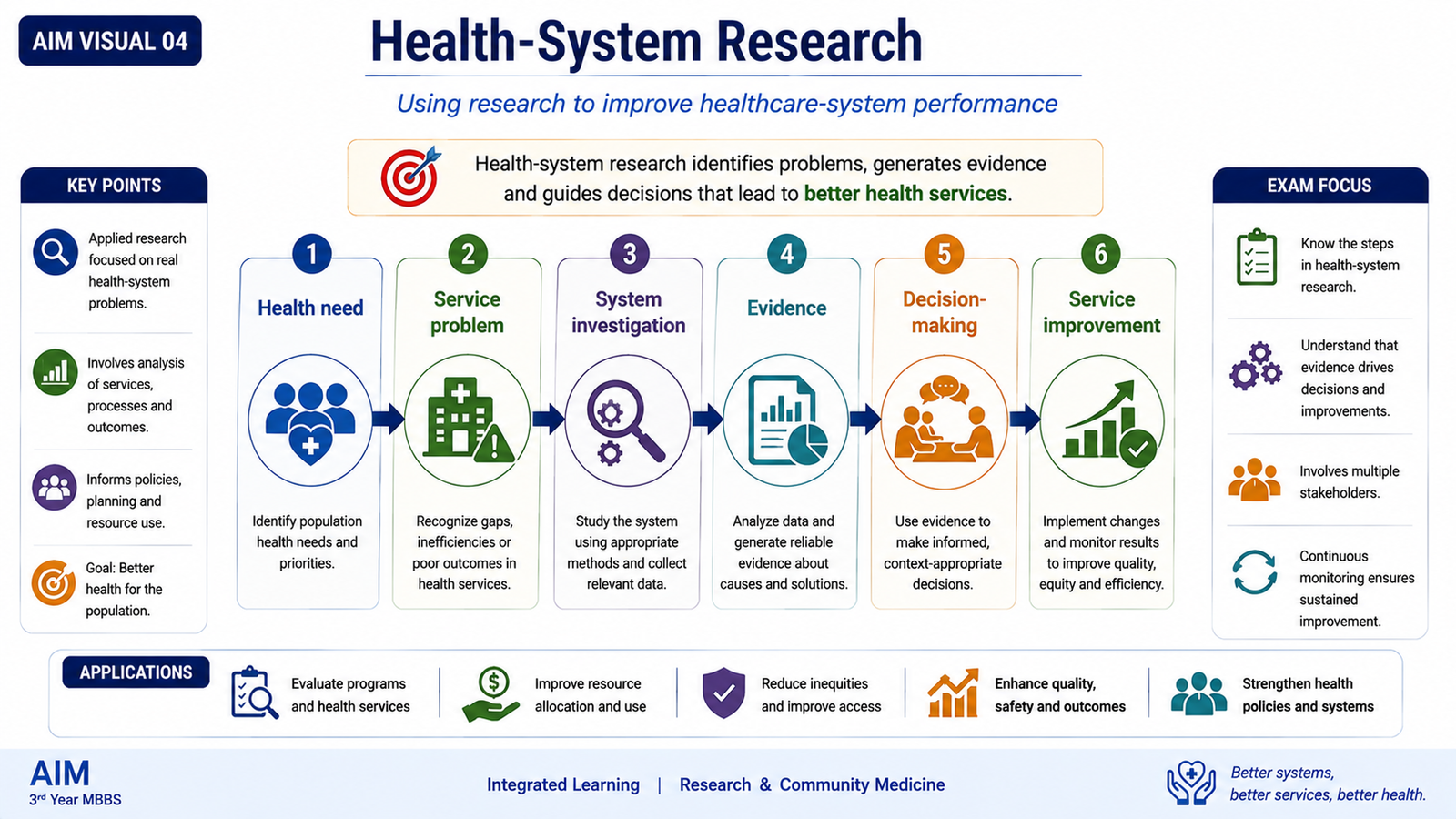
Health-system research is therefore the systematic study of problems related to the organization, delivery, performance and improvement of healthcare systems. Its focus is not limited to whether a particular treatment works. It may ask whether health services are accessible, acceptable, efficient, adequately staffed, appropriately financed or organized in a way that meets population needs.
Important characteristics
Health-system research is usually problem-oriented. It begins with a real problem in healthcare delivery and seeks evidence that may help improve the system.
- Applied: it is directed toward practical healthcare problems.
- System-oriented: it examines services, resources and organizations rather than only individual disease mechanisms.
- Multidisciplinary: it may require epidemiology, economics, management, sociology and clinical knowledge.
- Decision-oriented: findings are intended to support better planning and service delivery.
- Context-sensitive: a solution that works in one setting may not work in the same way in another.
- Population-focused: it considers how services meet the needs of communities as well as individual patients.
Examples of health-system questions
A health-system researcher might examine why patients cannot reach a service, why medicines are repeatedly unavailable, why a referral system is inefficient, whether healthcare workers are distributed appropriately, or whether a service is producing the expected health benefit.
E. Health-System Building Blocks and Key Areas of Concern
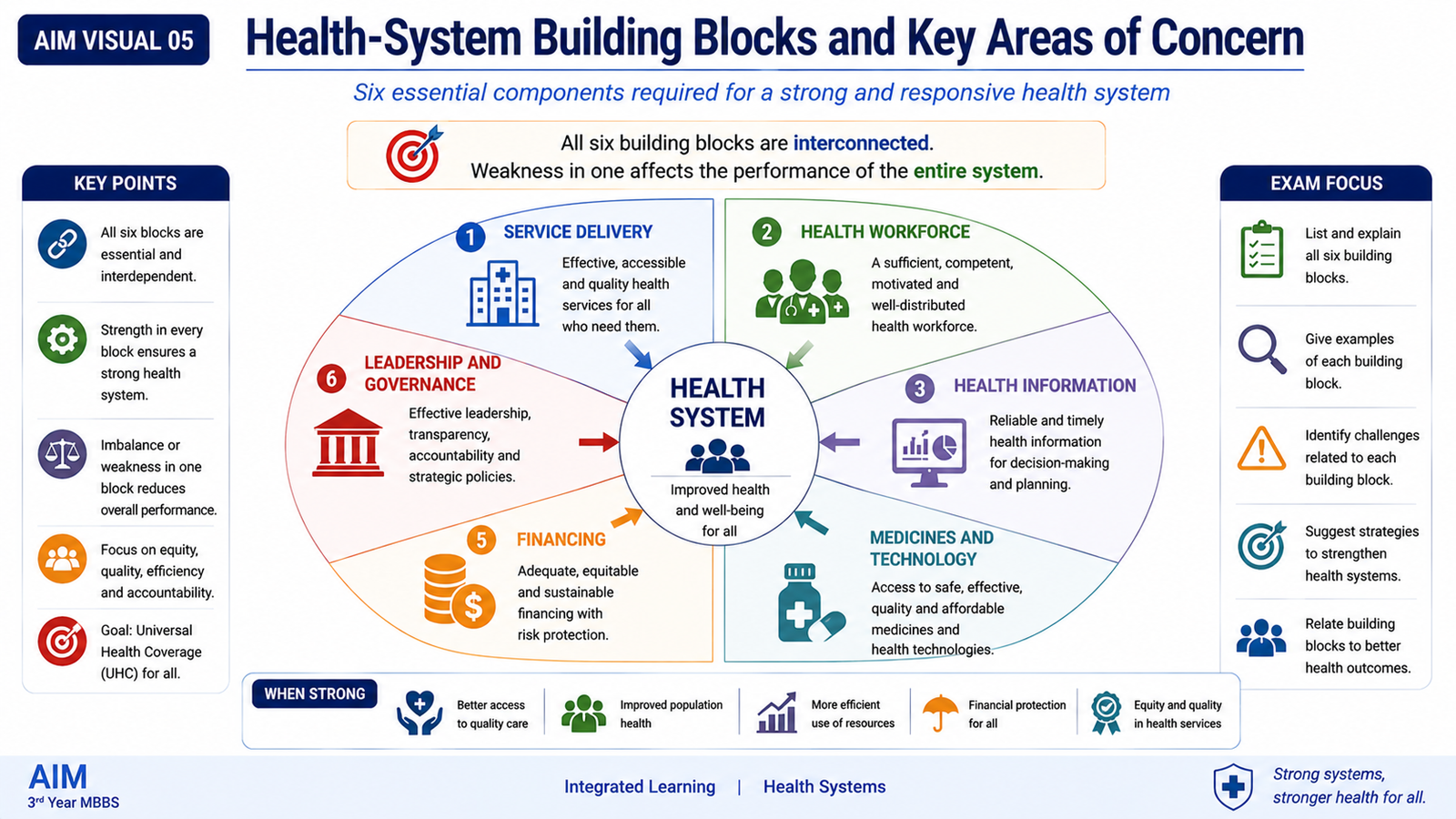
A health system functions properly only when several components work together. Weakness in one component can affect the others. For example, a health facility may exist, but effective care cannot be provided if trained staff, medicines, reliable information or adequate financing are absent.
Six major health-system building blocks
1. Service delivery
Health services should be available and organized so that people can receive appropriate care when it is needed.
2. Health workforce
A functioning system requires sufficient healthcare workers with appropriate knowledge, skills, distribution and support.
3. Health information systems
Information about health problems, service use and system performance is needed for planning, monitoring and decision-making.
4. Access to essential medicines and health technologies
Effective healthcare depends on reliable access to appropriate medicines, diagnostic tools and other health technologies.
5. Health financing
Resources must be collected and used in a way that supports healthcare delivery while reducing unnecessary financial barriers to essential care.
6. Leadership and governance
Health systems require clear direction, responsible management, coordination, accountability and appropriate use of resources.
Key areas of concern in a health system
When evaluating a health system, attention is given not only to the number of hospitals or healthcare workers but also to whether care actually reaches the people who need it.
- Access: whether people can obtain required services.
- Coverage: whether needed services reach the intended population.
- Quality: whether care is appropriate, effective and safe.
- Equity: whether services are fairly available according to health need.
- Efficiency: whether available resources are used appropriately.
- Continuity: whether care remains coordinated when patients move between services.
- Responsiveness: whether services appropriately respond to the needs and expectations of individuals and communities.
F. General Practice and Major Models of Healthcare
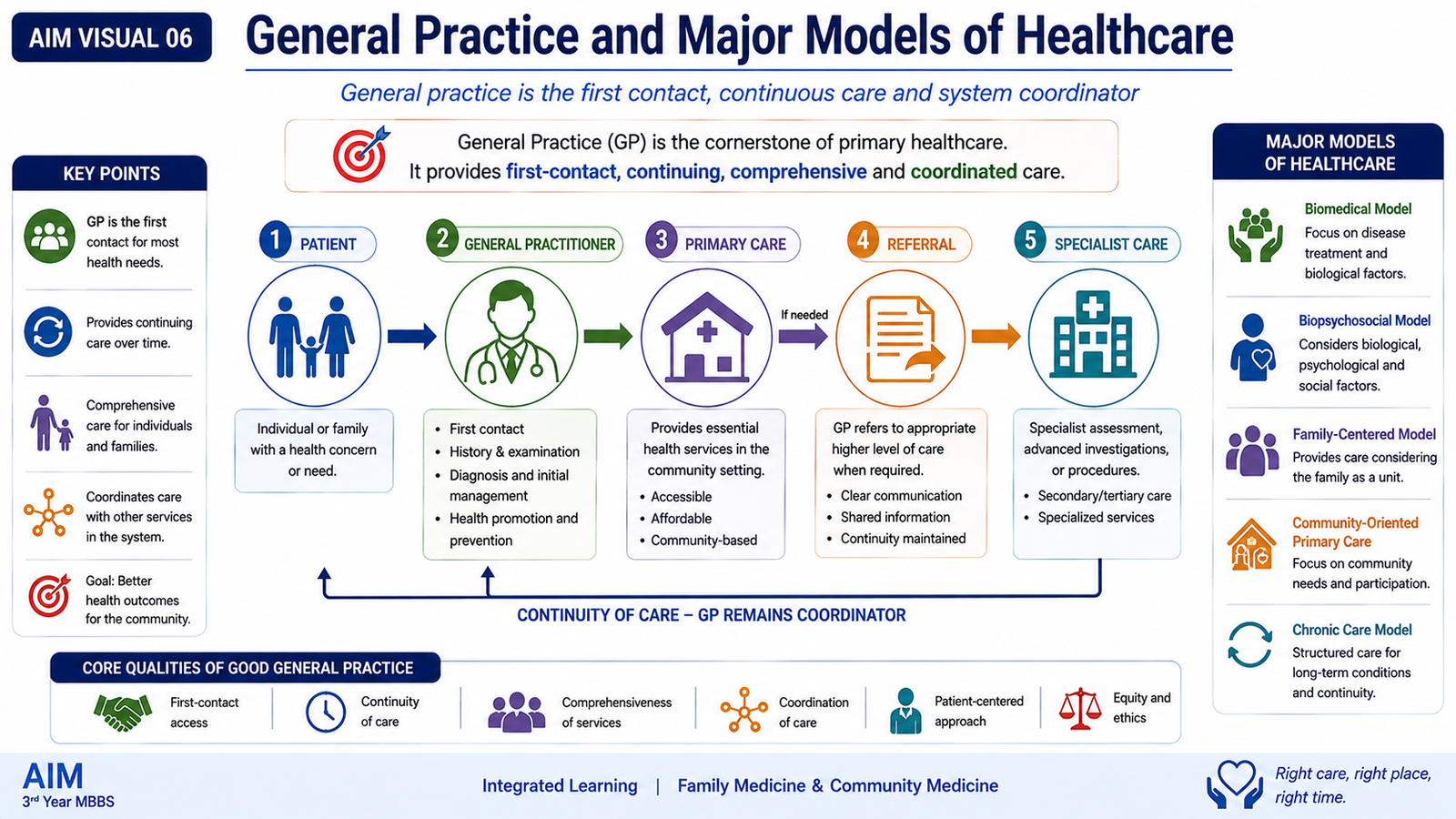
General practice is the provision of broad, first-contact medical care to individuals and families. The general practitioner manages common health problems, recognizes conditions requiring referral and provides continuing care over time. Modern family medicine developed from this generalist tradition and emphasizes comprehensive, continuous and person-centred care.
Historical perspective
In earlier healthcare systems, one physician often managed a wide range of illnesses affecting members of the same family. As medicine advanced, increasing specialization divided care into separate disciplines. The need for a doctor who could provide first-contact care, coordinate different services and follow patients over time maintained the importance of general practice and later contributed to the development of family medicine as an organized discipline.
Therefore, the modern general practitioner is not simply a doctor who treats minor illnesses. General practice acts as an entry point to the wider health system and helps decide which problems can be managed locally and which require referral.
Current organization of general practice
The exact structure varies among countries, but general practice usually functions at the primary-care level. Care may be provided through community clinics, public primary-care facilities or private practices.
Internationally, some healthcare systems use a strong primary-care structure in which patients usually contact a general practitioner or family physician before accessing many specialist services. In other systems, patients may have more direct access to specialist care. The general principle remains that well-organized primary care provides first contact, continuity, coordination and appropriate referral.
In Pakistan, general medical care is delivered through a mixture of public and private services. Primary-level public facilities and community-based services provide important first-contact care, while private general practitioners also contribute substantially to ambulatory healthcare. Patients requiring services beyond the capacity of primary care are referred to higher levels.
Major models of healthcare financing and organization
Countries organize and finance healthcare in different ways. The commonly taught models illustrate who finances care, who provides it and how patients gain access.
| Model | Basic principle | Typical financing approach |
|---|---|---|
| Beveridge model | Healthcare largely organized through government | Mainly taxation |
| Bismarck model | Insurance-based system involving employers and employees | Insurance contributions |
| National Health Insurance model | Publicly supported insurance finances care delivered by a range of providers | Government-supported insurance |
G. Levels of Health Services in Khyber Pakhtunkhwa
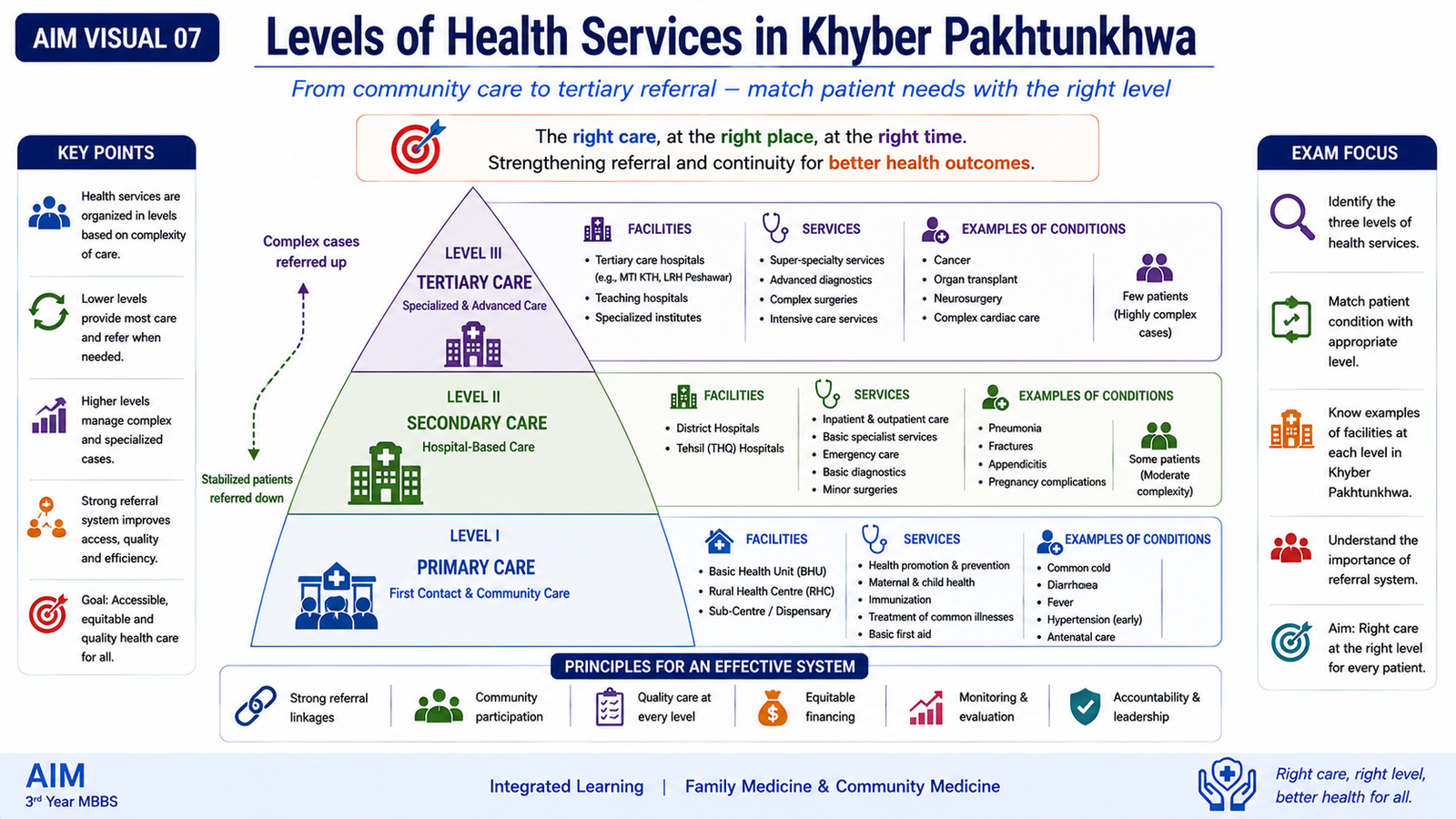
Health services are organized into levels so that common health needs can be managed close to the community while more complex problems are referred to facilities with greater diagnostic and treatment capacity. This creates a referral system in which each level has a different role.
Community and primary-level services
Primary healthcare forms the first organized level of contact between the population and the health system. It addresses common illnesses, basic preventive care, maternal and child health needs, health education and early identification of patients requiring referral.
In Khyber Pakhtunkhwa, facilities such as Basic Health Units (BHUs) and Rural Health Centres (RHCs) form important parts of the primary-care network. Community-based health workers and related community services also help connect households with formal healthcare facilities.
Secondary-level services
Secondary care is required when a patient’s condition cannot be adequately managed at the primary level. It provides broader diagnostic services, inpatient facilities and specialist medical care.
Tehsil-level and district-level hospitals commonly perform this referral role. They receive patients from primary-care facilities and manage conditions requiring greater clinical expertise or resources.
Tertiary-level services
Tertiary care provides highly specialized investigation and management for complicated conditions that cannot be adequately treated at lower levels. Teaching hospitals and other major referral centres commonly provide this level of care.
The purpose of dividing services into levels is not to create isolated institutions. The levels should be connected through an effective referral pathway.
A patient should ideally receive care at the lowest level capable of safely managing the problem. Referral is required when the patient’s needs exceed the resources or expertise available at that level.
⭐ AIM High-Yield Review
- Research is a systematic scientific process used to answer a defined question or generate useful knowledge.
- A research protocol is the written plan describing why and how a study will be performed.
- Research question → objectives → study design → population/sample → variables → data collection → analysis.
- Good methodology reduces systematic error and ensures that the method matches the research question.
- Observational studies do not assign an intervention; experimental studies deliberately introduce or allocate an intervention.
- Health research includes biomedical, clinical, public-health and health-system research.
- Health-system research examines practical problems in the organization, delivery and performance of healthcare.
- The six health-system building blocks are service delivery, workforce, information, medicines/technology, financing, and leadership/governance.
- Important health-system concerns include access, quality, equity, efficiency, coverage and continuity.
- General practice provides broad first-contact and continuing care and coordinates referral when necessary.
- Major healthcare models include Beveridge, Bismarck, National Health Insurance and private/out-of-pocket approaches.
- Many countries use mixed systems rather than a single pure healthcare model.
- Primary care manages common health needs close to the community; secondary care provides greater diagnostic and specialist capacity.
- Tertiary care manages complex conditions requiring highly specialized resources.
- ⭐ In Khyber Pakhtunkhwa, BHUs and RHCs are important primary-care facilities, while higher-level hospitals provide secondary and tertiary referral services.
Watch this video to strengthen your understanding of healthcare systems, their major building blocks and different models of healthcare delivery.