
This chapter follows the supplied KMU learning outcomes in a logical sequence. First understand how health, disease, prevention and health systems connect with one another; then use the AIM High-Yield Review for focused revision.
Topic 10 — Health, Disease, Prevention, Primary Health Care and Health Systems
A structured introduction to the meaning of health and disease, causation and natural history of disease, levels of prevention, Primary Health Care, and the organization of health services including the health system of Pakistan.
Topic Introduction
Community Medicine looks at health and disease not only in individual patients but also in populations. It asks why disease occurs, which factors influence health, how illness develops over time, and where prevention can interrupt this process. These ideas form the basis for organized public-health action and Primary Health Care. In this chapter, you will learn the meaning and scope of Community Medicine, Public Health and Preventive Medicine; concepts of health, disease causation, natural history and the iceberg phenomenon; levels of prevention and disease control; the principles and development of Primary Health Care; and the organization of health services, including Pakistan’s health system. The aim is to understand how individual care and population-based prevention fit into one health system.
A. Foundations of Community Medicine, Public Health and Preventive Medicine
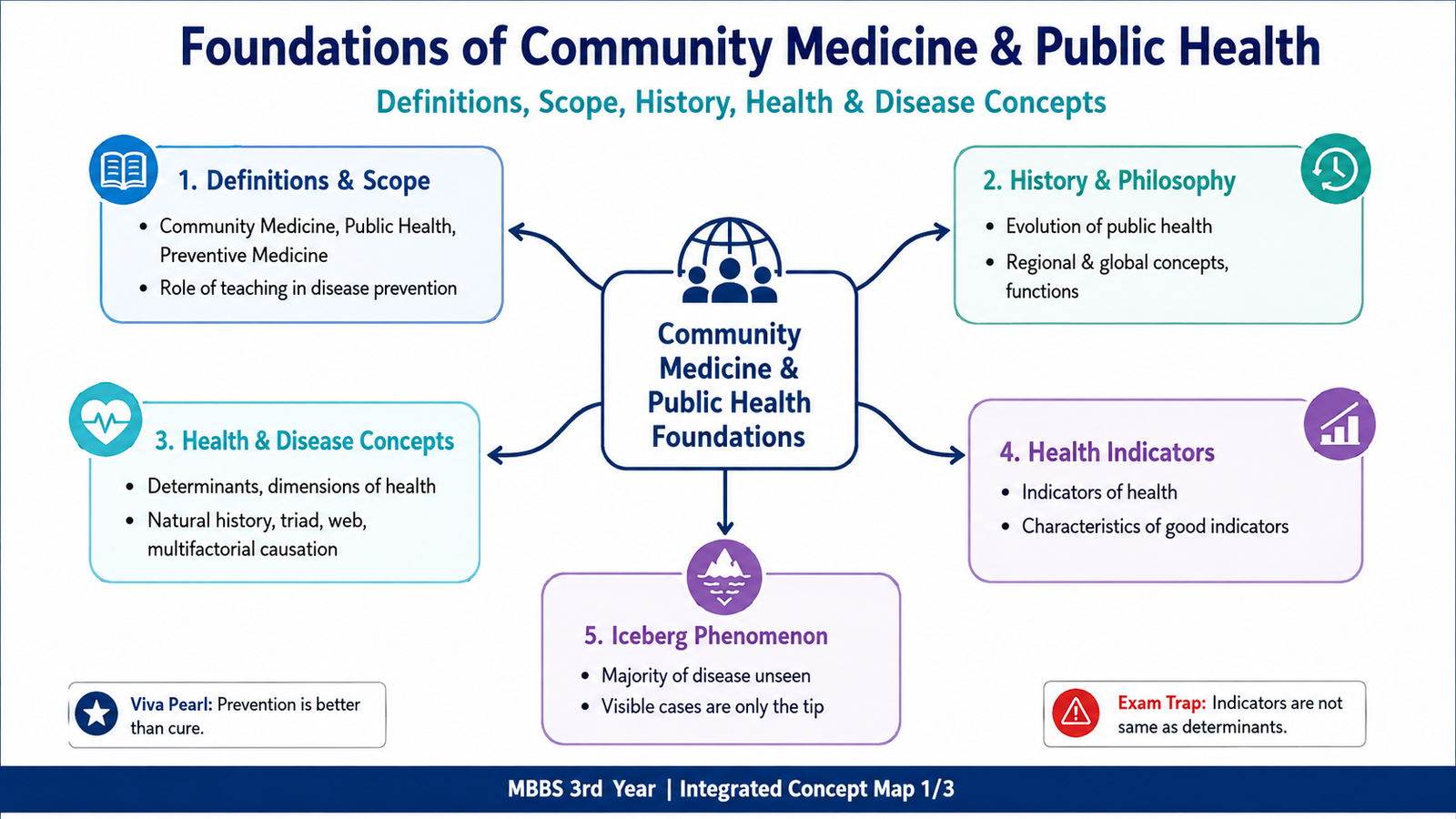
Community Medicine, Public Health and Preventive Medicine are closely related fields, but each emphasizes a slightly different part of the same goal: maintaining and improving health. Understanding these terms first makes the later concepts of prevention, Primary Health Care and health systems much easier.
Community Medicine
Community Medicine is the branch of medicine concerned with the health of populations and communities. It combines medical knowledge with epidemiology, prevention, health promotion and organization of health services. Instead of focusing only on diagnosing and treating one patient, it also examines factors affecting groups of people and plans measures to improve their health.
Public Health
Public Health refers to organized efforts of society to prevent disease, prolong life and promote health. Its activities may involve safe water, sanitation, immunization, disease surveillance, health education, maternal and child health services and other organized measures that protect populations.
Preventive Medicine
Preventive Medicine emphasizes actions taken to prevent disease, detect it early or reduce its consequences. It therefore extends from preventing exposure to disease-causing factors to limiting disability in people who already have established disease.
| Field | Main Emphasis | Typical Perspective |
|---|---|---|
| Community Medicine | Health of defined communities and populations | Medical care linked with population health |
| Public Health | Organized societal action for health | Population-wide protection and promotion |
| Preventive Medicine | Prevention, early detection and limitation of consequences | Intervention before or during disease development |
Why Public-Health Teaching Matters
Clinical medicine becomes much more effective when doctors understand why diseases occur within communities. Public-health teaching enables medical students to recognize determinants of disease, identify preventable risk factors and understand measures that can protect many people at the same time. It therefore shifts part of medical thinking from treating disease after it appears toward preventing disease before serious consequences develop.
History and Philosophy of Public Health
The development of public health reflects a gradual change from responding to disease after its occurrence toward organized prevention. Early public-health efforts concentrated mainly on environmental sanitation, clean water, waste disposal and control of communicable diseases. As scientific understanding improved, epidemiology, immunization, maternal and child health, health education and organized health services became important components.
The modern philosophy of public health recognizes that health is influenced by biological, environmental, social and health-service factors. Public health therefore operates at local, regional, national and global levels. Although specific health priorities differ between populations, its major functions remain the assessment of population health, prevention of disease, promotion of health and organization of appropriate health services.

B. Health, Disease and the Factors That Determine Health
Health and disease are not simply two completely separate states. A person’s health reflects the interaction of many influences, including biological characteristics, environment, lifestyle, socioeconomic conditions and available health services. Community Medicine studies these influences because changing them can prevent disease and improve the health of whole populations.
Concept and Dimensions of Health
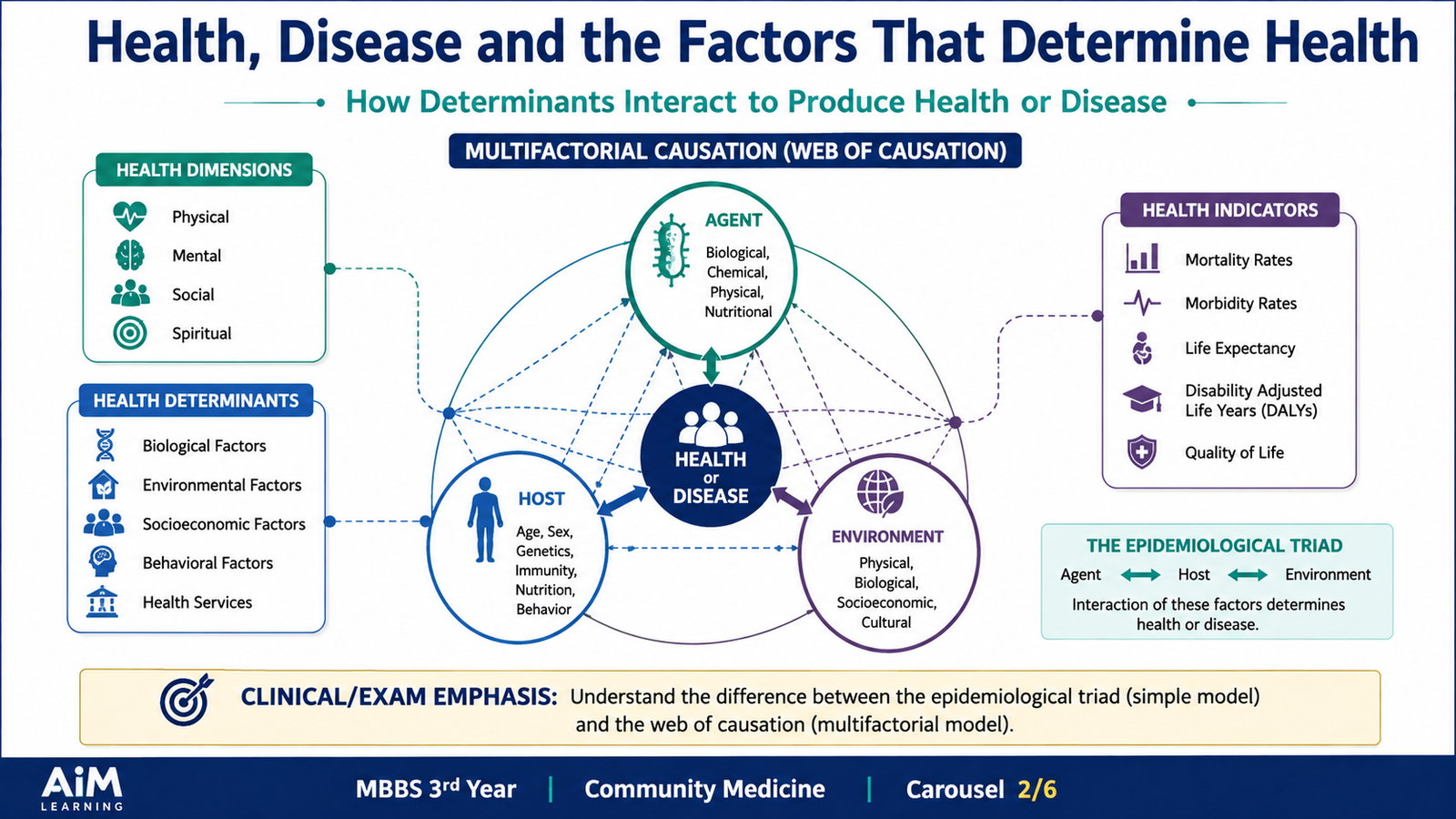
Health is broader than the absence of a diagnosed disease. It includes the ability of a person to function physically, mentally and socially. These dimensions interact with one another; disturbance in one area can influence the others.
- Physical dimension: effective functioning of the body and its systems.
- Mental dimension: ability to think, cope and maintain psychological balance.
- Social dimension: ability to participate and function appropriately within family and society.
Determinants of Health
A determinant of health is a factor that influences the health of an individual or population. Disease usually develops because several determinants interact rather than because of one isolated factor.
- Biological factors: age, sex and inherited characteristics may influence susceptibility.
- Environment: physical, biological and social surroundings can increase or reduce exposure to disease.
- Lifestyle and behaviour: personal habits may increase or reduce health risks.
- Socioeconomic conditions: education, occupation, income and living conditions influence opportunities for healthy living.
- Health services: availability, accessibility and quality of preventive and curative care affect health outcomes.
Epidemiological Triad
The epidemiological triad explains disease through interaction between three components: agent, host and environment. The model is especially useful for understanding communicable diseases, although the general idea of interacting causative factors can also help explain other conditions.
Agent + susceptible host + favourable environment → interaction permitting disease to occur.
- Agent: the factor whose presence, absence or excess contributes to disease.
- Host: the person or population whose characteristics influence susceptibility or response.
- Environment: external conditions that influence the agent, host or their interaction.
Multifactorial Causation and the Web of Causation
Many diseases cannot be explained adequately by a single agent. Multifactorial causation means that several factors contribute to disease development. These factors may interact with and reinforce one another.
The web of causation represents this interconnected network. Instead of searching for one isolated cause, it identifies several contributing factors. This concept is particularly useful because prevention may be possible by interrupting one or more important links in the web even when the complete cause cannot be removed.
Indicators of Health
A health indicator is a measurable variable used to describe the health status of a population or an important factor influencing health. A single indicator cannot describe every aspect of health, so different indicators are considered together.
Important groups of indicators may describe:
- mortality;
- morbidity;
- disability;
- nutritional status;
- health-service availability and utilization;
- environmental conditions;
- socioeconomic conditions;
- quality-of-life or related health status.
A useful health indicator should be scientifically meaningful, measurable, reliable enough to give consistent information, sensitive to relevant changes and practical for the purpose for which it is being used.
C. Natural History of Disease and the Iceberg Phenomenon
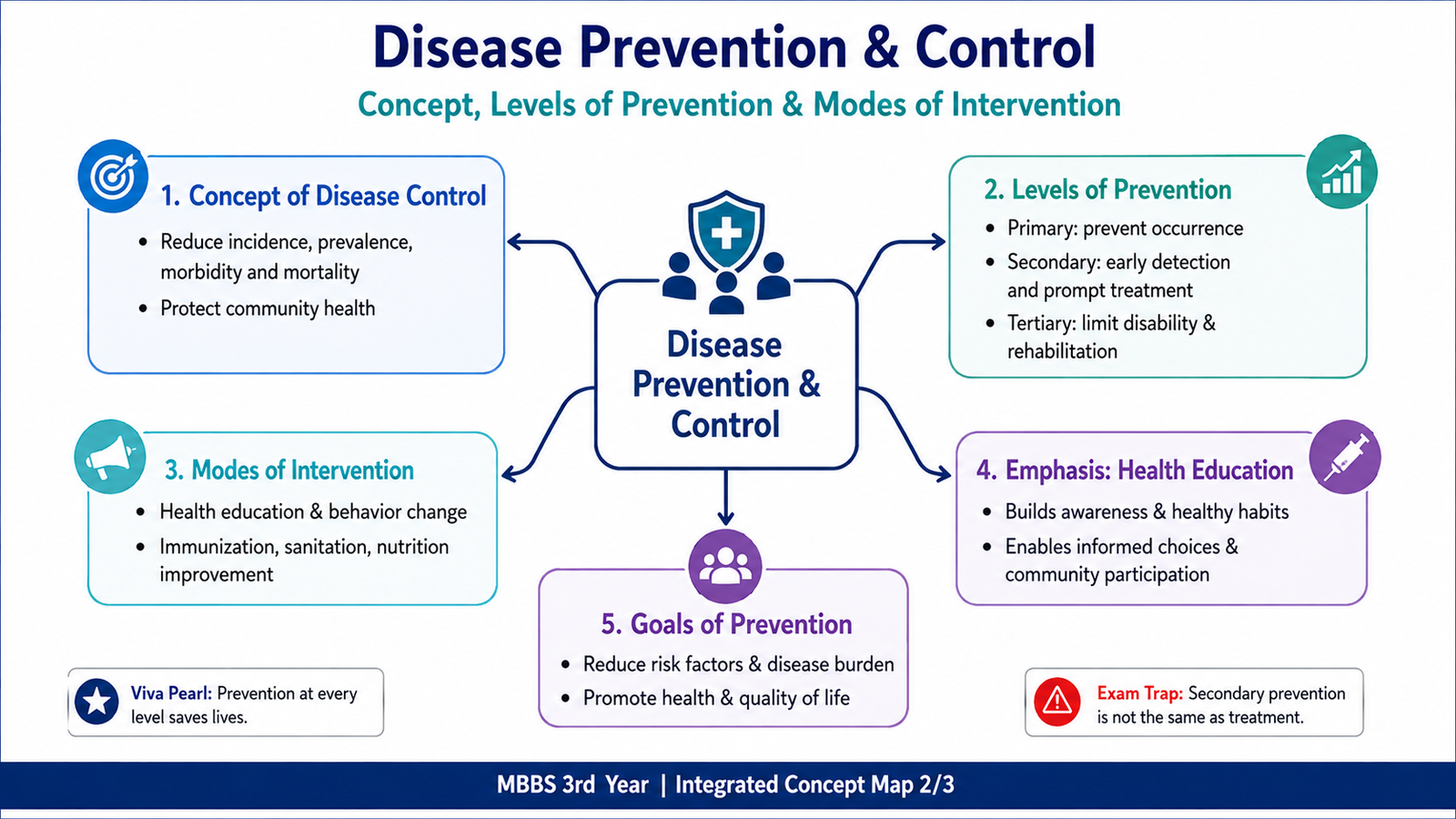
The natural history of disease describes how a disease develops and progresses over time when no intervention changes its course. It begins before clinical disease is obvious and may end in recovery, disability, chronic illness or death. This concept is important because different preventive interventions become useful at different stages of disease development.
1. Pre-Pathogenesis Phase
During the pre-pathogenesis phase, disease has not yet developed in the individual. However, factors capable of producing disease are already interacting within the environment and population. A susceptible host may be exposed to risk factors or an agent, but there are no disease-related tissue changes or clinical manifestations yet.
This phase is especially important for prevention because action may stop disease before the pathological process begins.
2. Pathogenesis Phase
The pathogenesis phase begins after the disease process starts within the host. Early pathological changes may occur without symptoms. This is followed, in some diseases, by a point at which the condition becomes detectable through screening or other methods before the patient experiences recognizable clinical illness.
As the process progresses, signs and symptoms may appear and the disease becomes clinically apparent. The final outcome depends on the nature of the disease, host response and any intervention. Possible outcomes include recovery, residual disability, chronic disease or death.
Iceberg Phenomenon
The iceberg phenomenon of disease explains that the clinically recognized cases of some diseases represent only a portion of the total disease present in a population. The visible part of an iceberg represents diagnosed and clinically apparent cases. Beneath the surface may be undiagnosed, subclinical, mild or otherwise unrecognized disease.
This matters in Community Medicine because counting only patients who reach health facilities may underestimate the true burden of disease. It also explains why screening, surveillance and population-based assessment can provide information that routine clinical practice alone may miss.
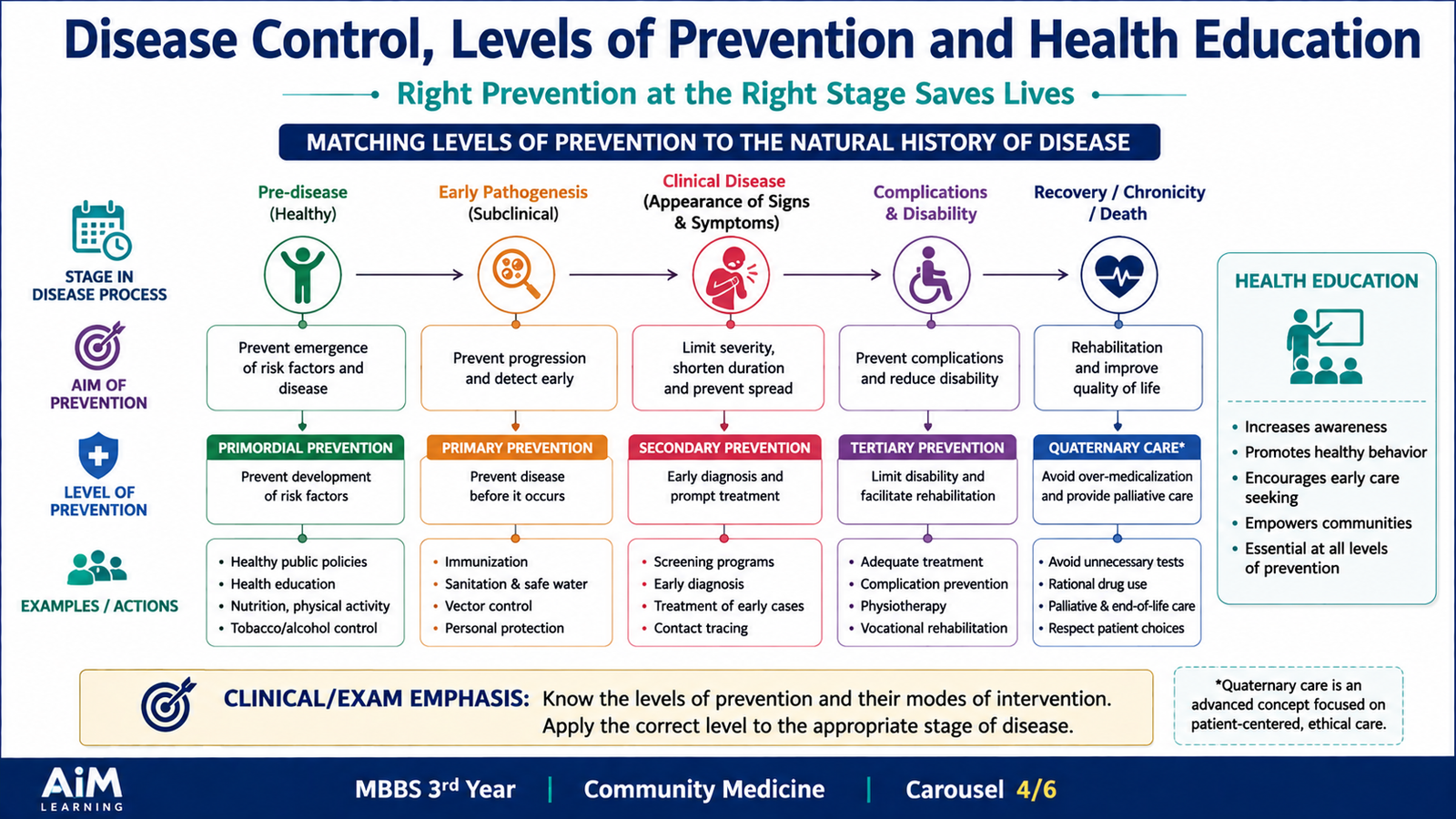
D. Disease Control, Levels of Prevention and Health Education
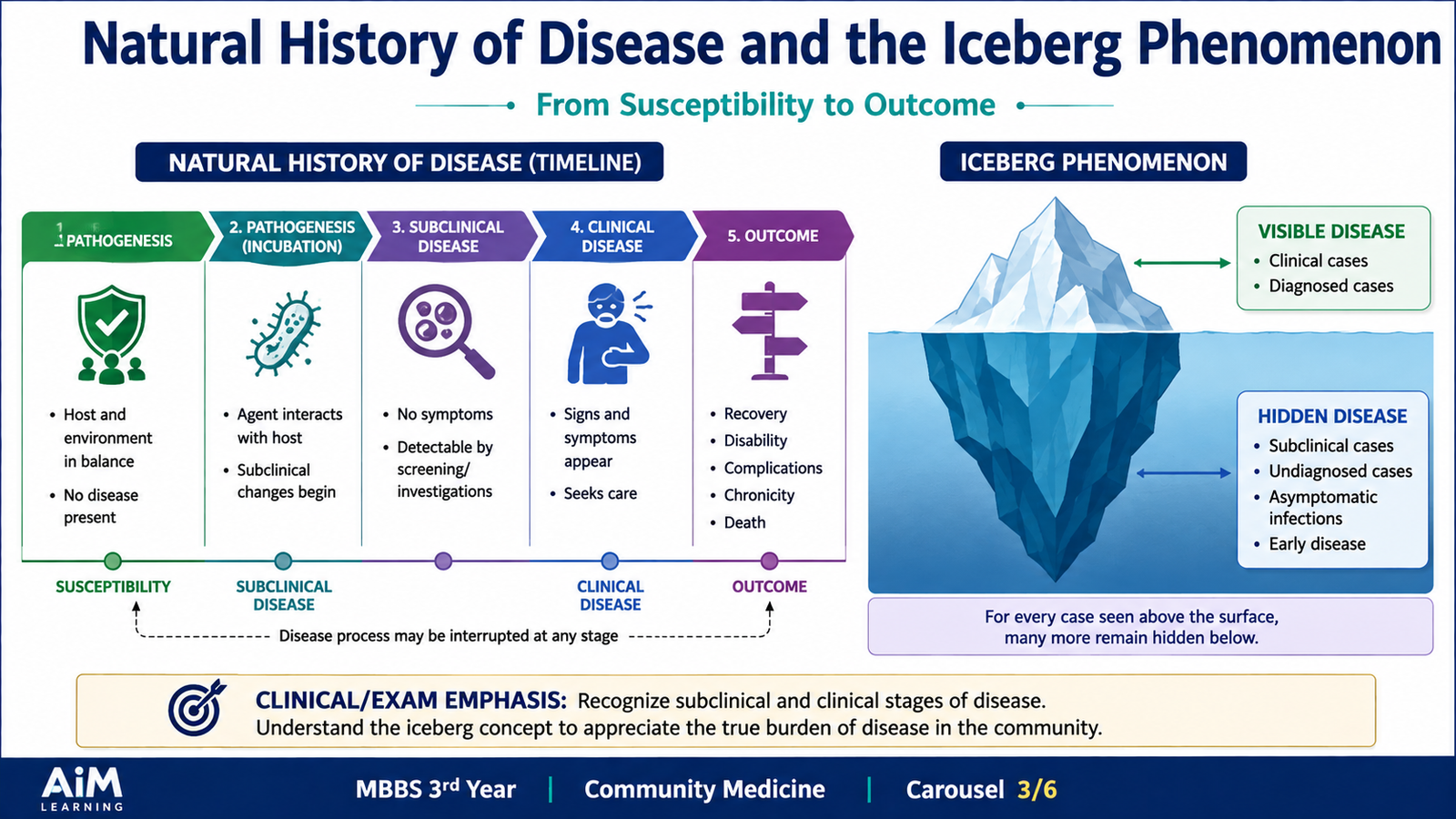
Disease prevention aims to stop disease from occurring, identify it before major consequences develop, or reduce the disability produced by established disease. Disease control is a broader organized effort to reduce the occurrence, consequences or transmission of a disease to a level at which it is no longer causing the same degree of public-health burden.
Levels of Prevention
The levels of prevention correspond broadly to different stages in the natural history of disease. This relationship is important: prevention is most effective when an intervention is applied at the appropriate point in disease development.
| Level | Main Purpose | Typical Mode of Intervention |
|---|---|---|
| Primordial prevention | Prevent development of risk-promoting social or environmental conditions | Healthy policies, environments and behaviours before risk factors become established |
| Primary prevention | Prevent disease before it begins | Health promotion and specific protection |
| Secondary prevention | Detect and manage disease early | Early diagnosis and prompt intervention |
| Tertiary prevention | Reduce disability and improve function after disease is established | Disability limitation and rehabilitation |
Primordial Prevention
Primordial prevention acts even before conventional risk factors have become established. Its purpose is to prevent the emergence of social, environmental or behavioural conditions that later produce disease risk. It therefore acts very early in the chain of causation.
Primary Prevention
Primary prevention acts before the disease process begins. It includes health promotion, which improves general conditions supporting health, and specific protection, which protects against a particular disease or hazard.
Secondary Prevention
Secondary prevention acts after the disease process has started but aims to identify disease early and intervene before serious progression or complications develop. Early diagnosis is useful only when detection can be followed by meaningful action.
Tertiary Prevention
Tertiary prevention is used when disease is already established. It attempts to prevent further disability, preserve remaining function and help the individual return to the highest achievable level of functioning through disability limitation and rehabilitation.
Modes of Disease Intervention
Control and prevention can operate at different points in the pathway from risk to disease outcome. Depending on the disease, interventions may reduce exposure, increase host resistance, modify behaviour, detect disease earlier, interrupt transmission, prevent complications or support rehabilitation.
Role of Health Education
Health education helps individuals and communities understand health problems and make informed decisions about behaviours that influence health. Simply providing information is not enough; effective health education should help people understand why a change matters and encourage practical action that can be adopted in daily life.
Health education can contribute at several levels of prevention. It can promote healthy behaviour before disease appears, encourage early use of appropriate services and help patients with established disease reduce complications and maintain function.
E. Primary Health Care: Development, Principles, Elements and Assessment
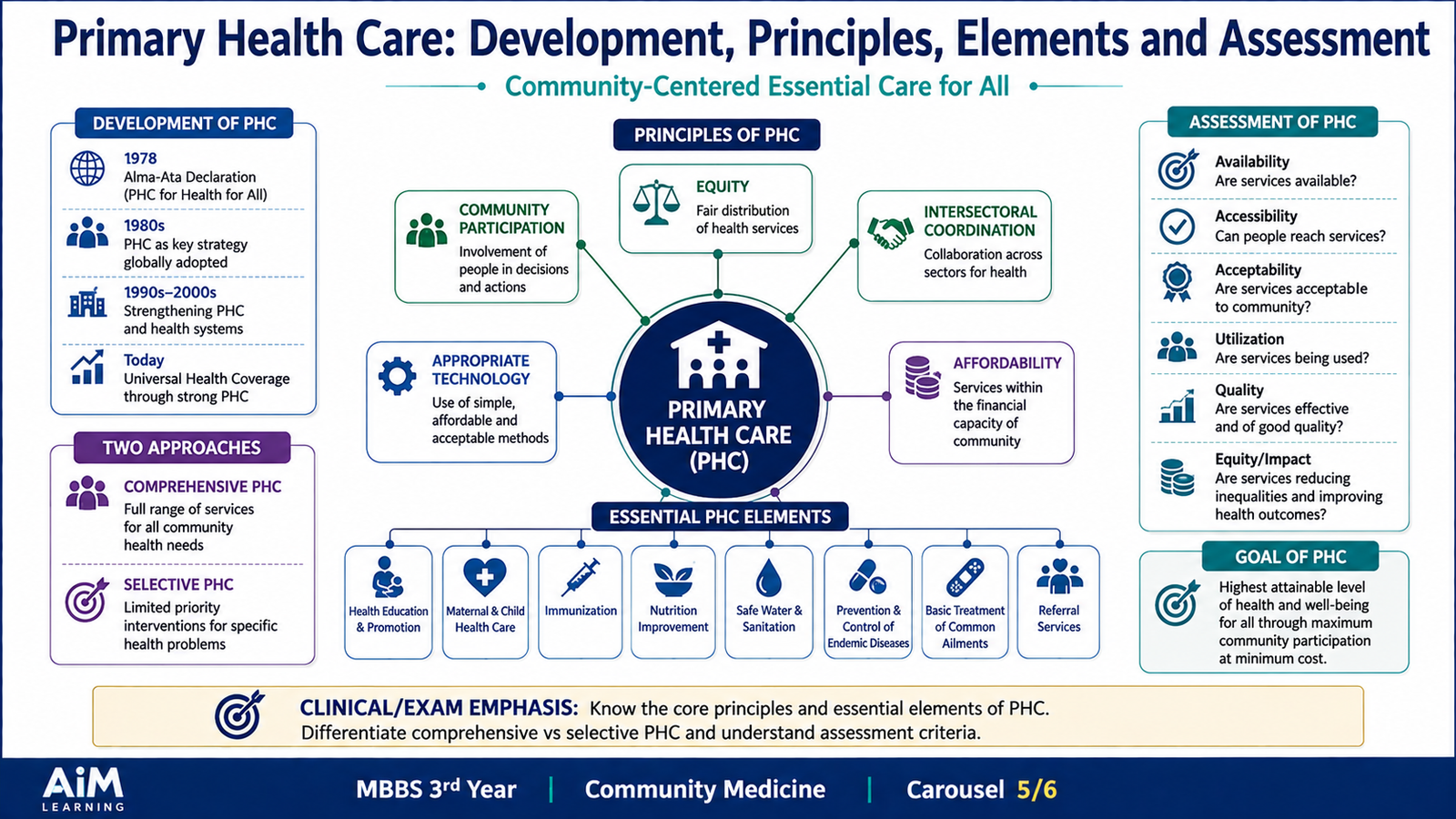
Primary Health Care (PHC) is an approach to health care that brings essential care as close as practical to where people live and work and makes communities active participants in improving their own health. PHC is broader than simply providing first-contact treatment. It combines promotive, preventive, curative and rehabilitative services with community participation and coordination between different sectors.
Historical Development of PHC
The PHC approach developed from recognition that highly centralized and hospital-oriented systems alone could not meet the basic health needs of entire populations. Large differences in access to health services remained, particularly among underserved communities. The international PHC movement therefore emphasized accessible essential care, equity and community participation.
The Alma-Ata Declaration of 1978 established Primary Health Care as the key approach for working toward the goal of Health for All. “Health for All by the year 2000” expressed the goal that all people should reach a level of health that enables socially and economically productive lives. It did not mean that every disease would disappear by the year 2000.
Principles of Primary Health Care
The principles of PHC describe how health services should be organized so that essential care reaches the population effectively and fairly.
- Equitable distribution: essential health services should be available according to need rather than concentrated only where resources are greatest.
- Community participation: people should participate in identifying health needs and in planning and implementing appropriate solutions.
- Intersectoral coordination: health is influenced by sectors such as education, nutrition, water, sanitation and social development, so cooperation is necessary.
- Appropriate technology: methods should be scientifically sound, practical, acceptable and suitable for available resources.
Elements of Primary Health Care
The classical PHC framework includes essential activities that address common and important health needs of communities. These include:
- education concerning prevailing health problems and methods for their prevention and control;
- promotion of food supply and proper nutrition;
- adequate supply of safe water and basic sanitation;
- maternal and child health care, including family-planning services;
- immunization against major infectious diseases;
- prevention and control of locally endemic diseases;
- appropriate treatment of common diseases and injuries;
- provision of essential medicines.
Implementation Strategies
PHC implementation requires more than establishing health facilities. Services must be accessible to communities, linked through an appropriate referral system, supported by trained health workers and coordinated with community and other sectors. Local participation is important because health programmes are more likely to meet real needs when communities are involved.
Comprehensive and Selective Primary Health Care
Comprehensive PHC follows the broad philosophy of addressing the major determinants and health needs of a community through integrated promotive, preventive, curative and rehabilitative services.
Selective PHC concentrates limited resources on a smaller number of priority interventions chosen because they can produce important health benefits. Its advantage is practical focus, but if used alone it may not address the wider causes of poor health or the full range of community needs.
| Feature | Comprehensive PHC | Selective PHC |
|---|---|---|
| Scope | Broad and integrated | Focused on selected priorities |
| Approach | Addresses wider health needs and determinants | Targets specific high-priority problems |
| Main strength | Whole-system and community approach | Efficient use of limited resources for chosen interventions |
F. District Health Services and the Health System of Pakistan
A health system is the organized network of people, institutions, resources and activities whose main purpose is to maintain or improve health. For students of Community Medicine, the important concept is not simply the names of different facilities but how different levels of care connect with one another and how the major functions of a health system work together.
District Healthcare System
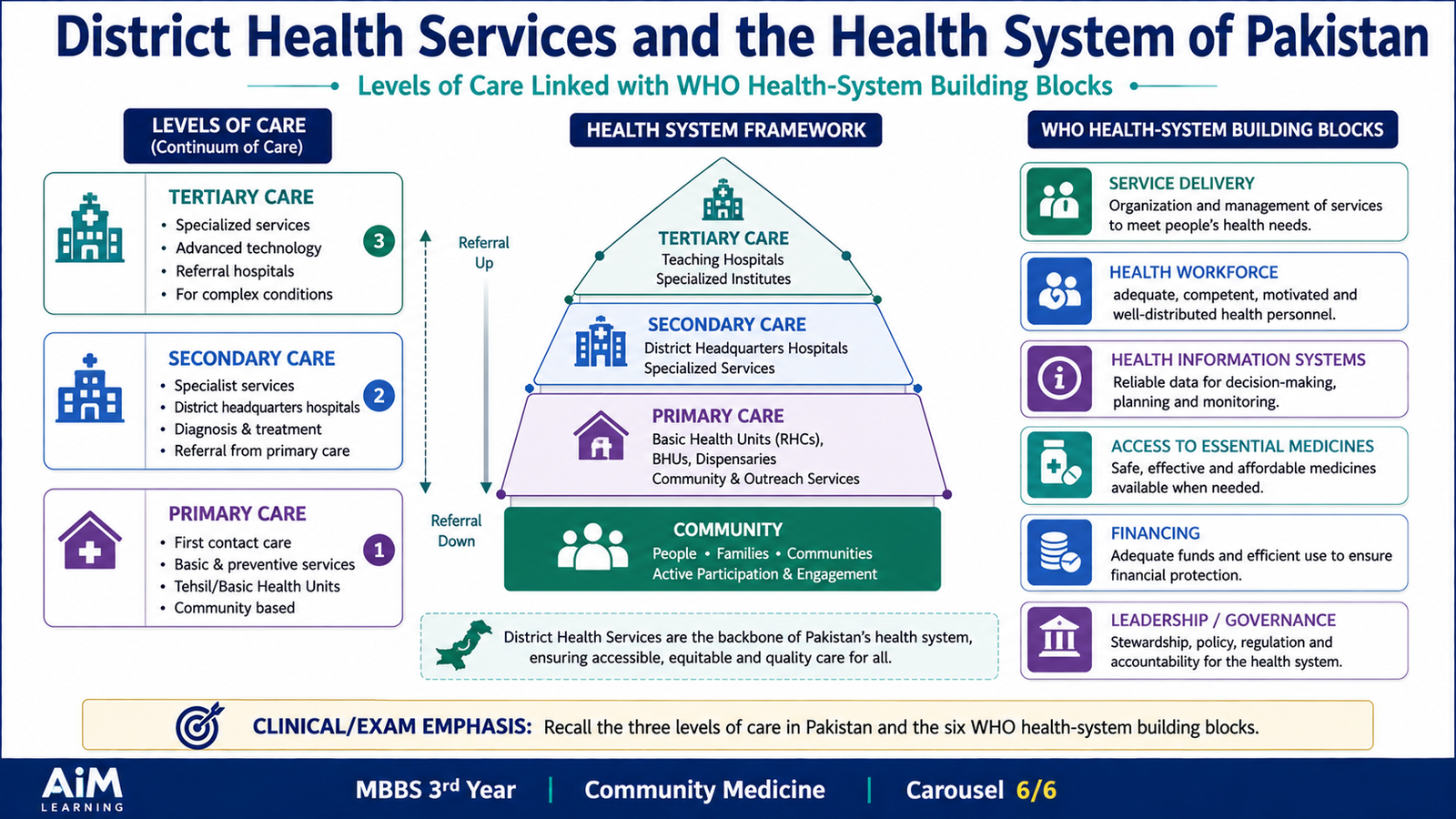
The district is an important operational level for organizing health services because it connects community-level and primary-care services with facilities capable of providing more advanced care. A functional district system should allow patients to receive appropriate care at the lowest suitable level and move to a higher level through referral when necessary.
Conceptually, services can be viewed as a connected pathway:
A district health system should therefore support preventive, promotive and curative activities rather than functioning only as a collection of treatment facilities. Referral links are essential because different levels of care have different capabilities.
Health System of Pakistan
Pakistan’s health system includes public-sector and private-sector providers and operates through different levels of care. Primary-level services provide basic and first-contact care, secondary-level services provide broader diagnostic and inpatient capacity, and tertiary-level institutions provide more specialized services. The effectiveness of the overall system depends on how well these levels are connected and whether people can obtain the services they need.
WHO Health-System Framework
The WHO framework describes a health system through six major building blocks. These are useful for understanding Pakistan’s healthcare system because they show that health-system performance depends on much more than hospitals alone.
- Service delivery: provision of effective, safe and appropriate health services to people who need them.
- Health workforce: availability and appropriate distribution of competent health workers.
- Health information systems: collection, analysis and use of reliable health information for planning and decision-making.
- Access to essential medicines and technologies: ensuring that essential health products are available and appropriately used.
- Health financing: mobilizing and using resources so that health services can be provided and people can obtain needed care.
- Leadership and governance: policy direction, regulation, coordination, accountability and stewardship of the health system.
These building blocks are interconnected. For example, expanding a service is unlikely to improve health if trained staff are unavailable, essential medicines are missing, information systems are weak or financing is inadequate. Similarly, good leadership is needed to coordinate different components of the system.
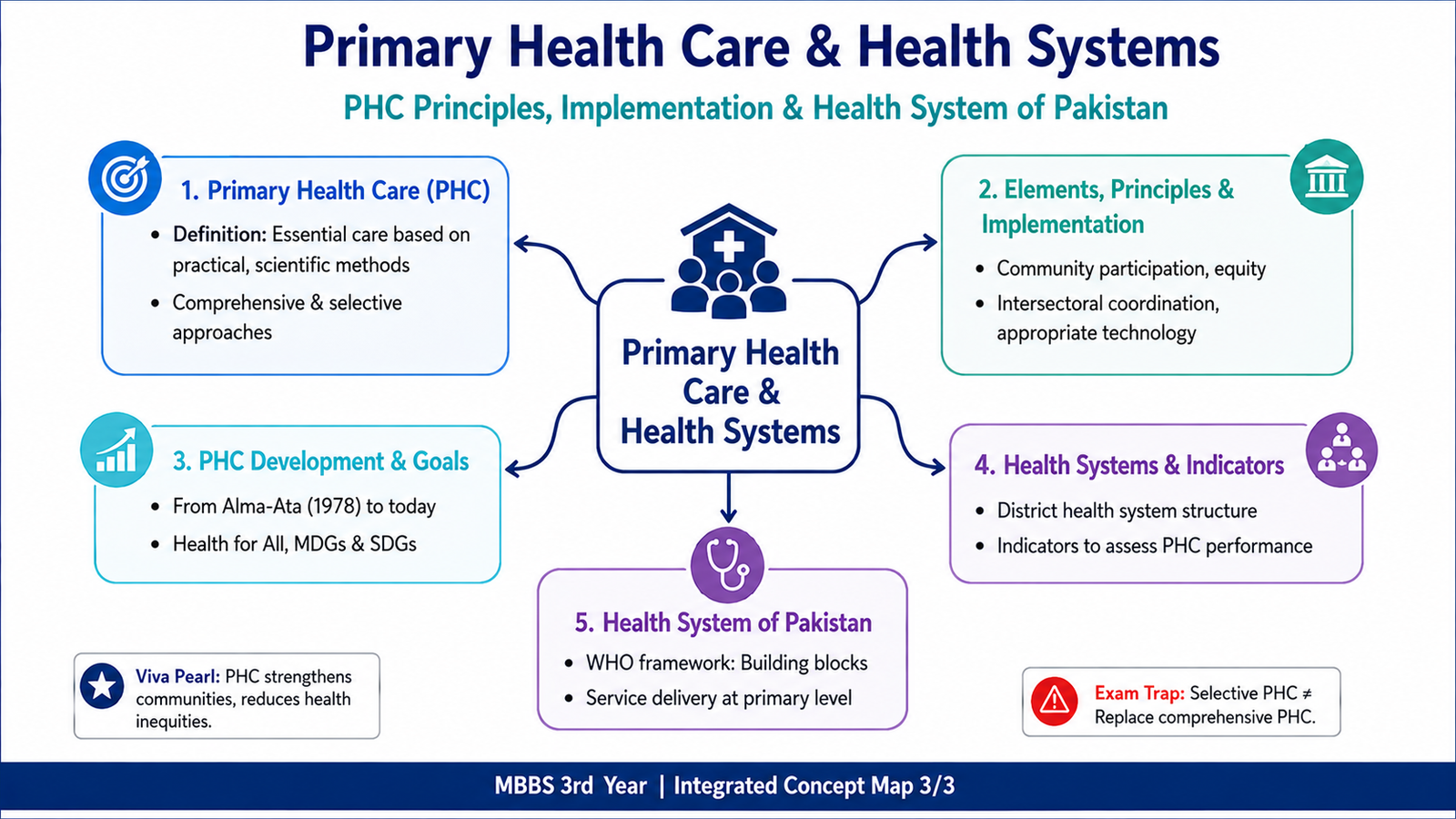
Integrated Mechanism Flow
The major concepts in this topic can be connected as one public-health pathway:
↓
Interaction of agent, host, environment or multiple causal factors
↓
Disease progresses through its natural history
↓
Prevention is applied at the appropriate stage
↓
Primary Health Care delivers essential services close to communities
↓
District and higher levels provide referral and broader care
↓
The complete health system coordinates services, workforce, information, medicines, financing and governance.
⭐ AIM High-Yield Review
- Community Medicine applies medical and public-health principles to the health of communities and populations.
- Public Health emphasizes organized societal action for disease prevention, health promotion and population protection.
- Health is influenced by multiple biological, environmental, behavioural, socioeconomic and health-service determinants.
- ⭐ The classical epidemiological triad consists of agent, host and environment.
- The web of causation is particularly useful for understanding diseases produced by multiple interacting factors.
- The natural history of disease progresses from susceptibility and exposure → subclinical disease → clinical disease → outcome.
- ⭐ The iceberg phenomenon means clinically apparent cases may represent only the visible portion of the total disease burden.
- Primary prevention acts before disease begins; secondary prevention emphasizes early detection and intervention; tertiary prevention reduces disability and supports rehabilitation.
- Primordial prevention aims to prevent the development of conditions that lead to establishment of risk factors.
- ⭐ Core PHC principles include equitable distribution, community participation, intersectoral coordination and appropriate technology.
- Comprehensive PHC addresses broad health needs, while selective PHC concentrates on selected priority interventions.
- “Health for All by the year 2000” did not mean elimination of every disease; it represented a goal of achieving a socially and economically productive level of health.
- The MDGs included major health-related priorities, while the SDGs use a broader development framework in which SDG 3 specifically addresses health and well-being.
- A district health system should connect community and primary services with higher levels through an effective referral pathway.
- ⭐ The six WHO health-system building blocks are service delivery, health workforce, health information systems, access to essential medicines and technologies, financing, and leadership/governance.
Natural History of Disease & Levels of Prevention
Use this video to reinforce the natural history of disease and the relationship between primordial, primary, secondary and tertiary prevention.