
This chapter follows the KMU learning outcomes in a logical sequence, from workplace hazards to their prevention and the public-health approach to snakebite. First understand how each hazard causes harm and how exposure can be controlled; then use the final AIM High-Yield Review for rapid revision.
Occupational and Environmental Health: Workplace Hazards, Prevention and Snakebite
Endocrine + Reproduction Module
Understand how workplace exposures affect health, how hazards can be recognized and controlled, and how occupational-health principles extend from prevention and worker protection to snakebite and social protection.
1. Topic Introduction
Occupational health deals with protecting and promoting the health of people in relation to their work. A workplace may expose workers to heat, noise, dust, chemicals, machinery, infectious agents and psychological stress. These hazards do not cause disease simply because they are present; harm depends on the nature and intensity of exposure, its duration and the susceptibility of the worker. Occupational health therefore combines recognition of hazards, prevention of exposure, medical surveillance and protection of workers. This chapter also covers ergonomics, the duties of occupational-health personnel, snakebite as an important environmental and occupational problem, and the role of health insurance and social security in reducing the health and financial consequences of illness and injury.
A. Occupational Health, Ergonomics and the Occupational Health Officer
Occupational health aims to maintain the highest practical level of physical, mental and social well-being of workers. Its central idea is prevention: work should be organized so that the job does not damage the worker, and the worker should be appropriately matched to the demands of the job.
Occupational health: core concept and importance
A workplace contains both useful productive activities and potential hazards. Occupational health identifies these hazards, assesses their possible effects and introduces measures that reduce exposure before disease or injury develops.
Its importance includes:
- preventing occupational disease and workplace injuries;
- detecting work-related illness at an early stage;
- maintaining workers’ physical and mental capacity;
- reducing sickness absence and disability;
- improving safety and productivity;
- supporting rehabilitation and safe return to work; and
- protecting workers who may be especially susceptible to particular exposures.
Ergonomics
Ergonomics means adapting the work, workplace, tools and working conditions to the abilities and limitations of the worker. Instead of forcing a person to adapt to a poorly designed job, ergonomic design attempts to fit the job to the worker.
Poor ergonomics may produce awkward posture, repetitive strain, excessive muscular effort and fatigue. Over time, these may contribute to musculoskeletal pain, reduced efficiency and accidents. Good ergonomics therefore considers:
- appropriate working posture;
- correct height and design of chairs, tables and work surfaces;
- safe lifting and handling of loads;
- appropriate design and placement of tools;
- reduction of unnecessary repetitive movements;
- adequate rest and variation in tasks when repetitive work is unavoidable; and
- design of the work environment to reduce fatigue and error.
Responsibilities of an Occupational Health Officer
An Occupational Health Officer links clinical care with workplace prevention. The role is not limited to treating an injured worker. It includes recognizing hazardous working conditions and helping prevent future disease.
- Workplace assessment: identify physical, chemical, biological, mechanical and psychosocial hazards.
- Health assessment: support appropriate pre-placement and periodic health evaluation.
- Medical surveillance: look for early evidence of disease among workers exposed to particular hazards.
- Emergency care: help organize first aid and appropriate referral for occupational injuries or acute exposures.
- Health education: teach workers about hazards, hygiene, safe work practices and correct use of protective equipment.
- Prevention: advise management on measures that reduce exposure at its source.
- Records and surveillance: maintain appropriate occupational-health information and recognize patterns of work-related illness.
- Rehabilitation: assist in recovery, work modification and safe return to suitable duties when needed.

B. Physical Hazards in the Workplace
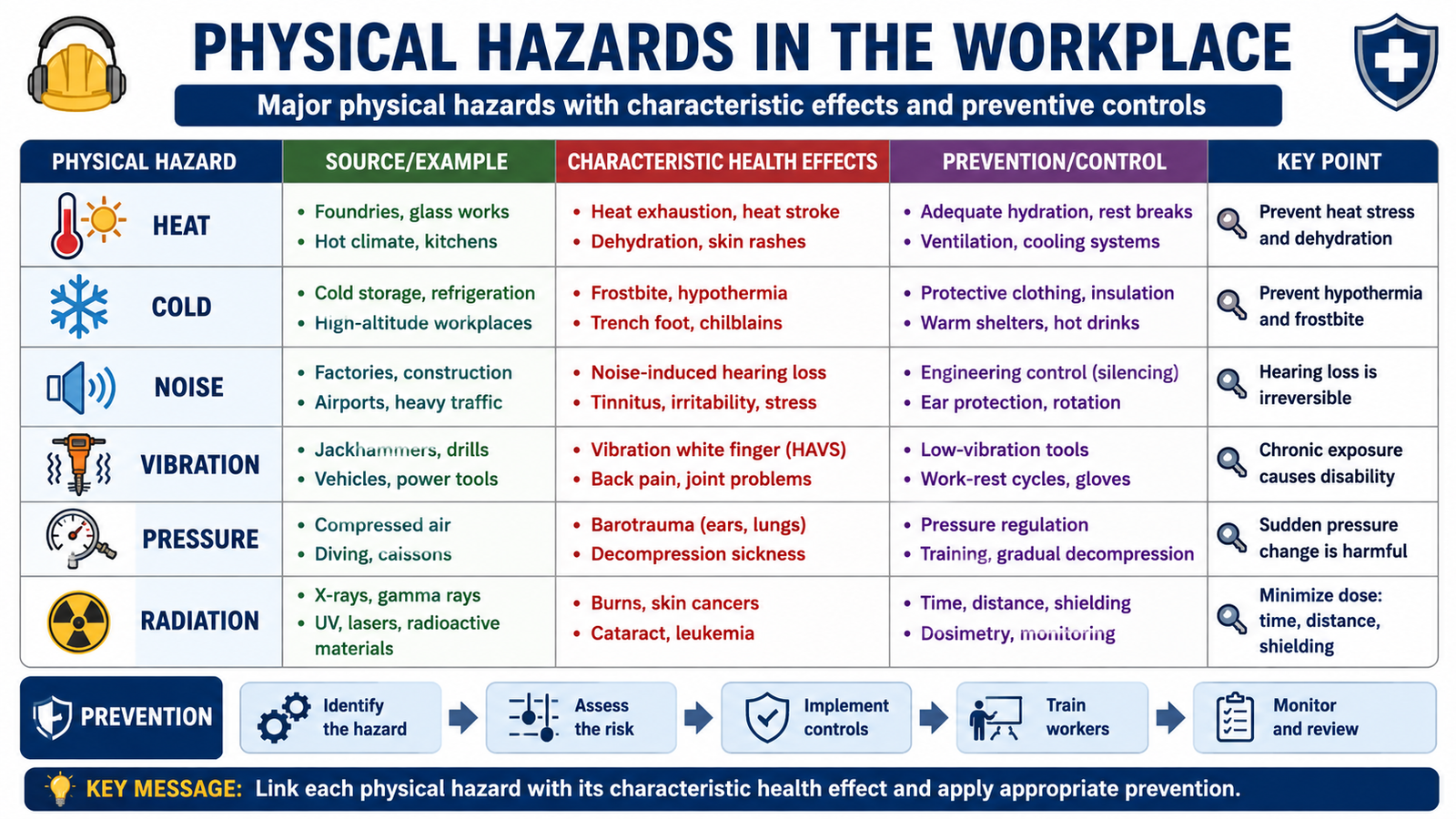
Physical hazards are harmful forms of energy or environmental conditions present in the workplace. Important examples are excessive heat or cold, noise, poor or excessive illumination, vibration, abnormal pressure and radiation. The health effect depends on the intensity of the hazard, duration of exposure and effectiveness of protective measures.
| Physical hazard | Important health effects | Main preventive approach |
|---|---|---|
| Heat | Heat cramps, heat exhaustion, dehydration and potentially life-threatening heat stroke | Reduce heat exposure, improve ventilation, provide rest and hydration, suitable clothing and acclimatization |
| Cold | Cold injury, reduced dexterity, frostbite and hypothermia | Insulation, suitable clothing, heated shelter and limitation of prolonged exposure |
| Noise | Temporary hearing disturbance, tinnitus and permanent noise-induced hearing loss after significant chronic exposure | Control noise at source, isolate noisy processes, maintain equipment and use hearing protection where required |
| Light | Poor visibility, eye strain, headache, fatigue, glare-related visual difficulty and increased accident risk | Adequate, uniform illumination and reduction of glare and excessive contrast |
| Vibration | Hand-arm symptoms, vascular and neurological disturbance, musculoskeletal discomfort; whole-body vibration may contribute to back symptoms | Reduce vibration at source, maintain machinery, improve tool design and limit unnecessary exposure |
| Abnormal pressure | Barotrauma and decompression-related illness when pressure changes occur in susceptible work | Controlled changes in pressure, appropriate procedures, training and medical supervision |
| Radiation | Depending on type and exposure: tissue injury, skin effects, lens damage, bone-marrow injury and increased long-term malignant risk | Minimize unnecessary exposure using time, distance, shielding and suitable monitoring/protection |
Why these hazards produce disease
Heat: The body normally loses excess heat through the skin. When environmental heat and workload overwhelm heat-loss mechanisms, body temperature rises and sweating causes water and electrolyte loss. Mild disease may therefore progress from cramps and exhaustion to heat stroke if thermoregulation fails.
Cold: Vasoconstriction reduces heat loss by decreasing blood flow to the skin. Prolonged or severe exposure may reduce tissue temperature enough to damage peripheral tissues and eventually lower core body temperature.
Noise: Repeated excessive sound exposure can injure sensory structures involved in hearing. Progressive damage may therefore result in permanent sensorineural hearing loss even when the worker initially notices little difficulty.
Abnormal pressure: Rapid changes in environmental pressure produce pressure differences across air-containing spaces and may also alter gases dissolved in body tissues. This explains barotrauma and decompression-related disease.
Radiation: Ionizing radiation carries enough energy to damage cellular molecules, including DNA. The risk of tissue injury rises with significant exposure, while cumulative cellular damage contributes to longer-term health effects.
C. Chemical Hazards: Dusts, Metals and Industrial Chemicals
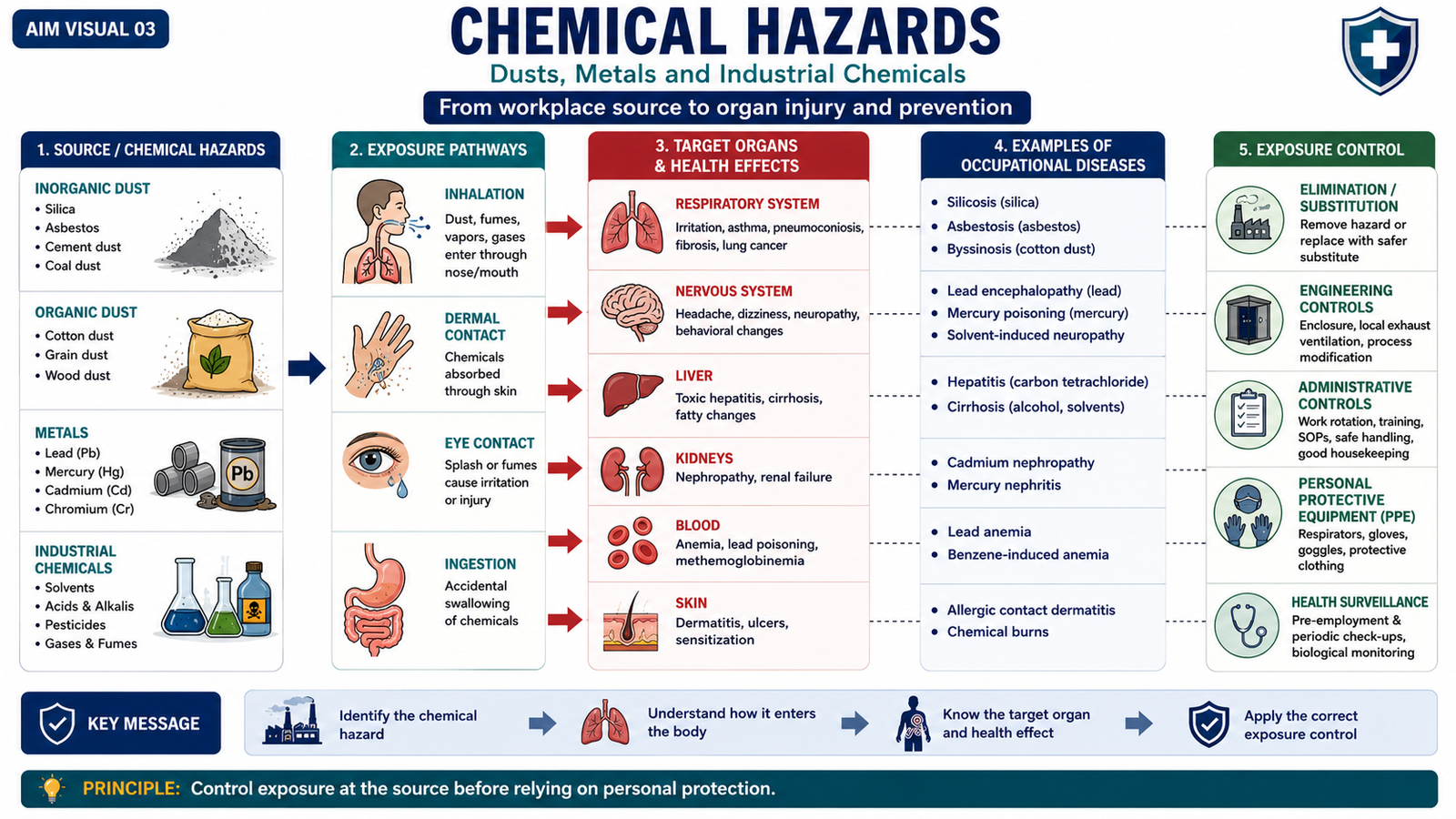
Chemical occupational hazards may enter the body by inhalation, skin contact or ingestion. In many workplaces, inhalation is particularly important because gases, vapours, fumes and fine particles can reach the respiratory tract. Some substances mainly produce local damage, while others are absorbed and produce systemic toxicity.
Occupational dusts
Dust consists of solid particles suspended in air. The disease produced depends on the chemical nature of the dust, particle characteristics, concentration and duration of exposure.
Inorganic dusts
Important inorganic occupational dusts include mineral dusts such as silica, coal dust and asbestos. Significant long-term inhalation may cause chronic lung disease. Certain mineral dusts produce pneumoconiosis, a group of lung disorders caused by inhalation and tissue reaction to occupational dust.
- Silica-containing dust: may cause silicosis following sufficient exposure.
- Coal dust: prolonged occupational exposure may cause coal-worker-related pneumoconiosis.
- Asbestos: may cause pulmonary fibrosis and is associated with important malignant disease after significant exposure.
The basic sequence is:
Organic dusts
Organic dust originates from plant, animal or biological material. Depending on the material and host response, exposure may produce airway symptoms or immune-mediated lung disease. Classically described occupational examples include cotton dust exposure and exposure to mouldy plant material.
Metals and other chemicals
Metals such as lead, mercury and other industrial substances may be absorbed and produce systemic toxicity. Their manifestations vary because different agents preferentially affect different organs, including the nervous system, kidneys, blood-forming tissues and gastrointestinal system.
Other workplace chemicals include solvents, irritant gases, acids, alkalis and pesticides. The key principle is that toxicity depends on the agent, route of entry, absorbed dose and duration of exposure.
| Hazard group | Typical concern | Prevention principle |
|---|---|---|
| Inorganic dusts | Chronic respiratory injury and fibrosis | Dust suppression, enclosure, ventilation and respiratory protection where necessary |
| Organic dusts | Airway or immune-mediated respiratory disease | Reduce airborne dust and prevent repeated exposure |
| Metals | Systemic toxicity affecting susceptible organs | Substitution, containment, hygiene and health surveillance |
| Gases, vapours and chemicals | Irritation, burns, respiratory effects or systemic poisoning | Closed processes, local exhaust ventilation, safer substances and appropriate PPE |
Prevention of chemical exposure
Effective prevention begins before the chemical reaches the worker. The best approach is to eliminate a hazardous substance or replace it with a safer one whenever practical. If this cannot be done, exposure should be reduced by engineering methods.
- substitution with a less hazardous material;
- enclosure or isolation of the hazardous process;
- local exhaust and general ventilation;
- wet methods or other measures that suppress dust generation;
- good workplace housekeeping and personal hygiene;
- safe storage, handling and labeling practices;
- appropriate personal protective equipment; and
- medical surveillance where the exposure makes it necessary.
D. Mechanical, Biological and Psychosomatic Workplace Hazards
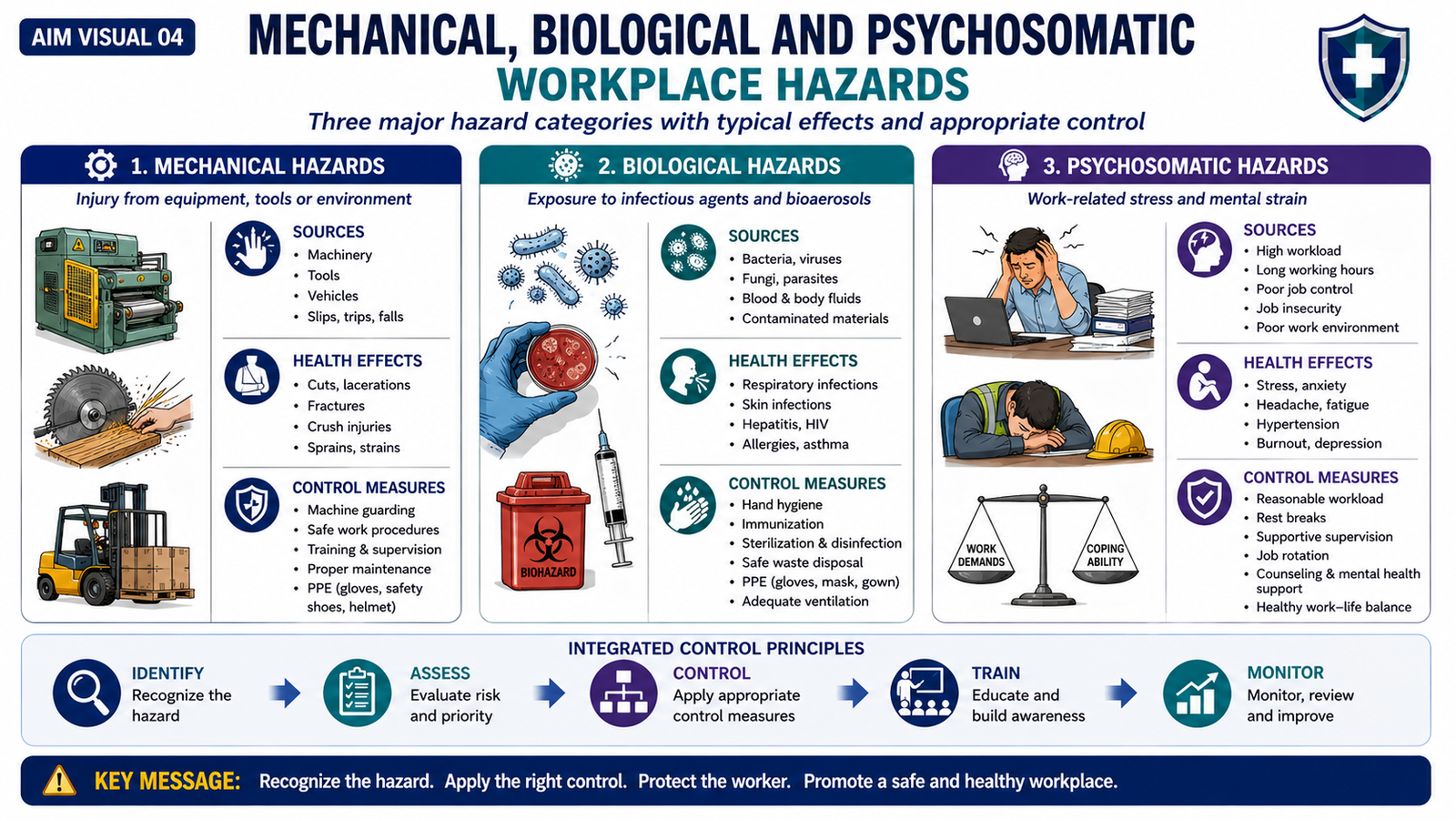
Not all occupational hazards are toxic substances or physical forms of energy. Workers may also be injured by machinery, exposed to infectious material or develop health problems because of chronic psychological and organizational stress. These hazards require different preventive measures, but the principle remains the same: identify the source of risk and control it before harm occurs.
Mechanical hazards
Mechanical hazards arise from machines, tools, moving objects and unsafe physical conditions. They may cause cuts, crush injuries, entanglement, falls, fractures and other trauma.
Control measures include:
- proper guarding of dangerous machinery and moving parts;
- regular inspection and maintenance of equipment;
- safe design of tools and work areas;
- good housekeeping to reduce slips, trips and falls;
- safe systems for handling and transporting materials;
- training and supervision of workers; and
- appropriate protective clothing and equipment when residual risk remains.
Why guarding is important: A machine guard interrupts the pathway between the worker and a dangerous moving component. It therefore prevents contact rather than merely reducing the severity of injury after contact occurs.
Biological hazards
Biological hazards include infectious organisms or biologically contaminated material encountered through work. Healthcare workers may be exposed to blood or body fluids, laboratory personnel may handle infectious specimens, and agricultural or animal workers may encounter zoonotic infections.
Control depends on interrupting transmission:
- hand and workplace hygiene;
- safe handling of blood, body fluids and biological specimens;
- safe disposal of sharps and contaminated waste;
- appropriate barriers and personal protective equipment;
- environmental cleaning and infection-control practices;
- vaccination when an effective occupationally relevant vaccine is available; and
- prompt assessment after significant occupational exposure.
Psychosomatic and occupational stressors
Work affects mental as well as physical health. Excessive workload, monotonous work, shift work, poor communication, lack of control, conflicting responsibilities and difficult interpersonal environments may act as occupational stressors.
Persistent stress activates physiological and psychological stress responses. This may contribute to fatigue, sleep disturbance, poor concentration, anxiety symptoms, reduced work performance and increased risk of error or accidents.
Control measures include:
- reasonable workload and staffing;
- appropriate work-rest arrangements;
- clear roles and communication;
- worker participation in relevant workplace decisions;
- reduction of unnecessary repetitive or monotonous tasks;
- supportive supervision; and
- access to appropriate psychological or occupational-health support when required.
E. Prevention of Occupational Hazards
Occupational disease is best prevented by acting before significant exposure or injury occurs. Prevention therefore uses several complementary approaches. Engineering measures modify the workplace, medical measures protect and monitor the worker, and legal measures establish responsibilities and minimum safety requirements.
1. Engineering measures
Engineering control is particularly important because it aims to remove or reduce the hazard independently of the worker’s day-to-day behaviour.
- Elimination: remove the hazardous process or substance where possible.
- Substitution: replace it with a less hazardous alternative.
- Isolation: separate the dangerous process from workers.
- Enclosure: contain the source so the contaminant does not spread.
- Ventilation: remove contaminated air or dilute airborne hazards.
- Process modification: redesign the process to generate less dust, noise, heat or other hazard.
- Machine guarding: prevent contact with dangerous moving parts.
- Environmental control: improve lighting, temperature, layout and other workplace conditions.
2. Medical measures
Medical measures identify workers at risk, detect early effects of exposure and reduce disability when disease occurs.
- Pre-placement assessment: helps determine whether the worker can safely perform the intended job and establishes relevant baseline health information.
- Periodic medical examination: may detect early occupational disease before major disability develops.
- Medical surveillance: focuses on effects expected from particular occupational exposures.
- Immunization: may protect workers against relevant biological hazards when appropriate.
- Health education: improves understanding of risks and safe work practices.
- First aid and treatment: reduce consequences after acute injury or exposure.
- Rehabilitation: aims to restore function and facilitate safe return to appropriate work.
3. Legal measures
Legal measures provide an enforceable framework for occupational safety. Their purpose is to define duties, require minimum safety standards and provide mechanisms for accountability and worker protection.
Depending on the applicable occupational-health system, such measures may address:
- safe workplace conditions;
- control of hazardous exposure;
- provision of appropriate protective measures;
- reporting and investigation of occupational disease and injury;
- inspection and enforcement;
- worker compensation and protection; and
- responsibilities of employers and workers.

F. Snakebite: Public-Health Importance, Prevention and Management
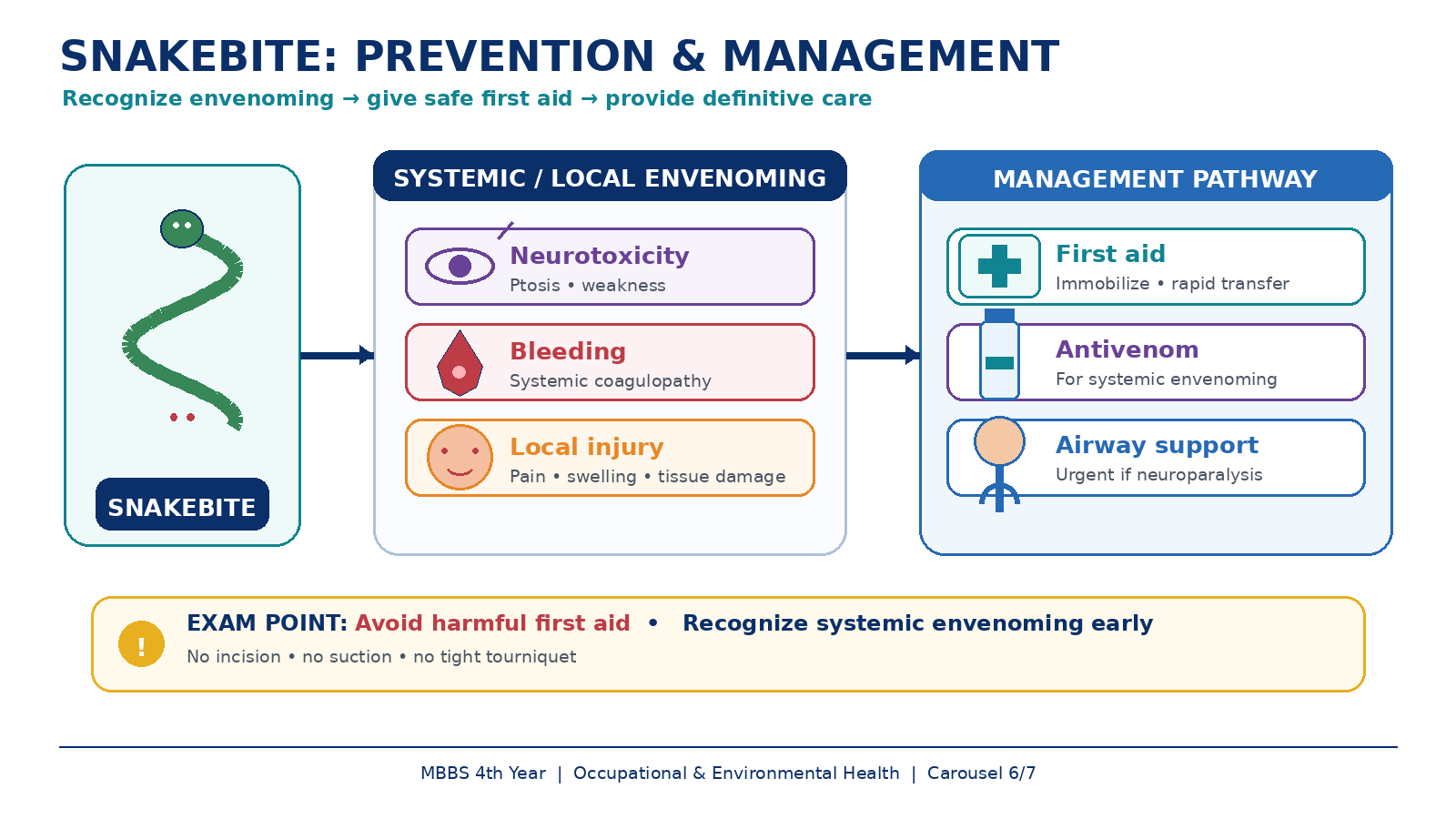
Snakebite is an environmental and occupational health problem because exposure commonly occurs where people live or work in close contact with natural snake habitats. Agricultural workers, rural populations and people walking or working outdoors may be particularly exposed. The major danger is not the bite wound itself but envenoming—the entry of biologically active venom into the body.
Types of snakebite
A snakebite does not always produce clinically important envenoming. For practical understanding, bites may be considered according to whether venom was delivered and the main clinical pattern produced.
- Non-venomous bite: may cause local trauma but no venom syndrome.
- Dry bite: a venomous snake bites but injects little or no venom; significant envenoming does not develop.
- Venomous bite with envenoming: local and/or systemic manifestations develop because venom has entered the tissues.
Clinically important venom effects may broadly appear as:
- Neurotoxic effects: neuromuscular dysfunction may cause ptosis, weakness and eventually respiratory paralysis.
- Hemotoxic or vasculotoxic effects: abnormalities of coagulation, bleeding and vascular injury may occur.
- Cytotoxic effects: prominent local pain, swelling and tissue injury may occur.
- Myotoxic effects: some venoms may produce skeletal-muscle injury.
The exact pattern depends on the snake and venom. Elapid snakes such as cobras and kraits are classically associated with important neurotoxic effects, while viper bites are commonly associated with bleeding, coagulation disturbance and local tissue injury.
Prevalence and epidemiological pattern
Snakebite burden is not evenly distributed. It is greater in communities where people frequently encounter snakes during agriculture, outdoor work or daily activities and where rapid access to healthcare is difficult. Occurrence also varies with geography, climate, season, occupation, housing conditions and local snake species. Exact numerical estimates differ between regions and surveillance systems; therefore, the important undergraduate principle is to recognize the high-risk settings and groups rather than memorize an unreliable universal figure.
Prevention
Snakebite prevention aims to reduce human-snake contact and protect people who must work in high-risk environments.
- wear suitable footwear and protective clothing during agricultural or outdoor work;
- avoid placing hands or feet into concealed spaces without checking;
- use adequate lighting when walking outdoors at night;
- reduce rubbish, debris and conditions around homes that provide hiding places for snakes;
- store food in ways that reduce rodent attraction, because rodents may attract snakes;
- educate high-risk communities about safe behaviour and appropriate first aid; and
- ensure rapid access and referral pathways to facilities capable of managing envenoming.
Immediate first aid after snakebite
The purpose of first aid is to keep the patient safe and obtain medical care quickly without adding further tissue injury.
- Reassure the patient and reduce unnecessary movement.
- Keep the bitten limb as still as practical and remove rings or tight objects before swelling increases.
- Arrange urgent transport to an appropriate healthcare facility.
- Do not cut the bite, suck the wound or apply harmful chemicals.
- Do not use tight arterial tourniquets, which may worsen ischemia and tissue damage.
- Do not delay medical treatment while trying to capture or kill the snake.
Hospital management principles
Management begins with stabilization rather than immediate attention to the appearance of the bite wound. The patient is assessed for evidence of local and systemic envenoming, and supportive care is provided while the need for antivenom is determined.
Important principles include:
- Airway and breathing: neurotoxic envenoming can paralyse respiratory muscles, so ventilatory support may become lifesaving.
- Circulation: assess perfusion and treat shock appropriately.
- Assessment of envenoming: repeatedly examine for neurological, bleeding, renal, muscular and progressive local effects.
- Laboratory assessment: investigations are selected to detect important venom effects such as coagulation abnormalities, anemia or hemolysis where relevant, renal dysfunction and muscle injury.
- Antivenom: specific antivenom is the major therapy for clinically significant envenoming when an appropriate antivenom is available and indicated.
- Monitoring during antivenom: antivenom can cause acute hypersensitivity reactions, so the patient requires appropriate clinical observation and readiness to treat a reaction.
- Supportive treatment: respiratory support, fluid management and treatment of complications may be as important as antivenom.
- Local care: assess swelling and tissue injury, provide appropriate wound care and avoid unnecessary traumatic procedures.
Why snakebite may be poorly managed
Poor outcome is often caused not by one mistake but by several delays or failures occurring between the bite and definitive care.
- delay in seeking medical care;
- reliance on ineffective traditional remedies;
- harmful first-aid practices such as cutting, suction or tight tourniquets;
- poor transport or long distance from an appropriate facility;
- failure to recognize systemic envenoming;
- delayed access to appropriate antivenom;
- inadequate monitoring after antivenom administration;
- failure to provide airway or ventilatory support in neurotoxic envenoming; and
- weak referral systems and inadequate training or resources.
G. Health Insurance and Social Security
Prevention reduces occupational disease, but illness, injury and disability cannot always be completely avoided. Workers and families may then face both health problems and loss of income. Health insurance and social security provide forms of financial and social protection against these consequences.
Health insurance
Health insurance is a mechanism in which financial risk arising from healthcare costs is shared across a group rather than being borne entirely by an individual at the time of illness. Contributions or premiums are pooled, and eligible healthcare expenses are supported according to the terms of the insurance system.
Potential benefits include:
- financial protection against major healthcare expenditure;
- improved ability to obtain necessary medical care;
- reduced dependence on direct out-of-pocket payment at the time of illness;
- greater continuity of treatment for eligible workers and families; and
- reduction of the financial impact of occupational disease and injury.
The public-health principle underlying insurance is risk pooling. Many people contribute to a common pool, while those who require healthcare use resources from that pool according to the system’s rules.
Social security
Social security is broader than health insurance. It refers to organized protection against social and economic problems that may follow illness, maternity, employment injury, disability, loss of earning capacity, old age or death of a wage earner. The exact benefits vary between systems, but the underlying aim is to prevent illness or loss of income from pushing workers and their dependents into severe financial hardship.
Depending on the social-security arrangement, benefits may include:
- medical-care benefits;
- sickness support;
- maternity-related protection;
- employment-injury benefits;
- disability support;
- old-age protection; and
- support for dependents or survivors.
3. Integrated Mechanism Flow
Occupational-health problems can be understood through one central cause-to-prevention sequence:
Heat, noise, dust, chemical, machine, organism or stressor
Inhalation, contact, physical energy or hazardous task
Tissue injury or functional disturbance develops
Clinical manifestations become apparent
Surveillance identifies affected workers or unsafe exposure
Engineering, medical and legal measures interrupt the pathway
4. Important Comparison — Approaches to Occupational Prevention
| Approach | Main target | Examples | Main purpose |
|---|---|---|---|
| Engineering | Hazard or workplace | Substitution, enclosure, ventilation, guarding | Prevent or reduce exposure |
| Medical | Worker | Health assessment, surveillance, education, treatment, rehabilitation | Protect health and detect disease early |
| Legal | Occupational-health system | Safety requirements, inspection, reporting and worker protection | Create enforceable minimum standards |
⭐ AIM High-Yield Review
- Occupational health aims to protect and promote worker health by preventing work-related disease and injury.
- ⭐ Ergonomics = fitting the job to the worker, not simply making the workplace comfortable.
- Major physical hazards include heat, cold, noise, light, vibration, abnormal pressure and radiation.
- Chronic excessive noise exposure can produce permanent sensorineural hearing loss.
- Pneumoconiosis refers to occupational lung disease resulting from inhaled dust and the resulting tissue reaction; important mineral exposures include silica, coal dust and asbestos.
- Control chemical hazards preferably by elimination, substitution, enclosure or ventilation before relying only on PPE.
- Mechanical-hazard prevention includes machine guarding, maintenance, safe design, housekeeping, training and supervision.
- Biological-hazard control interrupts transmission through hygiene, safe sharps/specimen practices, barriers, vaccination where appropriate and exposure management.
- Engineering measures act mainly on the hazard or workplace; medical measures protect and monitor the worker; legal measures provide an enforceable safety framework.
- ⭐ A snakebite may be a dry bite; a bite by a venomous snake does not automatically mean clinically significant envenoming.
- Neurotoxic envenoming may cause respiratory paralysis, while important viper envenoming commonly causes bleeding/coagulation disturbance and local tissue injury.
- Do not cut, suck or apply a tight tourniquet to a snakebite. Immobilize as practical and arrange urgent medical care.
- ⭐ Antivenom is used for clinically significant envenoming when indicated; airway and ventilatory support may be lifesaving in neurotoxic bites.
- Health insurance primarily pools financial risk related to healthcare, whereas social security provides broader protection against health and income-related consequences.
🎥 Occupational Health: Hazards, Prevention & Control
Review occupational hazards, ergonomics, engineering controls, medical measures and workplace prevention.
🎥 Snakebite: Correct First Aid
Reinforce safe immediate first aid and important practices to avoid after snakebite.