
Topic 3 — Demography, Community Needs, Patient-Centred Care and Gender-Based Violence
Understand how populations are described and change over time, how community health needs are identified, how care is adapted to the individual patient, and how gender-based violence can be recognized as an important health, social and legal issue.
1. Topic Introduction
Demography is the study of human populations, including their size, composition, distribution and change over time. For a doctor, population information is important because the health needs of a community depend greatly on its age structure, fertility, mortality, migration and rate of growth. This topic therefore moves from basic demographic measurements to population pyramids, demographic transition and population growth. It then explains how population information is converted into an assessment of community health needs. Finally, it applies a person-centred approach to individual care and examines gender-based violence as an important public-health problem, including its causes, consequences, prevention and medico-legal implications in Pakistan.
2. Core Learning Material
A. Foundations of Demography and Population Measurement
Demography describes a population in measurable terms. It is not limited to counting people. It also examines who makes up the population, where people live and how the population changes. These measurements help health planners estimate present and future needs for services such as maternal care, immunization, schools, hospitals and care of older adults.
Definition of demography
Demography is the statistical study of human populations, especially their size, composition, distribution and changes produced by births, deaths and migration.
Important related terms
- Population: the people living within a defined geographical area at a particular time.
- Population size: the total number of people in that population.
- Population composition: the distribution of people according to characteristics such as age and sex.
- Population density: the number of people living per unit area.
- Census: an organized enumeration of the population at a defined time, usually collecting demographic, social and household information.
- Vital events: major life events relevant to population change, particularly births and deaths.
- Fertility: actual reproductive performance, commonly expressed through the occurrence of live births.
- Fecundity: the biological capacity to reproduce. A person may be fecund but may not actually have children.
- Mortality: the occurrence of death in a population.
- Migration: movement of people from one geographical area to another. Immigration adds people to an area, while emigration removes them.
- Sex ratio: a comparison of the number of males and females in a population.
- Life expectancy: the average number of years a person is expected to live if prevailing mortality conditions continue.
- Dependency: the population groups that are more likely to depend economically on the working-age population, particularly children and older adults.
Crude birth rate
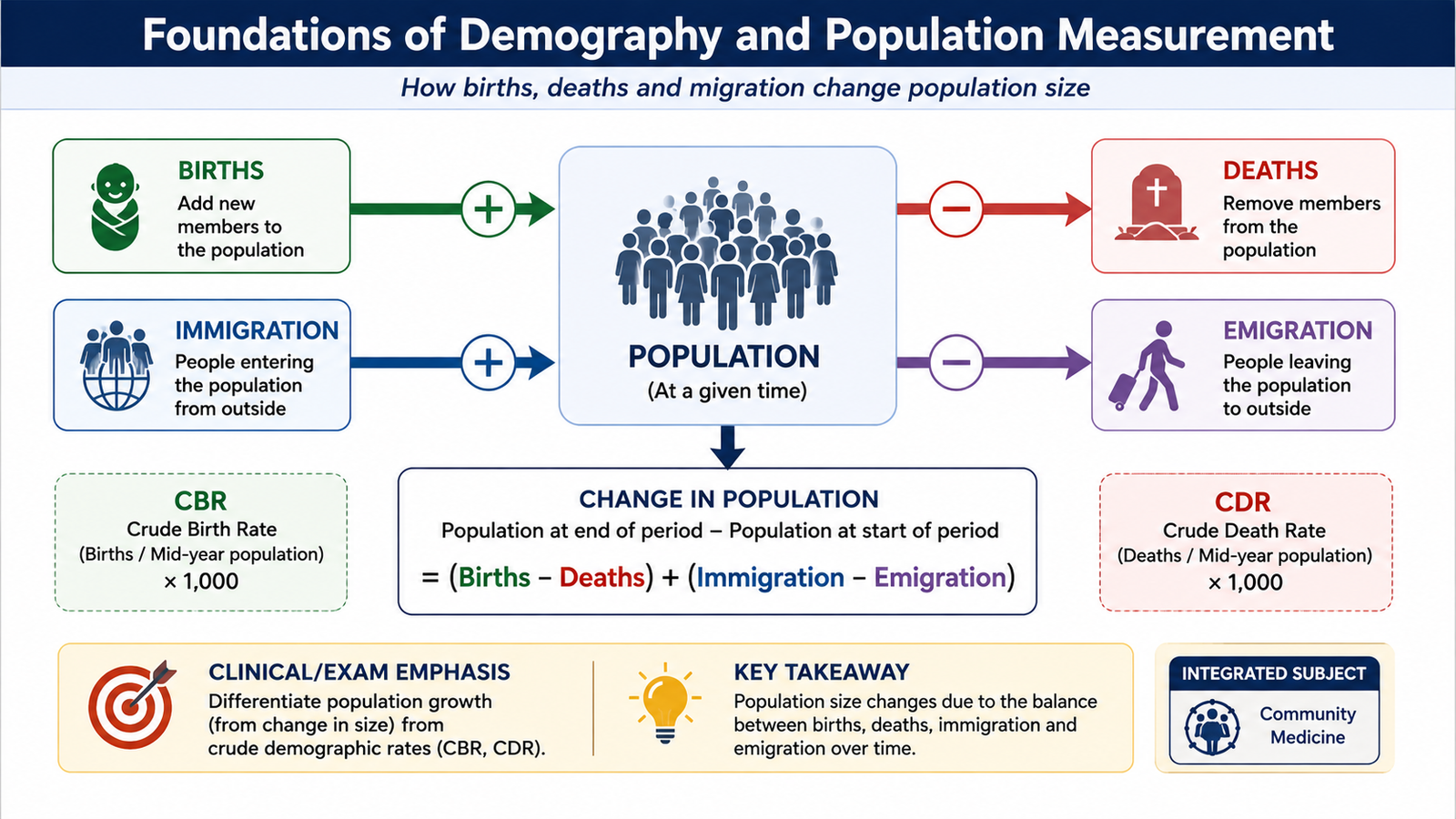
The crude birth rate (CBR) expresses the number of live births occurring in one year relative to the total population. It is called “crude” because it uses the entire population as the denominator, including people who are not biologically capable of giving birth.
Crude death rate
The crude death rate (CDR) expresses the number of deaths occurring during one year in relation to the total population.
Population growth rate
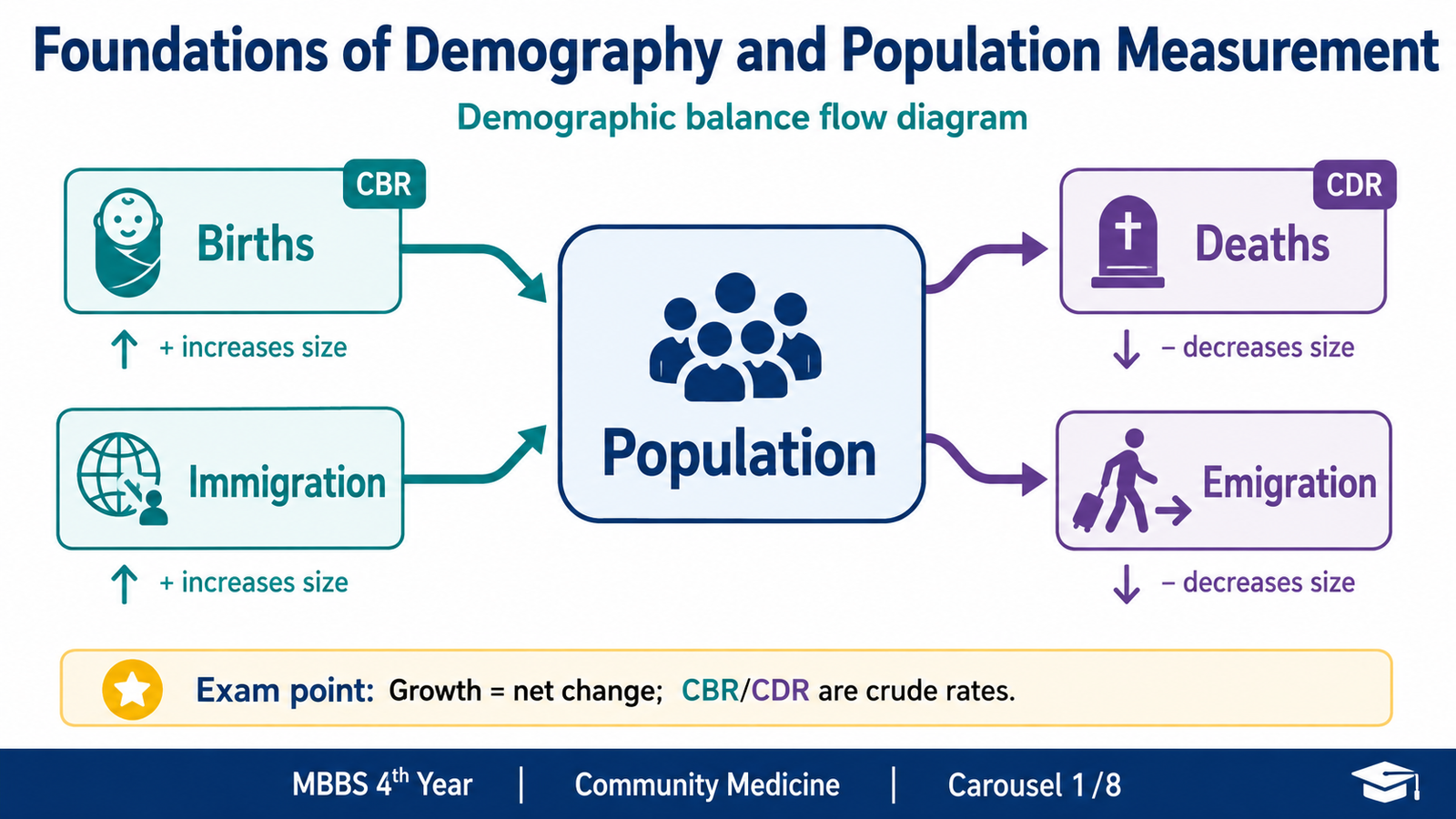
Population size changes through three basic processes: births, deaths and migration. Births and immigration increase population size, whereas deaths and emigration reduce it.
The population growth rate expresses this change relative to population size, usually as a percentage over a defined period. When migration is ignored, the difference between the birth rate and death rate represents the natural increase of the population.
B. Population Pyramids and Interpretation of Population Structure
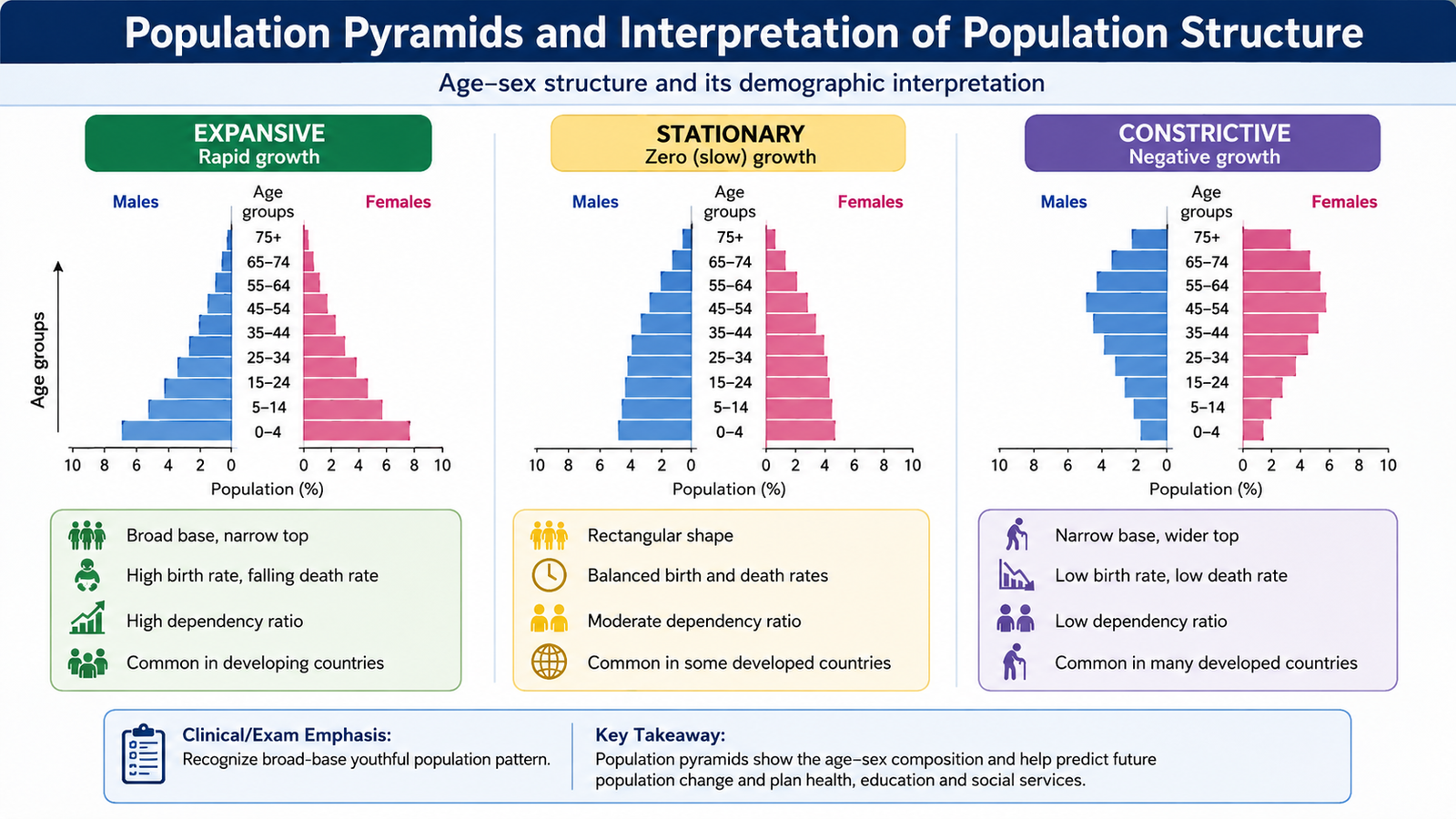
A population pyramid is a graphical representation of the age and sex composition of a population. It allows a large amount of demographic information to be understood at a glance. The vertical axis shows age groups, while the horizontal bars show the number or percentage of males and females in each age group. Conventionally, males are displayed on one side and females on the other. The shape is important because it reflects past fertility and mortality and gives clues about future population change. A wide base indicates that many children are entering the population, while a relatively wide upper portion indicates greater survival into old age.
Three basic patterns
- Expansive pyramid: broad base with progressive narrowing toward the top. It indicates a youthful population, relatively high fertility and continuing population growth.
- Stationary pyramid: age groups are relatively similar in width until older ages. Birth and death rates are low and population size is comparatively stable.
- Constrictive pyramid: the base is narrower than the middle age groups. This suggests low fertility, an ageing population and the possibility of very slow or negative natural population growth.
How to interpret a pyramid systematically
Begin with the base, because it gives the strongest visual clue to recent fertility. Then examine the middle of the pyramid for the proportion of working-age adults. Finally, examine the upper portion to assess population ageing and survival. Unexpected bulges or indentations may reflect changes in fertility, migration or major historical events that affected particular age groups.
A population pyramid therefore connects demographic information directly with community health planning. It is not merely a statistical graph.
C. Demographic Transition, Fertility and Mortality
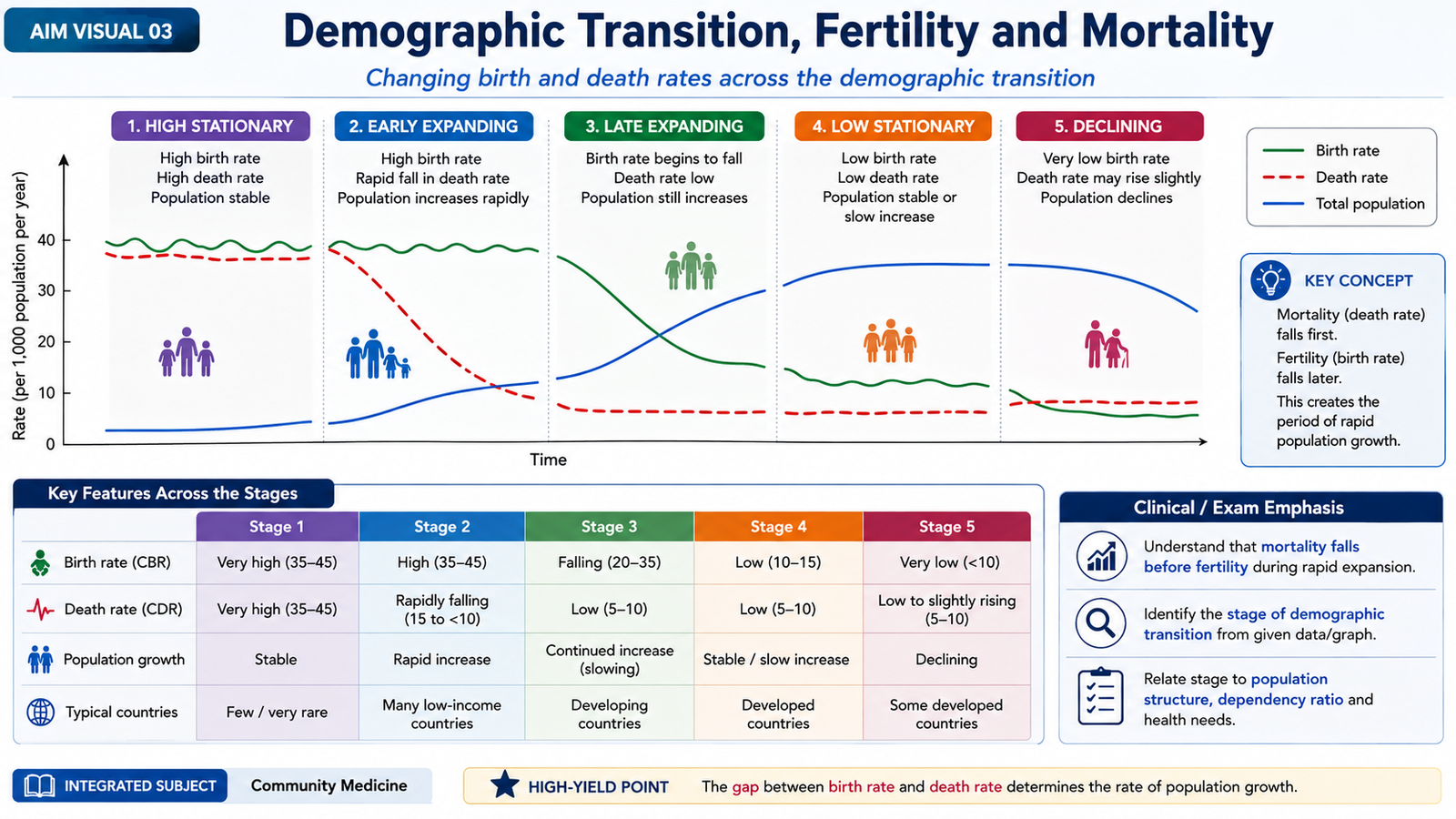
The demographic transition describes the long-term change of a population from a pattern of high birth and death rates to a pattern of low birth and death rates. The important idea is that mortality usually falls before fertility. This temporary gap between a falling death rate and a still-high birth rate produces rapid population growth.
Stages of demographic transition
| Stage | Birth rate | Death rate | Population effect |
|---|---|---|---|
| 1. High stationary | High | High | Little long-term growth |
| 2. Early expanding | Remains high | Falls rapidly | Rapid growth |
| 3. Late expanding | Begins to fall | Low | Growth continues but slows |
| 4. Low stationary | Low | Low | Population relatively stable |
| 5. Declining | Very low | May exceed birth rate | Ageing and possible population decline |
Why mortality usually falls first
Improvements in safe water, sanitation, food supply, housing, vaccination, infection control and health services reduce preventable deaths. Infant and childhood survival improves particularly quickly. If fertility remains high during this period, many more people are added to the population than are lost through death.
Factors associated with high fertility
Fertility is influenced by biological, social, economic and cultural conditions. High fertility is more likely where marriage and childbearing occur early, access to effective family planning is limited, female education and employment opportunities are restricted, child mortality is high, or families depend on children for social and economic security.
- Early marriage and a longer reproductive period.
- Limited access to or use of contraception.
- Lower female education and limited economic opportunities.
- High infant or child mortality.
- Social preference for larger families or sons.
- Economic or social value attached to larger families.
Factors associated with low fertility
Fertility generally falls when child survival improves and families increasingly choose to have fewer children. Urbanization, education, delayed marriage, employment opportunities and reliable family-planning services contribute to this change.
- Later marriage and delayed childbearing.
- Higher educational attainment.
- Greater participation of women in employment and decision-making.
- Effective and accessible family planning.
- Improved child survival.
- Urban living and higher financial cost of raising children.
Causes of high and low mortality
Mortality becomes high when populations are exposed to major health risks without adequate protection or treatment. Poor nutrition, unsafe water, infectious disease, maternal and childhood complications, poverty, conflict and inadequate health services can increase deaths. Mortality falls when living conditions and health systems improve.
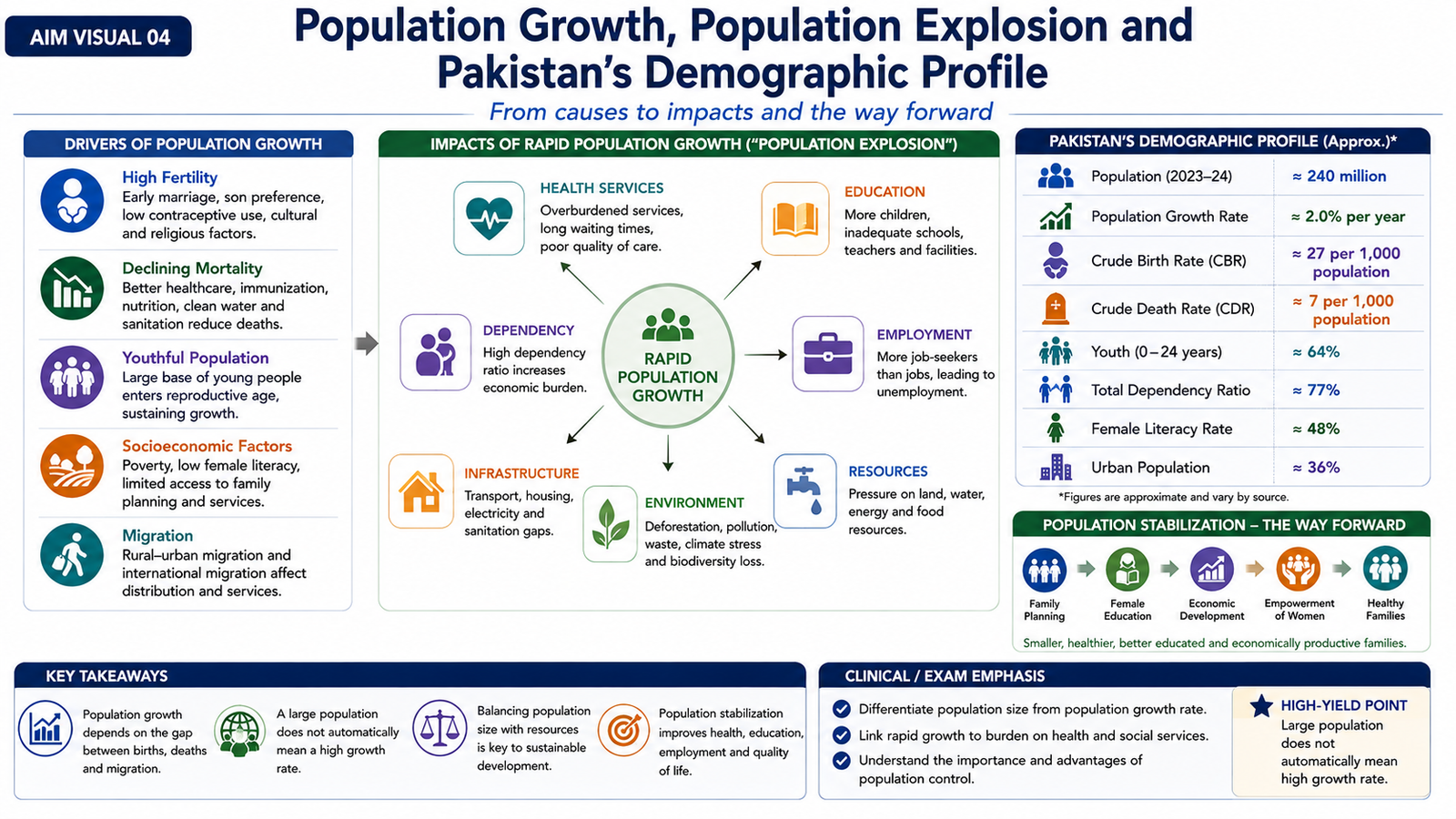
D. Population Growth, Population Explosion and Pakistan’s Demographic Profile
Population growth occurs when additions to a population exceed losses. A population can therefore continue to grow even after fertility begins to decline if births still considerably exceed deaths. This is especially important in a population containing a very large number of young people entering reproductive age.
Population explosion
Population explosion refers to rapid population growth that places increasing pressure on available resources and social services. The problem is not simply that the number of people is large. The major concern is a rate of growth that exceeds the ability of health, education, housing, employment and other systems to expand adequately.
Important implications
- Greater demand for maternal, newborn and child health services.
- Pressure on hospitals, primary-care facilities and the health workforce.
- Increased demand for schools, housing, transport and employment.
- Greater pressure on water, food and other essential resources.
- Rapid urbanization and expansion of inadequately serviced settlements.
- Environmental stress, waste generation and pollution.
- Difficulty improving per-capita access to public services when population growth is very rapid.
Population control and population stabilization
In public health, the traditional term population control refers to measures intended to reduce excessive population growth. In modern health practice, this should be approached through voluntary, informed and rights-based family planning, education and improved reproductive health rather than coercion. When couples are able to choose the number and spacing of their children, several benefits may occur:
- Improved maternal health through avoidance of very frequent pregnancies.
- Improved infant and child health through better spacing and family resources.
- Better opportunities for education, especially for girls and women.
- Reduced pressure on health, education and housing services.
- Improved ability of families to invest resources in each child.
- More sustainable use of national and community resources.
- Greater opportunity to convert a large working-age population into a productive demographic dividend.
Important demographic indicators of Pakistan
Pakistan has a large and relatively young population. For examination purposes, students should understand the overall pattern as well as the fact that numerical demographic estimates change with each census or official population projection.
The 2023 Population and Housing Census recorded approximately 241.5 million people and an average annual growth rate of about 2.55% between 2017 and 2023. About 39% of the population was urban and the age structure remained markedly young. The Pakistan Economic Survey 2025–26 subsequently reported an estimated population of about 252.09 million in 2025 with an estimated population growth rate of 2.07%. These figures are time-specific and should always be quoted with their source year.
The public-health significance of this profile is more important than memorizing one isolated number. A young and growing population creates major requirements for reproductive health, maternal-child health, vaccination, nutrition, education and future employment. As survival improves and fertility eventually declines, the population structure will gradually shift and the burden of chronic disease and ageing will become increasingly important.
E. Assessment of Health-Care Needs of a Community
A health system cannot plan effectively by assuming that every community has the same problems. Community health-needs assessment is a systematic process of identifying the important health problems of a defined population, determining which needs are not being adequately met and deciding which problems should receive priority. The assessment therefore connects demographic information with actual health-service planning. For example, a community with a large number of children will have different needs from a community with a high proportion of older adults.
What information is assessed?
Sources of information
Needs can be identified from both quantitative and qualitative information. Routine health records, surveys, census data and disease statistics show the measurable burden of health problems. Interviews, community meetings and discussions with patients, families, community representatives and health workers help reveal needs that may not appear clearly in numerical data.
Logical sequence of a community needs assessment
- Define the community whose needs are being assessed.
- Describe the population using demographic and social information.
- Identify important health problems and their determinants.
- Assess existing services and identify gaps between needs and available care.
- Consult the community and relevant stakeholders to understand priorities and barriers.
- Prioritize problems according to factors such as magnitude, severity, preventability, equity and feasibility.
- Plan appropriate action and determine how progress will be monitored.
Why prioritization is necessary
Resources are limited, so every identified need cannot usually be addressed at the same time. A common condition affecting many people may deserve priority because of its magnitude, while a less common problem may still deserve urgent attention because it causes severe disability or death. Equity is also important: a health need affecting a disadvantaged group should not be ignored simply because the group is numerically small.

F. Patient-Centred Care: Lifestyle, Beliefs and Support System
Patient-centred care means providing medical care that respects the patient’s individual needs, values, preferences and circumstances. The doctor still applies scientific medical knowledge, but the management plan is developed for the particular person rather than for an imaginary “average patient.” This is important because two patients with the same diagnosis may have very different lifestyles, beliefs, family circumstances, financial limitations and ability to follow a proposed treatment plan.
Understanding the individual’s lifestyle
Lifestyle affects both disease and the practicality of treatment. Relevant issues may include diet, physical activity, occupation, working hours, sleep pattern, smoking, travel, financial circumstances and responsibilities at home. The purpose is not to judge the patient’s lifestyle. It is to understand which recommendations are realistic and where change is possible.
Understanding beliefs and values
Patients may hold cultural, family, personal or religious beliefs that influence how they understand illness and treatment. A doctor should explore these beliefs respectfully rather than making assumptions. When a belief affects a proposed investigation or treatment, the doctor should explain the medical issue clearly, discuss alternatives where possible and involve the patient in the decision. Respecting beliefs does not mean providing unsafe treatment. It means communicating respectfully and trying to reach a medically appropriate plan that the patient understands and accepts.
Understanding the support system
A patient’s support system may include family members, friends, caregivers or community resources. Support can help with transport, medication, emotional coping and follow-up. However, family involvement should occur with the patient’s permission whenever the patient has decision-making capacity.
Core elements of patient-centred care
- Listen to the patient’s concerns and priorities.
- Explain the condition and available options in understandable language.
- Explore lifestyle, beliefs and practical barriers.
- Respect autonomy, dignity and confidentiality.
- Use shared decision-making when more than one reasonable option exists.
- Consider psychological and social needs as well as physical disease.
- Involve supportive family members or caregivers appropriately and with consent.
- Create a plan that is medically sound and realistically achievable.

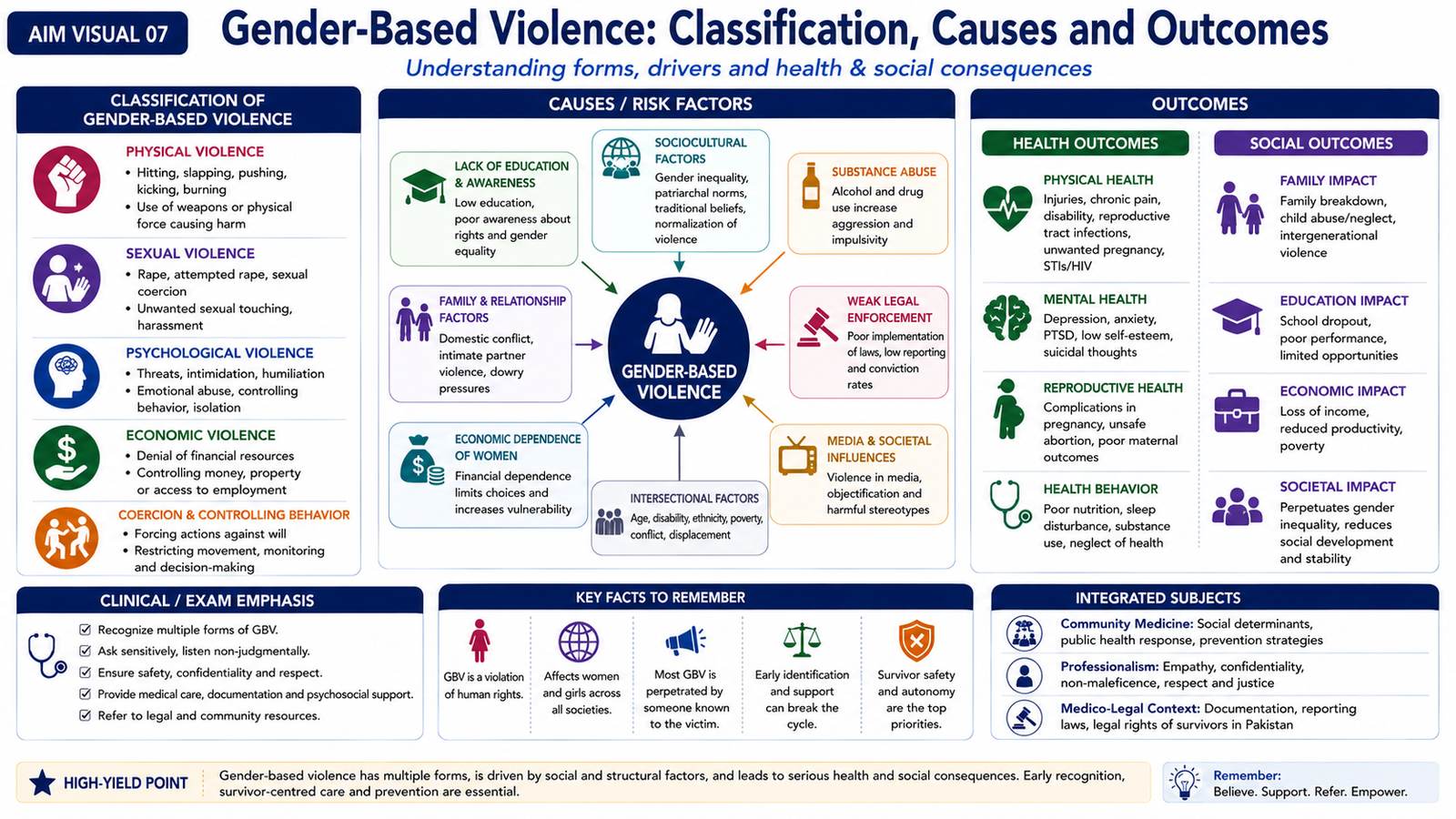
G. Gender-Based Violence: Classification, Causes and Outcomes
Gender-based violence (GBV) refers to harmful acts directed against a person because of gender or occurring within unequal gender and power relationships. It may affect people of any gender, although women and girls experience a particularly large burden of many forms of GBV. GBV is important to medical students because its consequences are not only social or legal. Violence can produce acute injury, chronic physical illness, reproductive-health problems, psychological trauma and long-term disability.
Classification
| Type | Examples | Main health significance |
|---|---|---|
| Physical violence | Hitting, kicking, burning, assault or other physical injury | Injury, disability, chronic pain or death |
| Sexual violence | Sexual assault, rape or forced sexual activity | Injury, infection, unintended pregnancy and psychological trauma |
| Psychological / emotional violence | Threats, humiliation, intimidation, isolation | Anxiety, depression, trauma and loss of self-worth |
| Economic abuse | Controlling money, preventing employment or withholding essential resources | Dependency and reduced ability to seek safety or health care |
| Harmful or coercive practices | Forced marriage and other practices involving coercion or violence | Physical, reproductive, psychological and social harm |
Why gender-based violence occurs
GBV usually does not arise from one isolated cause. It develops through interaction between social norms, unequal power, relationship factors, community conditions and individual circumstances. Understanding these determinants helps prevention because effective prevention must address more than the immediate violent act.
- Gender inequality and unequal power: social structures that give one person excessive control over another can enable abuse.
- Social acceptance of violence: communities in which violence is normalized or excused may provide less protection to victims.
- Economic dependency: financial dependence can make it difficult for an affected person to leave an unsafe environment.
- Low education and limited awareness of rights: these may reduce access to support and protective services.
- Relationship control and coercion: possessiveness, intimidation and isolation may precede physical or sexual violence.
- Exposure to violence within families or communities: repeated exposure may normalize violent behaviour across generations.
- Substance misuse and severe social stress: these may increase risk in some settings but do not excuse the perpetrator’s behaviour.
- Weak access to protection and support: lack of safe services or effective response may allow violence to continue.
Health and social outcomes
The consequences may be immediate or may remain for years after the violence has stopped.
- Physical: bruises, fractures, burns, head injury, chronic pain, disability and potentially fatal injury.
- Sexual and reproductive: sexually transmitted infections, unintended pregnancy, sexual dysfunction and adverse reproductive outcomes.
- Psychological: fear, anxiety, depression, post-traumatic symptoms, sleep disturbance, substance misuse and suicidal behaviour.
- Social: isolation, interruption of education, loss of employment, financial dependency and family disruption.
- Effects on children: witnessing or experiencing violence can affect emotional development, behaviour and future relationships.
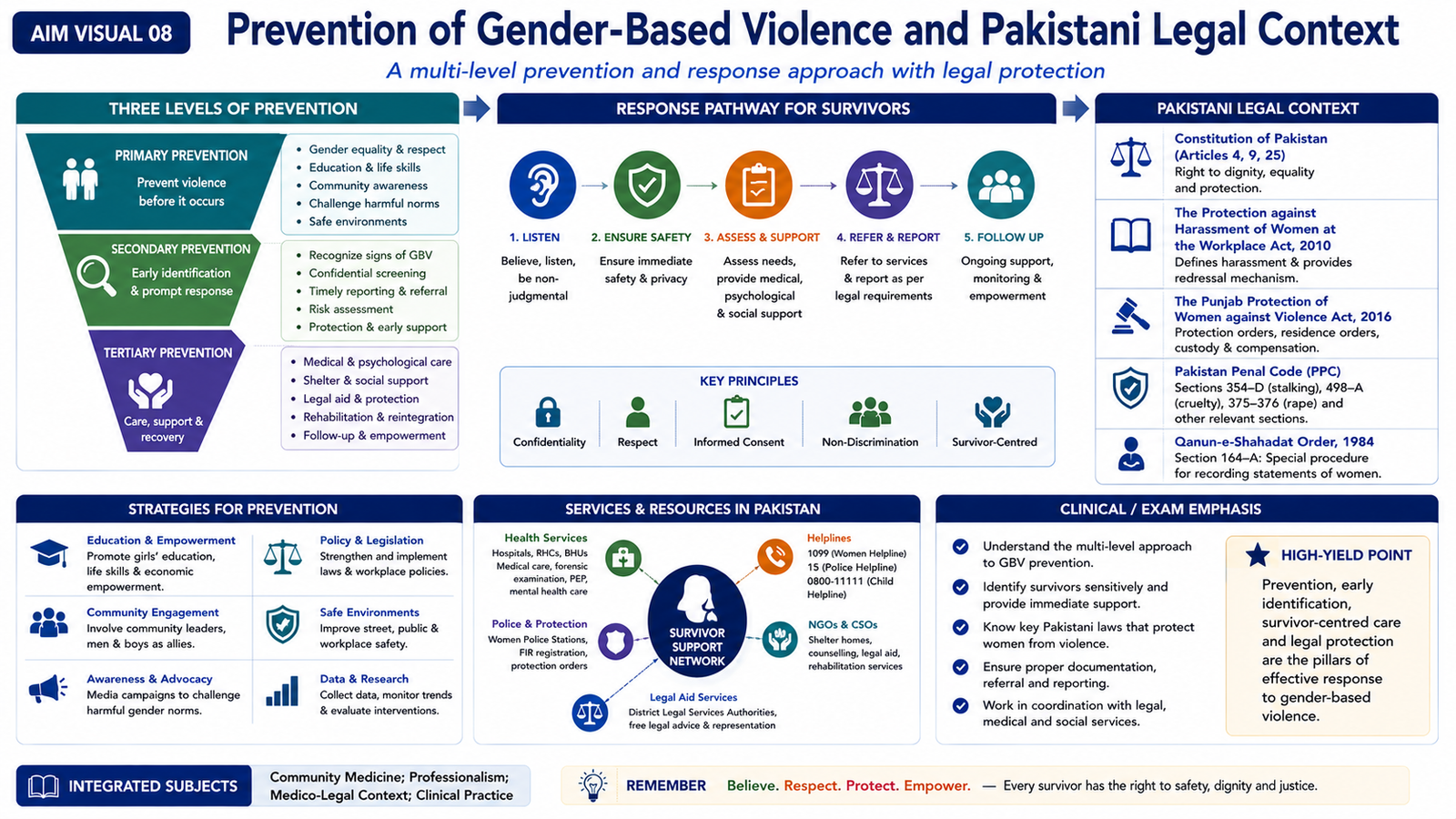
H. Prevention of Gender-Based Violence and Pakistani Legal Context
Prevention of GBV requires action before violence occurs, early support when violence is identified, and continuing care for people who have already been harmed. Because its determinants operate at individual, relationship, community and societal levels, no single intervention can prevent every case.
Primary prevention
Primary prevention attempts to prevent violence before it occurs by addressing the social conditions that allow violence and coercion to develop.
- Promote respectful and gender-equitable relationships.
- Improve access to education and economic opportunities.
- Teach young people about consent, dignity and non-violent relationships.
- Challenge social norms that tolerate violence or blame victims.
- Create safer educational institutions and workplaces.
- Improve awareness of legal rights and available support.
- Engage families, communities, men and boys in prevention.
Secondary prevention
Secondary prevention aims to identify violence early and reduce further harm. Health professionals may encounter patients with unexplained injuries, repeated presentations, anxiety, reproductive-health problems or direct disclosure of violence. The clinician should provide a private and respectful environment in which the patient can speak safely.
- Respond sensitively to disclosure.
- Assess immediate medical needs and immediate safety.
- Respect privacy and confidentiality within applicable legal limits.
- Provide information about appropriate health, social and protective services.
- Avoid confronting the suspected perpetrator in a way that could increase risk to the patient.
Tertiary prevention
Tertiary prevention reduces long-term consequences and recurrence after violence has occurred. It may include treatment of physical injury, reproductive and mental-health care, rehabilitation, safety planning and connection with appropriate social or legal support.
Legal implications in Pakistan
GBV may involve criminal offences as well as protections provided by specific federal or provincial laws. The exact legal pathway depends on the type of violence and the jurisdiction. Students should therefore understand the legal principles and recognize that applicable procedures must be checked against current law and local institutional policy. Pakistan has specific legislation addressing workplace harassment, including the Protection Against Harassment of Women at the Workplace Act, 2010, which was amended in 2022. In Khyber Pakhtunkhwa, domestic violence against women is specifically addressed through the Khyber Pakhtunkhwa Domestic Violence Against Women (Prevention and Protection) Act, 2021. Other acts of GBV may fall within the criminal-law framework where conduct amounts to assault, sexual violence, wrongful confinement, kidnapping or abduction, forced practices, serious bodily injury or other offences. The Ministry of Human Rights also lists several federal laws and criminal-law amendments addressing violence and harmful practices against women.
Professional responsibilities of the doctor
The doctor should first address health and safety. Medical care must not be delayed merely because an incident has possible legal significance. At the same time, careful clinical documentation may later become important evidence.
- Provide necessary emergency and clinical care.
- Obtain appropriate informed consent for examination and procedures.
- Maintain privacy and confidentiality according to professional and legal requirements.
- Record the history clearly and objectively without judgmental language.
- Document relevant examination findings and injuries accurately.
- Follow appropriate medico-legal procedures when a formal medico-legal examination or evidence collection is indicated.
- Preserve proper handling and chain of custody when medico-legal specimens are collected.
- Recognize that reporting or safeguarding obligations may differ according to age, immediate danger, type of offence and applicable law.
- Refer to appropriate medical, psychological, social and legal-support services when required.
3. Integrated Mechanism Flow — Demographic Change
4. Important Comparison — Population Pyramid Patterns
| Feature | Expansive | Stationary | Constrictive |
|---|---|---|---|
| Base | Broad | Moderate | Narrow |
| Fertility | Relatively high | Low | Very low |
| Age structure | Young | Balanced | Ageing |
| Growth tendency | Rapid growth | Stable or slow growth | Very slow or declining |
| Likely service pressure | Maternal-child health, education | Mixed services | Chronic disease and elderly care |
⭐ 5. AIM High-Yield Review
Demography, Community Needs, Patient-Centred Care & Gender-Based Violence
Use these videos after reading the AIM Learning Material to reinforce the major KMU learning outcomes.
Demography & Population Pyramids
Reinforces demography, population structure and interpretation of population pyramids.
Community Health Needs Assessment
Shows how community information and community participation are used to identify health needs and priorities.
Patient-Centered Care
Reinforces the shift from disease-focused care toward care based on the patient’s needs, preferences and individual circumstances.
Violence Against Women — Health-System Response
WHO video explaining the health consequences of violence and the important role of healthcare workers in supporting survivors.