
This chapter follows the KMU learning outcomes and builds the forensic concepts in a logical sequence. First understand what each reproductive finding means and how reliable it is; then use the AIM High-Yield Review for final revision.
Topic 21 — Forensic Reproductive Medicine: Impotence, Sterility, Assisted Reproduction, Pregnancy and Delivery
Module/Theme: Endocrine + Reproduction
This topic examines reproductive capacity, sterilization, assisted reproduction, evidence of pregnancy and delivery, legitimacy, parentage and important matrimonial medico-legal issues. :contentReference[oaicite:0]{index=0}
Topic Introduction
Forensic reproductive medicine applies medical knowledge of sexual function, fertility, pregnancy, childbirth and parentage to legal questions. A doctor may be asked whether a person is physically capable of sexual intercourse, whether infertility is present, whether a woman is or has recently been pregnant, whether delivery has occurred, or how assisted reproduction affects questions of parentage and consent. These findings must be interpreted carefully because many reproductive signs are supportive rather than absolutely specific. In this chapter, you will learn the difference between impotence and sterility, principles of sterilization and assisted reproduction, signs of pregnancy and delivery, the concepts of Isqat-i-Haml and Isqat-i-Janin, and the major medico-legal issues involving legitimacy, affiliation, adoption and marriage.
A. Impotence and Sterility
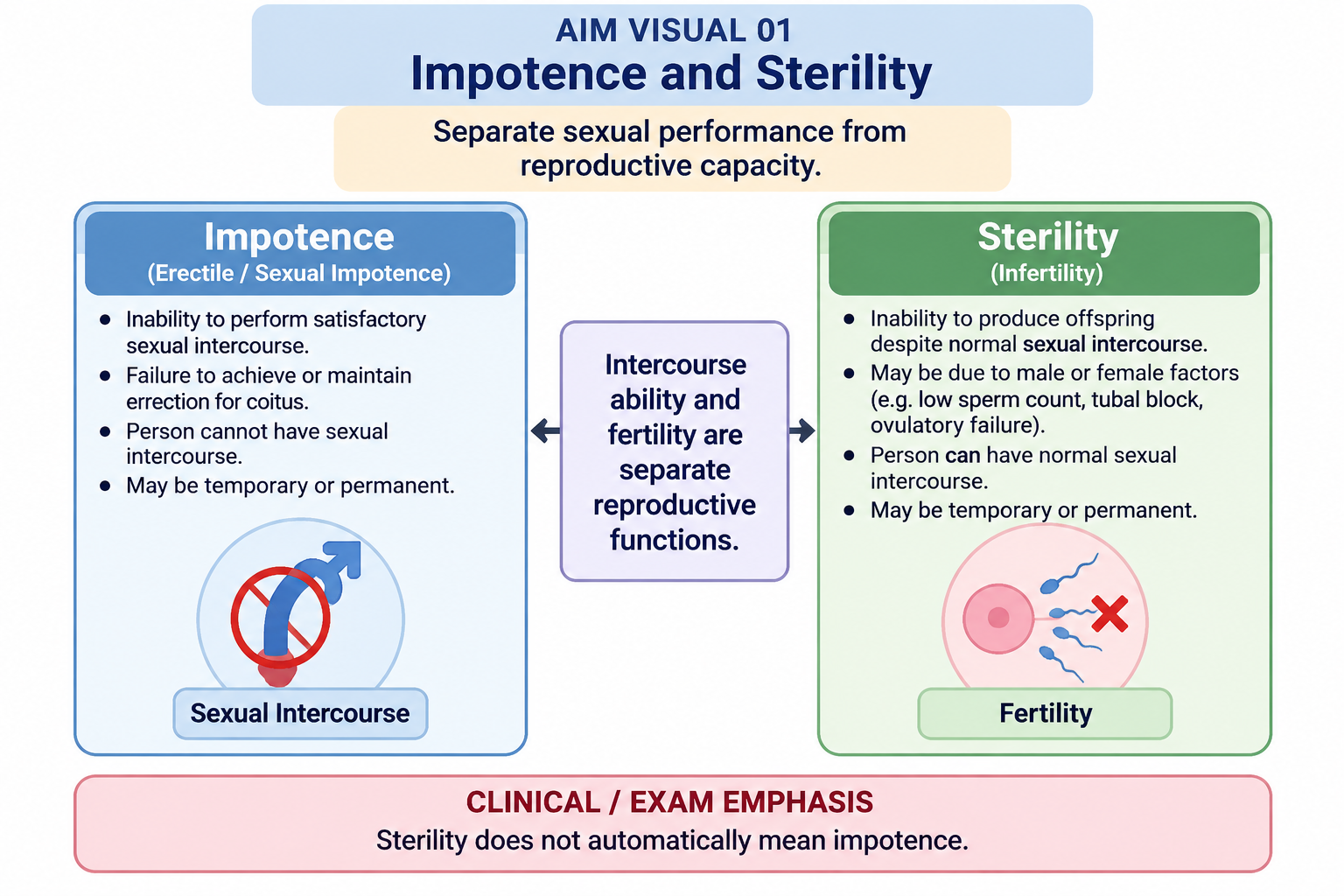
Impotence and sterility describe two different failures of reproductive function. The distinction is important because a person may be capable of sexual intercourse but unable to produce a child, or may be fertile biologically but unable to complete intercourse. Forensic conclusions therefore require separate assessment of sexual capacity and reproductive capacity.
Definitions
Impotence is inability to perform satisfactory sexual intercourse. In classical forensic terminology, inability to perform intercourse is called impotentia coeundi. In men, erectile dysfunction is an important cause, but impotence is broader than erection alone because penetration, ejaculation and anatomical ability may also be relevant.
Sterility is inability to procreate or produce offspring despite the ability to perform sexual intercourse. Classical texts may describe this as impotentia generandi. Sterility therefore concerns fertility rather than the mechanical performance of intercourse.
| Feature | Impotence | Sterility |
|---|---|---|
| Main problem | Performance of sexual intercourse | Ability to produce offspring |
| Intercourse possible? | Usually impaired or impossible | May be completely normal |
| Fertility | May be biologically preserved | Reduced or absent |
| Typical example | Severe erectile dysfunction | Azoospermia despite normal intercourse |
Important causes in males
Male impotence can result when anatomy, vascular supply, neurological control, hormonal function or psychological response prevents intercourse. Male sterility results when sperm are absent, insufficient, abnormal or unable to reach the female reproductive tract.
- Structural causes of impotence: major congenital or acquired abnormalities of the penis, severe deformity or destructive genital disease.
- Vascular causes: inadequate arterial inflow or excessive venous leakage may prevent adequate erection.
- Neurological causes: spinal cord, autonomic or peripheral nerve dysfunction may disturb erection or ejaculation.
- Endocrine causes: significant androgen deficiency or other hormonal disease may reduce sexual function.
- Psychogenic causes: anxiety, fear, relationship factors and other psychological disturbances may interfere with sexual performance.
- Drugs and systemic disease: some medications and chronic illnesses can impair sexual function.
- Causes of male sterility: testicular failure, absent sperm production, severe reduction in sperm number or function, obstruction of the reproductive tract and disorders of ejaculation.
Important causes in females
Female impotence usually refers to a physical or functional inability to permit intercourse. Female sterility instead results from failure of ovulation, fertilization, transport of gametes or implantation.
- Congenital absence, severe narrowing or obstruction of the vagina.
- Severe painful genital disease or scarring that prevents intercourse.
- Vaginismus: involuntary contraction of pelvic-floor muscles that may prevent penetration.
- Ovulatory failure or ovarian insufficiency causing infertility.
- Tubal obstruction preventing sperm and ovum from meeting.
- Important uterine or reproductive-tract abnormalities interfering with conception or implantation.
Medico-Legal Importance
Impotence and sterility may become relevant in matrimonial disputes, questions concerning consummation of marriage, dissolution or nullity, disputed paternity and some sexual-offence investigations. A crucial forensic principle is that sterility does not automatically mean impotence, and the absence of sperm does not prove that intercourse was impossible.
A conclusion about permanent impotence should not be based on a casual or single observation. History, physical examination and appropriate specialist assessment may be required, and the examiner should distinguish anatomical capacity from temporary psychological or physiological difficulty.

B. Sterilization and Its Medico-Legal Importance
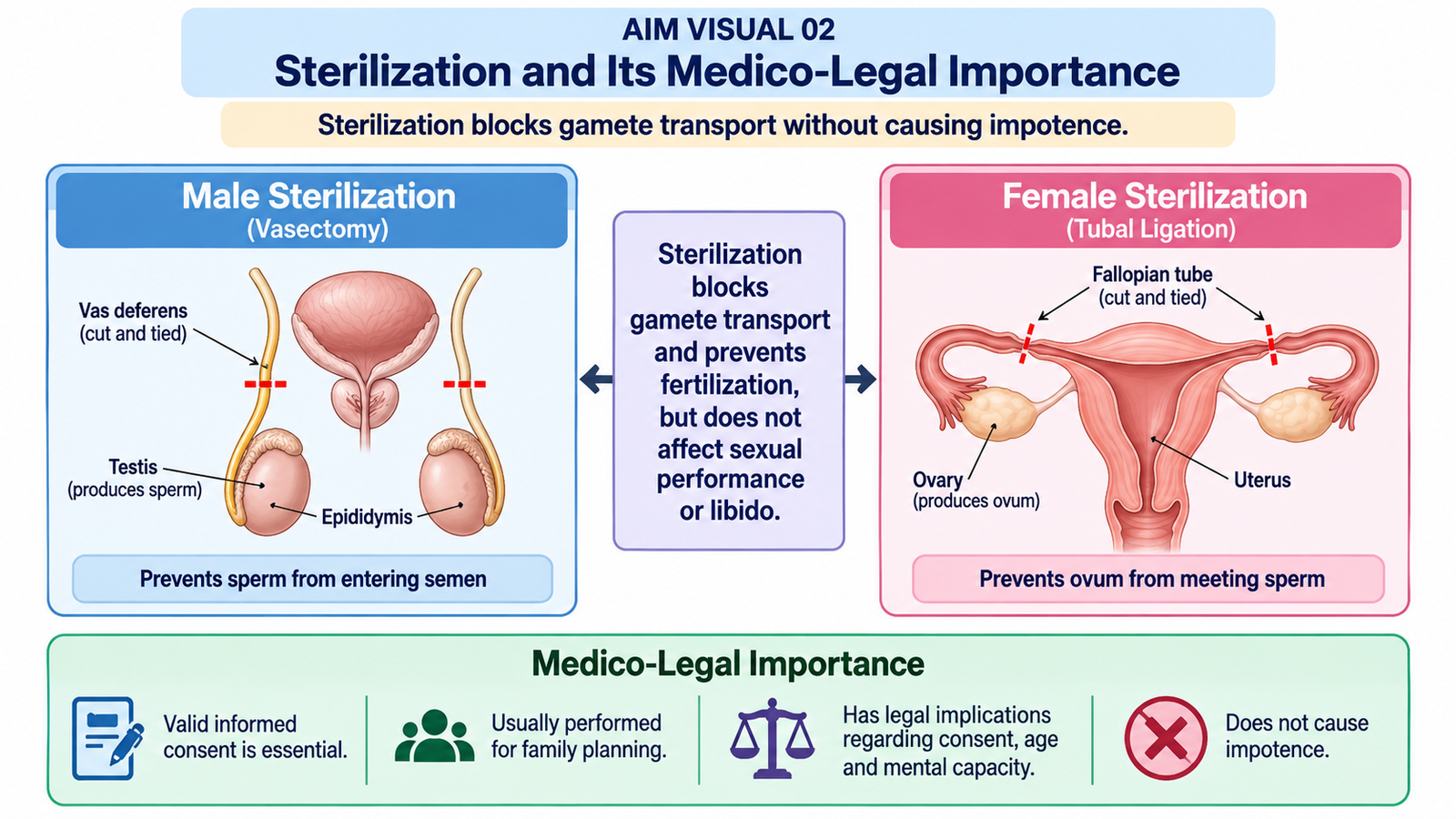
Sterilization is an intentional procedure performed to produce permanent contraception. It prevents pregnancy without necessarily altering sexual desire, sexual performance or the production of sex hormones. Thus, a sterilized person is not necessarily impotent.
Male sterilization
Vasectomy is the standard conceptual method of male sterilization. The vas deferens on each side is interrupted or occluded so that sperm produced in the testes cannot enter the ejaculate. Testosterone production, libido and erectile capacity are not abolished by vasectomy because the testes continue their endocrine function.
Female sterilization
Female sterilization is achieved by interrupting or occluding the fallopian tubes. This prevents the sperm and ovum from meeting. Ovarian endocrine function normally continues, so sterilization itself does not mean removal of the ovaries or loss of female hormonal function.
Medico-Legal Importance and Formalities
Because sterilization is intended to have a permanent reproductive effect, the quality of consent and documentation is particularly important. The patient must understand what is being proposed and must make the decision voluntarily.
- Valid informed consent should be obtained from a patient who has decision-making capacity.
- The nature and intended permanence of the procedure should be explained clearly.
- Reasonable alternatives should be discussed so that the decision is informed rather than coerced.
- The patient should understand that no contraceptive procedure can be represented irresponsibly as absolutely incapable of failure.
- Important procedural risks and possible consequences should be explained at an appropriate level.
- The identity of the patient, consent process, counseling and procedure should be properly documented.
- The procedure should be carried out by an appropriately trained practitioner in a suitable clinical setting.
- Consent obtained through force, deception or inappropriate pressure is medico-legally problematic.
Exact statutory or institutional formalities may vary with the applicable law and policy. The forensic principle is to document competent, voluntary and informed authorization and avoid assuming that sterilization is equivalent to impotence.
C. Assisted Reproduction: Artificial Insemination, IVF and Surrogacy
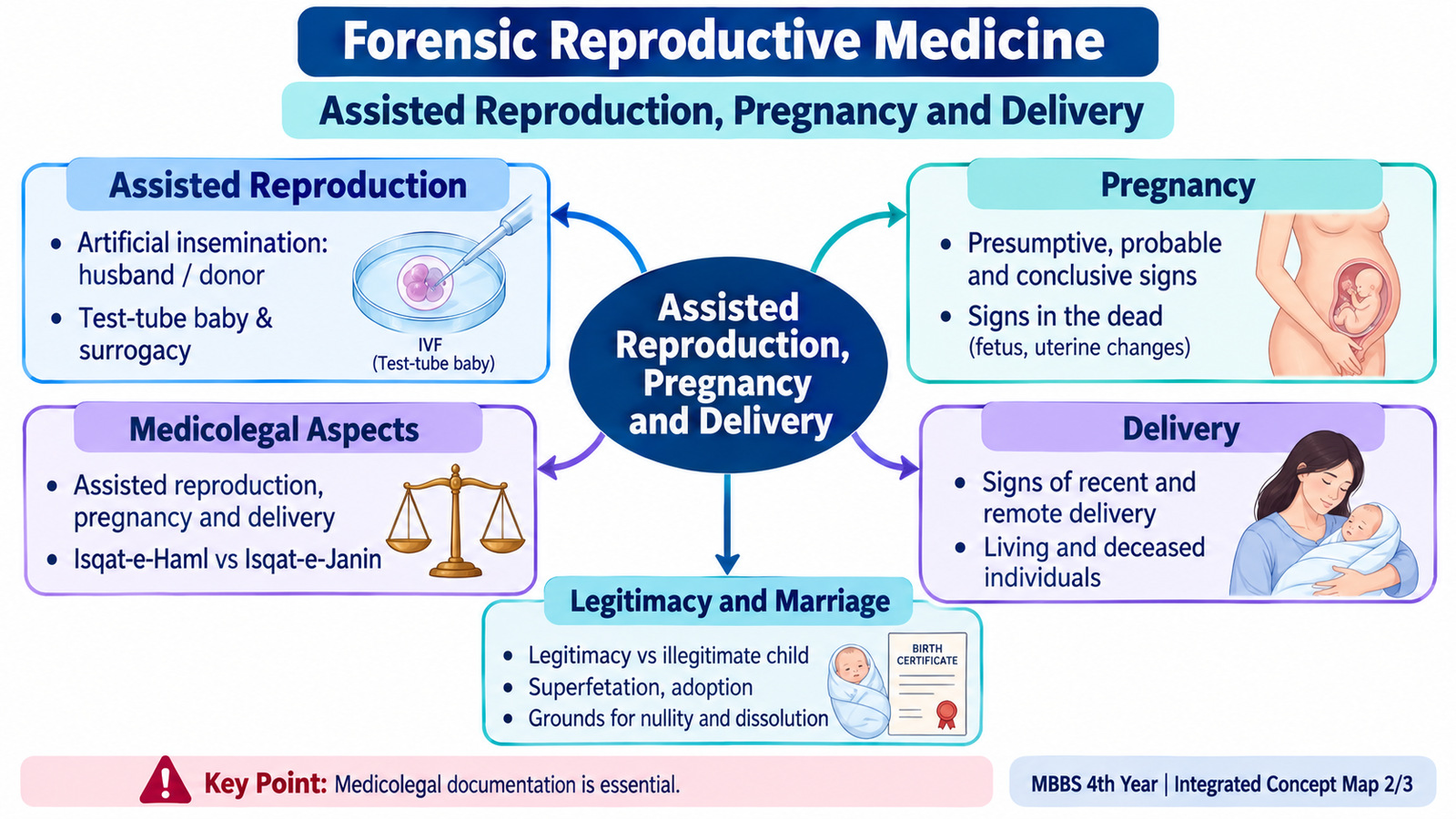
Assisted reproduction allows conception or pregnancy to occur with medical assistance rather than relying entirely on natural sexual intercourse. In forensic medicine, the most important issues are not the detailed laboratory techniques but the implications for consent, parentage, legitimacy, record keeping and disputes about reproductive responsibility.
Artificial insemination
Artificial insemination means introducing semen into the female reproductive tract by artificial means rather than by sexual intercourse, with the aim of achieving pregnancy.
It is traditionally classified according to the source of semen:
- AIH — Artificial insemination by husband: semen is obtained from the woman’s husband or recognized male partner in the relevant marital context.
- AID — Artificial insemination by donor: semen is supplied by a donor other than the husband.
- Combined or mixed insemination: older classifications may describe situations in which semen sources are combined; its practical and legal relevance depends on the setting.
Medico-legal aspects of artificial insemination
Artificial insemination can create legal questions even when the medical procedure itself is uncomplicated. The source of gametes and the consent of the people involved must therefore be clear and documented.
- Informed consent of the relevant competent parties.
- Accurate identification and handling of reproductive material.
- Confidentiality and appropriate maintenance of records.
- Questions concerning biological and legal parentage.
- Possible disputes concerning legitimacy, inheritance, maintenance or custody.
- Donor screening and responsible clinical practice.
- Religious and personal-law considerations where these affect legal status.
The physician should not assume that biological parentage and legal parentage are always identical. Their legal effect is determined by the applicable law.
Test-tube baby
The traditional term test-tube baby refers to a child conceived through in vitro fertilization (IVF). The ovum and sperm are brought together outside the woman’s body, fertilization occurs in the laboratory, and a resulting embryo is subsequently transferred into the reproductive tract for implantation.
The child develops in the uterus in the usual way after successful implantation; the term “test-tube baby” does not mean that fetal development occurs in a laboratory vessel.
Surrogate motherhood
Surrogate motherhood occurs when a woman carries a pregnancy with the intention that the child will be raised by another person or couple after birth. In a gestational surrogacy, the surrogate carries an embryo to which she may have no genetic contribution. In a traditional surrogacy, her own ovum contributes genetically to the child.
The major medico-legal concerns include:
- Who is recognized as the legal mother and father.
- Validity and scope of consent.
- Custody after birth.
- Disagreement about medical decisions during pregnancy.
- Confidentiality and reproductive records.
- Potential exploitation or coercion.
- Inheritance, legitimacy and birth-registration issues.
The legal status of surrogacy is jurisdiction- and personal-law dependent; therefore a forensic practitioner should distinguish the medical facts from the legal conclusion.

D. Pregnancy and the Forensic Signs of Pregnancy
Pregnancy is the physiological state in which a developing conceptus is present in the uterus after conception and implantation. In forensic practice, signs of pregnancy are traditionally divided into presumptive, probable and conclusive signs according to how strongly they support the diagnosis.
This classification matters because many early features of pregnancy can occur in other conditions. A doctor should therefore avoid treating a nonspecific symptom as proof of pregnancy.
| Category | Meaning | Important examples |
|---|---|---|
| Presumptive | Symptoms or changes suggesting pregnancy but not proving it | Amenorrhea, nausea, breast changes, urinary frequency, quickening reported by mother, pigmentation |
| Probable | Objective findings strongly supporting pregnancy but not absolutely diagnostic | Uterine enlargement, cervical/uterine softening, ballottement, Braxton Hicks contractions, positive pregnancy test |
| Conclusive | Direct evidence of a fetus | Fetal heart activity, fetal movement detected by examiner, ultrasound demonstration of embryo/fetus |
Presumptive signs
These signs are often noticed first by the woman. Amenorrhea is common because the hormonal environment of pregnancy suppresses the normal menstrual cycle. Breast enlargement and pigmentation result from hormonal stimulation, while nausea and urinary frequency are physiological effects associated with early pregnancy.
These features are useful clues but are not proof. Amenorrhea, for example, may occur because of endocrine disease, stress, illness or menopause.
Probable signs
Probable signs are objective and therefore stronger than symptoms alone. Progressive uterine enlargement occurs as the pregnancy grows. Increased vascularity and softening produce characteristic cervical and uterine changes. A positive pregnancy test demonstrates pregnancy-associated hormone activity, but laboratory positivity alone is not equivalent to direct demonstration of a fetus.
- Goodell sign: softening of the cervix.
- Hegar sign: softening of the lower uterine segment or isthmus.
- Chadwick sign: bluish discoloration of vaginal and cervical tissues due to increased vascularity.
- Ballottement: rebound movement of the fetus within the fluid-filled uterus after displacement.
- Braxton Hicks contractions: intermittent uterine contractions that may be detected during pregnancy.
Conclusive signs
Conclusive signs demonstrate the fetus directly rather than merely showing maternal physiological change. Ultrasound visualization, fetal cardiac activity and fetal movements detected objectively provide much stronger evidence than symptoms such as amenorrhea or nausea.
Signs of pregnancy in the dead
At autopsy, pregnancy may be demonstrated through direct examination of the reproductive organs. Findings become more persuasive when several are present together.
- Enlargement of the uterus appropriate to pregnancy.
- Presence of a gestational sac, embryo or fetus.
- Placental tissue or a placental attachment site.
- Decidual changes in the endometrium.
- A corpus luteum in the ovary, which may support but does not by itself prove pregnancy.
- Pregnancy-associated breast, cervical and vaginal changes.
The most reliable postmortem evidence is direct demonstration of products of conception or characteristic pregnancy-related uterine structures. Nonspecific breast or genital changes should not be interpreted in isolation.

E. Medico-Legal Importance of Pregnancy, Isqat-i-Haml and Isqat-i-Janin
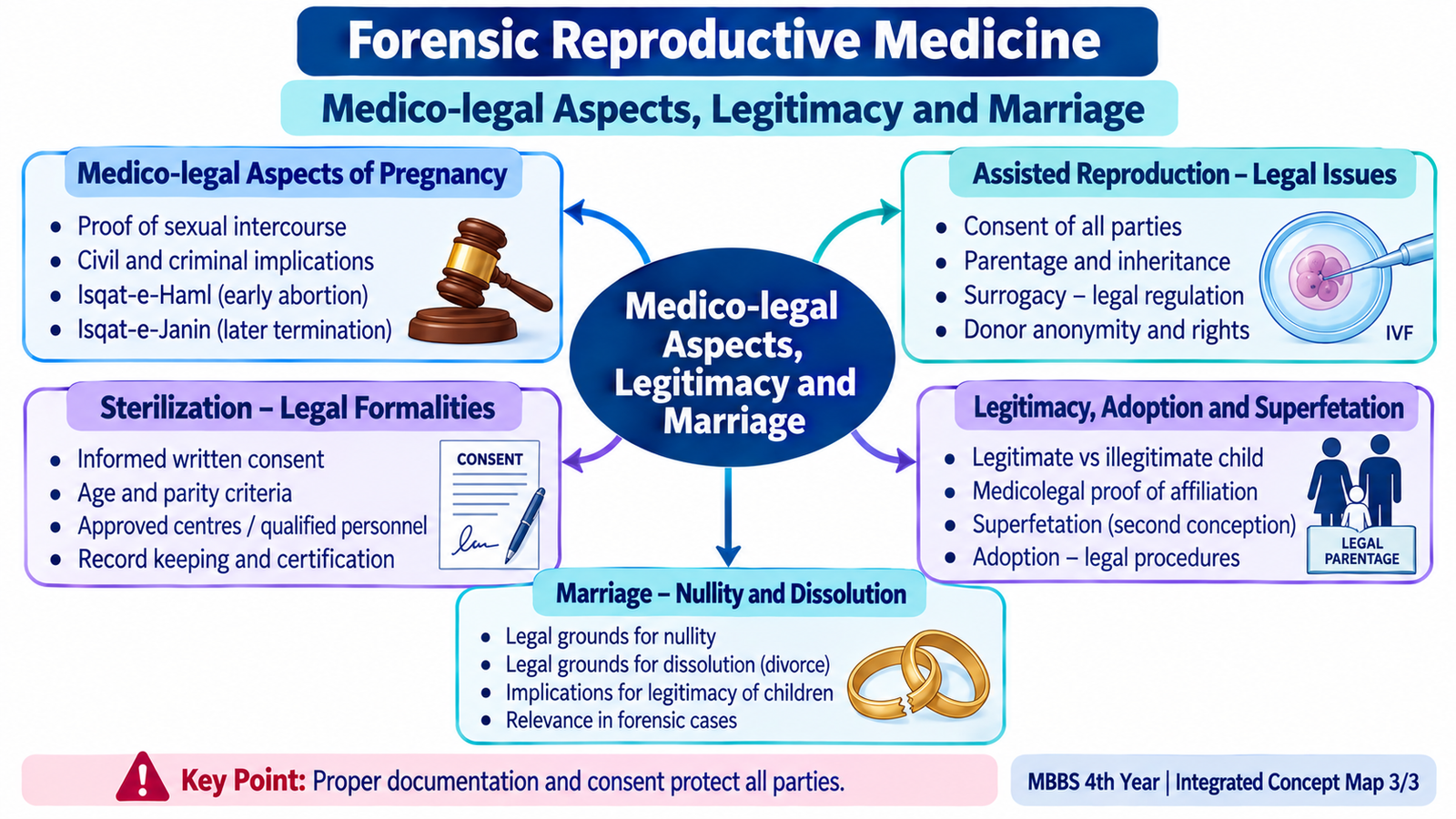
Establishing pregnancy may have legal importance, but the medical finding must be interpreted only for what it can actually prove. Pregnancy demonstrates conception; it does not identify the father, establish whether intercourse was consensual, or by itself prove a particular alleged sexual event.
Important medico-legal situations
- Pregnancy following an alleged sexual offence.
- Disputes involving maternity, paternity or legitimacy.
- Questions concerning inheritance or marital status.
- Allegations of unlawful termination of pregnancy.
- Investigation of concealed pregnancy, delivery or disposal of products of conception.
- Assessment of pregnancy in a deceased woman.
Isqat-i-Haml
Under the terminology used in the Pakistan Penal Code, Isqat-i-Haml refers to causing a pregnant woman to miscarry when the organs of the conceptus have not yet formed, except where the act falls within the legally recognized good-faith circumstances stated in the law. The statutory wording recognizes saving the woman’s life and necessary treatment in this context. :contentReference[oaicite:1]{index=1}
Isqat-i-Janin
Isqat-i-Janin refers to causing miscarriage when some limbs or organs of the developing conceptus have formed, except where the miscarriage is caused in good faith for the purpose recognized by the law of saving the woman’s life. :contentReference[oaicite:2]{index=2}
The key undergraduate distinction is therefore based on whether fetal limbs or organs have formed. These are medico-legal definitions rather than ordinary obstetric classifications of miscarriage.

F. Delivery: Signs of Recent and Remote Childbirth
Delivery is the process by which the fetus and subsequently the placenta and membranes are expelled or removed from the uterus at the end of pregnancy. In forensic practice, examination may be required to determine whether a woman has recently delivered or whether she has evidence suggesting childbirth in the more distant past.
Recent delivery produces temporary physiological and traumatic changes. Remote delivery is inferred from residual anatomical changes that may persist after the acute puerperal findings have disappeared.
Signs of recent delivery in the living
Immediately after childbirth, the genital tract and uterus show changes produced by uterine distension, passage of the fetus and separation of the placenta.
- General appearance compatible with the recent puerperium.
- Breasts may be enlarged, vascular and secreting colostrum or milk.
- Abdominal wall may be lax with recent striae.
- Vulva and vagina may be swollen, relaxed or bruised.
- Recent tears, sutures or an episiotomy may be present.
- The cervix is soft and relatively open soon after delivery.
- The uterus remains enlarged but progressively contracts after birth.
- Lochia, the postpartum uterine discharge, supports recent delivery when interpreted with other findings.
Signs of recent delivery in the deceased
At autopsy, the examiner can assess both external and internal reproductive structures. In addition to the external findings described above, internal examination may demonstrate an enlarged postpartum uterus and the recent placental implantation site.
- Enlarged uterus with postpartum changes.
- Placental attachment site on the uterine wall.
- Blood, lochia or decidual material within the uterine cavity.
- Relaxation or recent injury of the cervix and genital tract.
- Breast changes or lactation.
Signs of remote delivery
After healing and involution, recent findings disappear. Some residual changes may suggest previous childbirth, but they are less useful for establishing exactly when delivery occurred or how many pregnancies reached delivery.
- Parous cervix: the external cervical os tends to become a transverse slit rather than the small rounded opening typical of a nulliparous cervix.
- Persistent relative laxity of the vaginal walls.
- Carunculae myrtiformes: small residual tags formed from the torn hymenal tissue following childbirth.
- Old healed perineal tears or episiotomy scars.
- Striae albicantes: pale, older stretch marks of the abdominal wall.
- Residual abdominal-wall laxity.
These findings may also be assessed in a deceased woman. No isolated remote sign should be used to determine the exact number of previous deliveries.
Medico-legal importance of delivery
Evidence of delivery can be important when investigating concealment of birth, abandonment of an infant, disputed maternity, alleged recent childbirth or death of a newborn. The doctor’s role is to establish and document the medical evidence while avoiding conclusions that exceed the findings.

G. Legitimacy, Superfetation, Affiliation and Adoption
Questions about parentage are medico-legally important because biological relationships may affect legal status, inheritance, maintenance, custody and identity. The doctor may provide medical evidence, but the final legal determination of legitimacy or parentage belongs to the competent legal authority applying the relevant law.
Legitimacy
Legitimacy describes the legally recognized status of a child in relation to the lawful marital relationship of the parents according to the applicable law. Traditionally, a legitimate child is a child whose parentage is recognized as arising within a valid marriage.
An illegitimate child is the traditional forensic term for a child whose birth does not satisfy the legal requirements for legitimacy under the applicable law. Because the legal consequences of this label are jurisdiction- and personal-law dependent, the medical examiner should avoid making a legal declaration solely from clinical findings.
Medico-legal importance of legitimacy
- Disputed paternity or maternity.
- Inheritance and succession disputes.
- Maintenance and family responsibilities.
- Custody and guardianship questions.
- Birth registration and family identity.
- Interpretation of reproductive or genetic evidence in court.
Medical or genetic evidence can be highly informative in parentage disputes, but the legal presumption of legitimacy and the admissibility or effect of such evidence depend on the applicable law.
Superfetation
Superfetation means conception of a second embryo during an already established pregnancy, so that two conceptuses would have different conception times. It is considered an exceptionally rare phenomenon in humans.
Its forensic importance lies mainly in unusual disputes about gestational age or parentage. Marked differences in fetal size are not by themselves proof of superfetation because growth discordance between twins can occur for many other reasons.
Affiliation
Affiliation refers to establishing or legally recognizing the parent-child relationship, particularly when parentage is disputed. Medical evidence may assist by documenting reproductive history or biological relationship, but the doctor does not replace the legal process that determines legal parentage.
Adoption
Adoption is a legal or social arrangement in which responsibility for the care of a child is assumed by person or persons other than the biological parents. Its exact legal consequences vary according to jurisdiction and personal law.
Medico-legally, adoption may raise questions concerning:
- Identity of biological and legal caregivers.
- Medical and genetic history.
- Consent of relevant persons.
- Custody and guardianship.
- Inheritance and family status.
- Confidentiality of records.
A useful distinction is that biological parentage is a medical fact, whereas legal parentage is a legal status. They may coincide, but one should not automatically be substituted for the other.

H. Nullity and Dissolution of Marriage
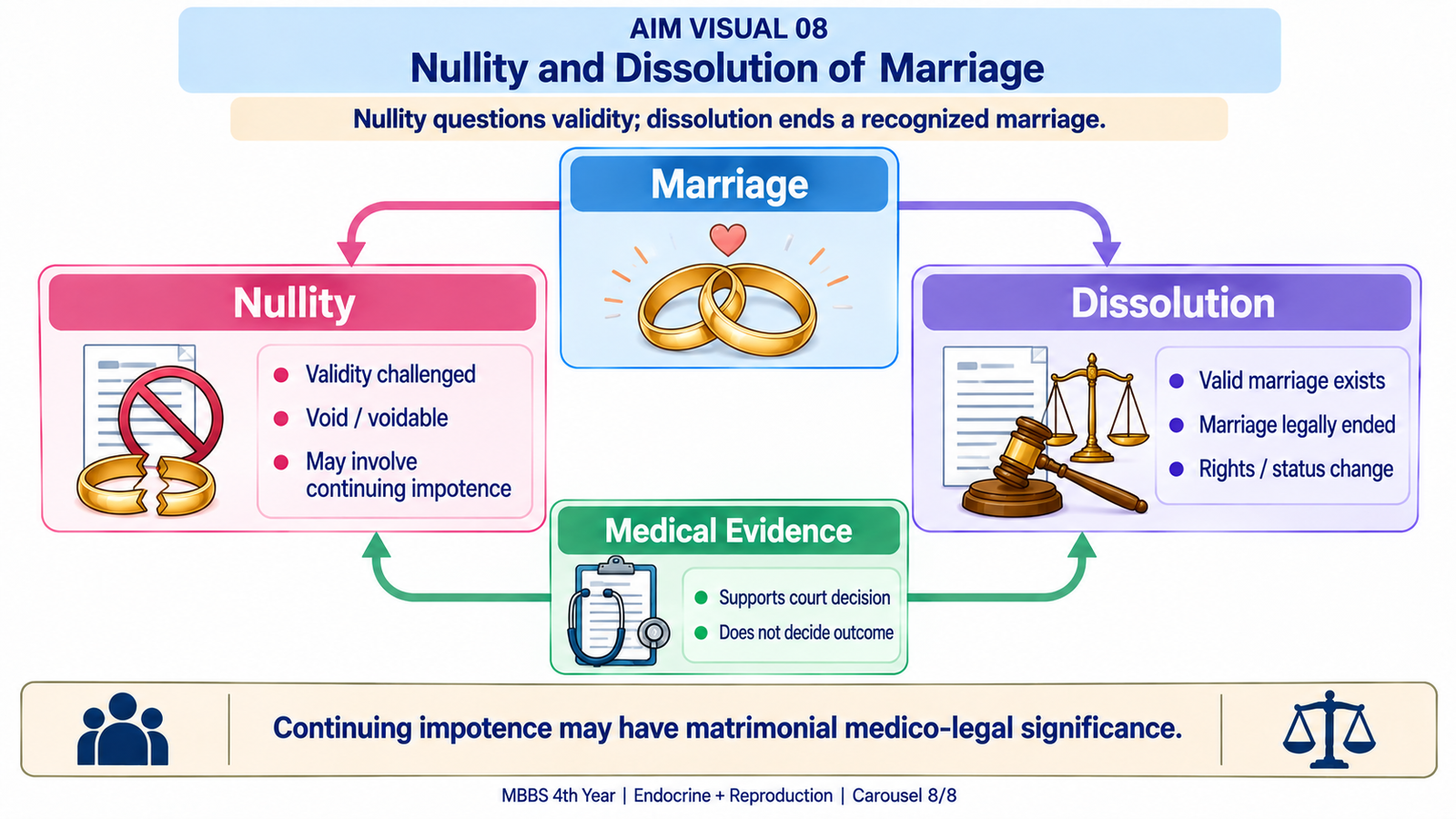
Marriage may enter forensic discussion when medical facts such as impotence, consummation, fertility or parentage become relevant to matrimonial proceedings. It is important to distinguish nullity from dissolution. Nullity concerns a marriage alleged to be legally invalid or voidable because an essential legal requirement was defective, whereas dissolution terminates a marriage that was legally recognized.
Grounds relevant to nullity
The exact grounds for nullity depend on the personal law governing the parties. At undergraduate forensic level, important categories include:
- A marriage prohibited because the parties fall within a legally prohibited relationship.
- Absence of legally valid consent or required mental capacity.
- Failure of an essential condition required for a valid marriage under the applicable personal law.
- In some legal contexts, inability to consummate marriage due to continuing impotence may become relevant to annulment or other matrimonial relief.
Because matrimonial law differs between communities and jurisdictions, a doctor should provide the medical finding—for example, whether persistent impotence is present—rather than independently declaring the marriage null.
Grounds for dissolution under Muslim law in Pakistan
The Dissolution of Muslim Marriages Act, 1939 sets out grounds on which a Muslim woman may seek a decree for dissolution of marriage. Important undergraduate grounds include the following: :contentReference[oaicite:3]{index=3}
- Whereabouts of the husband not known for four years.
- Failure or neglect to provide maintenance for two years.
- The husband taking an additional wife in contravention of the applicable Muslim Family Laws Ordinance provisions.
- Sentence of the husband to imprisonment for seven years or more, subject to the statutory conditions.
- Failure without reasonable cause to perform marital obligations for three years.
- The husband being impotent at the time of marriage and continuing to be so.
- Specified prolonged insanity or specified serious disease recognized by the statute.
- Repudiation of a marriage contracted by a guardian during minority, subject to the conditions stated by law.
- Lian, where the statutory circumstances apply.
- Cruelty, including the forms recognized in the legislation.
- Any other ground recognized as valid for dissolution under Muslim law.
From the forensic point of view, continuing impotence is particularly important because a medical assessment may be requested. The examiner should give a careful medical opinion on capacity and avoid deciding the legal outcome of the marriage.
⭐ AIM High-Yield Review
- Impotence means inability to perform sexual intercourse; sterility means inability to procreate.
- A person may be sterile but fully capable of normal sexual intercourse.
- Male sterilization is usually achieved by interruption of the vas deferens; female sterilization by interruption of the fallopian tubes.
- Valid, informed and voluntary consent is central to the medico-legal safety of sterilization.
- AIH uses the husband’s semen; AID uses donor semen.
- A “test-tube baby” is conceived by in vitro fertilization; fetal development subsequently occurs in the uterus.
- Pregnancy signs progress in evidentiary strength from presumptive → probable → conclusive.
- Direct fetal demonstration by ultrasound or objective fetal cardiac activity provides conclusive evidence of pregnancy.
- Isqat-i-Haml and Isqat-i-Janin are distinguished chiefly by whether fetal limbs or organs have formed.
- Recent delivery is suggested by postpartum uterine, genital, lochial and breast changes; remote delivery by residual parous changes.
- A parous cervix commonly has a transverse external os, while carunculae myrtiformes are residual hymenal tags after childbirth.
- Superfetation is conception of another embryo during an established pregnancy and is exceptionally rare in humans.
- Biological parentage and legal parentage are related concepts but are not always legally identical.
- Nullity concerns legal validity of marriage, whereas dissolution terminates a recognized marriage.
Forensic Reproductive Medicine
Use these videos after completing the learning material to reinforce impotence, sterility, assisted reproduction, pregnancy and delivery from a forensic medicine perspective.
Video 1 — Impotence, Sterility, IVF and Surrogacy
Focus on the definitions and differentiation of impotence and sterility, infertility concepts, test-tube baby and surrogacy.
Video 2 — Pregnancy and Delivery in Forensic Medicine
Reinforces presumptive, probable and conclusive signs of pregnancy together with the forensic assessment of pregnancy and delivery.
Video 3 — Integrated Forensic Reproductive Medicine Review
A broader MBBS forensic medicine review covering impotency, sterility and pregnancy-related medico-legal concepts.