
This chapter follows the KMU learning outcomes in a logical sequence. First understand the basic antimicrobial terms and mechanisms, then revise the high-yield differences and resistance mechanisms at the end.
Principles of Antimicrobial Chemotherapy and Antibacterial Resistance
Infection and Inflammation • Pharmacology
Topic Introduction
Antimicrobial chemotherapy means using drugs to treat infections caused by microorganisms while producing as little harm as possible to the patient. Successful antimicrobial therapy depends not only on choosing a drug that can inhibit or kill the organism, but also on understanding how strongly the organism responds to the drug, how antibacterial activity changes with drug concentration and time, and how bacteria can become resistant. In this chapter, you will learn the essential terminology of antimicrobial therapy, the major mechanisms by which antibacterial drugs act, why drugs are sometimes combined, how bacteria develop resistance, and the important difference between concentration-dependent and time-dependent antibacterial killing.
A. Fundamental Terms in Antimicrobial Chemotherapy
Before studying individual antimicrobial drugs, it is important to understand the language used to describe antimicrobial therapy. These terms explain what antimicrobial drugs are, how their activity is measured and how they are selected in clinical practice.
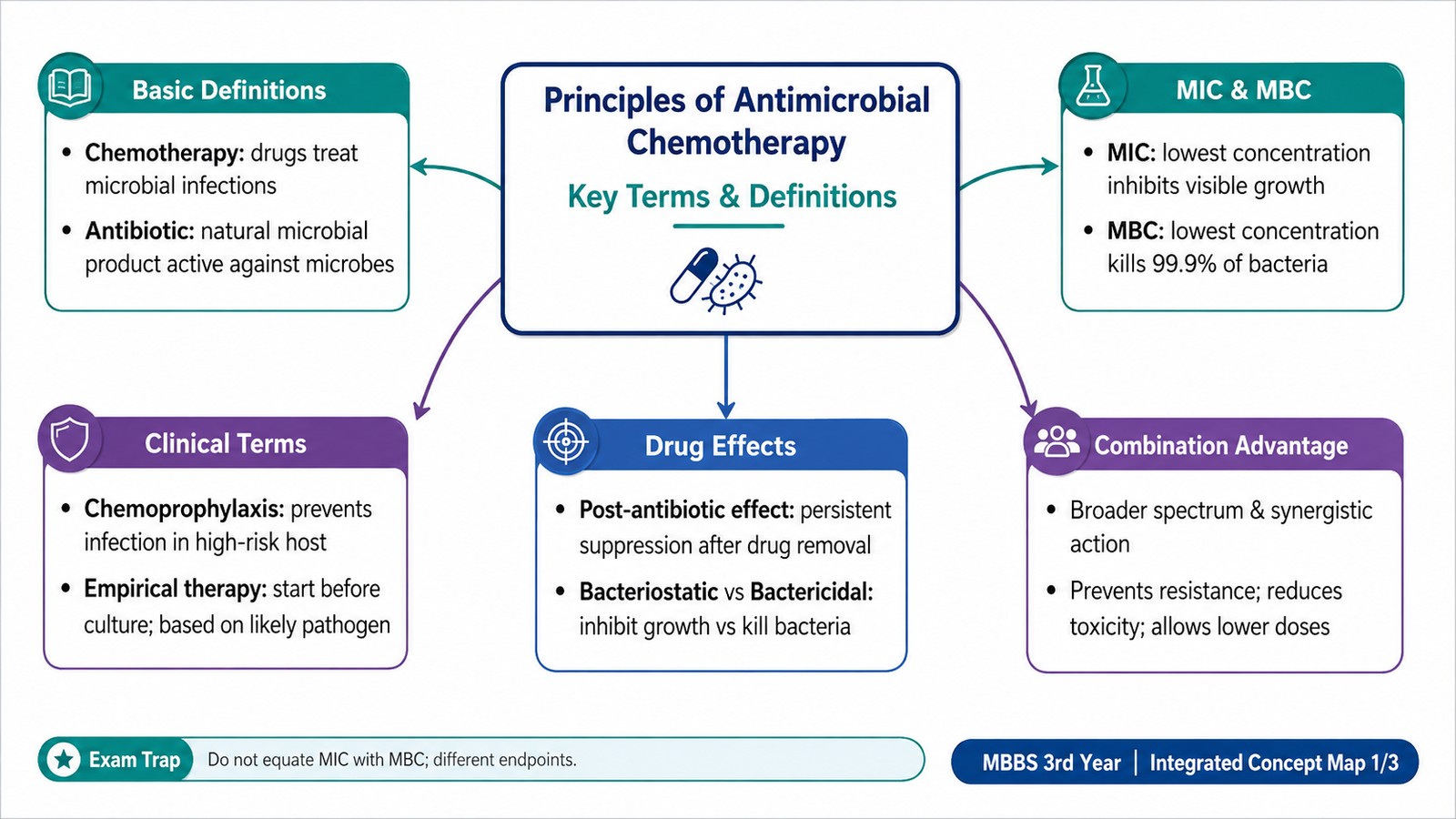
Chemotherapy
Chemotherapy means the use of chemical agents to treat disease. In antimicrobial pharmacology, it refers specifically to the use of drugs that selectively inhibit or destroy microorganisms within the host.
Antimicrobial
An antimicrobial is a substance that kills microorganisms or inhibits their growth. The term is broad and can include drugs acting against bacteria, fungi, viruses and parasites.
Antibiotic
An antibiotic is an antimicrobial agent used particularly against bacteria. Historically, the word referred to substances produced by microorganisms that inhibited other microorganisms, but in clinical practice the term is commonly used for antibacterial drugs regardless of whether they are natural, semisynthetic or synthetic.
Chemoprophylaxis
Chemoprophylaxis is the use of an antimicrobial drug to prevent infection rather than to treat an established infection. The purpose is to prevent susceptible organisms from establishing clinically significant disease when a predictable risk of infection exists.
Empirical Therapy
Empirical antimicrobial therapy is treatment started before the exact organism and its antimicrobial susceptibility are known. Drug selection is therefore based on the most likely organisms and the suspected site of infection. Once microbiological information becomes available, therapy can be adjusted accordingly.

B. MIC, MBC and Bacteriostatic versus Bactericidal Activity
The response of a bacterium to an antimicrobial can be described quantitatively by determining how much drug is required to inhibit or kill it. Two important laboratory concepts are the minimum inhibitory concentration (MIC) and minimum bactericidal concentration (MBC). These concepts also help explain the difference between bacteriostatic and bactericidal drugs.
Minimum Inhibitory Concentration
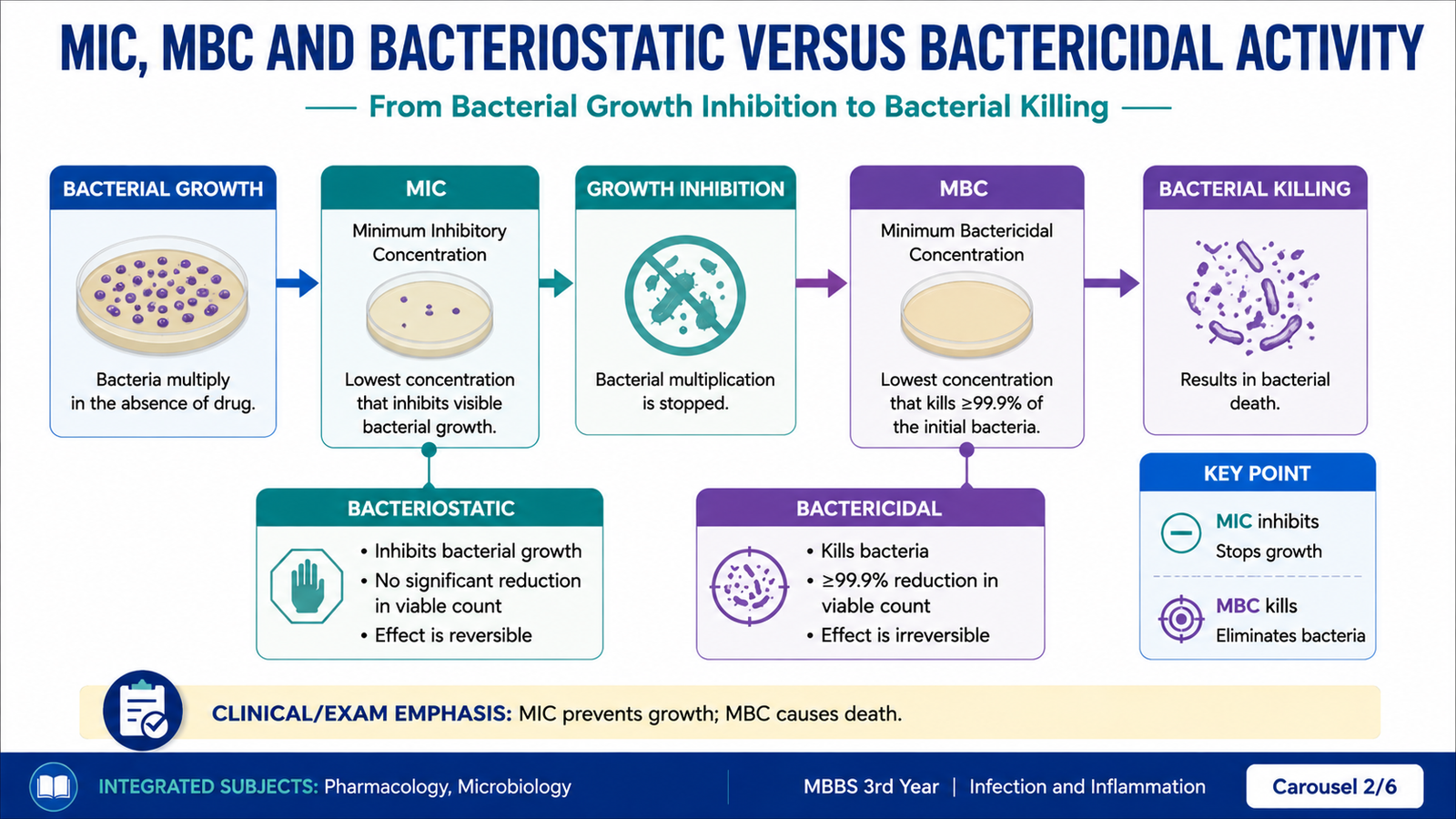
The MIC is the lowest concentration of an antimicrobial drug that prevents visible growth of a microorganism under standardized laboratory conditions. A lower MIC generally indicates that the organism can be inhibited by a lower concentration of that particular drug.
Key concept: MIC measures inhibition of visible bacterial growth; it does not necessarily mean that the bacteria have been killed.
Minimum Bactericidal Concentration
The MBC is the lowest concentration of an antimicrobial drug that kills the bacterial population under standardized testing conditions. It therefore measures bactericidal activity rather than simple inhibition of growth.
Bacteriostatic Antimicrobials
A bacteriostatic drug mainly stops bacteria from multiplying. Once bacterial growth has been inhibited, host immune mechanisms can eliminate the remaining microorganisms.
Examples commonly considered predominantly bacteriostatic include:
- Tetracyclines
- Macrolides
- Clindamycin
- Chloramphenicol
- Sulfonamides when used alone
Bactericidal Antimicrobials
A bactericidal drug causes bacterial death. Many bactericidal drugs damage an essential bacterial structure or process so severely that the organism cannot survive.
Common examples include:
- β-lactam antibiotics
- Aminoglycosides
- Fluoroquinolones
- Vancomycin
The bacteriostatic-versus-bactericidal distinction is useful for understanding antimicrobial action, but the activity of a drug may vary according to the organism, drug concentration and clinical conditions.
| Feature | Bacteriostatic | Bactericidal |
|---|---|---|
| Main action | Inhibits bacterial multiplication | Kills bacteria |
| Dependence on host defenses | Greater contribution from host immunity | Direct bacterial killing is prominent |
| Examples | Tetracyclines, macrolides | β-lactams, aminoglycosides |
C. Classification of Antimicrobials by Mechanism of Action
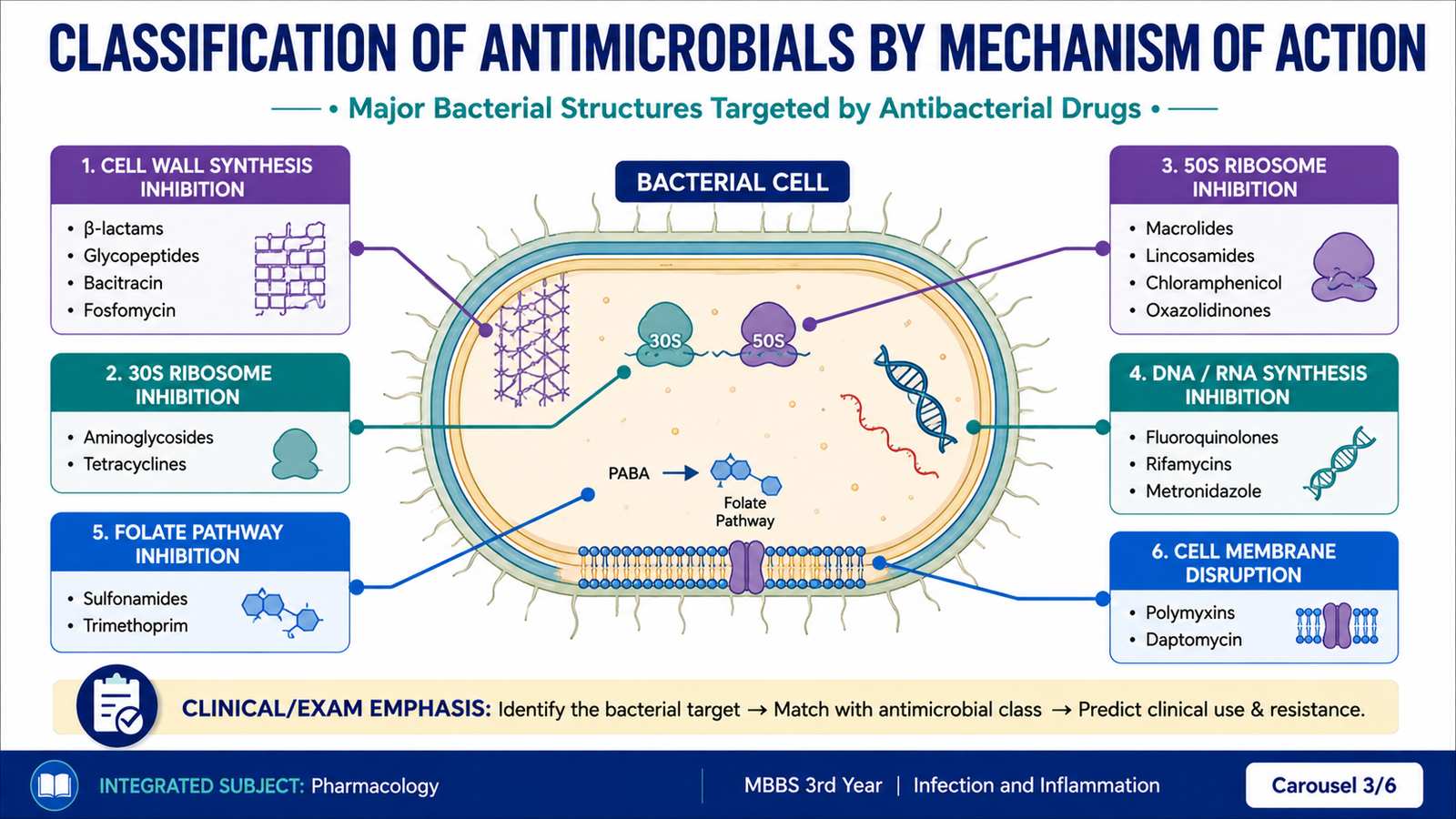
Antibacterial drugs work because they interfere with structures or biochemical processes that are essential for bacterial survival or multiplication. Understanding drugs according to their mechanism of action makes antimicrobial pharmacology much easier because several apparently different drug classes can be grouped according to the same bacterial target.
1. Inhibition of Cell-Wall Synthesis
The bacterial cell wall provides structural strength and protects bacteria against osmotic rupture. Drugs that interfere with cell-wall formation weaken this protective structure, particularly in actively growing bacteria.
- β-lactams: penicillins, cephalosporins, carbapenems and monobactams
- Glycopeptides: vancomycin
Cell-wall synthesis inhibition → weakened bacterial wall → osmotic instability → bacterial death
2. Inhibition of Protein Synthesis
Bacterial ribosomes differ sufficiently from human cytoplasmic ribosomes to provide useful antimicrobial targets. Several antibacterial classes bind bacterial ribosomal subunits and interfere with translation of bacterial proteins.
- 30S subunit: aminoglycosides and tetracyclines
- 50S subunit: macrolides, clindamycin, chloramphenicol and linezolid
3. Inhibition of Nucleic-Acid Function or Synthesis
Bacteria require DNA replication and RNA synthesis for survival and multiplication. Antibacterial drugs may therefore act by inhibiting enzymes involved in bacterial nucleic-acid function.
- Fluoroquinolones: interfere with bacterial DNA replication
- Rifamycins: inhibit bacterial RNA synthesis
- Metronidazole: causes damage to microbial DNA in susceptible organisms
4. Inhibition of Essential Metabolic Pathways
Bacteria must synthesize folate for production of important cellular components. Humans obtain folate from the diet, whereas many bacteria synthesize it themselves. This difference permits selective antimicrobial action.
- Sulfonamides: inhibit an earlier step in bacterial folate synthesis
- Trimethoprim: inhibits a later step in the same pathway
5. Disruption of Cell-Membrane Integrity
The bacterial cell membrane is essential for maintaining the internal environment of the organism. Drugs that disrupt its integrity cause leakage of important cellular contents and loss of normal membrane function.
- Polymyxins are important examples of drugs acting on bacterial membranes.
D. Antimicrobial Drug Combinations
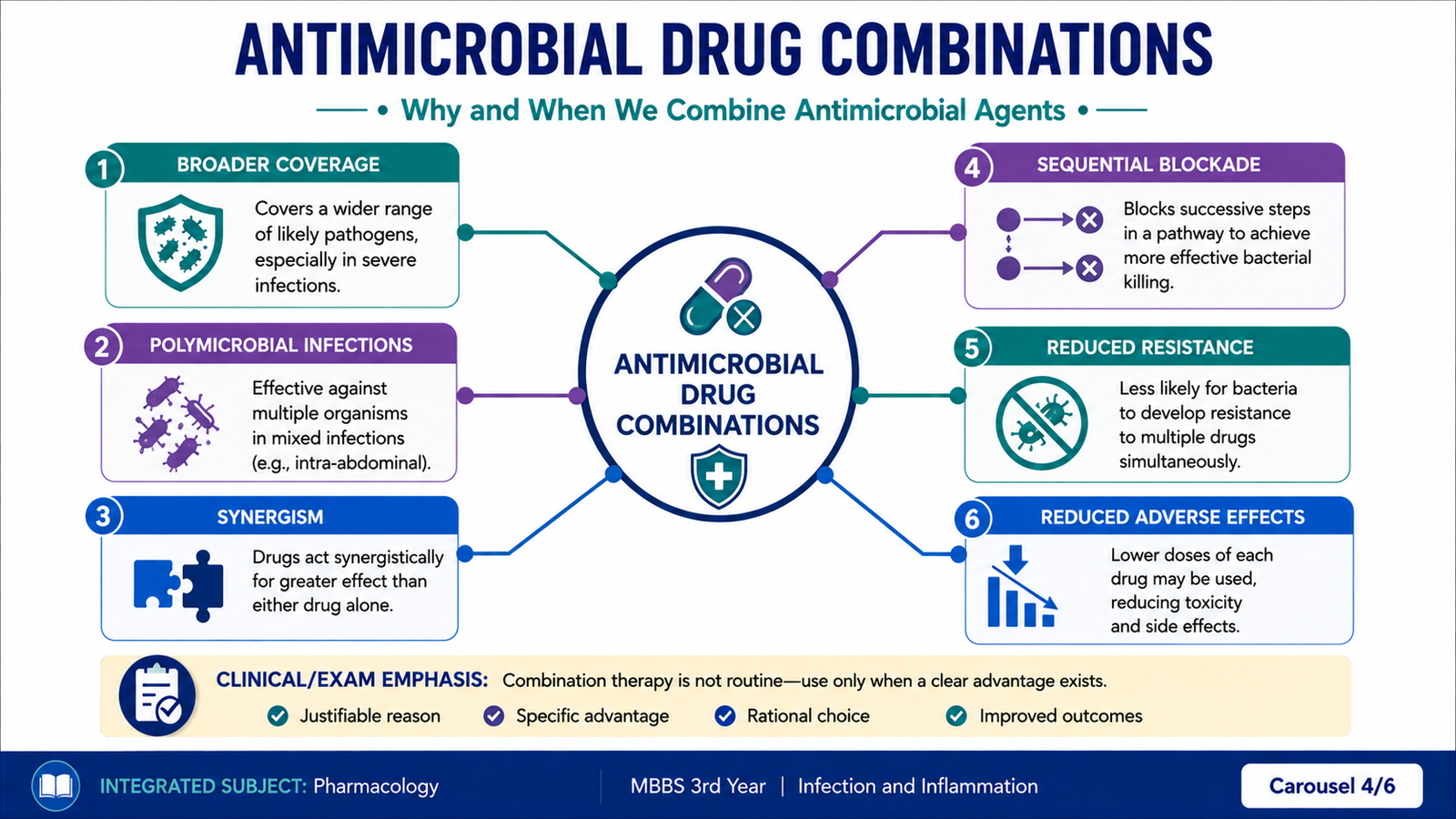
Antimicrobial drugs are sometimes used together rather than as single agents. Combination therapy should have a clear pharmacological or clinical purpose because unnecessary combinations may increase adverse effects, cost and antimicrobial selection pressure. When appropriately chosen, however, combinations can provide important advantages.
Broader Antimicrobial Coverage
When the causative organism has not yet been identified, more than one antimicrobial may be used to cover several likely pathogens. This is especially relevant to empirical therapy when delaying effective treatment would be undesirable.
Treatment of Polymicrobial Infection
Some infections contain several organisms with different antimicrobial susceptibilities. A combination may therefore be required when a single agent cannot adequately cover all important organisms.
Synergistic Antibacterial Action
Synergism occurs when the combined antibacterial effect of two drugs is greater than the effect expected from either drug alone. This can occur when one drug improves the ability of another to reach or act on its target.
Another important example is sequential blockade of a metabolic pathway. Sulfonamides and trimethoprim inhibit different sequential steps in bacterial folate metabolism. Blocking two points in the same essential pathway produces a stronger antimicrobial effect than blocking either point alone.
Reduction in Emergence of Resistance
If bacteria can become resistant to one drug through a particular genetic change, using another active drug with a different target can make survival of a resistant bacterial population less likely in situations where combination therapy is appropriate.
Potential Disadvantages
The advantages of combination therapy do not mean that more drugs are always better. Unnecessary combinations can:
- increase adverse effects;
- increase the possibility of drug interactions;
- increase cost;
- produce unnecessary antimicrobial exposure;
- occasionally produce antagonism between drugs.
E. Mechanisms of Bacterial Resistance to Antimicrobials
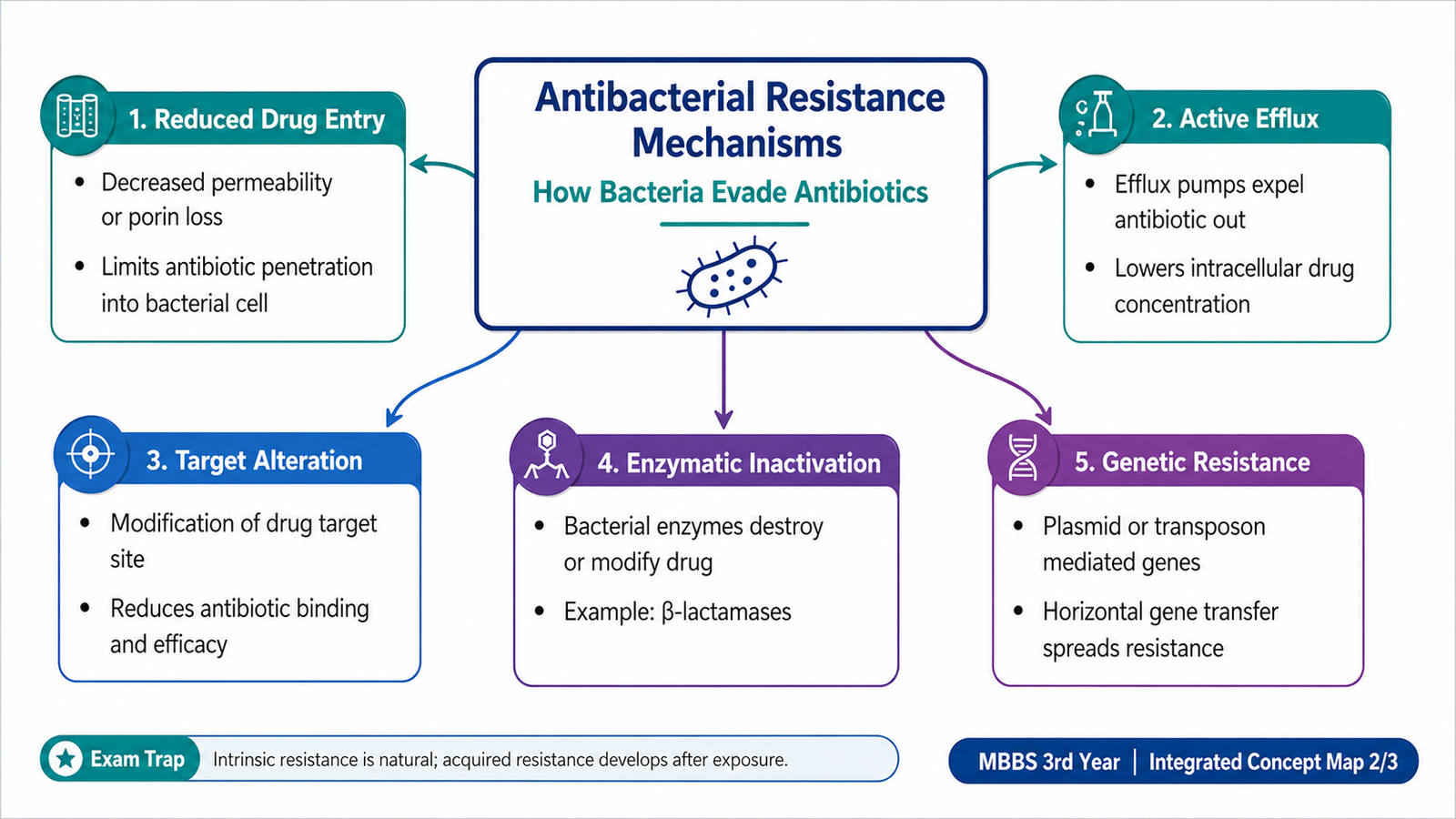
Antimicrobial resistance means that a bacterium can survive or continue multiplying despite exposure to an antimicrobial that would normally inhibit or kill susceptible bacteria. Resistance becomes clinically important because the drug may no longer reach or effectively act on its bacterial target.
Bacteria may possess resistance naturally, or resistance may emerge through genetic change. Whatever its origin, the final resistance mechanism usually prevents an adequate concentration of active antimicrobial from interacting effectively with its target.
1. Enzymatic Inactivation of the Drug
Bacteria may produce enzymes that destroy the antimicrobial or chemically modify it so that it can no longer bind effectively to its target.
Example: β-lactamases hydrolyze the β-lactam ring of susceptible β-lactam antibiotics. Once the ring is disrupted, the drug can no longer effectively inhibit its bacterial target.
Resistance enzyme → drug destruction or modification → loss of active drug → treatment failure
2. Alteration of the Drug Target
A drug must recognize and bind its target. If bacteria alter that target, the antimicrobial may have reduced affinity and can no longer produce its normal effect.
Target alteration may involve changes in bacterial proteins, ribosomal targets or enzymes required for antimicrobial binding.
3. Reduced Drug Entry
Some antimicrobial agents must enter the bacterial cell to reach their target. Bacteria can become less permeable to the drug, for example through changes affecting outer-membrane channels in certain organisms.
Reduced permeability → less intracellular antimicrobial → inadequate target exposure → resistance
4. Active Efflux of the Drug
Efflux pumps are bacterial transport systems that remove substances from the cell. Increased activity of these pumps can expel an antimicrobial faster than it accumulates, reducing the intracellular drug concentration below an effective level.
5. Bypass of the Inhibited Metabolic Pathway
A bacterium may avoid the effect of an antimicrobial by using an alternative biochemical pathway or by producing an alternative form of an enzyme. The blocked step is therefore no longer essential for bacterial survival.
6. Increased Production of the Target or Metabolic Substrate
If bacteria produce very large amounts of the drug target or of a competing metabolic substrate, the antimicrobial effect may be reduced because the available drug is no longer sufficient to inhibit the pathway effectively.
Genetic Basis of Acquired Resistance
Acquired resistance can arise through mutation in bacterial genes or through acquisition of resistance genes from other bacteria. Once resistance provides a survival advantage during antimicrobial exposure, susceptible bacteria are preferentially eliminated while resistant organisms survive and multiply.

F. Concentration-Dependent and Time-Dependent Killing

The effectiveness of an antibacterial drug does not depend simply on whether the organism is susceptible. The relationship between drug concentration, duration of exposure and bacterial killing also matters. Antibacterial drugs can therefore be broadly described as producing concentration-dependent or time-dependent killing.
Concentration-Dependent Killing
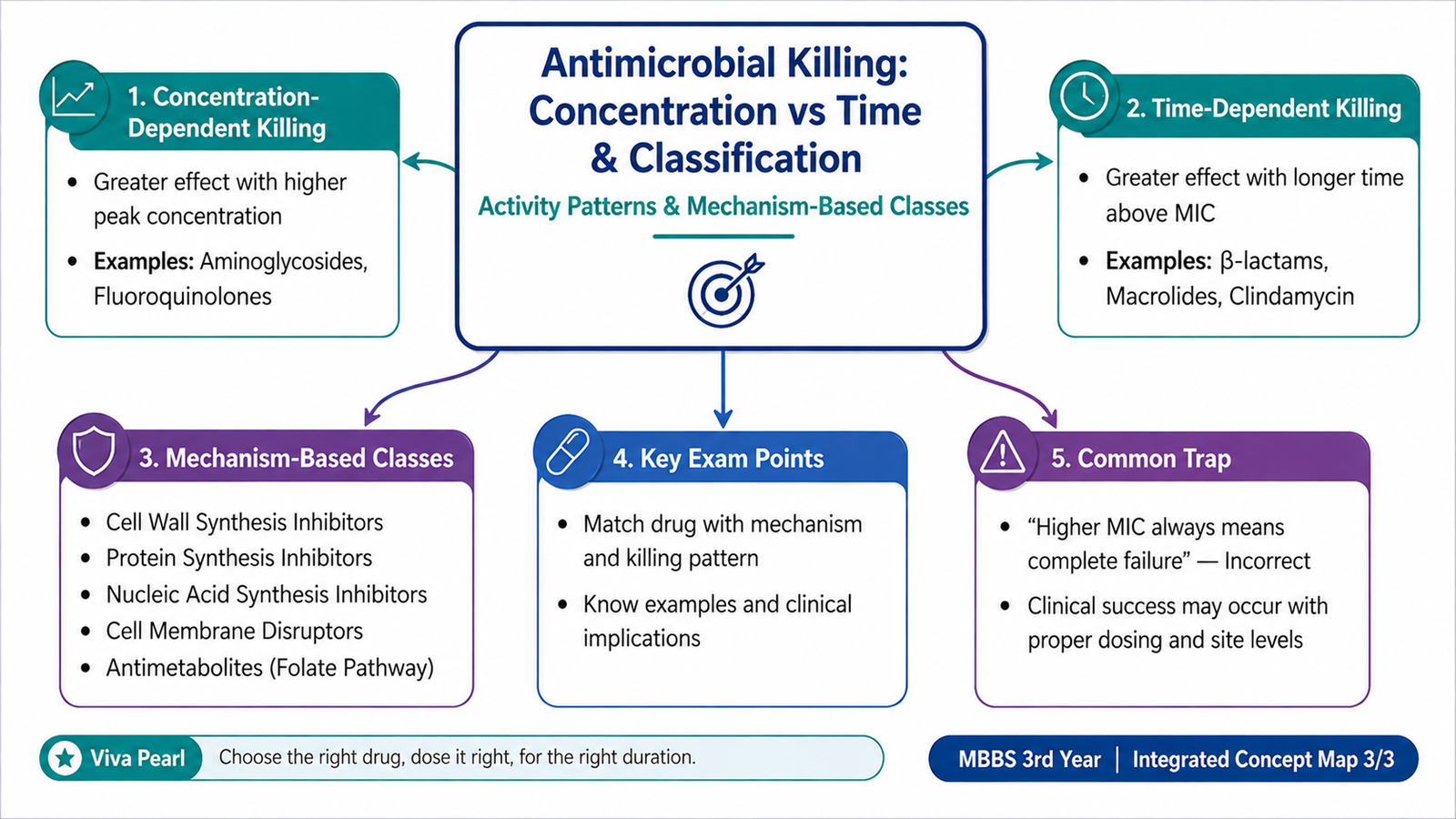
In concentration-dependent killing, bacterial killing becomes greater as the antimicrobial concentration rises above the MIC. A high peak concentration relative to the organism’s MIC therefore improves antibacterial activity.
Important examples include:
- Aminoglycosides
- Fluoroquinolones
Higher effective drug concentration → greater bacterial killing
Time-Dependent Killing
In time-dependent killing, increasing the concentration far above the MIC produces relatively little additional benefit once an effective concentration has been reached. Antibacterial success depends more on how long the drug concentration remains above the MIC.
The classic examples are β-lactam antibiotics.
Drug concentration remains above MIC for sufficient time → continued antibacterial effect
Post-Antibiotic Effect
The post-antibiotic effect (PAE) is persistent suppression of bacterial growth after brief exposure to an antimicrobial, even when the drug concentration has subsequently fallen below the MIC or the drug has been removed.
Aminoglycosides show a significant post-antibiotic effect against susceptible bacteria. This means that bacterial growth may remain suppressed for a period even after measurable concentrations decline.
| Feature | Concentration-Dependent Killing | Time-Dependent Killing |
|---|---|---|
| Main determinant | Higher effective concentration relative to MIC | Duration concentration remains above MIC |
| Effect of increasing concentration | Usually increases bacterial killing | Limited additional killing beyond an effective concentration |
| Examples | Aminoglycosides, fluoroquinolones | β-lactams |
| Key memory idea | How high? | How long? |
Integrated Mechanism Flow
↓
Interacts with an essential bacterial target
↓
Bacterial growth is inhibited or the organism is killed
↓
Genetic change or acquisition of resistance genes may alter this interaction
↓
Drug destruction, target change, reduced entry, efflux or metabolic bypass develops
↓
Effective drug-target exposure falls
↓
Resistant bacteria survive and multiply
⭐ AIM High-Yield Review
- Antimicrobial is a broad term for agents acting against microorganisms; antibiotic commonly refers to antibacterial drugs.
- Empirical therapy begins before the exact organism and susceptibility pattern are known.
- Chemoprophylaxis uses an antimicrobial to prevent infection.
- MIC is the lowest concentration that prevents visible bacterial growth.
- MBC refers to the lowest concentration that kills the bacterial population under test conditions.
- Bacteriostatic drugs primarily inhibit multiplication; bactericidal drugs produce bacterial death.
- Major antibacterial targets include the cell wall, ribosome, nucleic acids, folate pathway and cell membrane.
- Useful antimicrobial combinations may provide broader coverage, treat polymicrobial infection, produce synergism or reduce emergence of resistance.
- Important resistance mechanisms are drug inactivation, target alteration, reduced permeability, active efflux and metabolic bypass.
- β-lactamase-mediated resistance is an example of enzymatic drug inactivation.
- In concentration-dependent killing, greater effective concentration generally produces greater killing; aminoglycosides and fluoroquinolones are important examples.
- In time-dependent killing, efficacy depends mainly on maintaining the concentration above the MIC; β-lactams are classic examples.
- Post-antibiotic effect means continued suppression of bacterial growth after antimicrobial concentration falls below the MIC or exposure ends.
- ⭐ Memory rule: concentration-dependent = “How high?”; time-dependent = “How long?”.
🎥 AIM Video Learning
Watch this visual explanation to reinforce the major mechanisms of action of antibacterial drugs.
Video: Armando Hasudungan — Microbiology: Antibiotics Mechanisms of Action