
Topic 19 — Sepsis and Septic Shock
Topic Introduction
Sepsis is a severe and potentially life-threatening response to infection in which the body’s normal defensive reaction becomes dysregulated and begins to damage its own tissues and organs. The important idea is that sepsis is not simply the presence of microorganisms in the blood. It develops because infection triggers widespread inflammation, endothelial activation, abnormalities of coagulation and disturbance of the microcirculation. When these changes become severe, organs receive inadequate oxygen and nutrients and begin to malfunction. Septic shock represents the most severe end of this process, with profound circulatory and metabolic abnormalities and persistent tissue hypoperfusion. This chapter explains the definitions, important causative organisms, underlying pathophysiology and major clinical features.
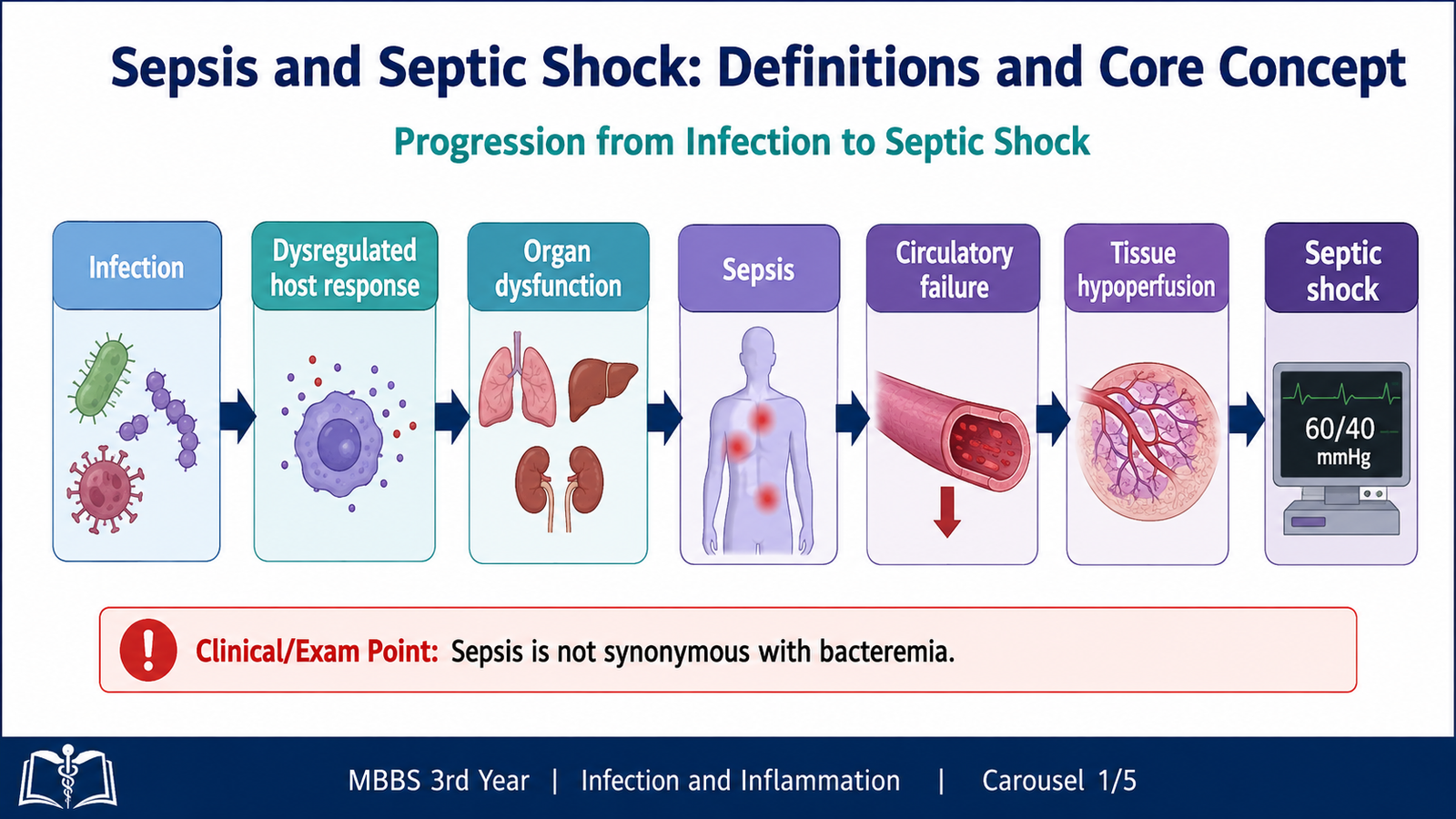
A. Sepsis and Septic Shock: Definitions and Core Concept
Infection normally activates a controlled inflammatory response that helps destroy microorganisms while limiting damage to the host. In sepsis, this response becomes poorly regulated. Pro-inflammatory, anti-inflammatory, coagulation and vascular mechanisms become disturbed at the same time, producing organ dysfunction rather than an effective localized response.
Sepsis
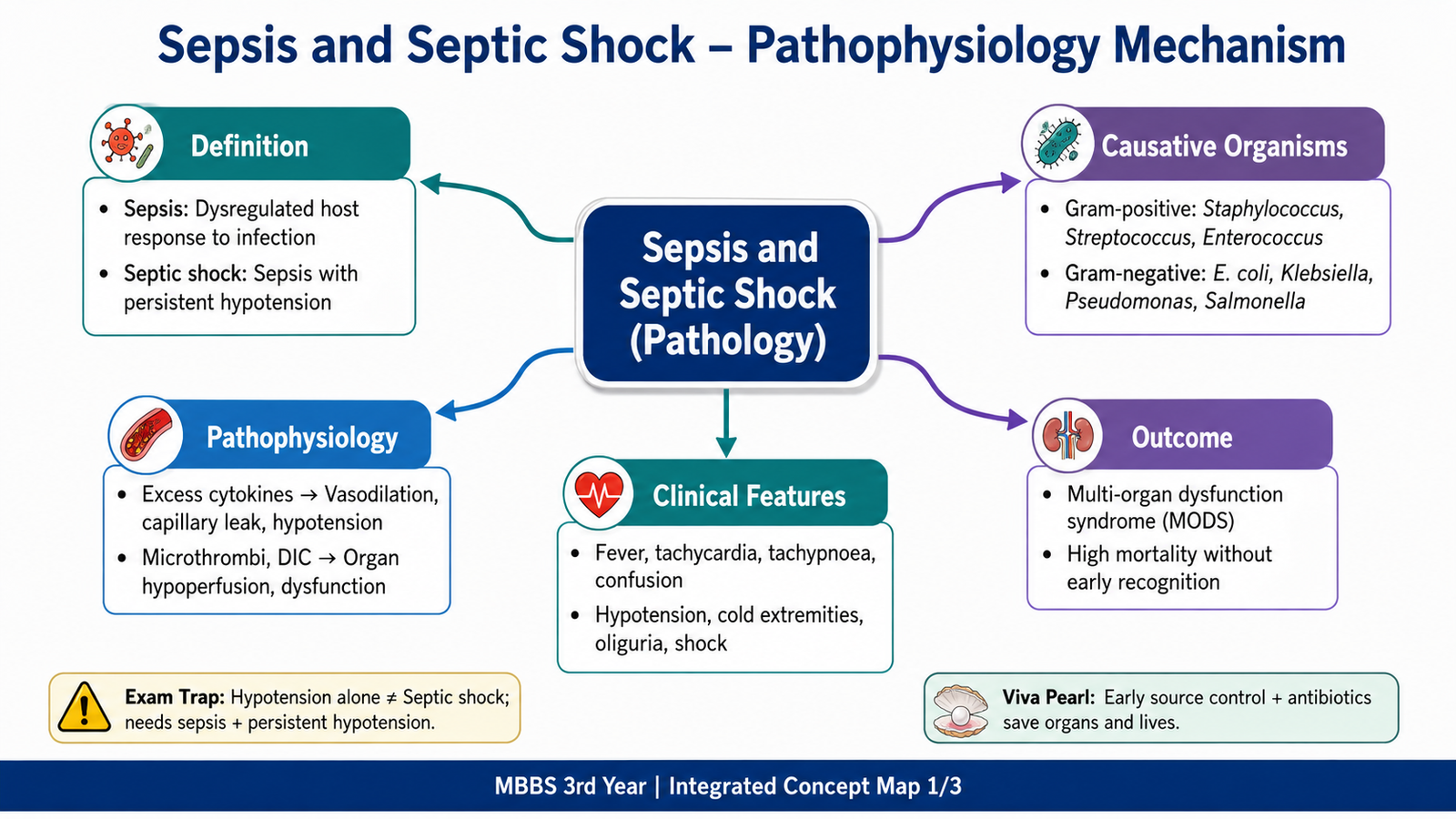
Sepsis is life-threatening organ dysfunction caused by a dysregulated host response to infection. The essential concept is therefore:
Sepsis should not be considered synonymous with bacteremia. Bacteremia means bacteria are present in the bloodstream, while sepsis refers to harmful organ dysfunction caused by the host response to infection. A patient can develop sepsis from an infection at a tissue site even when microorganisms are not continuously detectable in the blood.
Septic Shock
Septic shock is a severe subset of sepsis in which circulatory, cellular and metabolic abnormalities become profound enough to produce persistent hypotension, impaired tissue perfusion and a markedly increased risk of death. The major pathological problem is failure of effective circulation despite the body attempting to compensate.
In simple terms, sepsis indicates infection-associated organ dysfunction, whereas septic shock indicates a particularly severe form in which vascular tone and tissue perfusion are critically disturbed.
| Feature | Sepsis | Septic Shock |
|---|---|---|
| Central problem | Dysregulated response to infection causing organ dysfunction | Sepsis with profound circulatory and metabolic failure |
| Circulation | May be disturbed | Severely disturbed with persistent tissue hypoperfusion |
| Severity | Life-threatening | Most severe end of the septic process |
B. Organisms Capable of Causing Sepsis
Sepsis can result from infection by many different microorganisms. Historically, gram-negative bacteria received particular attention because their lipopolysaccharide can strongly activate inflammatory pathways. However, gram-positive bacteria and fungi are also important causes. The decisive factor is not simply whether an organism enters the blood; rather, it is whether the infection provokes a widespread and damaging host response.
Gram-Negative Bacteria
Gram-negative bacteria contain lipopolysaccharide (LPS) in their outer membrane. The lipid A component of LPS is a powerful microbial signal capable of activating innate immune cells and inflammatory pathways.
- Escherichia coli
- Klebsiella species
- Pseudomonas aeruginosa
- Neisseria meningitidis
- Other invasive gram-negative bacilli
Gram-Positive Bacteria
Gram-positive bacteria lack LPS, but components of their cell walls and secreted microbial products can also activate powerful inflammatory pathways.
- Staphylococcus aureus
- Streptococcus pneumoniae
- Streptococcus pyogenes
- Other invasive streptococci and staphylococci
Fungi
Severe fungal infections may also produce sepsis, particularly when organisms invade tissues or enter the circulation. Candida species are important examples.
Sepsis is a host-response syndrome and is therefore not restricted to one bacterial group. Gram-negative bacteria, gram-positive bacteria and fungi can all induce the process.


C. Pathophysiology of Sepsis: From Infection to Organ Dysfunction
The pathogenesis of sepsis begins when microbial products are recognized by cells of the innate immune system. This recognition is necessary for host defence, but in sepsis the response becomes excessive, widespread and poorly controlled. Inflammation, endothelial activation, abnormalities of coagulation and impaired microvascular blood flow then reinforce one another and produce tissue injury.
1. Recognition of Microbial and Tissue-Damage Signals
Microorganisms contain conserved structures known as pathogen-associated molecular patterns (PAMPs). Examples include lipopolysaccharide from gram-negative bacteria and cell-wall components of gram-positive organisms. These microbial signals are recognized by pattern-recognition receptors, including Toll-like receptors, on macrophages, neutrophils and other cells.
Damaged host cells also release intracellular substances called damage-associated molecular patterns (DAMPs). These signals tell the immune system that tissue injury has occurred. PAMPs and DAMPs therefore amplify innate immune activation.
2. Excessive Inflammatory Mediator Release
Activated immune cells release inflammatory mediators such as tumor necrosis factor (TNF), interleukin-1 (IL-1) and other cytokines and chemokines. These mediators recruit and activate additional leukocytes and stimulate vascular endothelial cells.
At a local site of infection, these reactions are protective. When they become systemic, however, widespread vascular and tissue effects develop. The result is no longer a focused defence against infection but a generalized inflammatory state capable of damaging multiple organs.
3. Endothelial Activation and Injury
The vascular endothelium plays a central role in sepsis. Inflammatory mediators cause endothelial cells to become activated and dysfunctional. Vascular permeability increases, allowing fluid to leave the circulation and enter tissues. This reduces the effective circulating volume and contributes to edema.
At the same time, endothelial dysfunction alters vascular tone. Widespread vasodilation reduces systemic vascular resistance and contributes to falling blood pressure.
4. Activation of Coagulation
Severe inflammation favors coagulation and reduces normal anticoagulant activity. Tissue factor expression increases and thrombin generation is promoted. Small fibrin thrombi may therefore form throughout the microcirculation.
These microthrombi obstruct small vessels and reduce blood supply to tissues. In severe cases, widespread activation and consumption of clotting factors and platelets may contribute to disseminated intravascular coagulation (DIC).
5. Microcirculatory and Cellular Dysfunction
Tissue perfusion becomes abnormal because of vasodilation, fluid leakage, microvascular thrombosis and disordered blood distribution. Even when some blood continues to flow through an organ, it may not be distributed effectively at the capillary level.
Cells consequently receive inadequate oxygen and nutrients. Cellular metabolism becomes disturbed, energy production becomes less efficient, and organ function progressively deteriorates.
The major pathological processes in sepsis are interconnected: systemic inflammation promotes endothelial dysfunction and coagulation, while endothelial injury and microthrombi worsen tissue hypoperfusion.

D. Development of Septic Shock
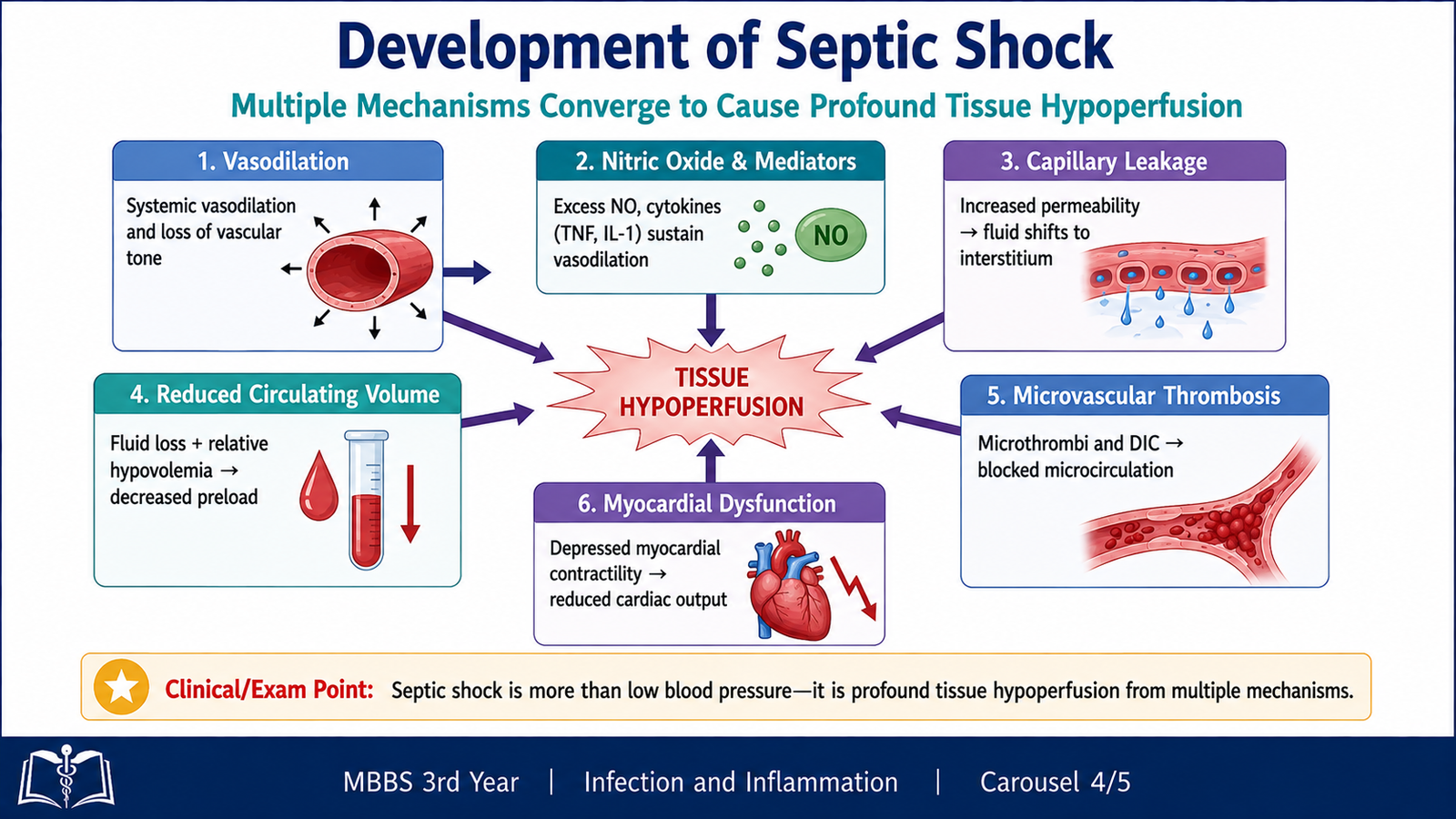
Septic shock develops when the vascular and metabolic abnormalities of sepsis become severe enough to prevent maintenance of adequate tissue perfusion. Several mechanisms act simultaneously, so the shock cannot be explained by a single abnormality.
Widespread Vasodilation
Inflammatory mediators stimulate production of vasodilator substances, particularly nitric oxide. Systemic vasodilation lowers peripheral vascular resistance. As resistance falls, arterial pressure may also fall and effective perfusion pressure becomes difficult to maintain.
Increased Vascular Permeability
Activated and injured endothelial cells become more permeable. Plasma fluid moves from blood vessels into the interstitial tissues. This decreases effective intravascular volume even though total body fluid may not initially be reduced.
Microvascular Thrombosis
Activation of coagulation produces fibrin deposition and small-vessel thrombi. These block portions of the microcirculation and further reduce oxygen delivery to tissues.
Myocardial and Cellular Dysfunction
Severe inflammatory responses may also impair myocardial function and disturb cellular metabolism. Therefore, adequate circulation becomes even more difficult to maintain.
Final Result: Tissue Hypoperfusion
The combined effects of vasodilation, vascular leakage, abnormal microcirculation, microthrombi and cardiac dysfunction cause inadequate delivery of oxygen to tissues. Cellular injury increases, organ dysfunction becomes more severe and a vicious cycle develops.
Septic shock is not simply low blood pressure. It reflects profound circulatory and cellular dysfunction with inadequate tissue perfusion and progressive organ injury.
E. Clinical Features and Their Pathophysiological Basis
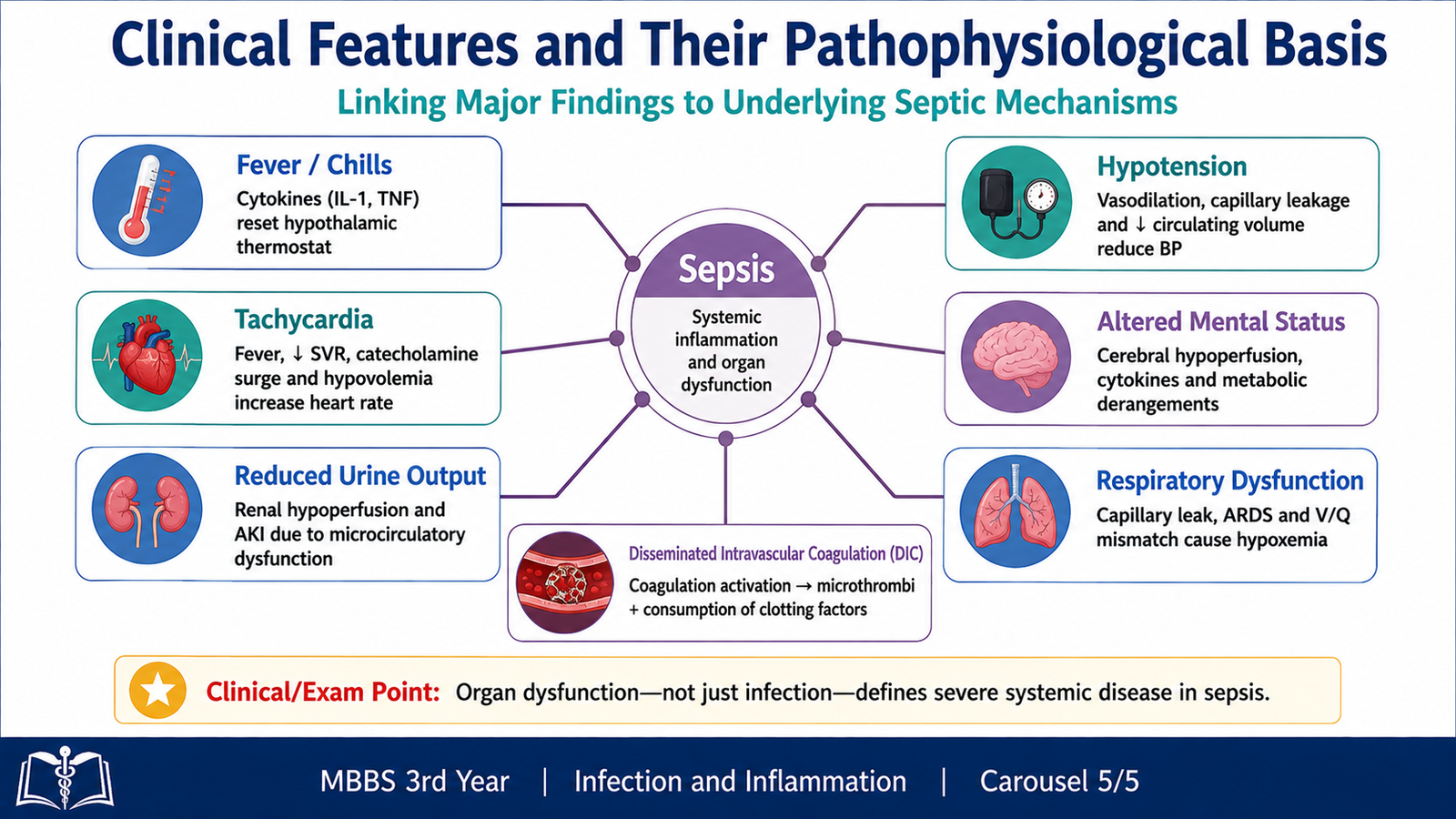
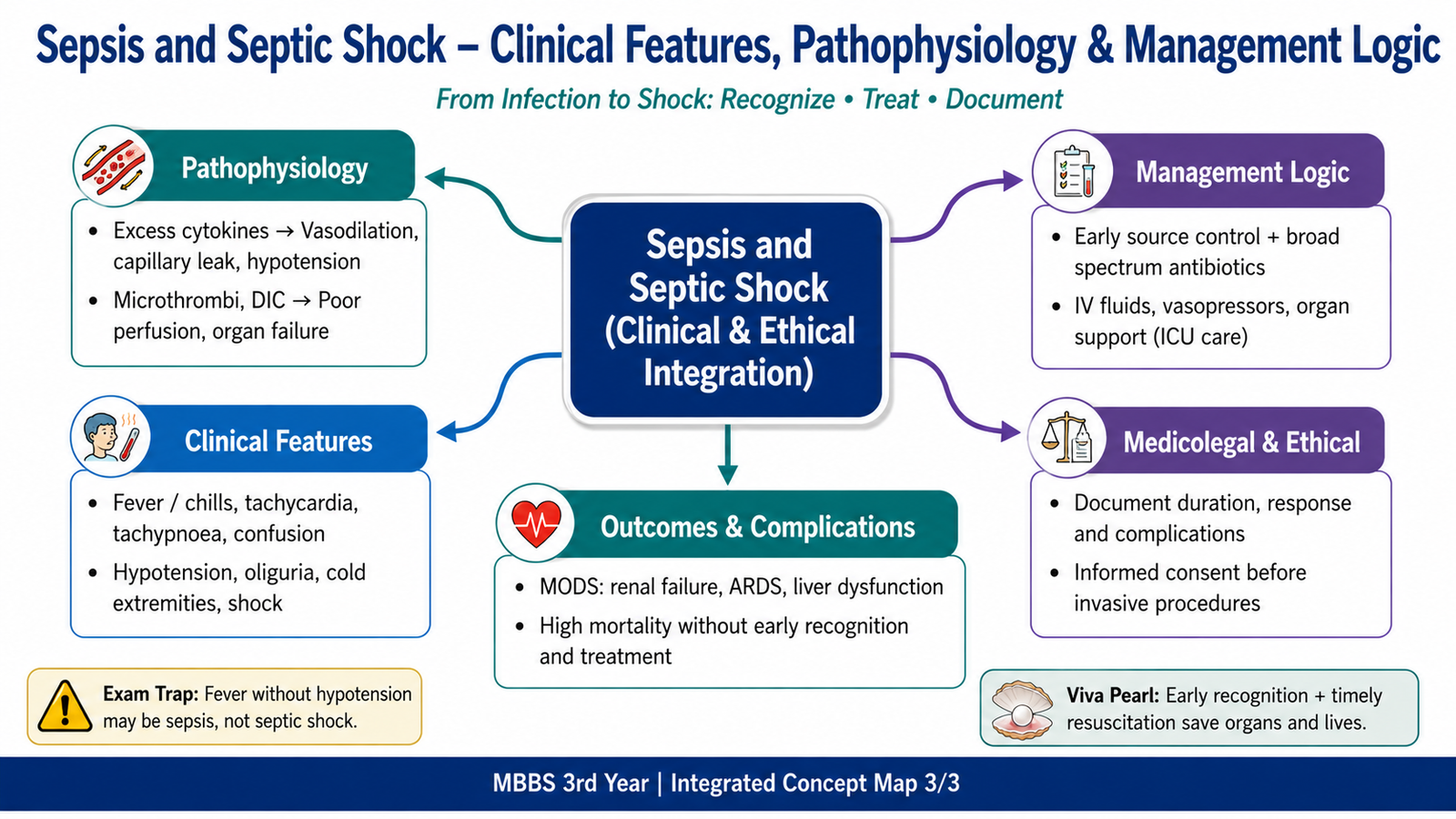
The clinical features of sepsis reflect both the underlying infection and the systemic effects of inflammation, vascular dysfunction and impaired tissue perfusion. As the condition becomes more severe, signs of organ dysfunction become increasingly prominent.
Fever and Systemic Features
Fever commonly develops because inflammatory cytokines influence temperature-regulating pathways. Some severely ill patients may not develop a marked fever and may instead show an abnormally low body temperature.
- Fever or abnormal body temperature
- Chills or rigors may occur with infection
- General weakness and marked illness
Cardiovascular Features
The heart rate commonly increases as the body attempts to maintain cardiac output. Vasodilation and loss of fluid into tissues reduce effective circulatory volume. With progression toward septic shock, hypotension becomes a major feature.
- Tachycardia
- Hypotension in advanced disease
- Signs of impaired peripheral or organ perfusion
Respiratory Features
Respiratory rate may increase as systemic illness and metabolic disturbance progress. Severe inflammatory injury to the pulmonary microvasculature can interfere with gas exchange and contribute to respiratory dysfunction.
Renal Dysfunction
Reduced renal perfusion and microcirculatory abnormalities may impair kidney function. A fall in urine output is therefore an important clinical indication of worsening organ perfusion.
Neurological Dysfunction
Reduced cerebral perfusion and systemic metabolic disturbances may alter mental status. Confusion, reduced alertness or other changes in consciousness indicate significant systemic illness.
Coagulation Abnormalities
Widespread coagulation activation may consume platelets and clotting factors. If DIC develops, microvascular thrombosis and bleeding tendencies can coexist.
| Clinical Feature | Main Pathophysiological Basis |
|---|---|
| Fever | Systemic inflammatory cytokine activity |
| Tachycardia | Compensatory response to systemic illness and circulatory disturbance |
| Hypotension | Systemic vasodilation plus reduced effective circulating volume |
| Reduced urine output |
Integrated Mechanism Flow
↓
2. PAMPs and tissue-damage signals activate innate immunity
↓
3. Cytokine release and widespread endothelial activation
↓
4. Vasodilation + vascular leakage + coagulation activation
↓
5. Microvascular thrombosis and impaired tissue perfusion
↓
6. Cellular dysfunction and organ dysfunction = Sepsis
↓
7. Profound circulatory and metabolic failure = Septic Shock
⭐ AIM High-Yield Review
- Sepsis is life-threatening organ dysfunction caused by a dysregulated host response to infection.
- Septic shock is a severe subset of sepsis characterized by profound circulatory, cellular and metabolic abnormalities.
- Sepsis is not synonymous with bacteremia.
- Gram-negative bacteria, gram-positive bacteria and fungi can all cause sepsis.
- Important gram-negative examples include E. coli, Klebsiella, Pseudomonas and N. meningitidis.
- Important gram-positive examples include S. aureus, S. pneumoniae and S. pyogenes.
- PAMPs from microorganisms and DAMPs from injured cells activate innate immune responses.
- TNF, IL-1 and other mediators contribute to systemic inflammation and endothelial activation.
- Endothelial dysfunction causes vasodilation and increased vascular permeability.
- Coagulation activation produces microvascular thrombi and may progress to DIC.
- Vasodilation, capillary leakage and microvascular thrombosis reduce effective tissue perfusion.
- Organ dysfunction may appear as altered mental status, reduced urine output, respiratory dysfunction or circulatory failure.
- ⭐ Hypotension in septic shock reflects widespread vascular and circulatory dysfunction, not simply loss of fluid.
- The central sequence is: infection → dysregulated host response → endothelial/coagulation abnormalities → tissue hypoperfusion → organ dysfunction → septic shock.
🎥 AIM Recommended Video — Sepsis and Septic Shock
Use this video to reinforce the definitions, pathophysiology, organ dysfunction and progression from sepsis to septic shock.
Recommended for 3rd Year MBBS • Topic 19 — Sepsis and Septic Shock