
📖 Step 2 — Learning Material
🔹 1️⃣ Introduction
Minor carbohydrate metabolic pathways are alternative pathways involved in the metabolism of sugars other than the major glycolytic pathway. These pathways help the body process fructose, galactose, and glucuronic acid for energy production, detoxification, biosynthesis, and specialized functions. They mainly occur in the liver, seminal vesicles, lens of the eye, and various tissues.
These pathways are clinically important because defects in their enzymes produce inherited metabolic diseases such as hereditary fructose intolerance and galactosemia. The uronic acid pathway is also important for detoxification and synthesis of glucuronic acid.
Fructose metabolism is especially relevant in diabetes because excess glucose may convert into sorbitol, contributing to diabetic cataract formation. Understanding these pathways helps explain nutritional disorders, pediatric metabolic diseases, and biochemical mechanisms of tissue injury.
🔹 2️⃣ Foundation Concepts
Key Definitions
- Minor carbohydrate pathways: Alternative pathways involved in metabolism of sugars other than glucose.
- Uronic acid pathway: Pathway producing glucuronic acid and pentoses from glucose.
- Fructose metabolism: Conversion of fructose into glycolytic intermediates.
- Galactose metabolism: Conversion of galactose into glucose derivatives.
- Sorbitol pathway: Reduction of glucose into sorbitol by aldose reductase.
- Galactosemia: Genetic disorder due to defective galactose metabolism.
- Hereditary fructose intolerance: Disorder caused by aldolase B deficiency.
- Glucuronic acid: Molecule important for detoxification reactions.
Essential Terminology
- Fructokinase
- Aldolase B
- Galactokinase
- UDP-galactose
- UDP-glucose
- Sorbitol
- Aldose reductase
- Glucuronides
Basic Overview
- Minor carbohydrate pathways mainly occur in liver and extrahepatic tissues.
- They metabolize fructose and galactose from diet.
- They produce glucuronic acid for detoxification.
- Some pathways generate clinically important products like seminal fructose.
- Enzyme deficiencies produce inherited metabolic diseases.
- Excess sorbitol accumulation causes osmotic tissue damage.
🔹 3️⃣ Core Learning — Curriculum Coverage
Uronic Acid Pathway — Products and Biological Importance
🧠 CORE
- Uronic acid pathway is an alternative oxidative pathway of glucose metabolism.
- Occurs mainly in liver.
- Produces:
- Glucuronic acid
- Pentoses
- Xylulose
- Does not produce ATP.
- Important for detoxification reactions.
- Helps conjugation of bilirubin, drugs, and steroid hormones.
- Provides precursors for glycosaminoglycans.
- Important in connective tissue metabolism.
- Humans cannot synthesize vitamin C through this pathway.
🔬 CONCEPT EXPLAINED
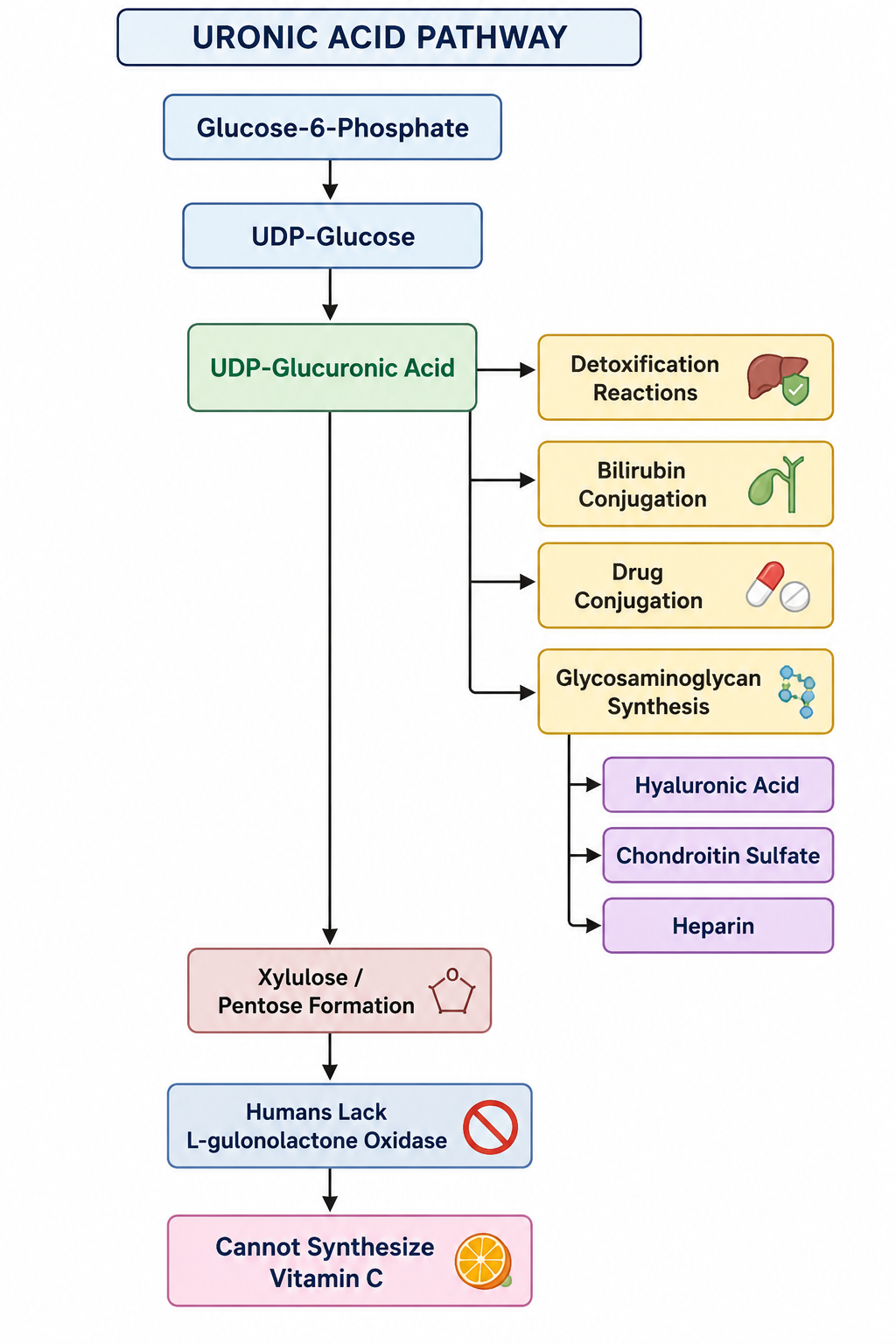
The uronic acid pathway begins with glucose-6-phosphate and forms UDP-glucuronic acid through oxidation reactions.
Glucuronic acid is highly important for detoxification because it combines with bilirubin, drugs, steroid hormones, and toxins to increase their water solubility, allowing excretion through urine or bile.
This pathway also contributes to formation of important connective tissue components such as:
- Hyaluronic acid
- Chondroitin sulfate
- Heparin
Pentoses such as xylulose are also produced and may enter other metabolic pathways.
Most animals use this pathway for vitamin C synthesis, but humans lack the enzyme L-gulonolactone oxidase and therefore cannot synthesize ascorbic acid.
⚠️ IF DAMAGED
Cause → Reduced glucuronic acid production
Effect → Impaired detoxification and toxic accumulation
Cause → Defective glucuronidation
Effect → Drug toxicity and jaundice
Cause → Reduced glycosaminoglycan synthesis
Effect → Connective tissue abnormalities
Role of Ascorbic Acid in Humans
🧠 CORE
- Ascorbic acid = Vitamin C.
- Humans cannot synthesize vitamin C.
- Required for collagen synthesis.
- Functions as antioxidant.
- Enhances iron absorption.
- Supports wound healing.
- Deficiency causes scurvy.
🔬 CONCEPT EXPLAINED
Most animals synthesize vitamin C from glucose through the uronic acid pathway. Humans lack the enzyme L-gulonolactone oxidase, therefore vitamin C must be obtained from diet.
Vitamin C is required for hydroxylation of proline and lysine during collagen formation. Proper collagen gives strength to blood vessels, skin, gums, and bone.
⚠️ IF DAMAGED
Cause → Vitamin C deficiency
Effect → Defective collagen synthesis
Clinical effects:
- Bleeding gums
- Poor wound healing
- Bone weakness
- Petechiae
Formation of Diabetic Cataract
🧠 CORE
- Occurs due to sorbitol accumulation.
- Polyol pathway involved.
- Excess glucose converted into sorbitol.
- Lens has low sorbitol dehydrogenase activity.
- Osmotic damage occurs.
- Leads to cataract formation.
🔬 CONCEPT EXPLAINED
In hyperglycemia, excess glucose enters lens cells. Aldose reductase converts glucose into sorbitol.
Glucose→Sorbitol\text{Glucose} \rightarrow \text{Sorbitol}
Sorbitol accumulates because lens cells poorly convert it further into fructose. Sorbitol attracts water, causing lens swelling and protein damage.
This leads to lens opacity and cataract formation.
⚠️ IF DAMAGED
Cause → Chronic hyperglycemia
Effect → Sorbitol accumulation
Result:
- Osmotic injury
- Lens opacity
- Cataract
⚙️ 4️⃣ Functional Flow
Uronic Acid Pathway
Glucose → Glucuronic acid → Detoxification → Excretion of toxins
Fructose Metabolism
Dietary fructose → Liver metabolism → Glycolytic intermediates → Energy production
Galactose Metabolism
Milk lactose → Galactose → Glucose intermediates → Cellular energy and biosynthesis
Polyol Pathway
Hyperglycemia → Sorbitol accumulation → Osmotic injury → Cataract formation
🩺 5️⃣ Clinical Correlation
Hereditary Fructose Intolerance
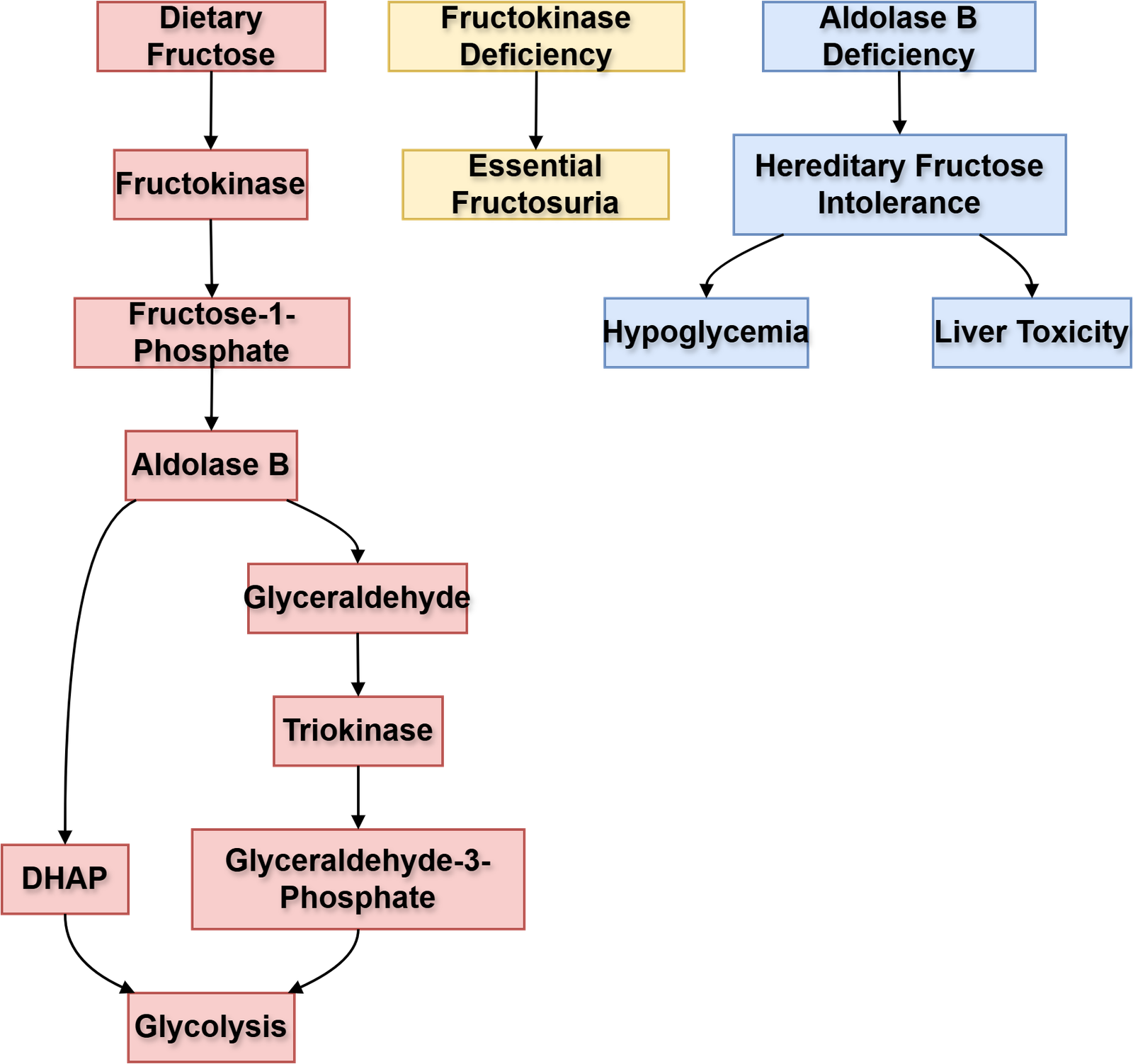
- Aldolase B deficiency
- Severe hypoglycemia after fructose intake
- Liver dysfunction
Essential Fructosuria
- Fructokinase deficiency
- Benign condition
- Fructose appears in urine
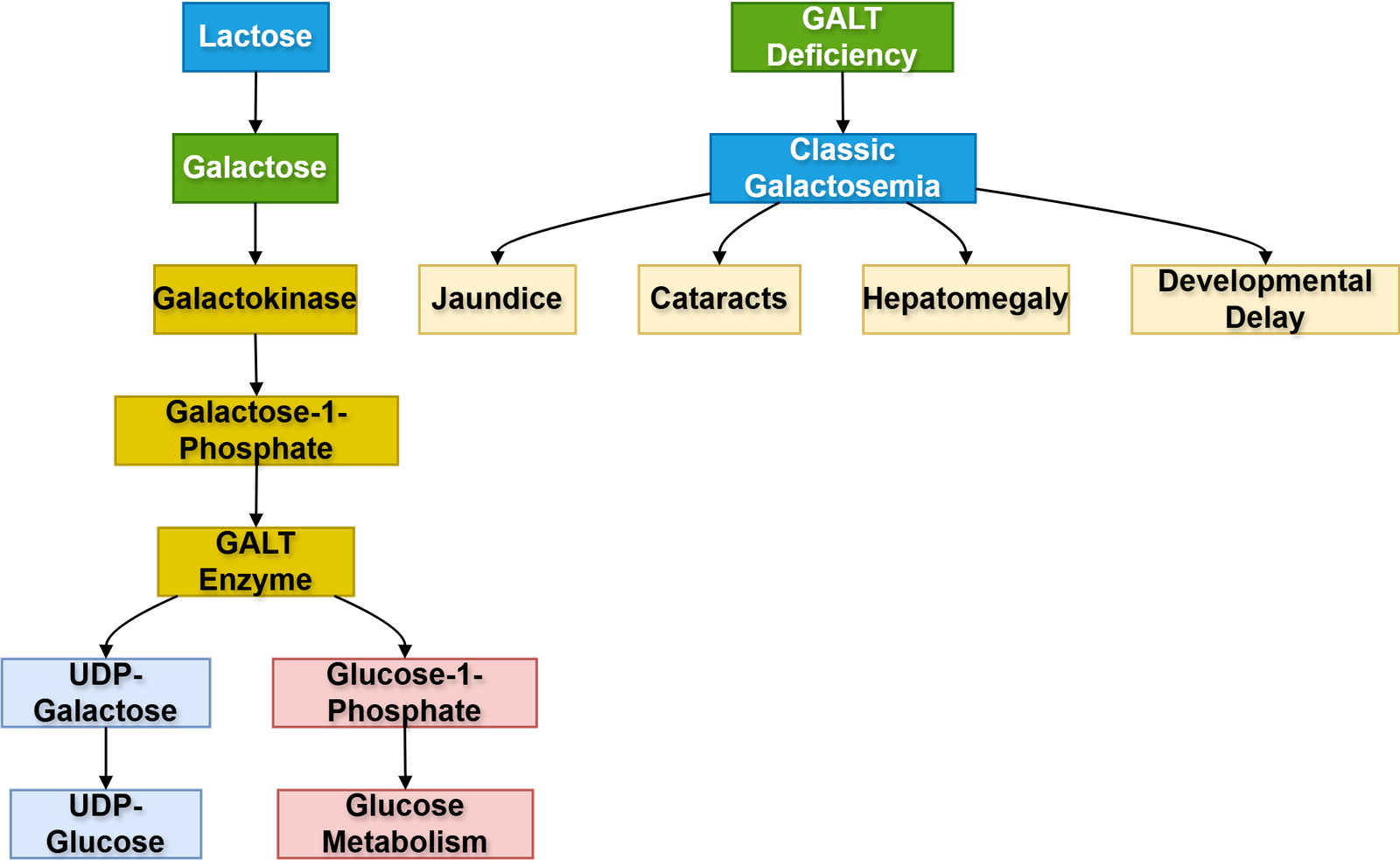
Classic Galactosemia
- GALT deficiency
- Neonatal vomiting and jaundice
- Cataracts and developmental delay
Diabetic Cataract
- Sorbitol accumulation in lens
- Osmotic swelling
- Lens opacity
Scurvy
- Vitamin C deficiency
- Defective collagen synthesis
- Bleeding gums and poor healing
📌 6️⃣ Summary Points
- Uronic acid pathway produces glucuronic acid for detoxification.
- Humans cannot synthesize vitamin C due to lack of L-gulonolactone oxidase.
- Fructose metabolism mainly occurs in liver.
- Aldolase B deficiency causes hereditary fructose intolerance.
- Sorbitol accumulation contributes to diabetic cataract.
- Galactose is mainly derived from lactose.
- GALT deficiency causes classic galactosemia.
- UDP-galactose is important for glycolipid synthesis.
- Fructose in seminal fluid provides energy for sperm.
- Glucuronic acid conjugates bilirubin and drugs.
- Early lactose restriction prevents complications of galactosemia.
- Minor carbohydrate pathways have major clinical importance despite lower energy contribution.