
📖 Step 2 — Learning Material
🔹 1️⃣ Introduction
Diarrhoea, constipation, and gastrointestinal infections are among the most common disorders affecting all age groups, especially children. These conditions directly affect intestinal motility, secretion, absorption, and fluid balance. Acute gastroenteritis remains a major cause of morbidity and mortality in developing countries due to dehydration and electrolyte imbalance. Understanding anti-diarrheal and laxative drugs is essential for safe clinical management. Community-level prevention through hygiene, food safety, and sanitation is equally important in reducing disease spread. This topic integrates pharmacology, paediatrics, and community medicine to explain how gastrointestinal disorders occur, how they are treated, and how they can be prevented.
🔹 2️⃣ Foundation Concepts
Key Definitions
- Diarrhoea: Passage of loose or watery stools more than three times daily.
- Constipation: Infrequent or difficult passage of hard stools.
- Gastroenteritis: Inflammation of stomach and intestines causing vomiting and diarrhoea.
- Dehydration: Excessive loss of body water and electrolytes.
- Anti-diarrheal drugs: Drugs used to reduce stool frequency and intestinal motility.
- Laxatives: Drugs that promote bowel evacuation.
- Food-borne infection: Illness caused by contaminated food or water.
Essential Terminology
- Peristalsis: Coordinated intestinal movement pushing contents forward.
- Electrolyte imbalance: Disturbance in sodium, potassium, or bicarbonate levels.
- ORS (Oral Rehydration Solution): Solution containing glucose and electrolytes to treat dehydration.
- Secretory diarrhoea: Excess intestinal secretion of water.
- Osmotic diarrhoea: Water retention in bowel due to unabsorbed substances.
- Motility disorder: Abnormal intestinal movement.
Basic Overview
- The intestine normally absorbs water and nutrients efficiently.
- Diarrhoea occurs when secretion exceeds absorption.
- Constipation occurs when intestinal transit becomes slow.
- Gastrointestinal infections commonly spread through contaminated food and water.
- Children are particularly vulnerable to dehydration.
- Pharmacological treatment aims to restore normal bowel function.
🔹 3️⃣ Core Learning — Curriculum Coverage
PHARMACOLOGY
Anti-Diarrheal Drugs
🧠 CORE
- Anti-diarrheal drugs reduce stool frequency and fluid loss.
- They mainly decrease intestinal motility or secretion.
- Used mainly in non-infectious diarrhoea.
- Important drugs include:
- Loperamide
- Diphenoxylate
- Bismuth subsalicylate
- Adsorbents
- ORS remains the most important treatment.
- Antibiotics are used only in selected infections.
- Anti-motility drugs should be avoided in bloody diarrhoea.
🔬 CONCEPT EXPLAINED
The intestine normally balances secretion and absorption of water. During diarrhoea, excessive secretion and rapid intestinal movement reduce water absorption.
Loperamide acts on opioid receptors in the intestinal wall. It slows peristalsis and increases water absorption from stool. Diphenoxylate acts similarly but may cross the blood-brain barrier at high doses.
Bismuth subsalicylate decreases intestinal secretion and has mild antimicrobial action.
ORS works by utilizing sodium-glucose co-transport in the intestine, allowing water absorption even during diarrhoea.
⚠️ IF DAMAGED
- Excessive intestinal motility → Reduced absorption → Watery stool
- Severe diarrhoea → Fluid loss → Dehydration
- Electrolyte loss → Hypokalemia → Muscle weakness
- Inappropriate anti-motility use in infection → Toxin retention → Worsening disease
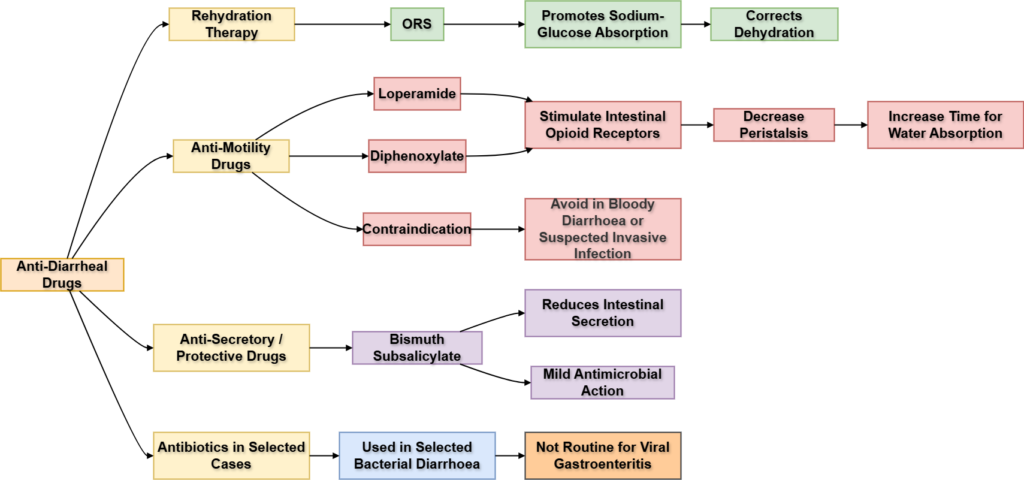
Mechanism of Anti-Diarrheal Drugs
🧠 CORE
- Most drugs act by reducing intestinal motility.
- Some decrease secretion.
- ORS increases water absorption.
- Opioid drugs act on enteric nervous system receptors.
- Reduced motility increases contact time for absorption.
- Bismuth reduces prostaglandin-mediated secretion.
🔬 CONCEPT EXPLAINED
The enteric nervous system regulates intestinal movement and secretion.
Loperamide stimulates μ-opioid receptors in intestinal smooth muscle, reducing propulsive peristalsis. Slower transit allows greater absorption of water and electrolytes.
Bismuth compounds reduce inflammatory secretion in intestinal mucosa.
ORS contains glucose and sodium. Glucose promotes sodium uptake through SGLT transporters, and water follows osmotically.
⚠️ IF DAMAGED
- Failure of intestinal absorption → Persistent dehydration
- Excessive slowing of bowel → Constipation or ileus
- Untreated severe diarrhoea → Shock and renal impairment
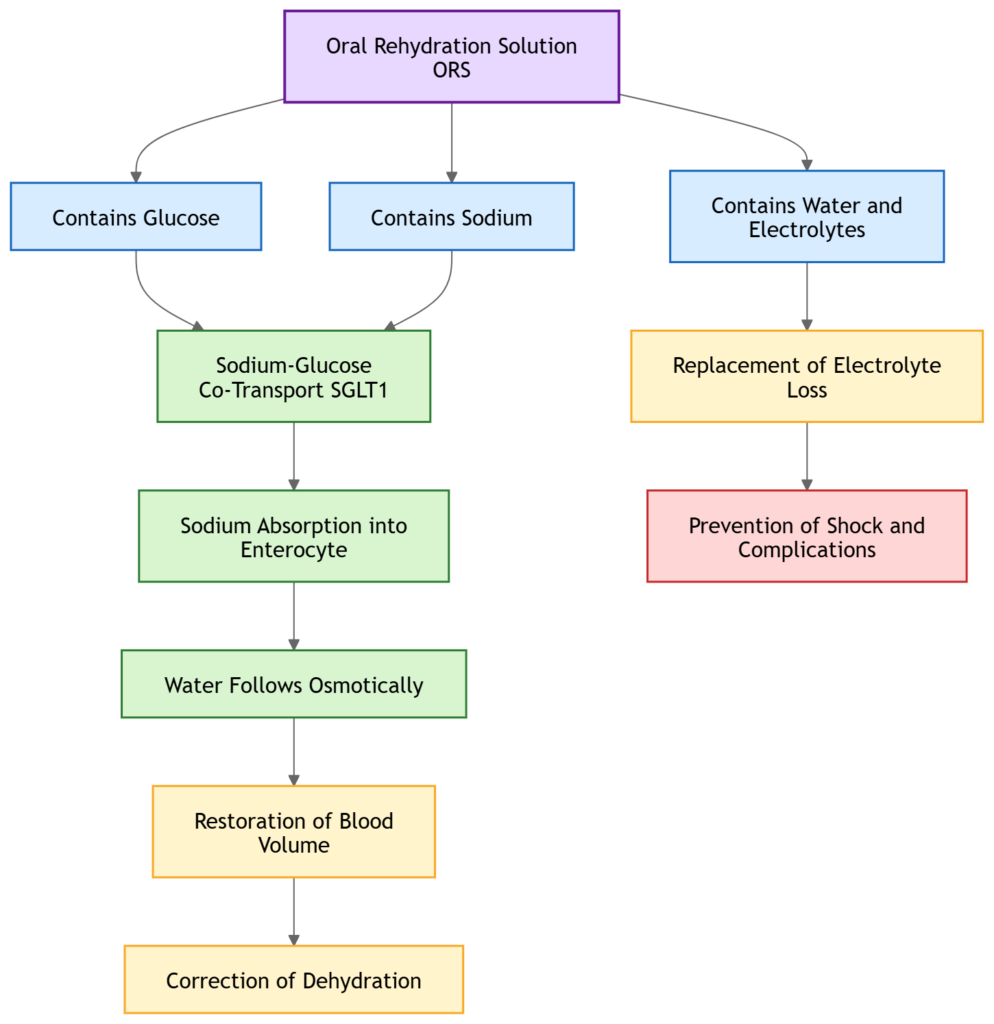
Drugs Used in Constipation
🧠 CORE
- Laxatives promote bowel evacuation.
- Common groups:
- Bulk-forming agents
- Osmotic laxatives
- Stimulant laxatives
- Stool softeners
- Used in chronic constipation and bowel preparation.
- Fiber intake is the safest long-term therapy.
- Adequate hydration is important.
🔬 CONCEPT EXPLAINED
Constipation commonly results from slow intestinal transit or excessive water absorption from stool.
Bulk-forming laxatives absorb water and increase stool volume. Increased stretch stimulates peristalsis.
Osmotic laxatives draw water into the bowel lumen, softening stool.
Stimulant laxatives directly stimulate enteric nerves to increase motility.
Stool softeners reduce stool surface tension, allowing water penetration.
⚠️ IF DAMAGED
- Chronic constipation → Fecal impaction
- Excess laxative use → Electrolyte imbalance
- Severe dehydration → Hard stool formation
- Long-term stimulant abuse → Lazy bowel syndrome
Mechanism of Constipation Drugs
🧠 CORE
- Bulk agents increase stool mass.
- Osmotic agents retain water in bowel.
- Stimulants increase intestinal contractions.
- Stool softeners soften feces.
- Increased bowel water improves stool passage.
🔬 CONCEPT EXPLAINED
Psyllium absorbs water and expands inside the intestine. Increased stool bulk activates stretch receptors and promotes motility.
Lactulose and polyethylene glycol increase osmotic pressure within bowel lumen, preventing water absorption.
Senna stimulates myenteric plexus activity, increasing peristalsis.
Docusate allows mixing of water with stool.
⚠️ IF DAMAGED
- Excess stimulant use → Dependence
- Excess fluid loss → Hypovolemia
- Poor bowel motility → Severe constipation
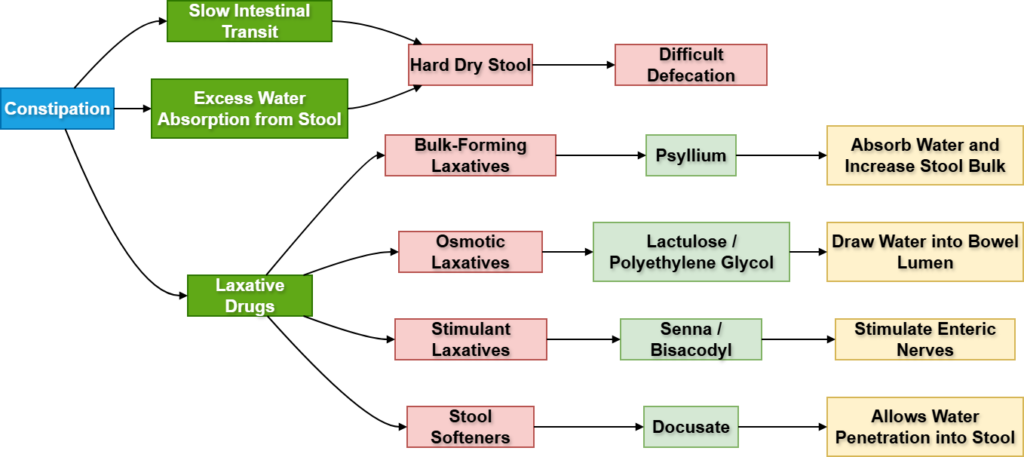
COMMUNITY MEDICINE
Epidemiology of Food-Borne Infections
🧠 CORE
- Food-borne infections are common worldwide.
- More common in areas with poor sanitation.
- Children are high-risk group.
- Common organisms:
- E. coli
- Salmonella
- Shigella
- Rotavirus
- Vibrio cholerae
- Spread occurs through contaminated food and water.
- Outbreaks commonly occur in crowded areas.
🔬 CONCEPT EXPLAINED
Food contamination occurs during preparation, storage, or handling.
Poor hygiene allows pathogens to enter the gastrointestinal tract. These organisms damage intestinal mucosa or produce toxins causing diarrhoea.
Unsafe water supply and inadequate sewage systems increase disease transmission.
Children have immature immunity and are more vulnerable to severe dehydration.
⚠️ IF DAMAGED
- Poor sanitation → Increased transmission
- Unsafe food handling → Community outbreaks
- Severe infection → Malnutrition and dehydration
Control Measures of Food-Borne Infections
🧠 CORE
- Hand hygiene is essential.
- Safe drinking water prevents transmission.
- Proper food cooking kills pathogens.
- Refrigeration prevents bacterial growth.
- Vaccination helps prevent some infections.
- ORS reduces mortality in diarrhoeal disease.
🔬 CONCEPT EXPLAINED
Most gastrointestinal infections spread through the fecal-oral route.
Handwashing interrupts pathogen transmission. Proper cooking destroys microorganisms. Safe sewage disposal prevents contamination of water supplies.
Public health education improves hygiene practices and reduces disease burden.
⚠️ IF DAMAGED
- Poor hygiene → Recurrent outbreaks
- Contaminated water → Epidemics
- Lack of ORS access → Increased mortality
PAEDIATRICS
Etiology of Acute Gastroenteritis
🧠 CORE
- Viral infection is the commonest cause.
- Rotavirus is a major pediatric pathogen.
- Bacterial causes include:
- E. coli
- Salmonella
- Shigella
- Protozoal causes include Giardia.
- Infection spreads mainly by fecal-oral route.
🔬 CONCEPT EXPLAINED
Pathogens infect intestinal mucosa and impair absorption.
Viruses damage enterocytes causing malabsorption and watery diarrhoea.
Bacterial toxins stimulate secretion of water and electrolytes into intestinal lumen.
Children rapidly lose fluids because of smaller body reserves.
⚠️ IF DAMAGED
- Severe infection → Dehydration
- Persistent vomiting → Electrolyte loss
- Malabsorption → Weight loss and malnutrition
Clinical Features of Gastroenteritis
🧠 CORE
- Diarrhoea
- Vomiting
- Fever
- Abdominal pain
- Dehydration
- Reduced urine output
- Lethargy in severe cases
🔬 CONCEPT EXPLAINED
Fluid loss from stool and vomiting reduces circulating blood volume.
Reduced plasma volume causes tachycardia and hypotension. Electrolyte loss may produce muscle weakness and altered consciousness.
Children may show sunken eyes, dry mucosa, and poor skin turgor.
⚠️ IF DAMAGED
- Severe dehydration → Shock
- Electrolyte imbalance → Arrhythmias
- Persistent fluid loss → Acute kidney injury
Treatment of Gastroenteritis
🧠 CORE
- ORS is first-line therapy.
- Continue feeding during illness.
- IV fluids used in severe dehydration.
- Zinc supplementation helps children.
- Antibiotics only for selected bacterial infections.
- Prevent dehydration early.
🔬 CONCEPT EXPLAINED
ORS restores sodium, glucose, and water balance through intestinal co-transport mechanisms.
Continued feeding maintains intestinal mucosal integrity and nutrition.
IV fluids rapidly restore circulation in severe dehydration.
Zinc improves intestinal healing and immune function.
⚠️ IF DAMAGED
- Delayed rehydration → Hypovolemic shock
- Unnecessary antibiotics → Resistance
- Severe dehydration → Multi-organ dysfunction
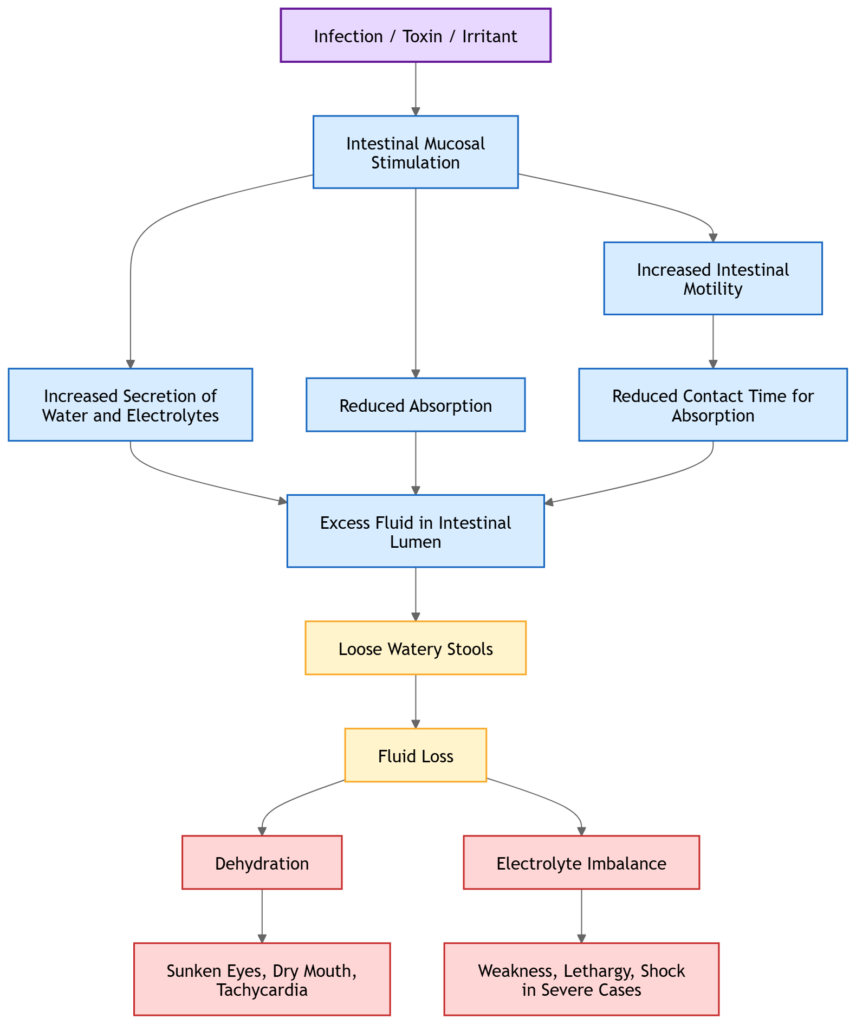
⚙️ 4️⃣ Functional Flow
| Structure | Function | Outcome |
|---|---|---|
| Intestinal mucosa | Absorption of water and electrolytes | Maintains hydration |
| Enteric nervous system | Regulates motility | Controls bowel movement |
| Goblet cells | Mucus secretion | Lubricates stool passage |
| ORS transport system | Sodium-glucose absorption | Rehydration |
| Colon | Water absorption | Stool formation |
🩺 5️⃣ Clinical Correlation
Cholera
- Causes profuse watery diarrhoea.
- Severe dehydration may occur rapidly.
- Main treatment is aggressive fluid replacement.
Rotavirus Infection
- Common in infants and children.
- Causes vomiting and watery diarrhoea.
- Vaccination reduces incidence.
Chronic Constipation
- Common in low-fiber diets.
- May cause hemorrhoids and fissures.
- Lifestyle modification is essential.
Laxative Abuse
- Can cause dependence.
- Leads to electrolyte imbalance.
- Chronic use damages bowel motility.
📌 6️⃣ Summary Points
- ORS is the cornerstone of diarrhoea treatment.
- Loperamide reduces intestinal motility.
- Anti-motility drugs should be avoided in bloody diarrhoea.
- Bulk-forming laxatives are safest for chronic constipation.
- Rotavirus is a major cause of pediatric gastroenteritis.
- Dehydration is the most dangerous complication of diarrhoea.
- Hand hygiene prevents food-borne infections.
- Zinc supplementation improves recovery in children.
- Excess stimulant laxative use may cause bowel dependence.
- Safe water and sanitation reduce gastrointestinal infections.