
📖 Step 2 — Learning Material
🔹 1️⃣ Introduction
Aromatic and sulphur-containing amino acids are essential biomolecules involved in protein synthesis, neurotransmitter production, methylation reactions, antioxidant defense, and hormone formation. These amino acids are mainly metabolized in the liver and participate in several clinically important biochemical pathways. Phenylalanine, tyrosine, and tryptophan are aromatic amino acids containing ring structures, while methionine and cysteine are sulphur-containing amino acids involved in sulphur transfer and detoxification reactions. Their metabolism is important for normal nervous system function, melanin formation, energy production, and cellular protection against oxidative stress. Defects in these pathways produce inherited metabolic disorders such as phenylketonuria, alkaptonuria, albinism, homocystinuria, and maple syrup urine disease–related complications. Understanding these pathways helps explain many neurological, hepatic, connective tissue, and developmental disorders encountered in clinical medicine.
🔹 2️⃣ Foundation Concepts
Key Definitions
- Amino acids: Organic compounds containing amino and carboxyl groups.
- Essential amino acids: Cannot be synthesized by the body and must be obtained from diet.
- Aromatic amino acids: Amino acids containing aromatic ring structures.
- Sulphur-containing amino acids: Amino acids containing sulphur atoms.
- Transamination: Transfer of amino group between amino acids.
- Hydroxylation: Addition of hydroxyl group during metabolism.
- Inherited metabolic disorder: Genetic defect causing enzyme deficiency.
Essential Terminology
- Phenylalanine
- Tyrosine
- Tryptophan
- Methionine
- Cysteine
- Homocysteine
- Catecholamines
- Melanin
- Serotonin
- Dopamine
- SAM (S-adenosyl methionine)
Basic Overview
- Aromatic amino acids participate in neurotransmitter and pigment synthesis.
- Sulphur-containing amino acids participate in methylation and antioxidant defense.
- Liver is the major site of amino acid metabolism.
- Vitamin cofactors are essential for many reactions.
- Genetic enzyme defects produce metabolic diseases.
- Some amino acids are glucogenic while others are ketogenic.
🔹 3️⃣ Core Learning — Curriculum Coverage
[Write short overview of curriculum coverage here]
A. Aromatic Amino Acids
Phenylalanine Metabolism
🧠 CORE
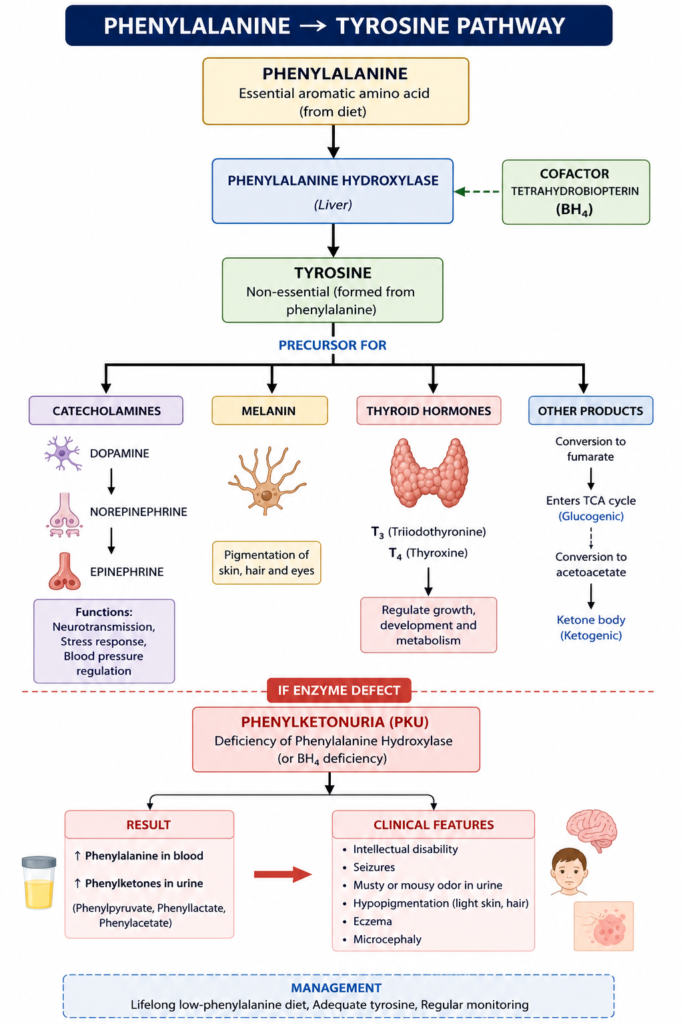
- Phenylalanine is an essential aromatic amino acid.
- Major site of metabolism is the liver.
- Converted into tyrosine by phenylalanine hydroxylase.
- Requires tetrahydrobiopterin (BH₄) as cofactor.
- Tyrosine becomes precursor for catecholamines and melanin.
- Phenylalanine is both glucogenic and ketogenic.
- Excess phenylalanine is toxic to brain tissue.
- Defect causes phenylketonuria (PKU).
🔬 CONCEPT EXPLAINED
Phenylalanine contains a benzene ring that makes it an aromatic amino acid. Since humans cannot synthesize it, dietary intake is necessary.
The first and most important metabolic step is hydroxylation of phenylalanine into tyrosine in hepatocytes. This reaction is catalyzed by phenylalanine hydroxylase and requires BH₄.
Tyrosine formed from phenylalanine acts as a precursor for:
- Dopamine
- Norepinephrine
- Epinephrine
- Thyroxine
- Melanin
This pathway links amino acid metabolism with endocrine and nervous system function.
When phenylalanine accumulates, toxic metabolites enter the brain and interfere with myelin formation and neurotransmitter synthesis.
⚠️ IF DAMAGED
Phenylalanine Hydroxylase Deficiency → PKU
Cause:
- Inability to convert phenylalanine into tyrosine.
Effect:
- Accumulation of phenylalanine and phenylketones.
- Intellectual disability.
- Seizures.
- Musty odor of urine.
- Hypopigmentation due to reduced melanin.
Tyrosine Metabolism
🧠 CORE
- Tyrosine is a nonessential aromatic amino acid.
- Formed from phenylalanine.
- Precursor for catecholamines.
- Required for melanin synthesis.
- Participates in thyroid hormone formation.
- Catabolism produces fumarate and acetoacetate.
- Both glucogenic and ketogenic.
- Defects produce alkaptonuria and albinism.
🔬 CONCEPT EXPLAINED
Tyrosine metabolism connects amino acid biochemistry with endocrine physiology and pigmentation.
Tyrosine undergoes multiple reactions to form:
- Dopamine
- Norepinephrine
- Epinephrine
- Melanin
- Thyroxine
Tyrosinase converts tyrosine into DOPA during melanin synthesis.
During catabolism, tyrosine eventually forms:
- Fumarate → enters TCA cycle.
- Acetoacetate → ketogenic pathway.
This explains why tyrosine contributes to both energy production and ketone body formation.
⚠️ IF DAMAGED
Alkaptonuria
Cause:
- Homogentisate oxidase deficiency.
Effect:
- Homogentisic acid accumulation.
- Black urine on standing.
- Ochronosis.
- Degenerative arthritis.
Albinism
Cause:
- Tyrosinase deficiency.
Effect:
- Reduced melanin formation.
- Hypopigmented skin and hair.
- Visual abnormalities.
- Increased skin cancer risk.
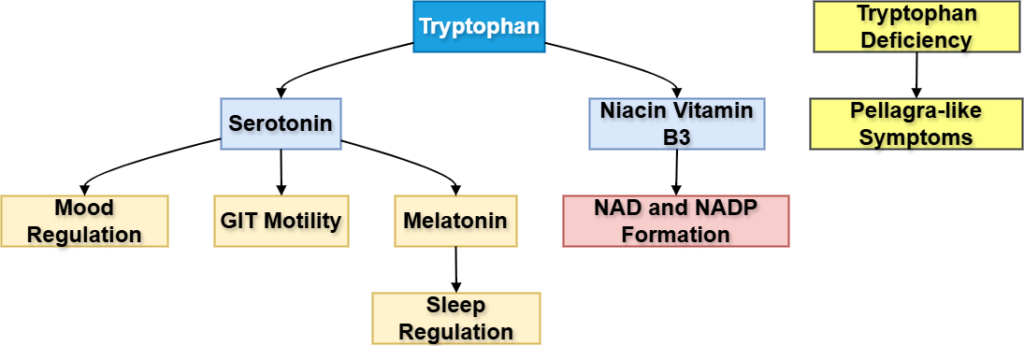
Tryptophan Metabolism
🧠 CORE
- Tryptophan is an essential aromatic amino acid.
- Precursor for serotonin and melatonin.
- Participates in niacin synthesis.
- Mainly metabolized in liver.
- Both glucogenic and ketogenic.
- Important for mood and sleep regulation.
- Serotonin formed in brain and gut.
- Deficiency may cause pellagra-like symptoms.
🔬 CONCEPT EXPLAINED
Tryptophan contains an indole ring and participates in several biologically important pathways.
Major metabolic products include:
- Serotonin → neurotransmitter
- Melatonin → sleep hormone
- Niacin → vitamin B₃
Tryptophan hydroxylase converts tryptophan into serotonin precursor molecules.
Serotonin regulates:
- Mood
- Sleep
- Appetite
- Gastrointestinal motility
Melatonin regulates circadian rhythm.
Some tryptophan is converted into niacin, explaining the relationship between protein deficiency and pellagra.
⚠️ IF DAMAGED
Hartnup Disease
Cause:
- Defective tryptophan transport.
Effect:
- Reduced niacin synthesis.
- Pellagra-like dermatitis.
- Cerebellar symptoms.
- Emotional disturbances.
B. Sulphur-Containing Amino Acids
Methionine Metabolism
🧠 CORE
- Methionine is an essential sulphur-containing amino acid.
- Major methyl donor in body.
- Converted into SAM.
- Participates in methylation reactions.
- Forms homocysteine during metabolism.
- Can regenerate methionine.
- Requires folate and vitamin B₁₂.
- Defects cause homocystinuria.
🔬 CONCEPT EXPLAINED
Methionine metabolism is important for transfer of methyl groups needed in cellular reactions.
Methionine first forms:
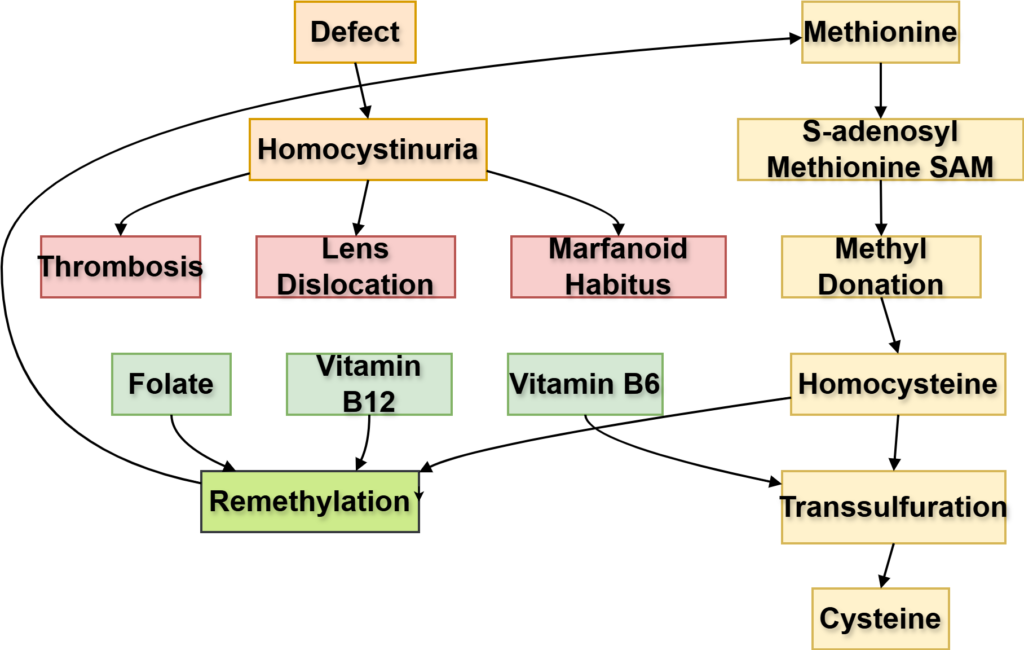
- S-adenosyl methionine (SAM)
SAM donates methyl groups for:
- DNA methylation
- Neurotransmitter synthesis
- Phospholipid synthesis
After methyl donation:
- SAM becomes homocysteine.
Homocysteine has two pathways:
- Remethylation → methionine.
- Transsulfuration → cysteine.
These reactions require:
- Vitamin B₆
- Vitamin B₁₂
- Folate
This pathway links nutrition with cardiovascular and neurological health.
⚠️ IF DAMAGED
Homocystinuria
Cause:
- Cystathionine synthase deficiency.
Effect:
- Elevated homocysteine.
- Thromboembolism.
- Lens dislocation.
- Intellectual disability.
- Marfanoid body habitus.
Cysteine Metabolism
🧠 CORE
- Cysteine is a nonessential sulphur-containing amino acid.
- Formed from methionine.
- Contains sulfhydryl (-SH) group.
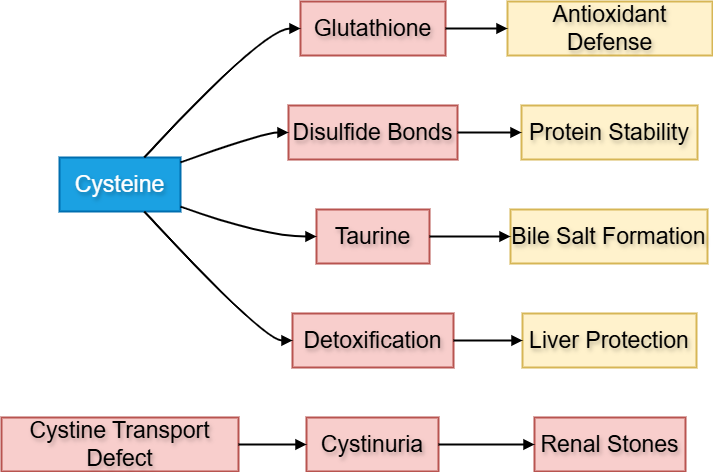
- Important in glutathione synthesis.
- Stabilizes protein structure.
- Participates in detoxification.
- Taurine is formed from cysteine.
- Important antioxidant functions.
🔬 CONCEPT EXPLAINED
Cysteine contains a reactive sulphydryl group that allows formation of disulfide bonds.
Disulfide bonds:
- Stabilize tertiary protein structure.
- Important in keratin and insulin structure.
Cysteine is essential for:
- Glutathione synthesis
- Antioxidant defense
- Detoxification in liver
Glutathione protects cells from oxidative injury by neutralizing reactive oxygen species.
Cysteine also contributes to taurine synthesis which helps bile salt formation.
⚠️ IF DAMAGED
Cystinuria
Cause:
- Defective renal tubular transport of cystine.
Effect:
- Cystine stone formation.
- Recurrent renal colic.
- Urinary obstruction.
⚙️ 4️⃣ Functional Flow
Structure → Function → Outcome
Aromatic Ring Structure
Structure:
- Benzene/indole ring systems.
Function:
- Enables neurotransmitter and hormone synthesis.
Outcome:
- Mood regulation, pigmentation, endocrine function.
Sulfhydryl Group of Cysteine
Structure:
- Reactive -SH group.
Function:
- Forms disulfide bonds.
Outcome:
- Protein stabilization and antioxidant defense.
Methionine Methyl Group
Structure:
- Sulphur-containing methyl donor.
Function:
- Transfers methyl groups.
Outcome:
- DNA regulation and neurotransmitter synthesis.
🩺 5️⃣ Clinical Correlation
| Disorder | Enzyme Defect | Important Features |
|---|---|---|
| Phenylketonuria | Phenylalanine hydroxylase | Intellectual disability, musty odor |
| Alkaptonuria | Homogentisate oxidase | Black urine, arthritis |
| Albinism | Tyrosinase | Hypopigmentation |
| Hartnup disease | Tryptophan transport defect | Pellagra-like symptoms |
| Homocystinuria | Cystathionine synthase | Thrombosis, lens dislocation |
| Cystinuria | Renal transport defect | Renal stones |
📌 6️⃣ Summary Points
- Phenylalanine is converted into tyrosine.
- Tyrosine forms catecholamines and melanin.
- Tryptophan forms serotonin and melatonin.
- Methionine is the major methyl donor.
- SAM participates in methylation reactions.
- Cysteine forms disulfide bonds in proteins.
- PKU causes intellectual disability if untreated.
- Alkaptonuria produces black urine.
- Homocystinuria increases thrombosis risk.
- Glutathione requires cysteine.
- Tyrosine is both glucogenic and ketogenic.
- Vitamin B₆, B₁₂, and folate are important in sulphur amino acid metabolism.