
📖 Step 2 — Learning Material
🔹 1️⃣ Introduction
Amino acids are not only building blocks of proteins but also essential molecules for energy production, neurotransmitter synthesis, detoxification, and nitrogen transport. After digestion and protein turnover, amino acids undergo specific metabolic pathways mainly in the liver, skeletal muscle, kidney, and brain. Different amino acids have unique metabolic roles depending on their carbon skeletons and nitrogen-containing groups.
Glycine, serine, and alanine participate in glucose metabolism, one-carbon transfer reactions, and nitrogen transport. Acidic amino acids such as glutamate and aspartate are central in amino group transfer and energy metabolism. Branched-chain amino acids (BCAAs) — leucine, isoleucine, and valine — are major energy sources for skeletal muscle and are clinically important because their metabolic defects produce severe neurological disease.
Understanding amino acid metabolism helps explain inherited metabolic disorders, nitrogen balance, neurotransmitter synthesis, and energy production during fasting and exercise.
🔹 2️⃣ Foundation Concepts
Key Definitions
- Amino acid metabolism: Biochemical processes involving synthesis and breakdown of amino acids.
- Transamination: Transfer of amino group between amino acids and keto acids.
- Glucogenic amino acid: Amino acid producing glucose precursors.
- Ketogenic amino acid: Amino acid producing ketone body precursors.
- Branched-chain amino acids (BCAAs): Leucine, isoleucine, and valine containing branched carbon chains.
- One-carbon metabolism: Transfer of single carbon units during biosynthetic reactions.
- Neurotransmitter precursor: Molecule used for synthesis of neurotransmitters.
Essential Terminology
- Aminotransferase
- Deamination
- α-ketoglutarate
- Pyruvate
- Oxaloacetate
- Glutamine
- Urea cycle
- Ketone bodies
Basic Overview
- Amino acids can be synthesized or degraded depending on body needs.
- Carbon skeletons enter pathways of glucose or energy metabolism.
- Nitrogen is removed mainly through transamination and deamination.
- Liver is the major organ for amino acid metabolism.
- Skeletal muscle plays a major role in BCAA metabolism.
- Some amino acids form neurotransmitters and other functional molecules.
- Inherited enzyme deficiencies lead to accumulation of toxic metabolites.
🔹 3️⃣ Core Learning — Curriculum Coverage
A. Glycine, Serine and Alanine
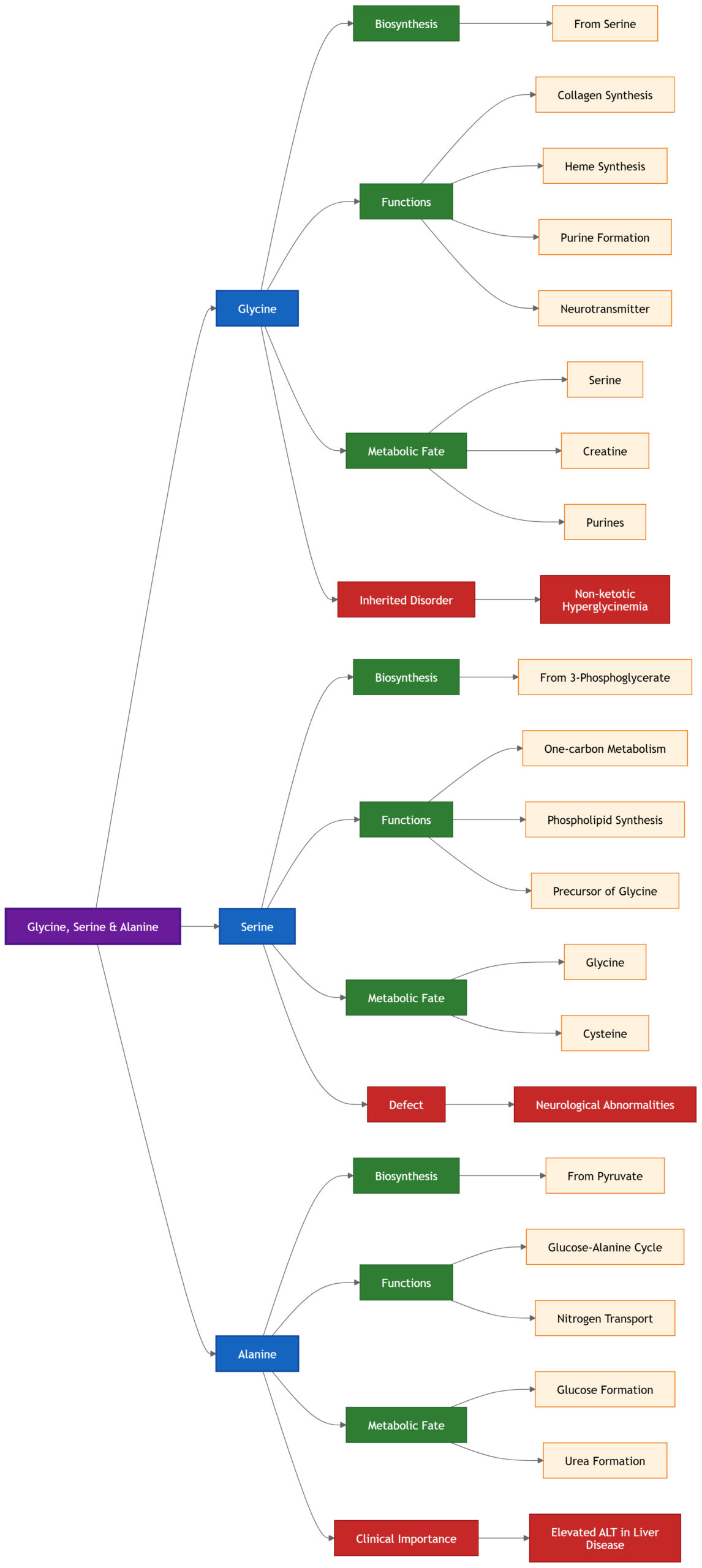
Glycine
🧠 CORE
- Smallest amino acid.
- Non-essential amino acid.
- Synthesized mainly from serine.
- Important in collagen formation.
- Required for heme synthesis.
- Participates in purine synthesis.
- Functions as inhibitory neurotransmitter in CNS.
- Excess glycine accumulation causes neurological disease.
🔬 CONCEPT EXPLAINED
Biosynthesis
Glycine is mainly synthesized from serine by the enzyme serine hydroxymethyltransferase. This reaction requires tetrahydrofolate (THF), linking glycine metabolism with one-carbon metabolism.
Metabolic Fate
Glycine can:
- Form serine
- Enter purine synthesis
- Participate in heme synthesis
- Form creatine
- Be converted into CO₂ and NH₃
Metabolic Functions
Structure → Function relationship:
- Simple structure allows flexible incorporation into collagen.
- Glycine occupies every third residue in collagen triple helix.
- Functions in detoxification through conjugation reactions.
⚠️ IF DAMAGED
Cause:
Defect in glycine cleavage system.
Effect:
- Glycine accumulation in blood and CNS
- Neurological toxicity
- Seizures
- Intellectual disability
Clinical disorder:
Non-ketotic hyperglycinemia
Serine
🧠 CORE
- Non-essential amino acid.
- Synthesized from glycolytic intermediate.
- Important in phospholipid synthesis.
- Participates in one-carbon metabolism.
- Precursor of glycine and cysteine.
- Important in cell membrane formation.
🔬 CONCEPT EXPLAINED
Biosynthesis
Serine is synthesized from 3-phosphoglycerate, an intermediate of glycolysis.
This links carbohydrate metabolism with amino acid metabolism.
Metabolic Fate
Serine can:
- Form glycine
- Participate in sphingolipid synthesis
- Form cysteine
- Donate one-carbon units
Metabolic Functions
- Important in rapidly dividing cells.
- Supports nucleotide synthesis.
- Participates in membrane phospholipid production.
⚠️ IF DAMAGED
Cause:
Defect in serine biosynthesis.
Effect:
- Impaired brain development
- Neurological abnormalities
- Developmental delay
Alanine
🧠 CORE
- Non-essential amino acid.
- Synthesized by transamination of pyruvate.
- Major role in glucose-alanine cycle.
- Important transporter of amino nitrogen.
- Links muscle and liver metabolism.
🔬 CONCEPT EXPLAINED
Biosynthesis
Alanine forms by transamination of pyruvate using alanine aminotransferase (ALT).
Metabolic Fate
Alanine travels from muscle to liver where:
- Nitrogen enters urea cycle
- Carbon skeleton forms glucose
Metabolic Functions
Structure → Function:
- Simple structure allows rapid interconversion with pyruvate.
- Helps transport ammonia safely from muscle to liver.
⚠️ IF DAMAGED
Cause:
Severe liver disease.
Effect:
- Impaired alanine metabolism
- Elevated ALT levels
- Defective nitrogen transport
B. Acidic Amino Acids
Aspartate
🧠 CORE
- Acidic amino acid.
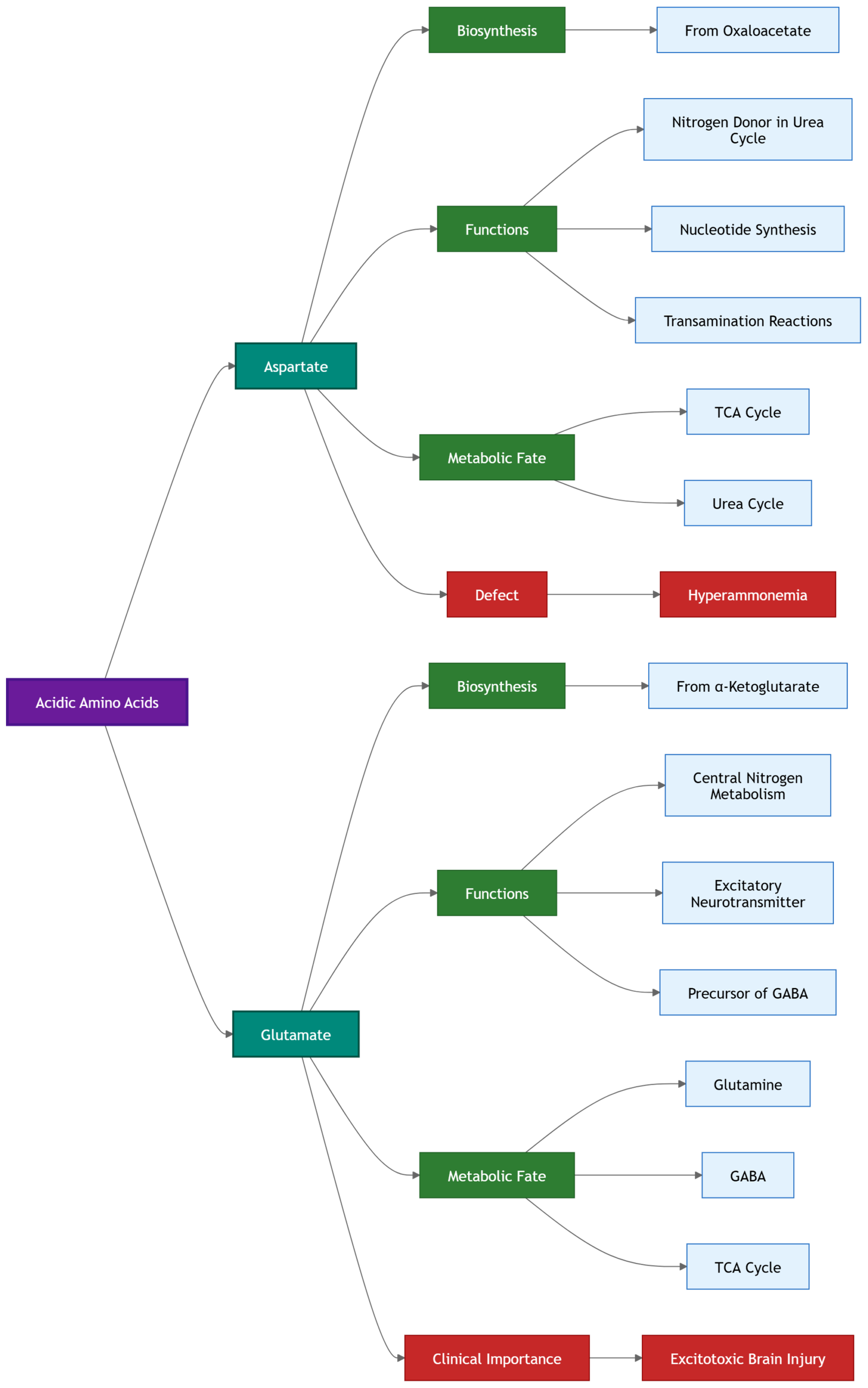
- Formed from oxaloacetate.
- Important in urea cycle.
- Participates in nucleotide synthesis.
- Functions in transamination reactions.
🔬 CONCEPT EXPLAINED
Biosynthesis
Aspartate forms by transamination of oxaloacetate.
Metabolic Fate
Aspartate can:
- Enter TCA cycle
- Participate in urea cycle
- Form nucleotides
Metabolic Functions
- Provides nitrogen in urea synthesis.
- Connects amino acid metabolism with energy metabolism.
⚠️ IF DAMAGED
Cause:
Defective transamination.
Effect:
- Reduced urea synthesis
- Ammonia accumulation
- Metabolic dysfunction
Glutamate
🧠 CORE
- Central amino acid in nitrogen metabolism.
- Formed from α-ketoglutarate.
- Major excitatory neurotransmitter.
- Precursor of GABA.
- Participates in ammonia detoxification.
🔬 CONCEPT EXPLAINED
Biosynthesis
Glutamate forms by:
- Transamination
- Reductive amination of α-ketoglutarate
Metabolic Fate
Glutamate can:
- Form glutamine
- Form GABA
- Enter TCA cycle
- Donate amino groups
Metabolic Functions
Structure → Function:
- Multiple amino group reactions make glutamate ideal for nitrogen transfer.
- Important in CNS neurotransmission.
⚠️ IF DAMAGED
Cause:
Excess glutamate accumulation.
Effect:
- Excitotoxic neuronal injury
- Neurodegeneration
- CNS dysfunction
Clinical importance:
Seen in ischemic brain injury.
C. Branched Chain Amino Acids (BCAAs)
Leucine, Isoleucine and Valine
🧠 CORE
- Essential amino acids.
- Metabolized mainly in skeletal muscle.
- Important energy source during exercise.
- Leucine is ketogenic.
- Valine is glucogenic.
- Isoleucine is both glucogenic and ketogenic.
- Require branched-chain α-ketoacid dehydrogenase complex.
🔬 CONCEPT EXPLAINED
Biosynthesis
Humans cannot synthesize BCAAs.
They must be obtained from diet.
Metabolic Fate
Initial metabolism occurs in muscle:
- Transamination
- Oxidative decarboxylation
- Formation of energy intermediates
End products:
- Leucine → Acetyl-CoA and acetoacetate
- Valine → Succinyl-CoA
- Isoleucine → Acetyl-CoA and succinyl-CoA
Metabolic Functions
- Provide energy during fasting and exercise.
- Support muscle protein synthesis.
- Leucine activates protein synthesis pathways.
⚠️ IF DAMAGED
Cause:
Deficiency of branched-chain α-ketoacid dehydrogenase.
Effect:
- Accumulation of branched-chain ketoacids
- Neurological toxicity
- Sweet odor urine
- Developmental delay
Clinical disorder:
Maple Syrup Urine Disease (MSUD)
⚙️ 4️⃣ Functional Flow
Glycine
Simple structure → Flexible collagen packing → Strong connective tissue.
Alanine
Pyruvate conversion → Nitrogen transport → Safe ammonia removal from muscle.
Glutamate
Amino group transfer → Nitrogen collection → Urea cycle support.
BCAAs
Muscle metabolism → ATP production during exercise → Preservation of muscle function.
🩺 5️⃣ Clinical Correlation
Non-Ketotic Hyperglycinemia
- Defect in glycine cleavage enzyme.
- Glycine accumulates in CNS.
- Causes seizures and developmental delay.
Maple Syrup Urine Disease (MSUD)
- Deficiency of branched-chain ketoacid dehydrogenase.
- Accumulation of leucine, isoleucine, valine metabolites.
- Urine has maple syrup odor.
- Causes severe neurological damage.
Hyperammonemia
- Failure of glutamate-mediated nitrogen handling.
- Elevated ammonia causes encephalopathy.
Elevated ALT
- Marker of hepatocellular injury.
- Indicates disturbed alanine metabolism.
📌 6️⃣ Summary Points
- Glycine is important for collagen and heme synthesis.
- Serine links glycolysis with amino acid metabolism.
- Alanine transports nitrogen from muscle to liver.
- Glutamate is the central amino acid in nitrogen metabolism.
- Aspartate contributes nitrogen to urea cycle.
- BCAAs are mainly metabolized in skeletal muscle.
- Leucine is purely ketogenic.
- Valine is glucogenic.
- Isoleucine is both ketogenic and glucogenic.
- MSUD results from defective BCAA metabolism.
- Glycine and serine participate in one-carbon metabolism.
- ALT is clinically important in liver disease.