
📖 Step 2 — Learning Material
🔹 1️⃣ Introduction
The small intestine is the major site for digestion and absorption of nutrients. It extends from the pylorus of the stomach to the ileocecal junction and performs coordinated movements and secretory activities essential for normal gastrointestinal function. Intestinal motility mixes food with digestive juices and propels chyme toward the large intestine. Secretions from intestinal glands and the pancreas provide enzymes, mucus, and alkaline fluid necessary for digestion and protection of the mucosa. Gastrointestinal hormones regulate motility, secretion, and coordination between different parts of the digestive tract. Disturbance of these mechanisms leads to malabsorption, diarrhea, nutritional deficiencies, and digestive disorders. Understanding intestinal physiology is essential for interpreting diseases such as pancreatic insufficiency, sprue, and motility disorders.
🔹 2️⃣ Foundation Concepts
Key Definitions
- Peristalsis: Propulsive wave-like contraction moving intestinal contents forward.
- Segmentation movements: Mixing contractions of small intestine.
- Brunner’s glands: Mucus-secreting glands in duodenum.
- Crypts of Lieberkühn: Intestinal glands present between villi.
- Enterokinase (enteropeptidase): Enzyme activating trypsinogen.
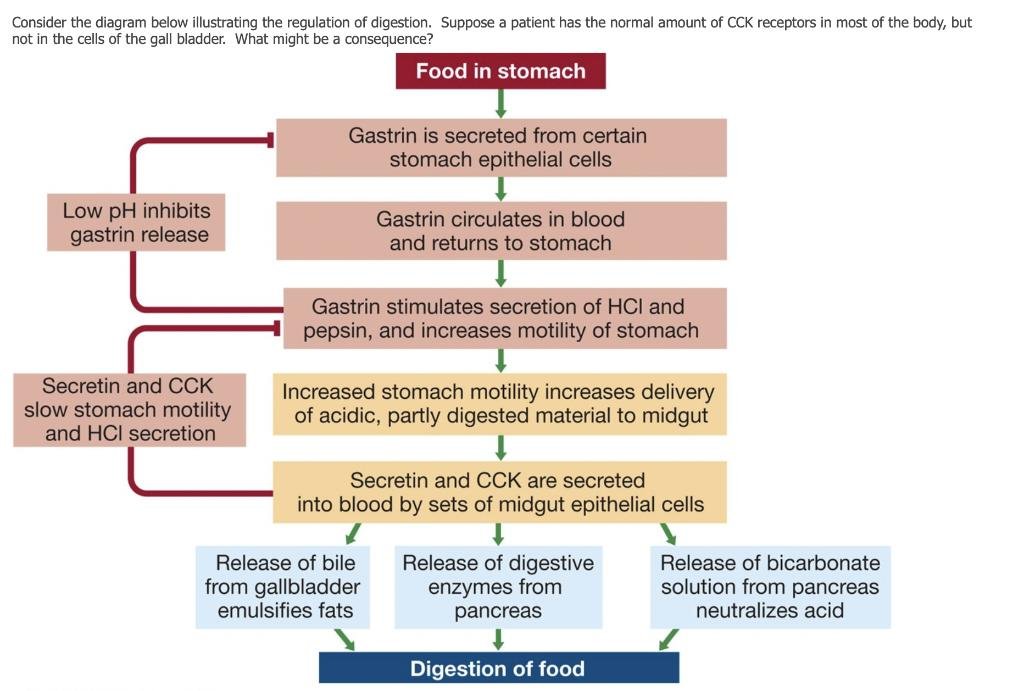
- CCK (Cholecystokinin): Hormone stimulating pancreatic enzyme secretion and gallbladder contraction.
- Secretin: Hormone stimulating bicarbonate-rich pancreatic secretion.
- Gastrin: Hormone stimulating gastric acid secretion.
- Sprue: Malabsorption syndrome due to intestinal mucosal damage.
Essential Terminology
- Motility
- Chyme
- Enteric nervous system
- Myenteric plexus
- Submucosal plexus
- Digestive enzymes
- Hormonal regulation
- Absorption
- Pancreatic secretion
Basic Overview
- Small intestine performs:
- Digestion
- Absorption
- Mixing
- Propulsion
- Hormonal signaling
- Major control systems:
- Nervous control
- Hormonal control
- Local intestinal reflexes
- Secretions include:
- Mucus
- Digestive enzyme
🔹 3️⃣ Core Learning — Curriculum Coverage
1. Small Intestinal Motility
Types of Movements of Small Intestine
🧠 CORE
- Two major movements:
- Segmentation
- Peristalsis
- Segmentation causes mixing of chyme.
- Peristalsis causes propulsion.
- Movements occur due to smooth muscle contraction.
- Controlled by enteric nervous system.
- Frequency depends on slow waves.
- Motility increases after meals.
- Helps digestion and absorption.
🔬 CONCEPT EXPLAINED
The intestinal wall contains circular and longitudinal smooth muscle layers. Rhythmic electrical slow waves generated by interstitial cells of Cajal produce contractions.
Segmentation movements
- Localized circular muscle contractions.
- Divide chyme into segments.
- Mix food with digestive secretions.
- Increase contact with mucosa.
Peristaltic movements
- Wave-like contractions.
- Circular muscle contracts behind bolus.
- Relaxation occurs ahead of bolus.
- Contents move forward.
Structure → Function:
- Circular muscle → mixing and propulsion.
- Longitudinal muscle → shortening intestine to assist movement.
⚠️ IF DAMAGED
- Reduced motility → intestinal stasis.
- Poor mixing → impaired digestion.
- Loss of propulsion → constipation or obstruction.
- Excess motility → diarrhea.
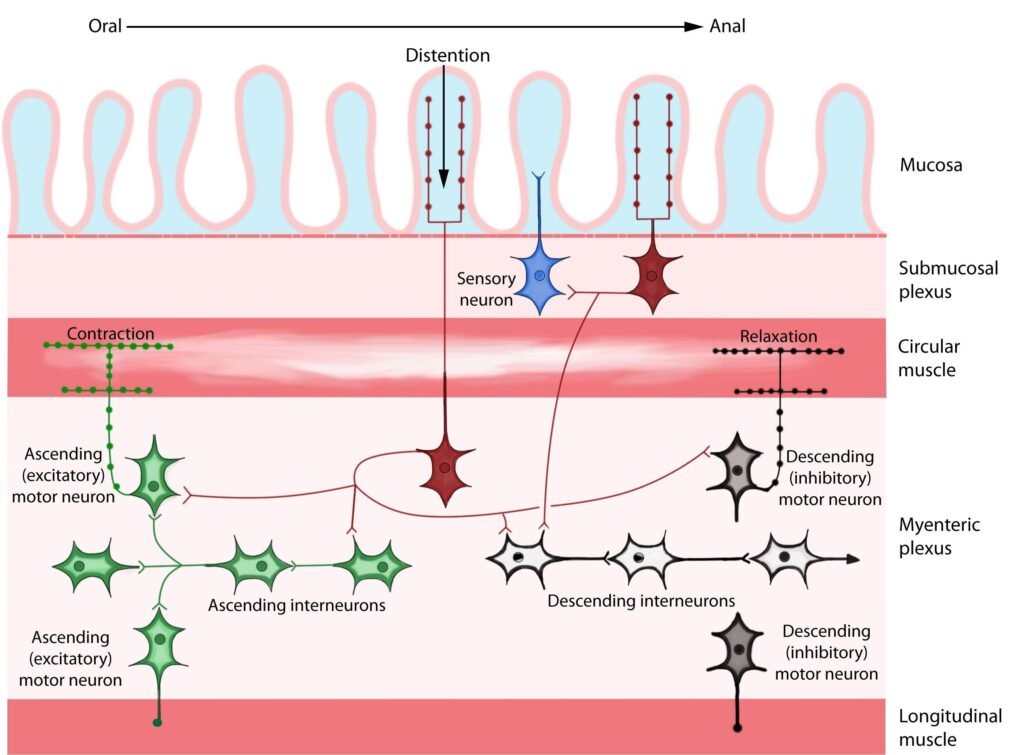
Control of Peristalsis
🧠 CORE
- Controlled mainly by myenteric plexus.
- Distension initiates peristaltic reflex.
- Stretch stimulates sensory neurons.
- Contraction occurs behind food bolus.
- Relaxation occurs ahead of bolus.
- Acetylcholine stimulates contraction.
- VIP and nitric oxide cause relaxation.
- Reflex ensures forward movement.
🔬 CONCEPT EXPLAINED
When chyme distends intestinal wall:
- Stretch receptors activate.
- Sensory neurons stimulate enteric plexus.
- Excitatory neurons contract proximal segment.
- Inhibitory neurons relax distal segment.
- Chyme moves forward.
This coordinated mechanism is called the law of the intestine.
⚠️ IF DAMAGED
- Enteric nerve damage → impaired peristalsis.
- Failure of propulsion → intestinal obstruction.
- Abnormal contractions → abdominal cramps.
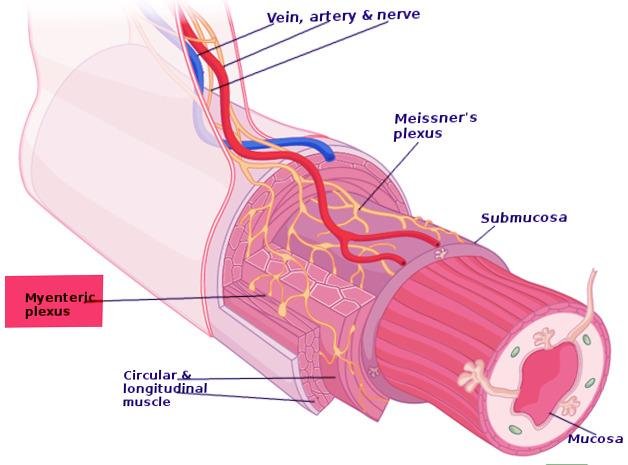
Nervous Regulation
🧠 CORE
- Controlled by enteric nervous system.
- Myenteric plexus regulates motility.
- Submucosal plexus regulates secretion.
- Parasympathetic stimulation increases motility.
- Sympathetic stimulation decreases motility.
- Vagus nerve supplies upper intestine.
- Pelvic nerves supply lower intestine.
- Local reflexes coordinate activity.
🔬 CONCEPT EXPLAINED
The enteric nervous system functions independently but is modified by autonomic nerves.
Parasympathetic stimulation
- Releases acetylcholine.
- Increases smooth muscle contraction.
- Enhances secretion.
Sympathetic stimulation
- Releases norepinephrine.
- Inhibits intestinal activity.
- Reduces blood flow.
Structure → Function:
- Myenteric plexus lies between muscle layers to coordinate contraction efficiently.
⚠️ IF DAMAGED
- Autonomic dysfunction → altered motility.
- Excess sympathetic activity → constipation.
- Loss of parasympathetic activity → reduced digestion.
Hormonal Regulation
🧠 CORE
- GI hormones modify intestinal activity.
- Gastrin increases motility.
- CCK slows gastric emptying.
- Secretin reduces gastric motility.
- Motilin stimulates migrating motor complex.
- Hormones coordinate digestion.
- Released from enteroendocrine cells.
- Respond to food in lumen.
🔬 CONCEPT EXPLAINED
Hormones are released into blood after food enters GI tract.
- Fatty acids stimulate CCK release.
- Acid stimulates secretin release.
- Fasting stimulates motilin release.
Hormones synchronize:
- Motility
- Pancreatic secretion
- Bile release
- Gastric emptying
⚠️ IF DAMAGED
- Hormonal imbalance → poor digestion.
- Excess motility → diarrhea.
- Reduced coordination → malabsorption.
Duodenal and Intestinal Secretions
Secretion of Mucus by Brunner’s Glands in the Duodenum
🧠 CORE
- Brunner’s glands lie in duodenal submucosa.
- Secrete alkaline mucus.
- Protect duodenal mucosa.
- Neutralize gastric acid.
- Stimulated by vagus nerve.
- Stimulated by secretin.
- Inhibited by sympathetic stimulation.
- Important for mucosal protection.
🔬 CONCEPT EXPLAINED
Duodenum receives acidic chyme from stomach. Brunner’s glands produce mucus rich in bicarbonate.
Structure → Function:
- Submucosal location allows extensive mucus secretion.
- Alkaline mucus protects epithelial cells from acid injury.
⚠️ IF DAMAGED
- Reduced mucus → duodenal ulcer formation.
- Acid injury → inflammation and pain.
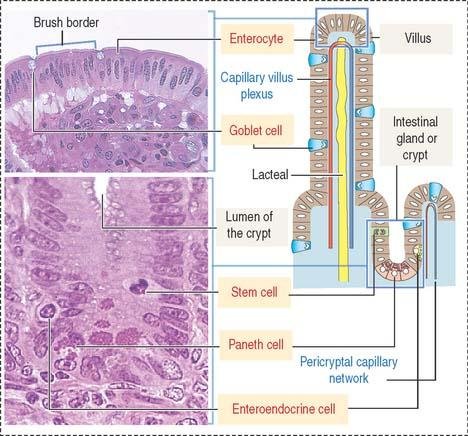
Secretion from Crypts of Lieberkühn
🧠 CORE
- Crypts are tubular glands between villi.
- Secrete watery intestinal fluid.
- Contain stem cells.
- Produce enterocytes.
- Paneth cells provide antimicrobial defense.
- Fluid aids digestion and absorption.
- Secretion rich in electrolytes.
- Controlled by local reflexes.
🔬 CONCEPT EXPLAINED
Crypt cells actively secrete chloride ions. Sodium and water follow passively, producing intestinal fluid.
Villus cells absorb nutrients while crypts mainly secrete fluid.
Structure → Function:
- Continuous epithelial renewal maintains absorptive surface.
⚠️ IF DAMAGED
- Reduced secretion → impaired digestion.
- Excess secretion → diarrhea.
- Stem cell damage → mucosal atrophy.
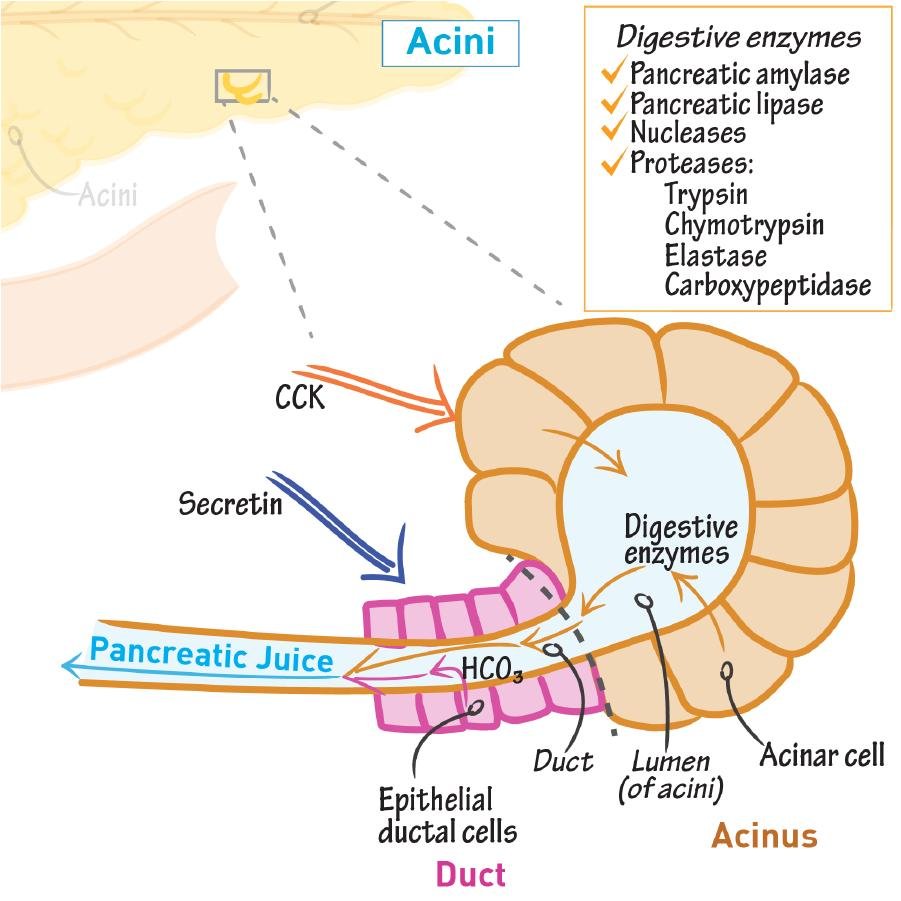
Pancreatic Enzymes
🧠 CORE
- Pancreas secretes digestive enzymes.
- Acinar cells produce enzymes.
- Enzymes digest proteins, fats, carbohydrates.
- Secreted into duodenum.
- Most enzymes secreted inactive.
- Activated in intestine.
- Essential for nutrient digestion.
- Pancreatic juice is alkaline.
🔬 CONCEPT EXPLAINED
Major enzymes:
- Trypsinogen
- Chymotrypsinogen
- Pancreatic amylase
- Lipase
- Nucleases
Trypsinogen is activated by enteropeptidase into trypsin. Trypsin activates other enzymes.
⚠️ IF DAMAGED
- Pancreatic insufficiency → maldigestion.
- Fat malabsorption → steatorrhea.
- Protein malnutrition may occur.
Chemistry of Pancreatic Enzymes
🧠 CORE
- Protein enzymes digest proteins.
- Amylase digests carbohydrates.
- Lipase digests triglycerides.
- Proteases secreted inactive.
- Lipase secreted active.
- Enzymes work at alkaline pH.
- Bicarbonate neutralizes acid.
- Enzymes hydrolyze food molecules.
🔬 CONCEPT EXPLAINED
Pancreatic enzymes are proteins synthesized in rough ER of acinar cells.
- Proteases break peptide bonds.
- Amylase converts starch to maltose.
- Lipase converts triglycerides to fatty acids and monoglycerides.
⚠️ IF DAMAGED
- Failure of enzyme activity → incomplete digestion.
- Acidic pH inactivates enzymes.
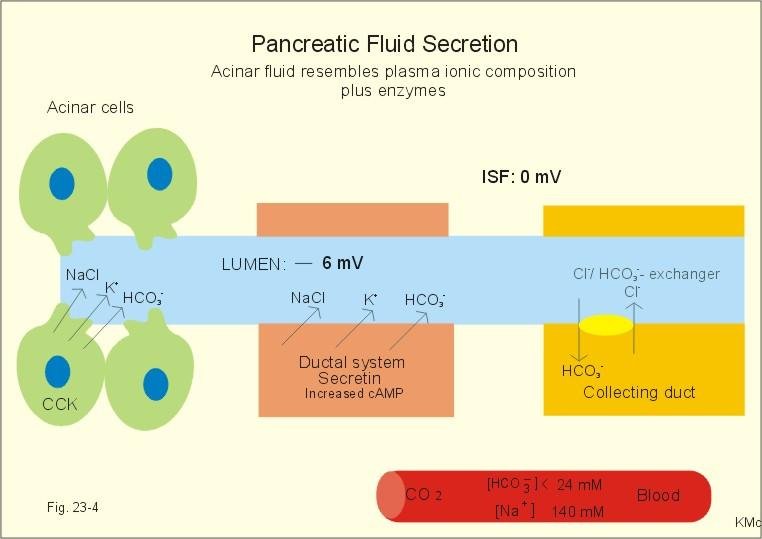
Secretion, Functions and Regulation
🧠 CORE
- Secretin stimulates bicarbonate secretion.
- CCK stimulates enzyme secretion.
- Vagus nerve enhances secretion.
- Acidic chyme stimulates secretin.
- Fat and proteins stimulate CCK.
- Pancreatic secretion aids digestion.
- Alkaline juice protects intestine.
- Secretion increases after meals.
🔬 CONCEPT EXPLAINED
- Acid enters duodenum.
- Secretin released.
- Pancreatic ducts secrete bicarbonate.
- Fat/protein stimulate CCK.
- Acinar cells release enzymes.
Structure → Function:
- Duct cells → bicarbonate secretion.
- Acinar cells → enzyme secretion.
⚠️ IF DAMAGED
- Reduced bicarbonate → duodenal injury.
- Reduced enzymes → malabsorption.
Intestinal Digestive Enzymes
🧠 CORE
- Present on brush border of enterocytes.
- Include disaccharidases and peptidases.
- Final stage of digestion occurs here.
- Lactase digests lactose.
- Maltase digests maltose.
- Sucrase digests sucrose.
- Peptidases digest peptides.
- Essential for absorption.
🔬 CONCEPT EXPLAINED
Brush border enzymes are membrane-bound enzymes attached to microvilli.
Structure → Function:
- Microvilli increase surface area.
- Enzymes positioned near absorptive cells for efficient nutrient uptake.
⚠️ IF DAMAGED
- Lactase deficiency → lactose intolerance.
- Brush border damage → malabsorption and diarrhea.
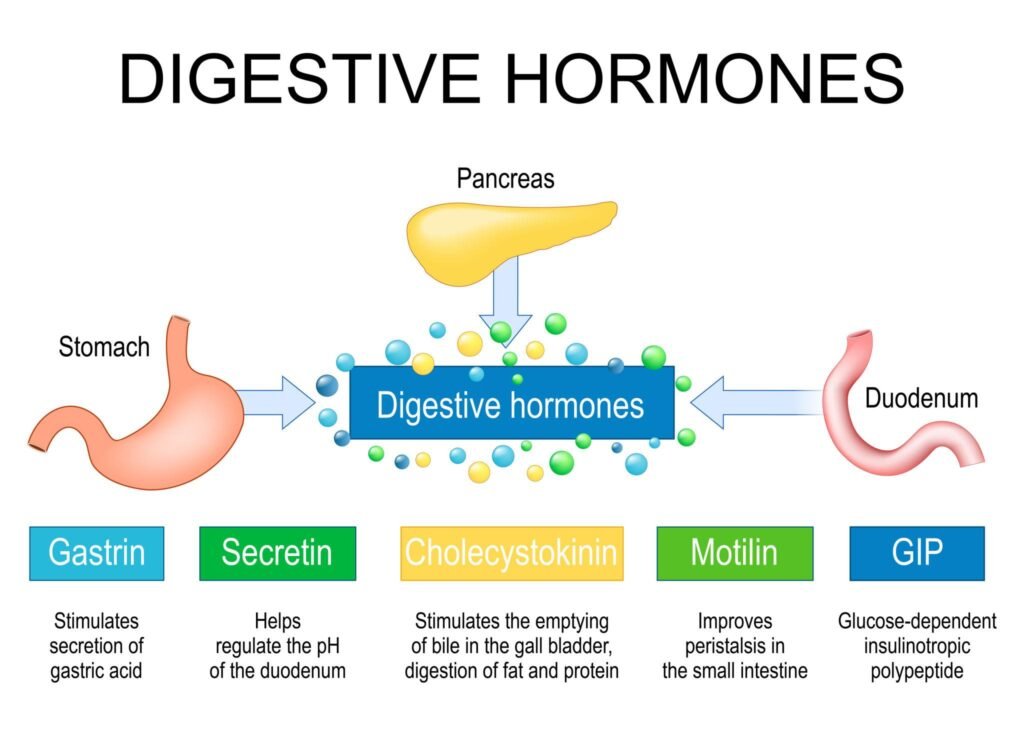
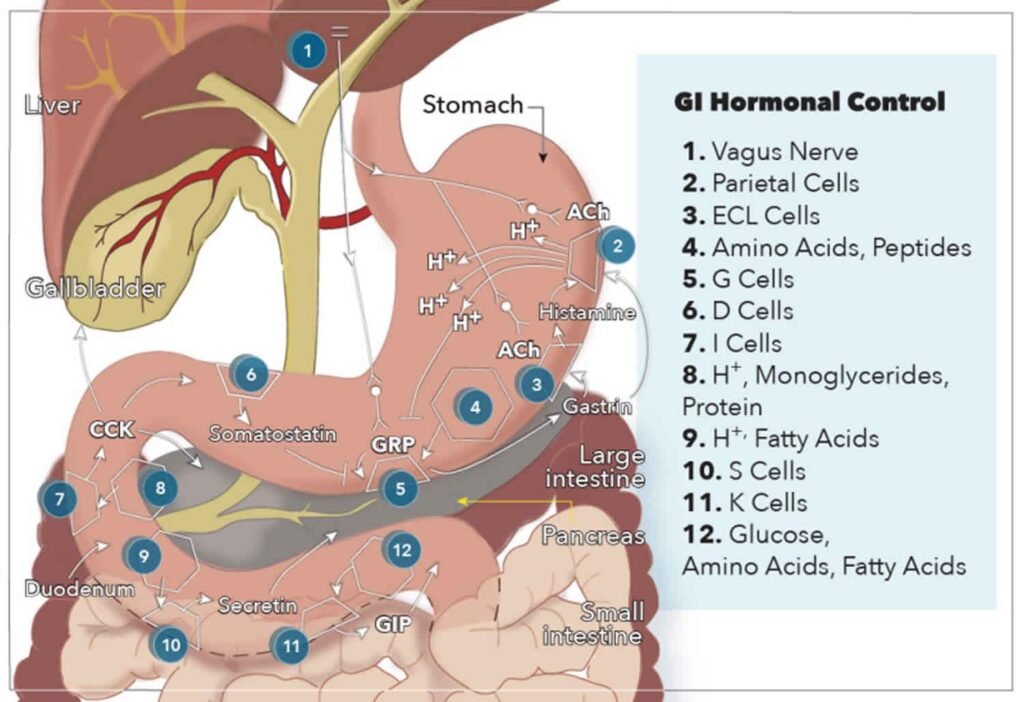
Gastrointestinal Hormones
Gastrin
🧠 CORE
- Secreted by G cells of stomach.
- Stimulated by proteins.
- Increases gastric acid secretion.
- Increases gastric motility.
- Enhances mucosal growth.
- Released into blood.
- Acts on parietal cells.
- Important in gastric phase.
🔬 CONCEPT EXPLAINED
Protein in stomach stimulates G cells → gastrin release → increased HCl secretion and motility.
⚠️ IF DAMAGED
- Excess gastrin → peptic ulcers.
- Reduced gastrin → low acid secretion.
Secretin
🧠 CORE
- Secreted by S cells of duodenum.
- Released in response to acid.
- Stimulates bicarbonate secretion.
- Inhibits gastric emptying.
- Neutralizes acid.
- Protects mucosa.
- Acts mainly on pancreatic ducts.
- Promotes alkaline environment.
🔬 CONCEPT EXPLAINED
Acidic chyme entering duodenum stimulates secretin release which increases bicarbonate secretion from pancreas.
⚠️ IF DAMAGED
- Poor neutralization → duodenal injury.
- Acidic intestine impairs enzyme activity.
Cholecystokinin (CCK)
🧠 CORE
- Secreted by I cells.
- Stimulated by fats and proteins.
- Stimulates pancreatic enzymes.
- Contracts gallbladder.
- Slows gastric emptying.
- Enhances digestion of fats.
- Coordinates bile release.
- Important after fatty meals.
🔬 CONCEPT EXPLAINED
Fatty chyme stimulates CCK release → pancreatic enzyme secretion and bile release increase.
⚠️ IF DAMAGED
- Poor fat digestion.
- Reduced bile release.
- Fat malabsorption.
Other GI Hormones
🧠 CORE
- Motilin stimulates MMC.
- GIP inhibits gastric activity.
- Somatostatin inhibits GI secretion.
- Histamine stimulates acid secretion.
- VIP relaxes smooth muscle.
- Hormones coordinate digestion.
- Released from enteroendocrine cells.
- Maintain GI balance.
🔬 CONCEPT EXPLAINED
Different hormones act together to coordinate motility and secretion according to digestive needs.
⚠️ IF DAMAGED
- Hormonal imbalance disrupts digestion and motility.
Clinical Correlation
Abnormal Digestion in Pancreatic Failure
🧠 CORE
- Occurs in chronic pancreatitis or pancreatic obstruction.
- Reduced enzyme secretion.
- Fat digestion most affected.
- Causes steatorrhea.
- Protein malnutrition may occur.
- Weight loss common.
- Vitamin deficiency develops.
- Malabsorption occurs.
🔬 CONCEPT EXPLAINED
Without pancreatic enzymes:
- Proteins not digested properly.
- Fats remain unabsorbed.
- Large fatty stools produced.
⚠️ IF DAMAGED
- Severe nutritional deficiency.
- Failure to thrive.
- Weakness and weight loss.
Malabsorption in Sprue
🧠 CORE
- Due to intestinal mucosal damage.
- Villi become flattened.
- Reduced absorptive surface.
- Nutrient absorption decreases.
- Causes diarrhea.
- Leads to anemia.
- Weight loss occurs.
- Commonly associated with gluten sensitivity.
🔬 CONCEPT EXPLAINED
Damage to villi decreases surface area and brush border enzymes leading to poor nutrient absorption.
Structure → Function:
- Loss of villi → reduced absorption → malnutrition.
⚠️ IF DAMAGED
- Severe vitamin deficiency.
- Electrolyte imbalance.
- Growth problems.
⚙️ 4️⃣ Functional Flow
- Segmentation movements mix chyme → improves digestion → enhances absorption.
- Peristalsis propels chyme → prevents stasis → maintains intestinal flow.
- Brunner’s glands secrete alkaline mucus → neutralizes acid → protects duodenum.
- Pancreatic enzymes digest nutrients → absorption becomes possible.
- Brush border enzymes complete digestion → nutrients absorbed efficiently.
- GI hormones coordinate secretion and motility → digestion occurs in organized sequence.
🩺 5️⃣ Clinical Correlation
| Condition | Physiological Defect | Clinical Effect |
|---|---|---|
| Pancreatic insufficiency | Reduced digestive enzymes | Steatorrhea and malnutrition |
| Lactase deficiency | Reduced lactase enzyme | Osmotic diarrhea |
| Celiac sprue | Villous atrophy | Malabsorption |
| Duodenal ulcer | Reduced mucus protection | Mucosal injury |
| Ileus | Failure of intestinal motility | Intestinal obstruction |
📌 6️⃣ Summary Points
- Segmentation mixes; peristalsis propels.
- Myenteric plexus mainly controls motility.
- Parasympathetic stimulation increases intestinal activity.
- Brunner’s glands secrete alkaline mucus.
- Crypts of Lieberkühn produce intestinal fluid and stem cells.
- Secretin stimulates bicarbonate secretion.
- CCK stimulates pancreatic enzymes and gallbladder contraction.
- Pancreatic enzymes are essential for fat digestion.
- Brush border enzymes complete final digestion.
- Villous damage causes malabsorption.
- Pancreatic failure commonly causes steatorrhea.
- Motilin regulates migrating motor complex.